Background
BMW 2002 turbo (E20) took the sporting character of the 02 Series to an entirely new level. Unveiled at the Frankfurt IAA in September 1973, it became the first series-produced European car to be fitted with a turbocharged engine. BMW took the already fast 2002 tii as its technical basis and added a turbocharger, creating a compact sports saloon whose performance placed it in a much higher class in the early 1970s.
Europe’s first production turbo car
BMW had already gained experience with turbocharging in motorsport, but the 2002 turbo brought the technology to a European production car for the first time. Its importance therefore extends far beyond the 02 Series itself. Turbocharged engines would become commonplace decades later, but in 1973 the use of an exhaust-gas turbocharger in a road car was still highly innovative.
170 hp and 240 Nm
The BMW 2002 turbo used a 1,990 cm³ M10-based four-cylinder engine with Kugelfischer mechanical fuel injection and a KKK turbocharger. Output increased from the 130 hp of the 2002 tii to 170 hp at 5,800 rpm, while maximum torque reached 240 Nm at 4,000 rpm. Power was transmitted to the rear wheels through a four-speed manual gearbox, with a five-speed sports transmission available as an option.
211 km/h
The BMW 2002 turbo accelerated from 0 to 100 km/h in 7.0 seconds and reached a top speed of 211 km/h. With a kerb weight of only around 1,080 kilograms, 170 hp gave the compact BMW exceptional performance for its era. Boost arrived relatively suddenly, and the resulting “turbo kick” became one of the defining characteristics of the car.
An unmistakable appearance
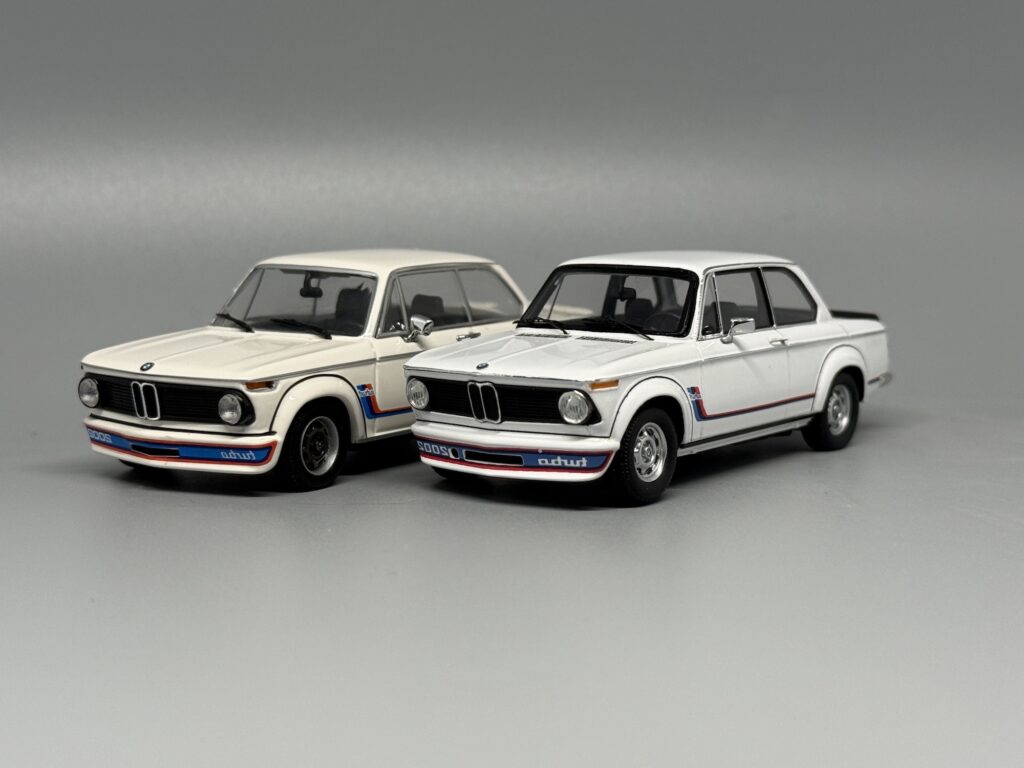
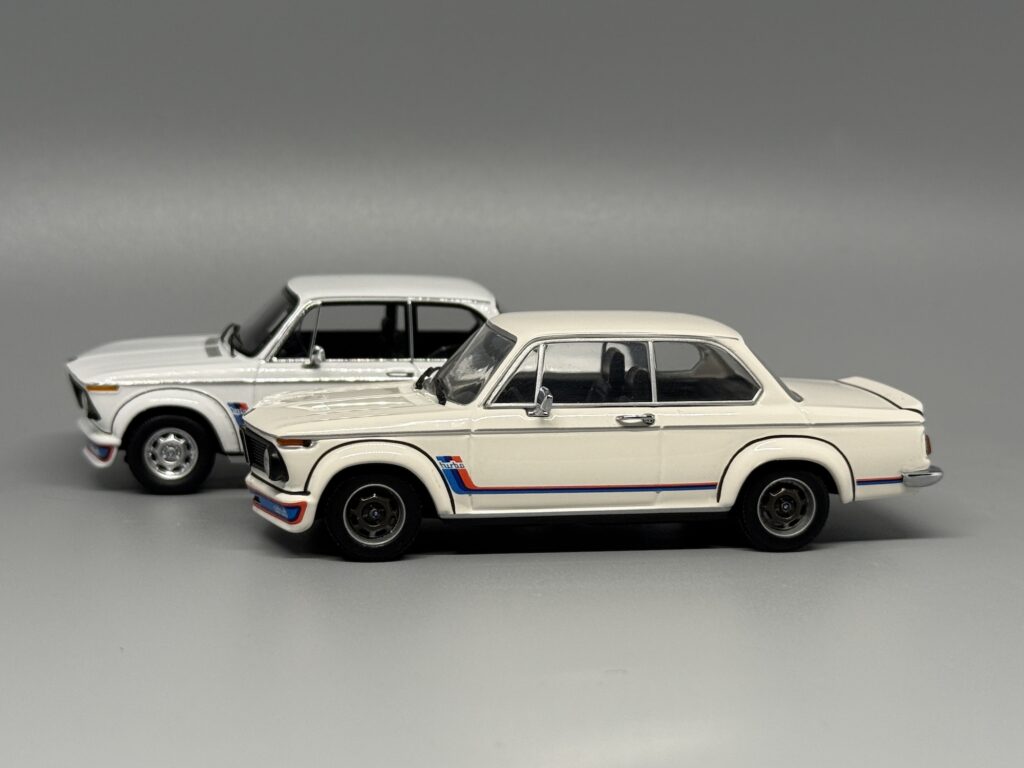
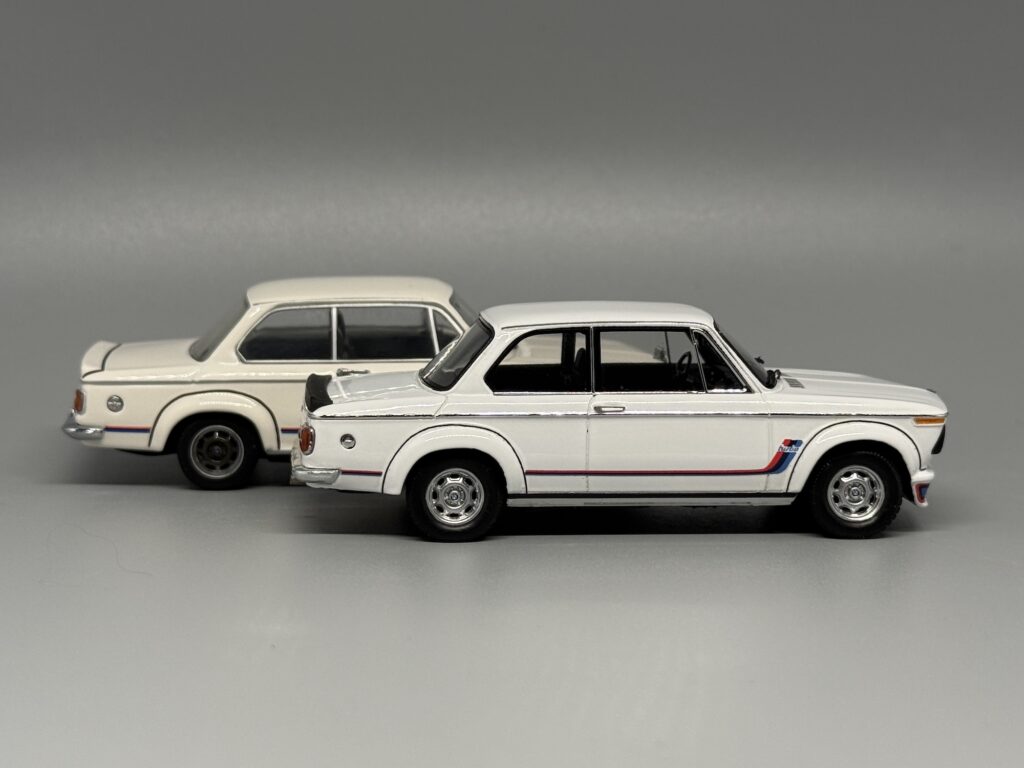
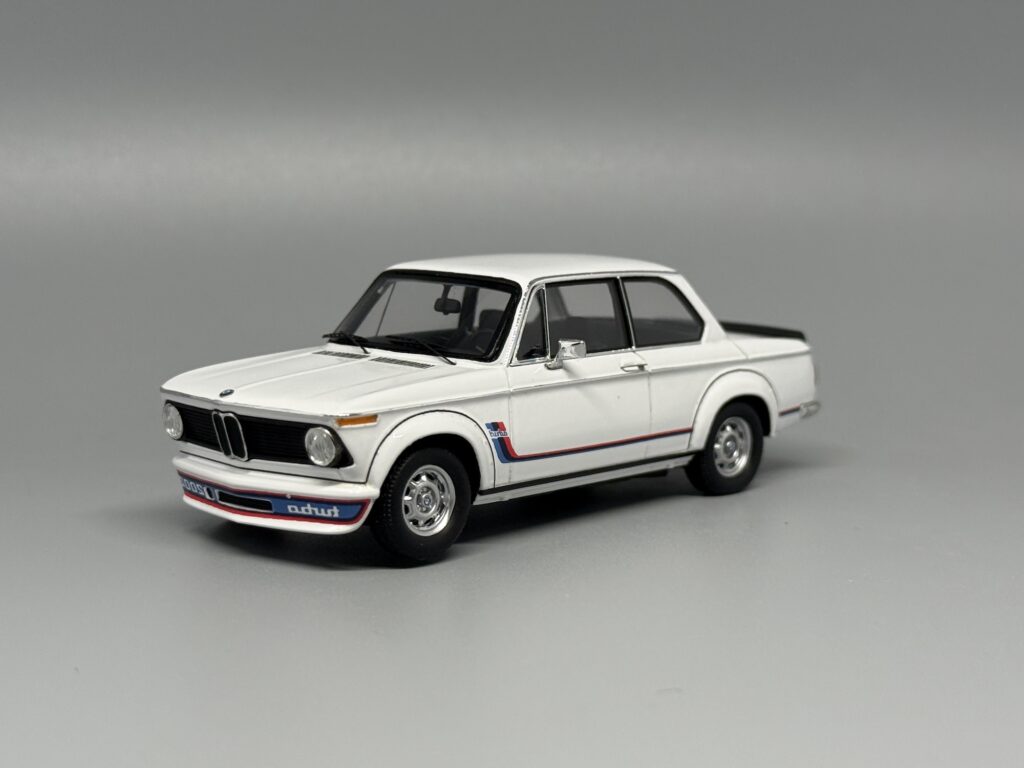
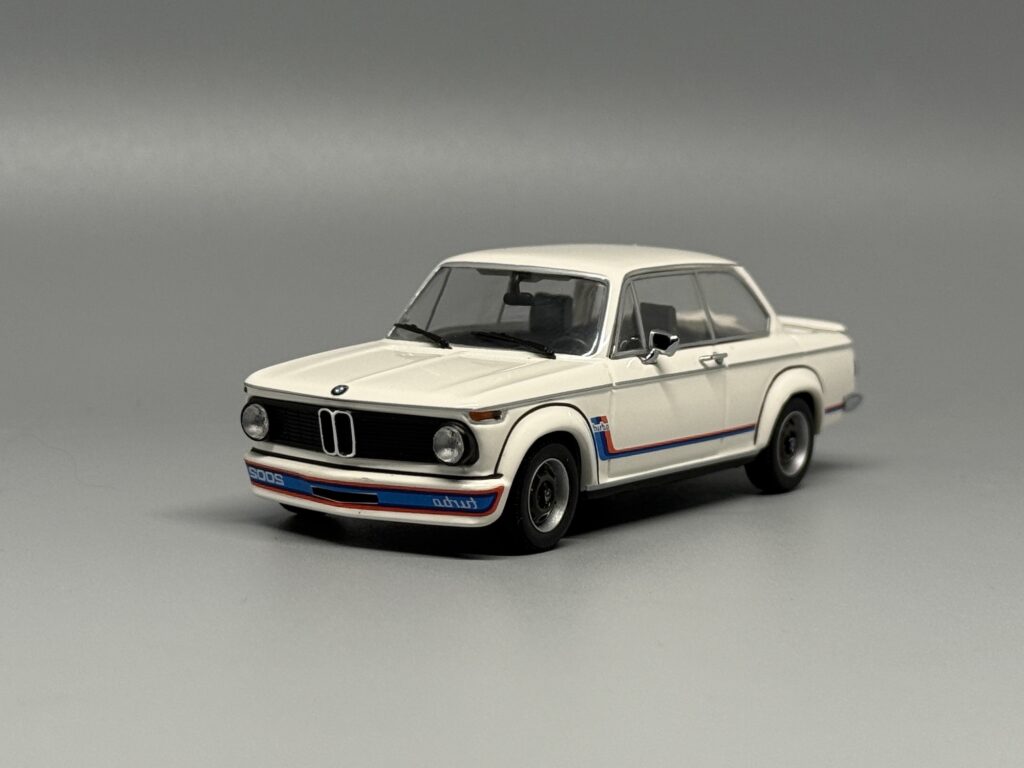
The 2002 turbo was distinguished from the regular 02 Series by its flared wheel arches, deep front spoiler, rear spoiler and BMW Motorsport stripes in blue, violet and red. It was offered only in Chamonix white and Polaris silver. Particularly famous was the mirror-written “2002 turbo” script on the front spoiler, designed to be read correctly in the rear-view mirror of the car ahead. Considered provocative at the time, the reverse script was not fitted as standard to production cars.
The wrong car at the wrong time
The 2002 turbo reached the market at an exceptionally unfortunate moment. Only weeks after its debut, the 1973 oil crisis began and Europe entered a period dominated by fuel-saving measures, speed restrictions and car-free Sundays. A 170 hp turbocharged sports car was badly suited to the new climate, and production remained short. From October 1973 until June 1975, only 1,672 cars were produced.
Historical significance
Although produced in small numbers, the influence of the BMW 2002 turbo was much greater than its production total suggests. It demonstrated the potential of turbocharging in a high-performance production car and became an important symbol of BMW’s later turbo-engine development. Its widened body, motorsport-inspired appearance and strong performance also anticipated the character of later compact BMW M models.
Models in the collection
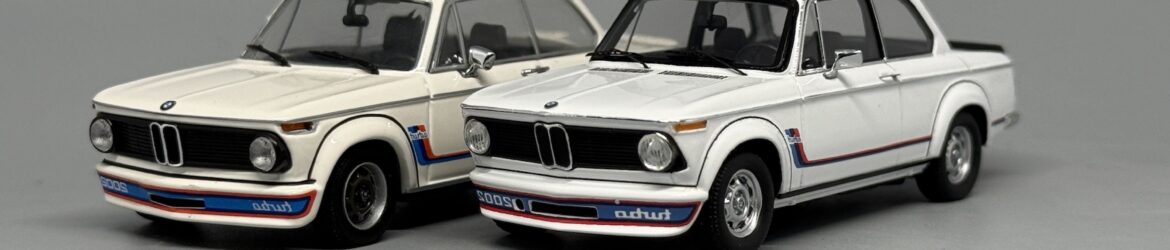
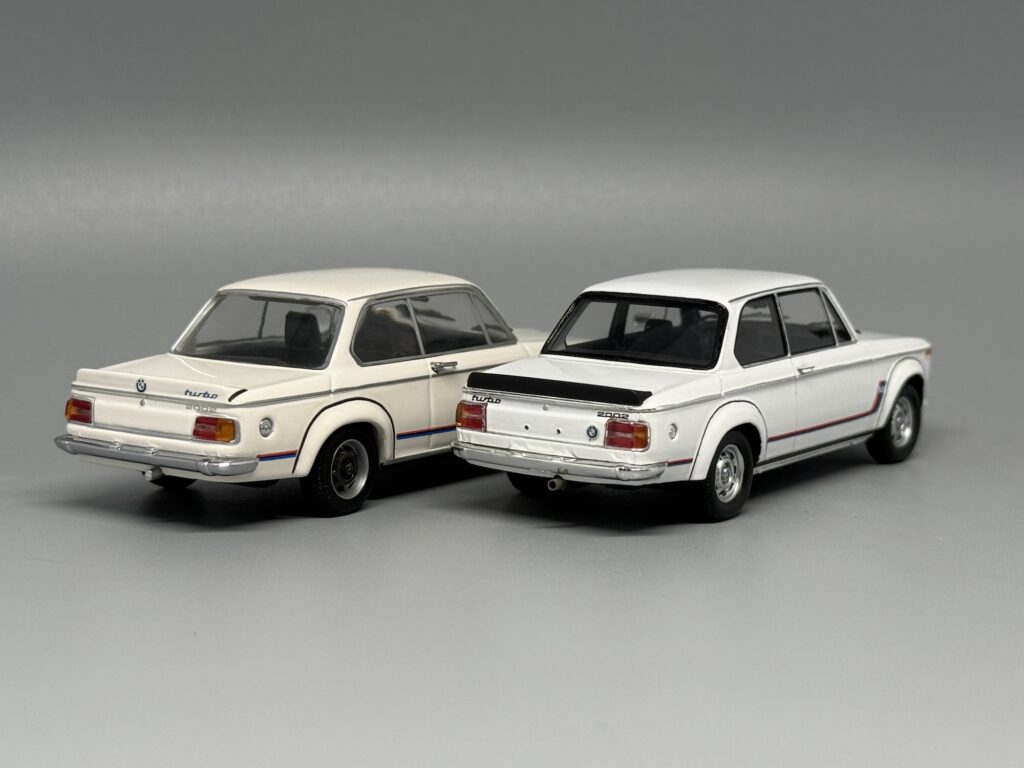
My collection includes two BMW 2002 turbo (E20) models. The Minichamps model represents a 1974 car and comes from a limited production run of 1,008 examples. The Spark model represents a 1973 car.
Technical data in brief
Production period: October 1973 – June 1975
Production location: Munich, Germany
Body style: two-door saloon
Engine: M10-based 2.0-litre turbocharged four-cylinder
Displacement: 1,990 cm³
Fuel system: Kugelfischer mechanical fuel injection
Turbocharger: KKK
Power: 170 hp @ 5,800 rpm
Torque: 240 Nm @ 4,000 rpm
Transmission: 4-speed manual, optional 5-speed sports transmission
Drivetrain: rear-wheel drive
0–100 km/h: 7.0 seconds
Top speed: 211 km/h
Kerb weight: 1,080 kg
Price when new: 18,720 Deutsche Mark
Production: 1,672 cars
Special feature: the first series-produced European car with a turbocharged engine
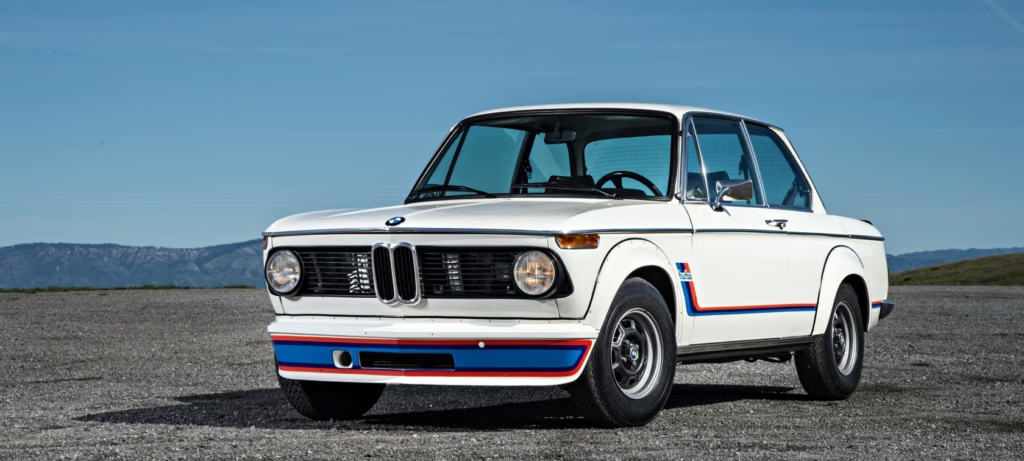
Photo of the real car. Source: bmw-m.com