Background
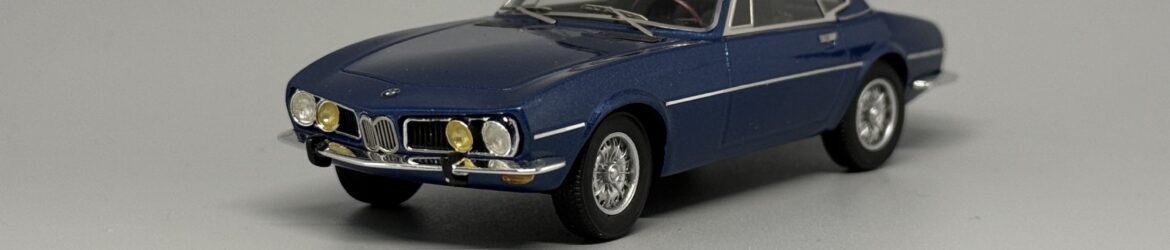
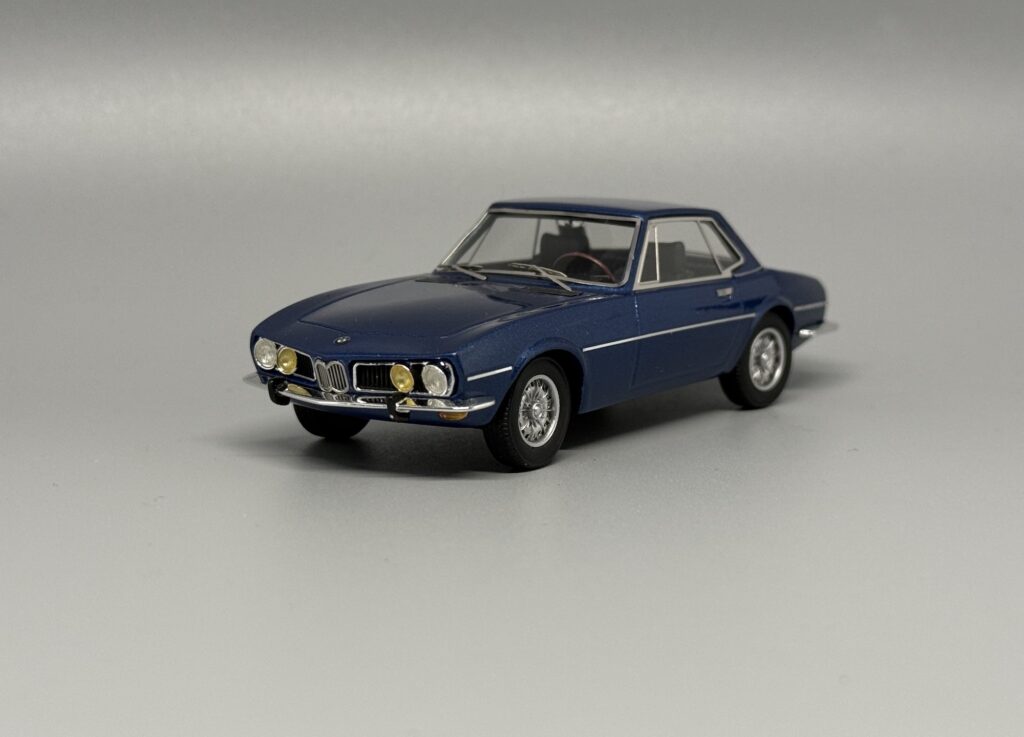
BMW 1600 ti Coupé Paul Bracq was a BMW sports-car project developed in the late 1960s and illustrates the company’s ambition to expand its model range with a new and more elegant two-seat car. The project was designed by French designer Paul Bracq, who at the time worked for the coachbuilding company Brissonneau & Lotz. Although the AutoCult model depicts the car as a closed coupé, the project was actually conceived as a two-seat Roadster with a removable hardtop. It never reached series production and, as far as is known, no fully driveable prototype was built.
Paul Bracq before BMW
By this time, Paul Bracq was already a well-known automotive designer. He had worked for Mercedes-Benz and had been involved in the design of several important models, including the W113 “Pagoda” SL. In 1967, he joined the French company Brissonneau & Lotz, where a small design department operated. It was there that Bracq’s first significant cooperation with BMW began, several years before he became head of BMW’s design studio in Munich in 1970.
From the first V8 coupé to the E19 project
Bracq’s first BMW-related project originated from an initiative by American BMW importer Max Hoffman and concerned a large V8-powered coupé intended for the American market. That idea did not progress far, but it was followed by an official BMW project aimed at creating a two-seat sports car using BMW 1600 TI mechanical components. This developed into the project later known by the designation E19.
BMW 1600 TI technical basis
The new sports car was intended to use components from the BMW 1600 TI and the 02 Series. This would have allowed proven BMW mechanical components to be combined with an entirely new body. The 1600 TI designation referred to a four-cylinder power unit, although different possibilities were considered during development. Since no fully driveable prototype is known to have been completed, it is not appropriate to assign a definite engine specification, power output or performance figures to the car.
Roadster with a removable hardtop
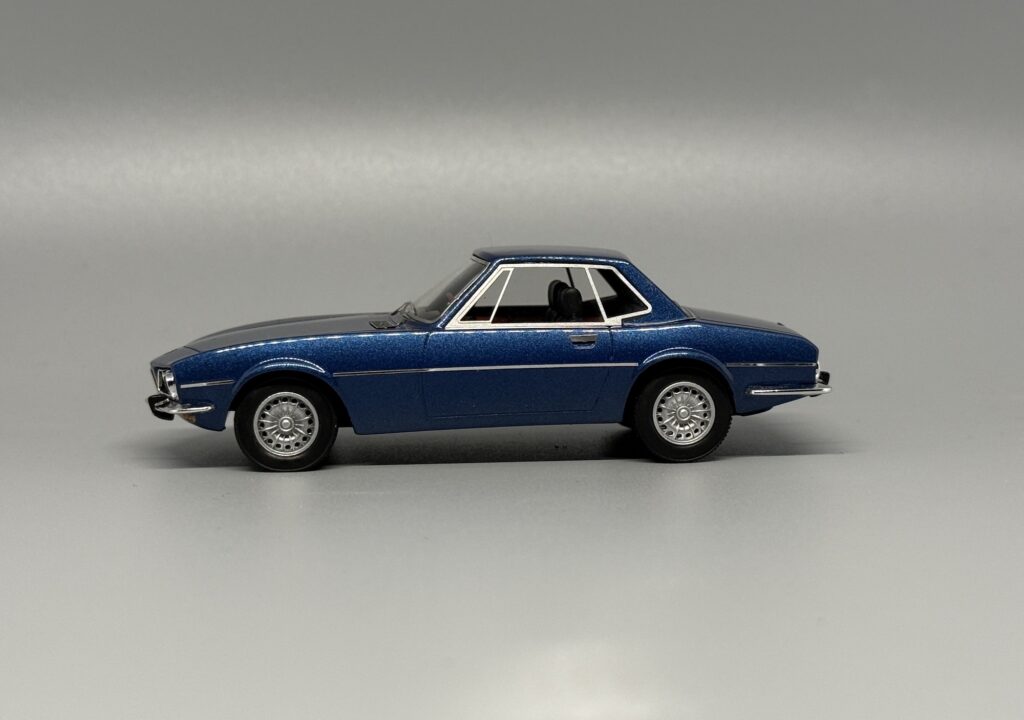
According to BMW’s own archive material, the basic concept was a two-seat Roadster. A removable hardtop was designed for the car, transforming its appearance into that of an elegant closed coupé. The AutoCult model represents the project in precisely this hardtop configuration. For this reason, model catalogues often refer to it as the BMW 1600 ti Coupé, although historically it is more accurately understood as the E19 Roadster project fitted with its removable hardtop.
Paul Bracq’s design
Bracq’s design was characterised by a long, low front section that tapered slightly towards the centre. The body was considerably lower and more sporting than that of the standard 02 Series, and its proportions reflected Bracq’s previous experience with elegant two-seat sports cars. However, it was not intended simply as an imitation of the Mercedes-Benz SL. Bracq sought to create a distinctive sporting identity appropriate for BMW.
Brissonneau & Lotz
BMW intended to develop the car in cooperation with Brissonneau & Lotz, an unusual arrangement compared with BMW’s normal development process. The French company was expected to be responsible for body construction and possible series production. The project reached a relatively advanced stage, with detailed design drawings, interior concepts and a full-size 1:1 styling model being completed.
A full-size model, not a driveable prototype
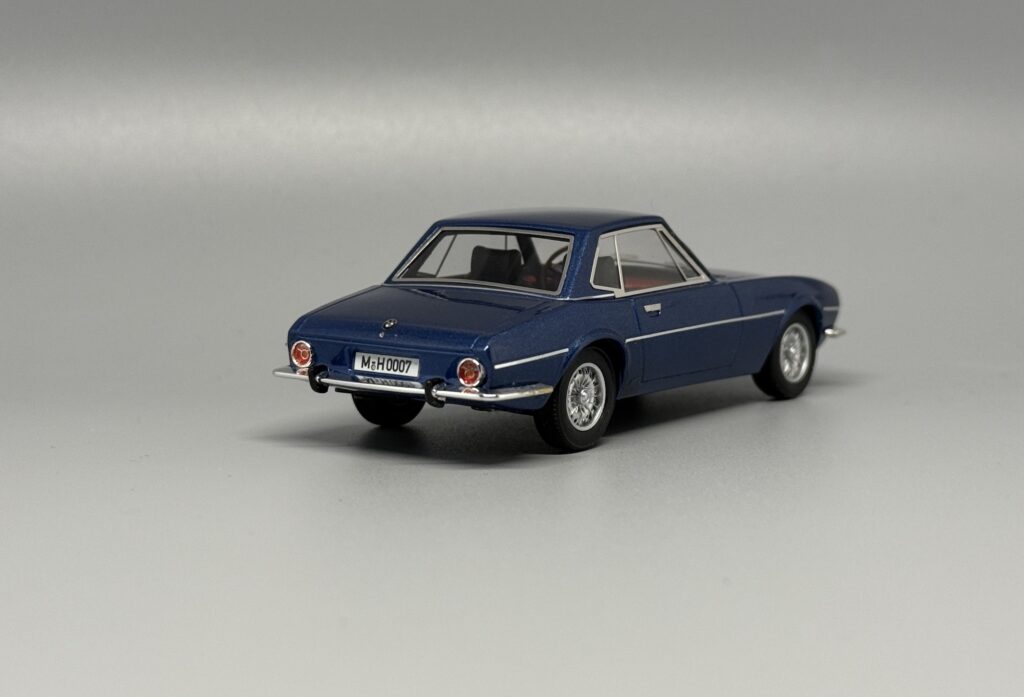
It is important to distinguish the BMW 1600 TI E19 styling model from a conventional working prototype. As far as is known, a fully driveable car was never built. Instead, a full-size 1:1 styling model was completed. It was even fitted with a Munich registration plate, which can make period photographs appear to show a finished and road-going automobile. In reality, the model was primarily intended for evaluating the design and proportions.
Why was the project cancelled?
The project was originally intended to reach production in the early 1970s, but Brissonneau & Lotz was undergoing major changes at the same time. The company’s automotive activities came under the control of other French industrial interests, and at the beginning of 1970 BMW was informed that the joint project would be discontinued. This effectively ended any prospect of the E19 reaching production. Bracq himself soon moved to BMW, where he became one of the most important figures in shaping the company’s design language during the 1970s.
Influence on Paul Bracq’s later BMW work
Although the E19 never reached production, the work carried out during the project was not entirely lost. While still at Brissonneau & Lotz, Bracq developed several interior and dashboard ideas that he later used at BMW. His subsequent work included the development of the first BMW 5 Series E12 and the BMW Turbo concept car, which became one of the most important BMW design landmarks of the 1970s.
Historical significance
The BMW 1600 TI E19 project is important primarily as an early example of cooperation between Paul Bracq and BMW. Although no driveable prototype or production version was completed, the project demonstrates BMW’s interest in creating a compact two-seat sports car as early as the late 1960s. It also represented an important stage in Paul Bracq’s path towards becoming BMW’s head of design and provides an intriguing glimpse of what a BMW sports car of the early 1970s might have looked like.
Model in the collection
The model in my collection was produced by AutoCult and represents the 1969 BMW 1600 ti Paul Bracq project fitted with its removable hardtop, giving the car a coupé-like appearance. AutoCult markets the model under the name BMW 1600 ti Coupé Paul Bracq. It was produced in a limited edition of 333 examples.
Technical data in brief
Project period: 1967–1969
Designer: Paul Bracq
Project: BMW 1600 TI / E19
Design studio and intended coachbuilder: Brissonneau & Lotz, France
Technical basis: planned BMW 1600 TI / 02 Series mechanical components
Body style: two-seat Roadster with removable hardtop
AutoCult model configuration: coupé appearance with hardtop fitted
Engine: planned BMW four-cylinder power unit
Driveable prototype: not built
Completed object: full-size 1:1 styling model
Special feature: BMW sports-car project designed by Paul Bracq that remained at the full-size styling-model stage
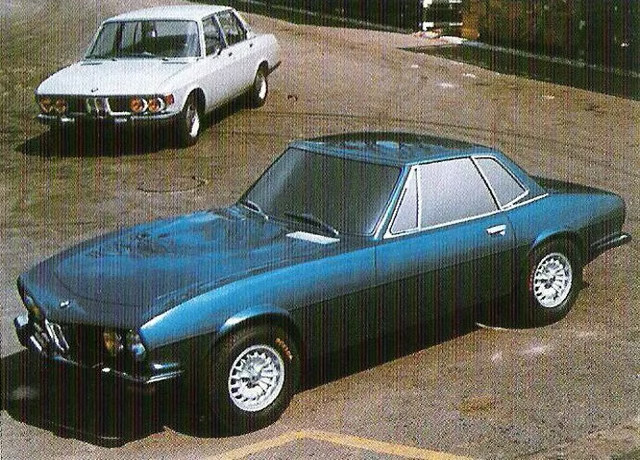
Photo of the real car. Source: petrolectable.com