
Background
BMW X5 Le Mans (E53) was a unique experimental vehicle presented in 2000 to demonstrate the extraordinary technical potential of BMW’s first Sports Activity Vehicle. The project was not intended to create a new production model but to explore the ultimate performance and dynamic capabilities of the X5. BMW combined the body of the first-generation X5 with advanced racing technology, creating one of the most unusual prototypes in the company’s history.
Le Mans racing technology
At the heart of the X5 Le Mans was a 6.1-litre naturally aspirated V12 engine derived from the BMW V12 LMR, which won the 24 Hours of Le Mans in 1999. In racing specification, the engine’s output had been restricted to approximately 580 hp through air intake restrictors. Freed from these limitations, the engine developed around 700 hp and 720 Nm of torque in the X5 prototype. Power was delivered through a six-speed manual transmission and an all-wheel-drive system.
Race-inspired exterior
Although the X5 Le Mans retained much of the regular production model’s overall appearance, its technical modifications were extensive. Its most striking feature was the large radiator air outlet in the carbon-fibre bonnet, designed to improve cooling for the powerful V12 engine. The bumpers, wheel arches and side sills were also modified. The car featured 20-inch BBS Le Mans wheels and suspension lowered by 30 millimetres. Weight distribution was almost ideal at 51:49 between the front and rear axles.
700 hp and 278 km/h
The X5 Le Mans accelerated from 0 to 100 km/h in just 4.7 seconds despite weighing approximately 2,130 kilograms. BMW originally published an official top speed of 278 km/h. Compared with the standard X5, the prototype’s handling was enhanced by its lowered suspension, wide tyres and specially adapted chassis. The result combined the dimensions of a large luxury SAV with genuine sports-car performance.
Nürburgring and 311 km/h
The X5 Le Mans became particularly famous in June 2001, when BMW racing driver Hans-Joachim Stuck completed a lap of the 20.8-kilometre Nürburgring Nordschleife in 7 minutes and 49.92 seconds. The car had been specially prepared for the run, including the removal of its rear seats. On the Döttinger Höhe straight, Stuck reached an astonishing 311 km/h. The achievement was remarkable for its time, and the lap remained a benchmark for this type of vehicle for almost two decades.
A racing-inspired interior
The original show car retained several elements of the standard X5 interior, but its luxury seats were replaced with four sporting bucket seats. Extensive use of aluminium highlighted the prototype’s experimental character and connection with motorsport. For its Nürburgring record attempt, the interior was further modified by removing the rear seats and preparing the car specifically for circuit driving.
The predecessor of the BMW X5 M
The BMW X5 Le Mans remained a unique prototype, with no plans for series production. Its importance lay primarily in demonstrating the technical possibilities available to BMW M. The project showed that a large and practical Sports Activity Vehicle could also provide the foundations for an exceptionally powerful sports car. BMW M regards the X5 Le Mans as the technical predecessor of the BMW X5 M, introduced in 2009.
Model in the collection
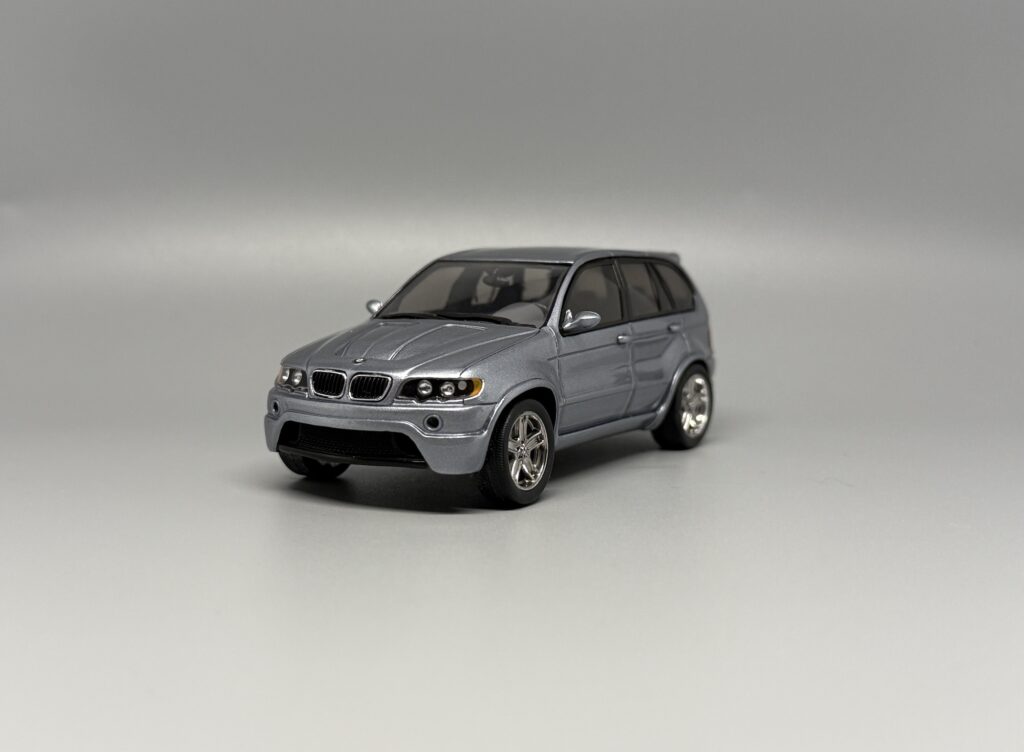
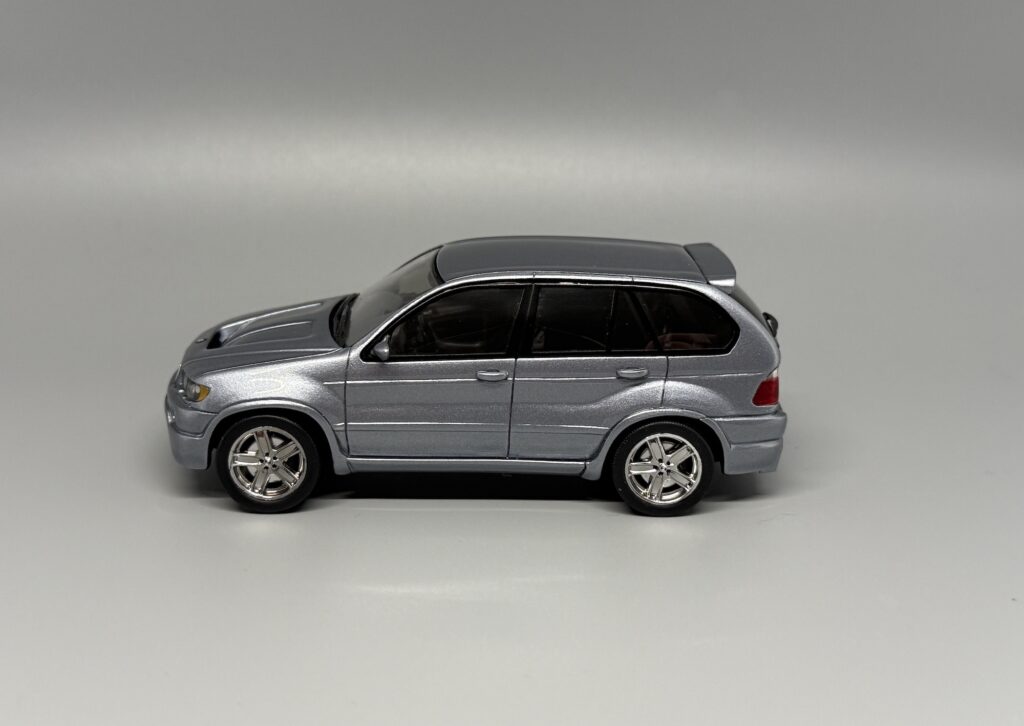
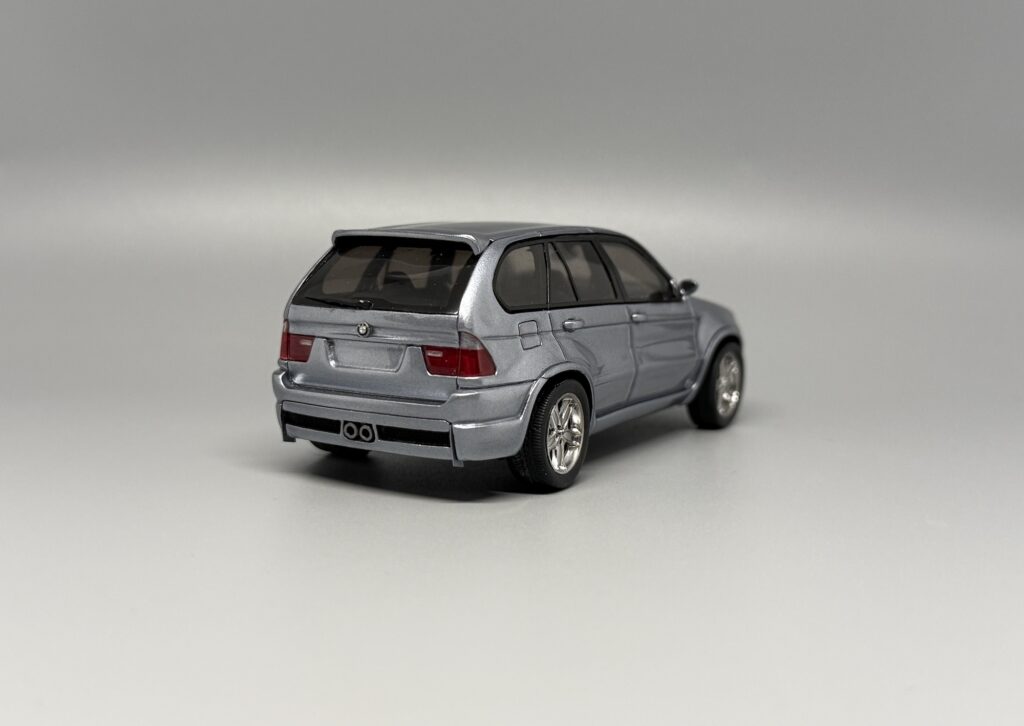
The BMW X5 Le Mans (E53) in my collection was produced by Spark. It represents the unique prototype unveiled in 2000, combining the BMW X5 body with the V12 racing engine from BMW’s Le Mans-winning sports car.
Technical data in brief
World premiere: March 2000, Geneva Motor Show
Year built: 2000
Body style: five-door experimental Sports Activity Vehicle
Engine: naturally aspirated V12 derived from the BMW V12 LMR
Displacement: approximately 6.1 litres
Power: approximately 700 hp
Torque: 720 Nm @ 5,000 rpm
Transmission: 6-speed manual
Drivetrain: all-wheel drive
0–100 km/h: 4.7 seconds
Official top speed: 278 km/h
Top speed achieved at the Nürburgring: 311 km/h
Nürburgring Nordschleife lap time: 7 minutes 49.92 seconds
Weight: approximately 2,130 kg
Wheels: 20-inch BBS Le Mans
Suspension: lowered by 30 mm compared with the standard X5
Production: one prototype
Special feature: unique BMW X5 prototype powered by the V12 engine from the Le Mans-winning BMW V12 LMR
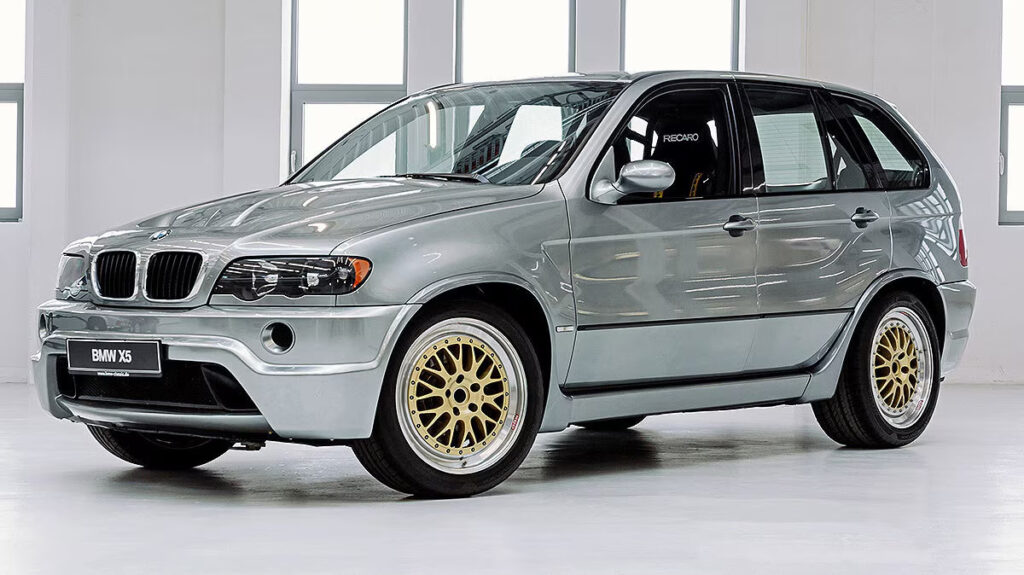
Photo of the real car. Source: autobild.de