
Background
BMW S1 was one of the most remarkable post-war racing prototypes developed in Eisenach. The car was completed in 1949, at a time when the former BMW automobile plant was operating under Soviet control as SAG Awtowelo Werk BMW Eisenach. Although the factory was no longer part of BMW AG in Munich, development of BMW’s pre-war engineering heritage continued there for several years, with particular emphasis on reviving the competition tradition established by the BMW 328 before the war. The S1 was created specifically for the two-litre racing class and abandoned the conventional open-wheel sports-car layout in favour of a radically aerodynamic concept.
Post-war Eisenach and the BMW 328 heritage
Before the Second World War, the BMW 328 had become one of Europe’s most successful two-litre sports cars and had been produced at Eisenach. After the war, components and technical knowledge from the 328 remained available at the factory, providing a foundation for the development of new sports and competition cars during the late 1940s. Other Eisenach projects from the same period included the BMW 340/1 Roadster, the 340-S and the two-litre BMW Intertyp. The S1, however, stood apart through its particularly radical approach to aerodynamics and was conceived from the outset primarily as a competition car.
Georg Hufnagel and construction
The development and construction of the S1 was carried out by a team of engineers at the Eisenach plant led by engineer Georg Hufnagel. The car was built around a lightweight tubular frame covered by a very smooth, hand-formed aluminium body. The objective was to minimise aerodynamic drag and eliminate as many protruding components as possible from the exterior surfaces. This approach differed considerably from most contemporary sports cars, which generally used separate wings over the wheels or exposed wheels altogether.
Aerodynamic body
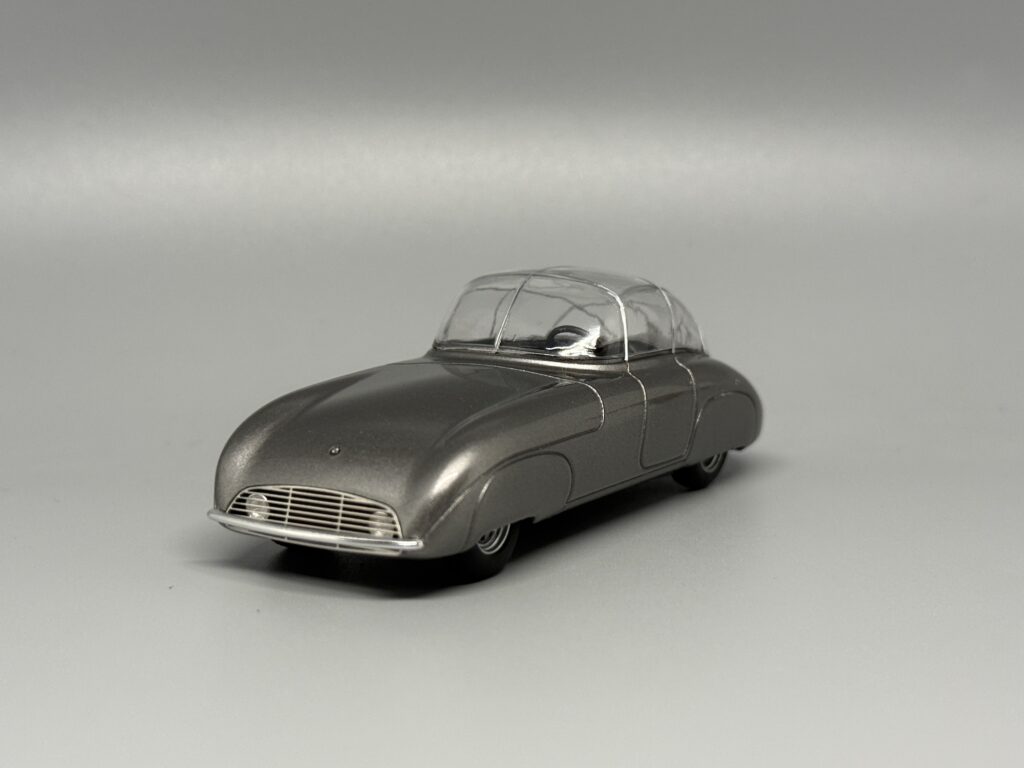
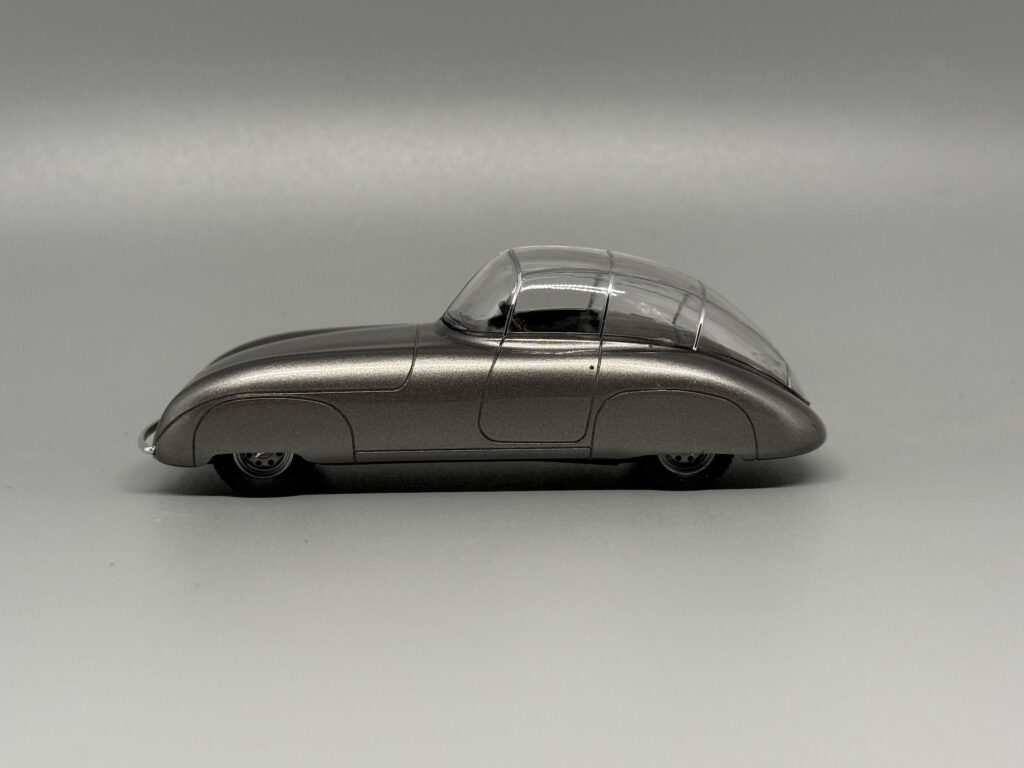
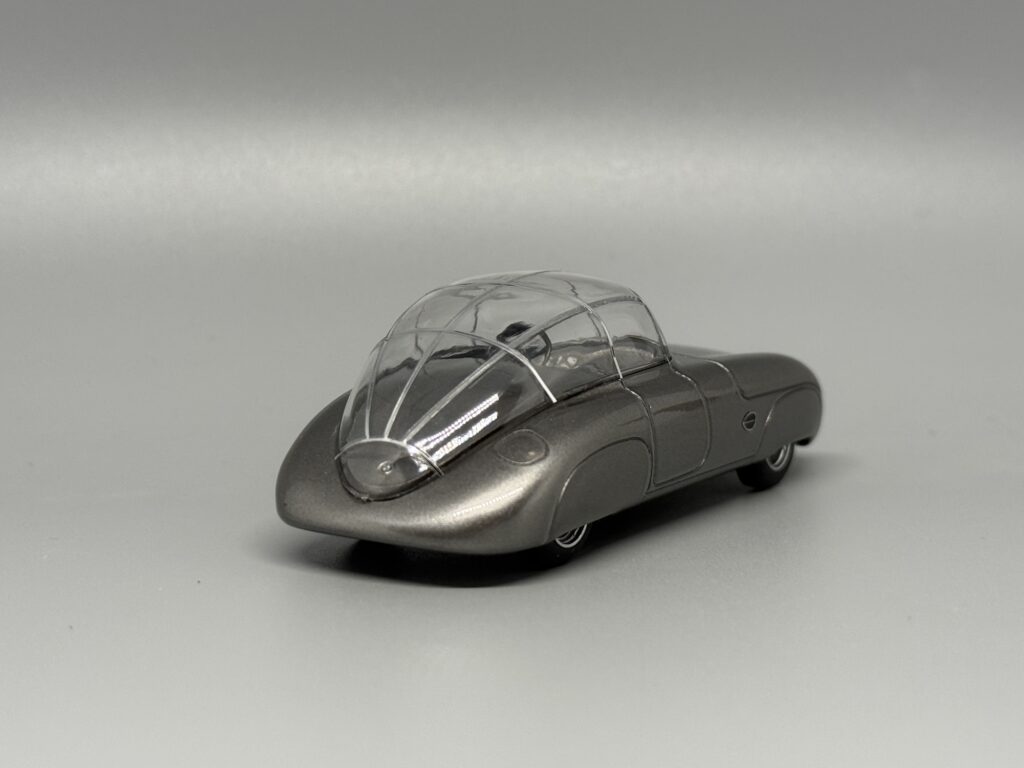
The most distinctive feature of the BMW S1 was its bodywork, which completely enclosed all four wheels. This created an exceptionally low, wide and streamlined shape that looked more like an aerodynamic research vehicle than a typical late-1940s racing car. Fully enclosing the wheels improved airflow around the vehicle but also created compromises: the steering angle of the front wheels had to be restricted, and the body consequently became noticeably wider than that of many competitors. This illustrates how strongly the entire S1 concept was shaped by aerodynamic considerations.
Two-litre six-cylinder engine
The S1 was developed for the racing class for sports cars with engines of up to two litres and used a six-cylinder in-line engine derived from BMW’s pre-war technical tradition. Its connection with the BMW 328 was significant, as the Eisenach plant retained both components and knowledge relating to the development of the 1,971 cm³ six-cylinder engine for competition use. However, the exact power output of the S1 is not consistently documented in surviving reliable sources, and it would therefore be misleading to assign a specific horsepower figure to the car. What can be stated with confidence is that it was designed as a high-performance competition car for the two-litre class.
Victory at Dessau in 1949
The best documented competition success of the S1 came on 4 September 1949 at Dessau. The race was held on a section of autobahn that had already been designed in the 1930s for use in speed trials and motor racing. The BMW S1 was driven by experienced racing driver Adolf Brudes, who had achieved several important results with the BMW 328 before the war and had finished third overall in the 1940 Mille Miglia. At Dessau, Brudes won the two-litre sports-car race in the S1, demonstrating that Eisenach’s new aerodynamic prototype was genuinely competitive.
Sachsenring and racing career
A few weeks later, on 25 September 1949, the S1 also competed in the first post-war race at the Sachsenring. Adolf Brudes finished fourth in the two-litre class. AutoCult’s historical description states that the S1 won two races during its competition career, although the results of all contemporary events in East Germany are not equally well documented today. The Dessau victory therefore remains the most securely established success of the car.
From racing car to road car
The story of the S1 did not end on the racetrack. After its competition career, the car was converted into a road-legal two-seater. The modifications were intended to make the radical aerodynamic racing prototype more suitable for everyday use while retaining its extraordinary body shape. In this form, the car was presented in Leipzig in 1950. This gives the S1 a particularly interesting history: the same car existed first as a purpose-built streamlined competition prototype and later as a two-seat road-going vehicle.
A one-off prototype
Only one BMW S1 is known to have been built. It was neither a planned production model nor even a small-series sports car, but an experimental competition project developed at the Eisenach plant. Its one-off status, highly unusual aerodynamic body and brief but successful racing career make the S1 one of the rarest post-war sports cars associated with the BMW name.
Historical significance
The BMW S1 is also particularly interesting because it was created during a very short transitional period. The car carried the BMW name and drew heavily on BMW’s pre-war engineering heritage, yet it was built at a factory that no longer belonged to BMW AG. A few years later, the Eisenach plant ceased using the BMW name and its vehicles began to carry the EMW name and red-and-white emblem. The S1 therefore remains one of the most radical examples of how BMW’s pre-war racing tradition survived for several years in East Germany and developed there into a distinctive technical branch of its own.
Model in the collection
The model in my collection was produced by Autocult and represents the streamlined 1949 BMW S1 racing car. It was produced in a limited edition of 333 examples.
Technical data in brief
Year completed: 1949
Place of production: Eisenach, Germany
Developer: SAG Awtowelo Werk BMW Eisenach
Head of development team: Georg Hufnagel
Body style: two-seat aerodynamic racing prototype
Body: hand-formed aluminium body
Frame: lightweight tubular frame
Engine: six-cylinder in-line engine
Engine class: up to 2.0 litres
Power: exact figure not reliably documented
Drivetrain: rear-wheel drive
1949 Dessau: 1st place, Adolf Brudes
1949 Sachsenring: 4th place, Adolf Brudes
1950: presented in Leipzig after conversion into a road-legal two-seater
Production: 1 prototype
Special feature: post-war Eisenach racing prototype with fully enclosed wheels, an aerodynamic aluminium body and a lightweight tubular frame