BMW M1 is one of the most important and most special sports cars in BMW history. It was the first independent series-production model developed by BMW Motorsport GmbH and a car that laid a strong foundation for the reputation of BMW M as a separate high-performance brand. The model was introduced in 1978 and stood apart from every other BMW of its time: the M1 was a low, sharply styled mid-engined sports car whose character came directly from racing.
The BMW M1 was born as a highly ambitious project. The original aim was to create a car that could be used in racing and homologated according to Group 4 regulations. BMW intended to compete in the German DRM series, but the development process proved complex and took longer than originally planned. At the same time, racing regulations changed, and the M1 could no longer fulfil its original role exactly as BMW had hoped.
Instead, the legendary BMW M1 Procar series was created, running in 1979 and 1980 alongside European Formula One events. Procar brought together both top F1 drivers and touring car racers on the same starting grid and quickly helped turn the M1 name into a legend, even though the car’s original racing programme did not develop exactly as planned.
Design and concept
In terms of design, the BMW M1 was a true milestone. Its shape was partly based on Paul Bracq’s 1972 BMW Turbo concept car, while the final appearance of the production model was created by Italian designer Giorgetto Giugiaro. The wedge-shaped body, very low height, pop-up headlights, flat kidney grille and black louvres above the rear window gave the car a highly distinctive look.
The BMW M1 was only 1.14 metres high, underlining its racing stance and helping achieve a low centre of gravity. Unlike BMW’s traditional saloons and coupés, the M1 was a pure sports car by nature. Its proportions, low silhouette and mid-mounted engine clearly distinguished it from all other BMW models of the same period.
The M1 was radical enough to serve as a serious basis for racing, yet refined enough to be a road-legal sports car. It was precisely this combination of two worlds — racing-derived engineering and the finish required of a road car — that made the M1 such a special model in BMW history.
Technology
Technically, the M1 was a completely special car for BMW. Unlike traditional front-engined BMW models, it used a mid-mounted power unit. At its heart was the 3.5-litre naturally aspirated M88 six-cylinder in-line engine, producing 277 hp and 330 Nm of torque in the road version.
The engine used four valves per cylinder and mechanical fuel injection, a very advanced solution for its time. Power was sent to the rear wheels through a five-speed manual gearbox, and top speed was around 265 km/h. This made the M1 the fastest German series-production sports car of its era.
The strength of the BMW M1 did not lie only in power. The mid-engine layout gave the car very good weight distribution and excellent handling characteristics. Its unladen weight was around 1300 kilograms, and together with the low body, strong engine and racing-derived construction, this gave the car an exceptionally pure sports-car character.
The M1 engine also had an important influence on BMW M history after the end of the model’s production. Further developments of the M88 power unit later found their way into iconic BMW M models such as the BMW M635CSi and the first BMW M5. For this reason, the M1 was not only a standalone sports car, but also a technical starting point for several later BMW M legends.
Production
Production of the BMW M1 remained very limited, and all cars were largely hand-built. The complexity of the project, cooperation with several partners and the goal of racing homologation made the M1 an unusual production programme for BMW. It was not an ordinary larger-series BMW, but a special project in which every car had a clear connection with BMW Motorsport’s ambitions.
BMW M material gives the total number as 460 cars, including both road and racing versions. It is often stated separately that 399 cars were built for road use. The small production number, mid-engine layout, BMW Motorsport background and Procar legend make the M1 one of the most highly regarded classic BMWs today.
Significance in BMW history
The special place of the BMW M1 in BMW history is connected with several different layers. It was a technical pioneer, a design milestone and a racing-born sports car that showed BMW Motorsport GmbH could create a completely independent high-performance model. Although the M1 did not bring BMW major series-production success, it became a timeless legend.
The importance of the M1 is not limited to the road car. The Procar cars were much more powerful and competition-focused than the road version, while retaining the M1’s basic shape and technical concept. It was the Procar series in particular that gave the M1 its strong motorsport image and secured its place among the central models in BMW M history.
The BMW M1 is also important in the BMW Art Car tradition. In 1979, one of the Group 4 racing versions was painted by Andy Warhol and competed in the 24 Hours of Le Mans that same year. The Warhol BMW M1 Art Car is today one of the most famous BMW Art Cars and has further strengthened the M1’s image not only as a sports car, but also as a cultural icon.
The BMW M1 combines the early courage of BMW M, Italian design, German engineering and pure motorsport into one of the most special packages in BMW history. Although its production volume remained small, its influence on the reputation of BMW M and on later models was very significant.
Model in the collection
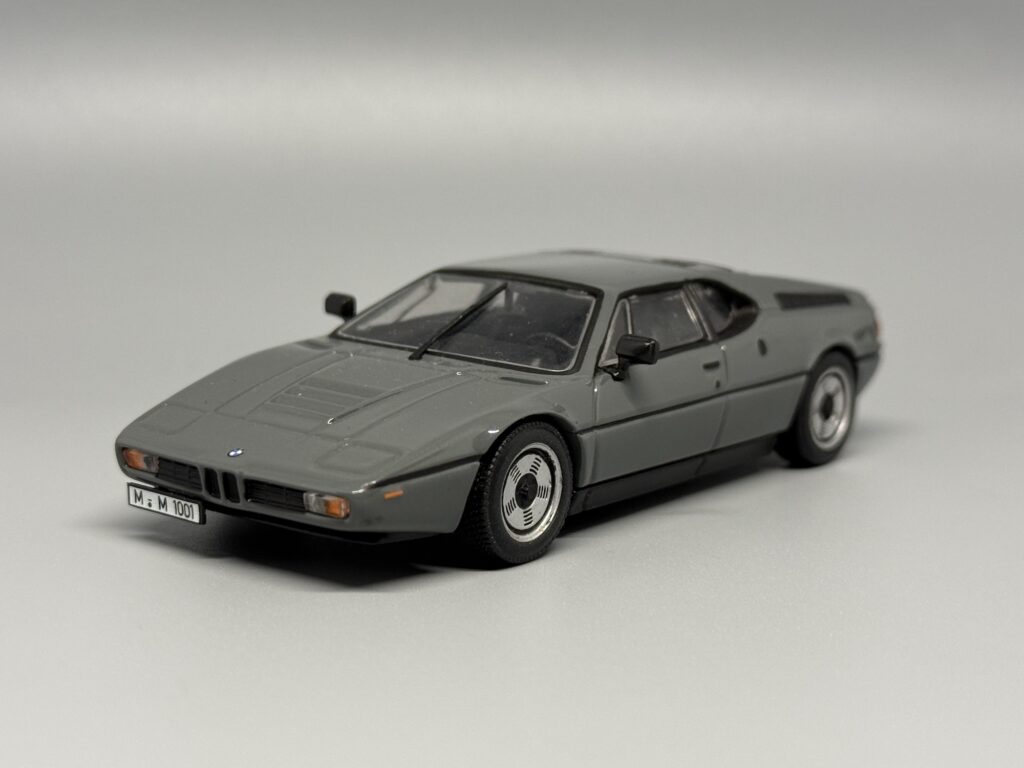
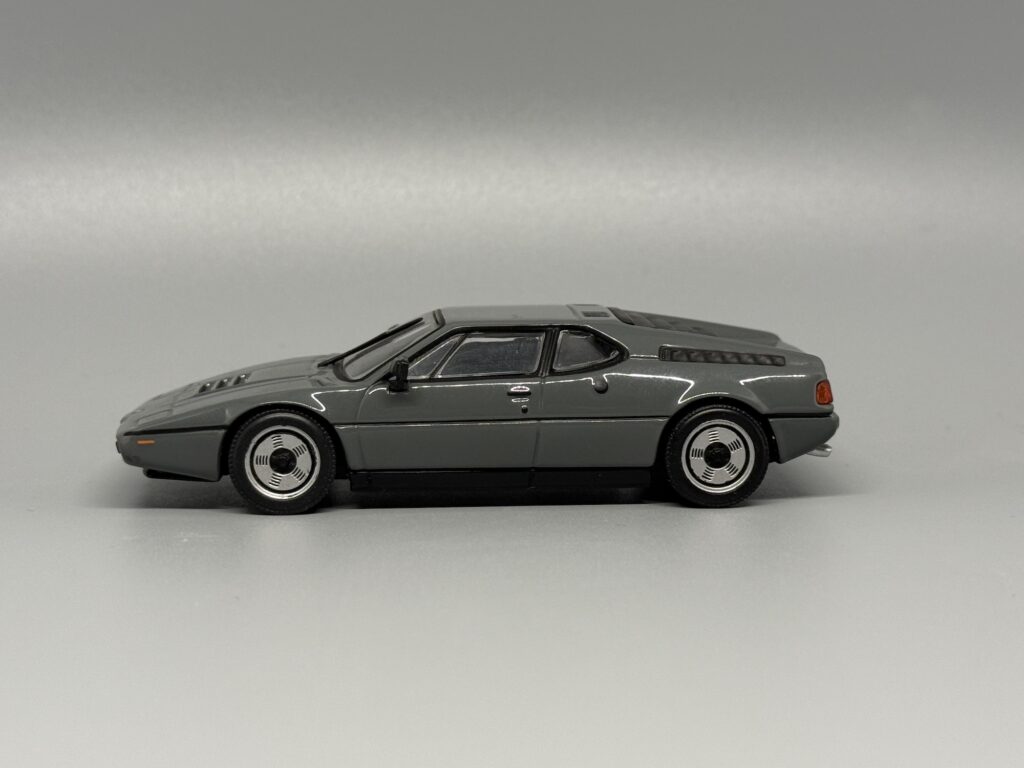
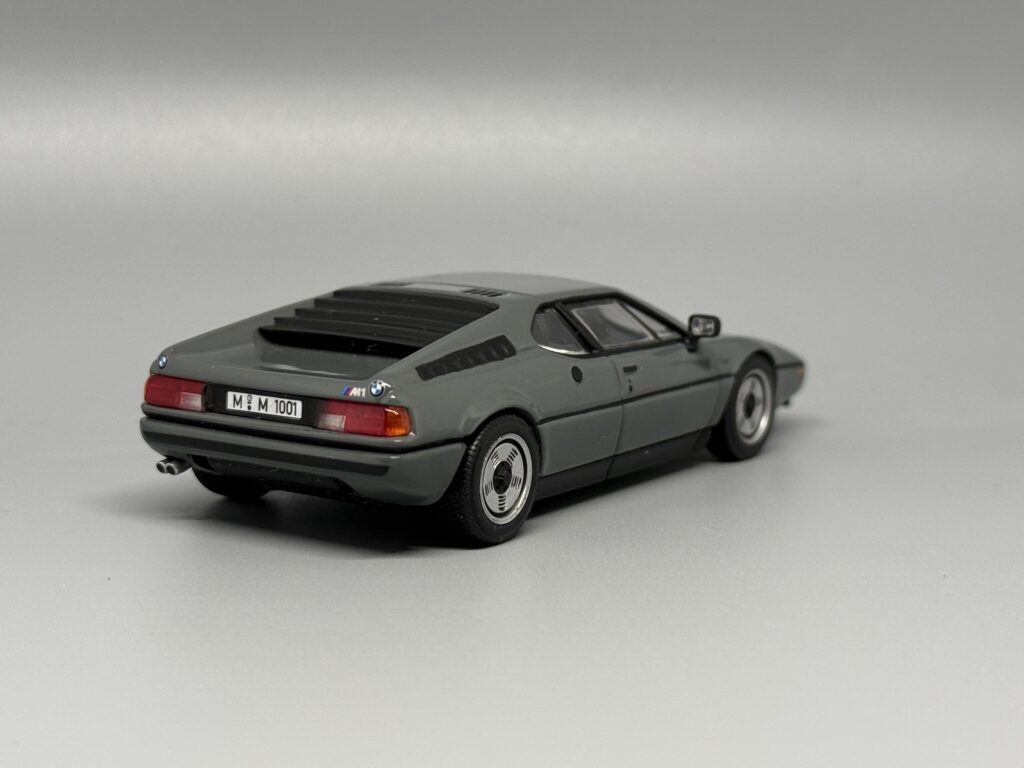
The model in my collection is produced by Minichamps.
Technical data in brief
Production period: 1978–1981
Production location: hand-built production in cooperation with several partners
Body style: two-door mid-engined sports coupé
Designer: Giorgetto Giugiaro
Engine: 3.5-litre M88 six-cylinder in-line engine
Power: 277 hp
Torque: 330 Nm
Transmission: 5-speed manual
Drivetrain: mid-engine, rear-wheel drive
Unladen weight: around 1300 kg
Top speed: around 265 km/h
Production number: 460 cars according to BMW M, including 399 road cars
Special feature: first independent series-production model developed by BMW Motorsport GmbH, with a mid-engine layout and a BMW M sports car legend through the Procar series

Background
BMW M1 is one of the most important and most special sports cars in BMW history. It was the first independent series-production model developed by BMW Motorsport GmbH and a car that laid a strong foundation for the reputation of BMW M as a separate high-performance brand. The model was introduced in 1978 and stood apart from every other BMW of its time: the M1 was a low, sharply styled mid-engined sports car whose character came directly from racing.
The BMW M1 was born as a highly ambitious project. The original aim was to create a car that could be used in racing and homologated according to Group 4 regulations. BMW intended to compete in the German DRM series, but the development process proved complex and took longer than originally planned. At the same time, racing regulations changed, and the M1 could no longer fulfil its original role exactly as BMW had hoped.
Instead, the legendary BMW M1 Procar series was created, running in 1979 and 1980 alongside European Formula One events. Procar brought together both top F1 drivers and touring car racers on the same starting grid and quickly helped turn the M1 name into a legend, even though the car’s original racing programme did not develop exactly as planned.
Design and concept
In terms of design, the BMW M1 was a true milestone. Its shape was partly based on Paul Bracq’s 1972 BMW Turbo concept car, while the final appearance of the production model was created by Italian designer Giorgetto Giugiaro. The wedge-shaped body, very low height, pop-up headlights, flat kidney grille and black louvres above the rear window gave the car a highly distinctive look.
The BMW M1 was only 1.14 metres high, underlining its racing stance and helping achieve a low centre of gravity. Unlike BMW’s traditional saloons and coupés, the M1 was a pure sports car by nature. Its proportions, low silhouette and mid-mounted engine clearly distinguished it from all other BMW models of the same period.
The M1 was radical enough to serve as a serious basis for racing, yet refined enough to be a road-legal sports car. It was precisely this combination of two worlds — racing-derived engineering and the finish required of a road car — that made the M1 such a special model in BMW history.
Technology
Technically, the M1 was a completely special car for BMW. Unlike traditional front-engined BMW models, it used a mid-mounted power unit. At its heart was the 3.5-litre naturally aspirated M88 six-cylinder in-line engine, producing 277 hp and 330 Nm of torque in the road version.
The engine used four valves per cylinder and mechanical fuel injection, a very advanced solution for its time. Power was sent to the rear wheels through a five-speed manual gearbox, and top speed was around 265 km/h. This made the M1 the fastest German series-production sports car of its era.
The strength of the BMW M1 did not lie only in power. The mid-engine layout gave the car very good weight distribution and excellent handling characteristics. Its unladen weight was around 1300 kilograms, and together with the low body, strong engine and racing-derived construction, this gave the car an exceptionally pure sports-car character.
The M1 engine also had an important influence on BMW M history after the end of the model’s production. Further developments of the M88 power unit later found their way into iconic BMW M models such as the BMW M635CSi and the first BMW M5. For this reason, the M1 was not only a standalone sports car, but also a technical starting point for several later BMW M legends.
Production
Production of the BMW M1 remained very limited, and all cars were largely hand-built. The complexity of the project, cooperation with several partners and the goal of racing homologation made the M1 an unusual production programme for BMW. It was not an ordinary larger-series BMW, but a special project in which every car had a clear connection with BMW Motorsport’s ambitions.
BMW M material gives the total number as 460 cars, including both road and racing versions. It is often stated separately that 399 cars were built for road use. The small production number, mid-engine layout, BMW Motorsport background and Procar legend make the M1 one of the most highly regarded classic BMWs today.
Significance in BMW history
The special place of the BMW M1 in BMW history is connected with several different layers. It was a technical pioneer, a design milestone and a racing-born sports car that showed BMW Motorsport GmbH could create a completely independent high-performance model. Although the M1 did not bring BMW major series-production success, it became a timeless legend.
The importance of the M1 is not limited to the road car. The Procar cars were much more powerful and competition-focused than the road version, while retaining the M1’s basic shape and technical concept. It was the Procar series in particular that gave the M1 its strong motorsport image and secured its place among the central models in BMW M history.
The BMW M1 is also important in the BMW Art Car tradition. In 1979, one of the Group 4 racing versions was painted by Andy Warhol and competed in the 24 Hours of Le Mans that same year. The Warhol BMW M1 Art Car is today one of the most famous BMW Art Cars and has further strengthened the M1’s image not only as a sports car, but also as a cultural icon.
The BMW M1 combines the early courage of BMW M, Italian design, German engineering and pure motorsport into one of the most special packages in BMW history. Although its production volume remained small, its influence on the reputation of BMW M and on later models was very significant.
Model in the collection
The model in my collection is produced by Minichamps.
Technical data in brief
Production period: 1978–1981
Production location: hand-built production in cooperation with several partners
Body style: two-door mid-engined sports coupé
Designer: Giorgetto Giugiaro
Engine: 3.5-litre M88 six-cylinder in-line engine
Power: 277 hp
Torque: 330 Nm
Transmission: 5-speed manual
Drivetrain: mid-engine, rear-wheel drive
Unladen weight: around 1300 kg
Top speed: around 265 km/h
Production number: 460 cars according to BMW M, including 399 road cars
Special feature: first independent series-production model developed by BMW Motorsport GmbH, with a mid-engine layout and a BMW M sports car legend through the Procar series
Photo of the real car, BMW Museum. Photo: Sten-Patrick Kreek