Background
BMW 1600-2 was the model that launched the BMW 02 Series in 1966 and marked one of the most important chapters in the company’s post-war history. The compact two-door saloon was based on the engineering of the larger Neue Klasse models but was smaller, lighter and more sporting in character. With the 1600-2, BMW created a car for buyers who wanted the practicality of a saloon combined with more direct handling and a more engaging driving experience. The model quickly became a sales success, and the 02 Series played a major role in establishing BMW’s reputation as a manufacturer of sporting, driver-focused cars.
The smaller brother of the Neue Klasse
Much of the BMW 1600-2’s engineering was derived from the four-door Neue Klasse saloons, but its body was distinctly different. The car was shorter and lighter, while the two-door layout gave it a more sporting appearance. BMW Group Classic describes the 02 Series as a model family that effectively established a new class of sporting compact two-door saloons in Germany. Although many technical components were shared with the Neue Klasse models, the smaller 02 Series offered a noticeably different and more direct driving experience.
The name 1600-2
The original designation 1600-2 referred to the car’s two-door body and distinguished it from the four-door Neue Klasse BMW 1600. In 1971, the model was renamed BMW 1602, following the increasingly consistent naming system used across the 02 Series. The basic technical concept remained unchanged, and the 1602 continued the role of the 1600-2 as the entry-level model of the 02 Series until 1975.
Design under Wilhelm Hofmeister
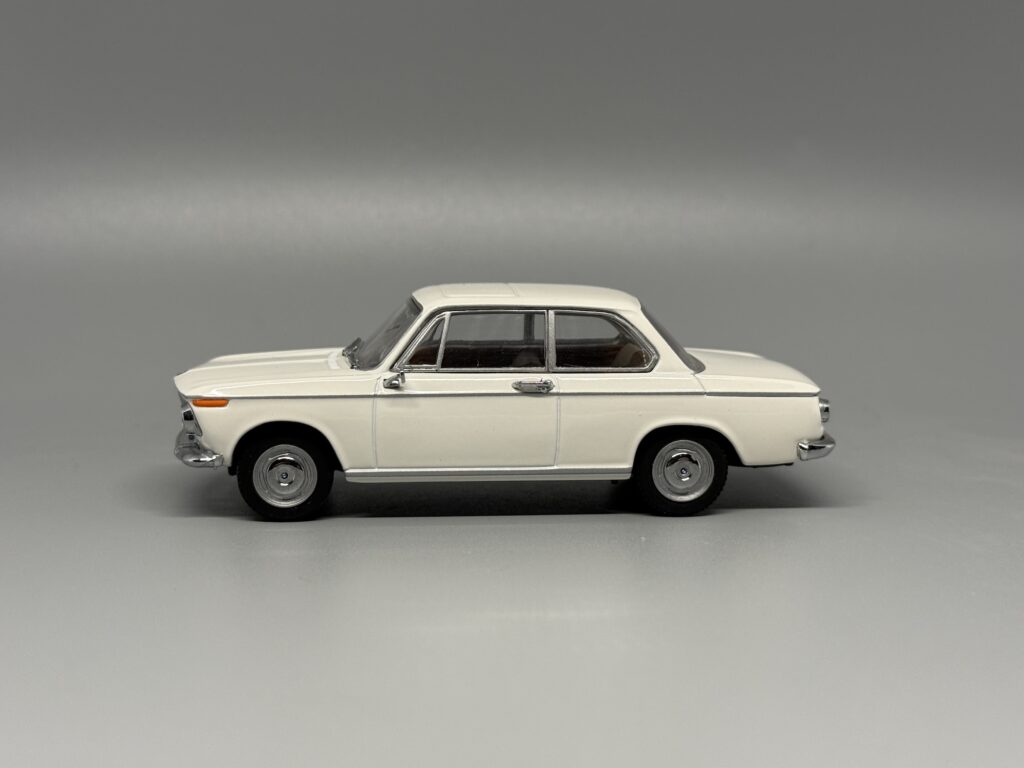
The two-door 02 Series body was developed by BMW’s design team under Wilhelm Hofmeister. Its shape was simple and functional but at the same time clearly sporting in character. Frameless side windows, a large glass area, short overhangs and a relatively upright passenger compartment gave the car a light and purposeful appearance. The design proved remarkably long-lived, and the same basic body shape remained at the heart of the 02 Series for more than a decade.
1.6-litre M10
The BMW 1600-2 was powered by a 1,573 cm³ inline four-cylinder engine from BMW’s M10 engine family. It produced 85 hp at 5,700 rpm. The M10 became one of BMW’s most important engines and, in various forms, was used in numerous BMW models over several decades. In the 1600-2, the 1.6-litre engine combined with the lightweight body and rear-wheel drive to create a well-balanced package that delivered strong performance without the need for a larger and more expensive engine.
Sporting driving character
An output of 85 hp was not exceptional even by the standards of the 1960s, but the strength of the 1600-2 lay in the complete package. Compact dimensions, relatively low weight, rear-wheel drive and a well-tuned chassis gave the car precise and lively handling. Equipped with a four-speed manual gearbox, the 1600-2 could reach a top speed of 160 km/h, making it highly competitive for a car of its size and price.
The beginning of the 02 Series
The success of the 1600-2 laid the foundation for an entire new BMW model family. It was followed by the 1600 ti, 1802, 2002, 2002 ti, 2002 tii and eventually the 2002 turbo. The BMW 2002 in particular became internationally famous, but the starting point for the entire development was the original 1966 1600-2. BMW Group Classic officially recognises it as the first model of the 02 Series.
Changes during production
During its long production life, the 1600-2 and later 1602 were updated several times. More significant changes took place in 1971 and 1974 and affected the exterior, equipment and model designations. From 1974, the 1602 could also be ordered in the more comfortably equipped L specification. Although later cars differed noticeably in detail from the original 1966 version, the basic engineering and design concept remained clearly recognisable throughout the production period.
Sales success
The BMW 1600-2 and later 1602 became a major commercial success. According to BMW Group Classic, more than a quarter of a million examples of this model line were produced, making it the second most popular member of the 02 Series after the BMW 2002. Frequently published combined production statistics give a total of 266,967 cars for the 1600/1600-2/1602 model line. Its success demonstrated the strong demand for a compact and practical BMW that also offered a distinctly sporting character.
The road to the BMW 3 Series
The significance of the 02 Series extends far beyond the success of a single model generation. In 1975, BMW introduced the first BMW 3 Series (E21) as its successor. The combination of compact dimensions, rear-wheel drive, sporting handling and a driver-focused character continued in the 3 Series and became one of BMW’s defining formulas over the following decades. The 1600-2 can therefore be regarded as one of the direct ancestors of the modern compact sporting BMW.
Historical significance
The importance of the BMW 1600-2 lies above all in the way it made BMW’s sporting driving character accessible to a broader range of buyers. It was neither a luxury car nor an exceptionally powerful one, but its combination of compact dimensions, excellent handling and everyday practicality increasingly came to define the BMW identity. The 1966 1600-2 marked the beginning of the 02 Series and directly paved the way for both the legendary BMW 2002 and the later BMW 3 Series.
Model in the collection
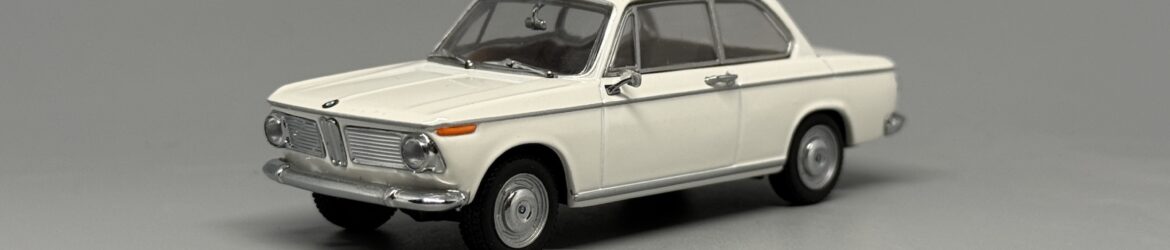
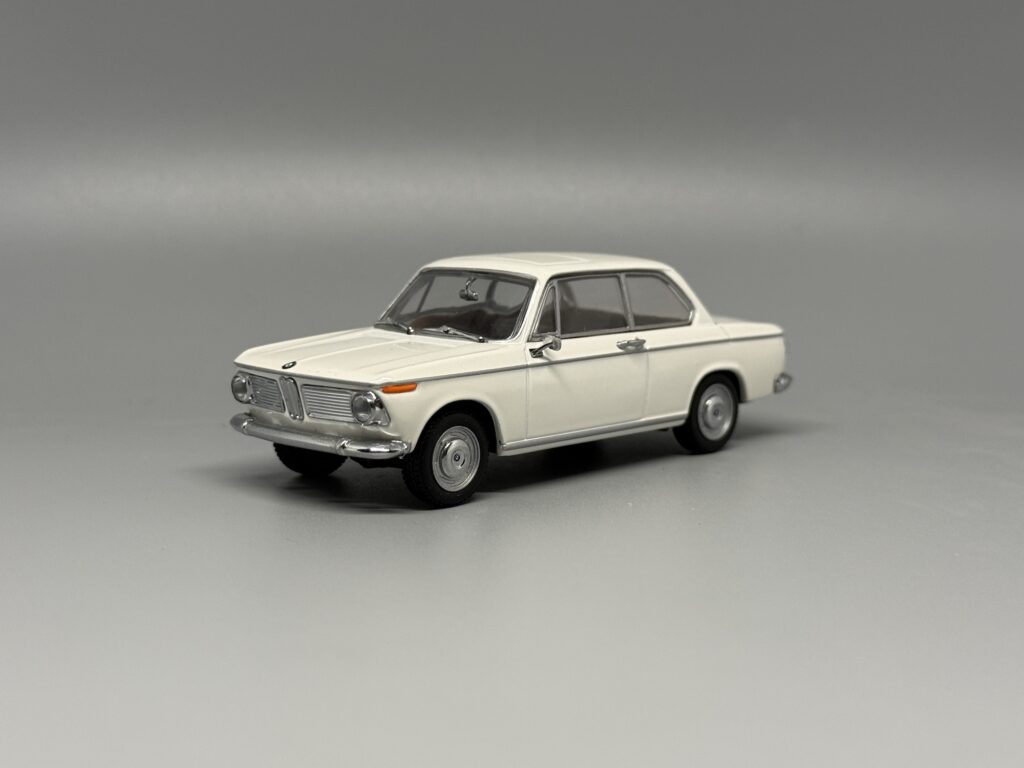
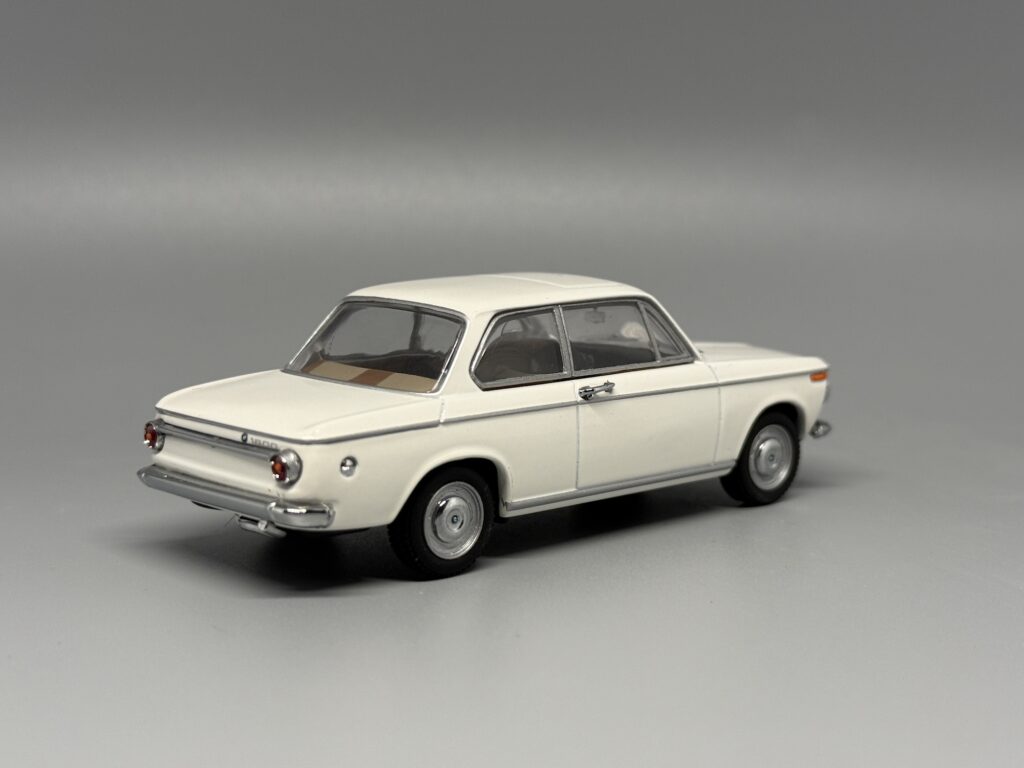
The model in my collection was produced by Minichamps and represents a 1966 BMW 1600-2, illustrating the very beginning of the 02 Series story.
Technical data in brief
Production period: March 1966 – October 1975
Original model designation: BMW 1600-2
Later model designation: BMW 1602 from 1971
Body style: two-door saloon
Engine: inline four-cylinder (M10)
Displacement: 1,573 cm³
Power: 85 hp @ 5,700 rpm
Transmission: 4-speed manual
Drivetrain: rear-wheel drive
Top speed: 160 km/h
Price at launch: 8,650 Deutsche Mark
Production: more than 250,000 cars
Special feature: the first model of the BMW 02 Series and the starting point of BMW’s later line of sporting compact cars
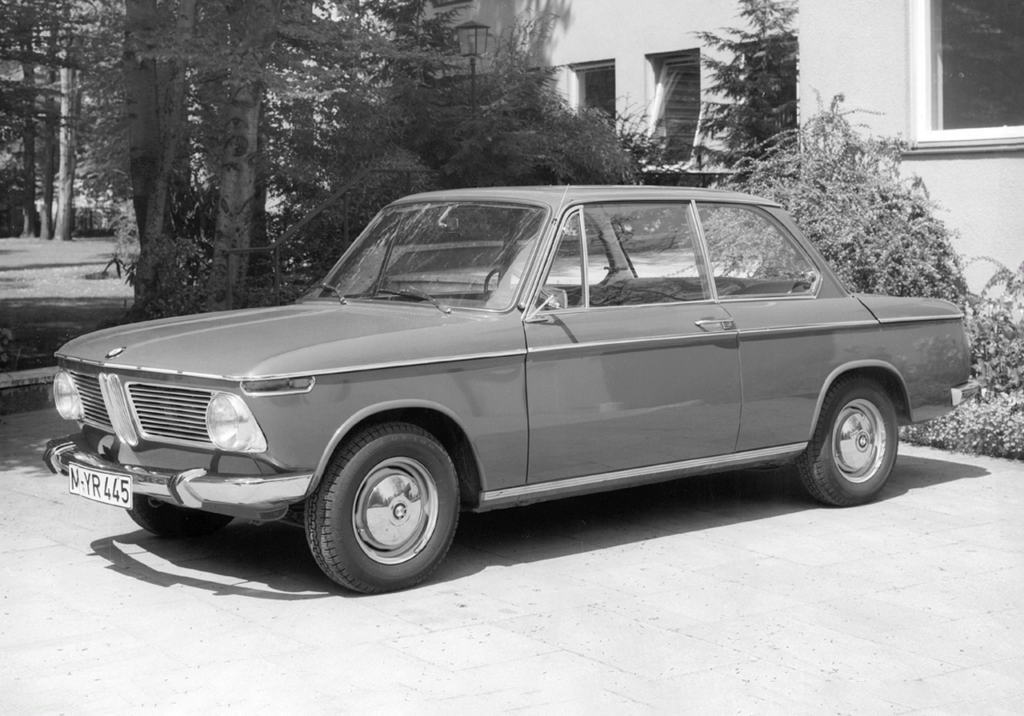
Photo of the real car. Source: bmwgroup-classic.com