BMW Alpina CSL (E9) belongs to the group of models where BMW’s elegant 1970s coupé design and Alpina’s sporting interpretation meet in a particularly convincing way. The E9-bodied BMW coupés were already among the most characteristic and beautiful BMWs of their era, but Alpina added even more power, technical ambition and a distinctive sporting character to this basis.
The BMW E9 model family was important in the history of both BMW’s luxury coupés and its motorsport activities. The BMW 3.0 CSL became especially significant, as it was created as a lighter and sportier homologation model. Alpina’s role in the development of the CSL was important already at an early stage, as BMW involved Alpina in the development of a lightweight version of the 3.0 CS. This connects the Alpina name very directly with the origins and later sporting reputation of the BMW E9 CSL.
By the early 1970s, the Alpina name already meant more than just additional equipment or exterior details. Alpina further developed BMWs technically, offering better performance, a sportier driving feel and a distinctive appearance. The BMW Alpina CSL represents this period very well: in Alpina’s interpretation, the elegant E9 coupé gained a sharper and more competition-oriented character.
Design and concept
In terms of design, the BMW Alpina CSL retained the basic character of the E9 coupé. The long bonnet, low roofline, slim pillars and graceful side profile made the E9 one of BMW’s most beautiful classic coupés. Alpina added a sportier dimension to this, not changing the essence of the car, but emphasising its more powerful side.
The wheels, stripe graphics and sportier stance typical of Alpina cars gave the E9 a separate identity. This was not an ordinary luxury coupé, but a car whose appearance clearly suggested improved performance and Alpina’s technical involvement. At the same time, the elegance typical of the E9 remained, so the car did not appear as a raw racing machine, but rather as a highly refined sporting coupé.
The lighter body and sportier starting point of the CSL suited Alpina’s philosophy well. While the BMW 3.0 CSL had already been created with lower weight and improved competition suitability in mind, Alpina added its own technical interpretation. In this car, BMW’s factory-developed sporting foundation and Alpina’s independent development philosophy came together.
Technology
Technically, the BMW Alpina CSL was based on the six-cylinder engine of the BMW E9 generation. The basis was the BMW 3.0 CSL, whose heart was a 3.0-litre six-cylinder in-line engine. The power output of standard BMW 3.0 CSL road versions depended on the development stage and was approximately in the range of 180–206 hp.
In the case of Alpina, the exact technical specifications depended on the individual car, its specification and intended use. Alpina developments could include engine tuning, suspension modifications, wheels and other sporting details. For this reason, the technical data of the BMW Alpina CSL should be treated with some caution: it was not one clearly fixed factory version, but rather a CSL interpreted and further developed by Alpina.
Alpina’s aim was not to turn the BMW into something unrecognisable, but to further develop its strengths. The six-cylinder engine, rear-wheel drive, lighter body and more precise tuning formed a combination that fitted well with BMW’s sporting image of the 1970s. Cars like this helped shape Alpina’s reputation as a refined, but very serious, developer of BMW models.
Production
A total of 1265 BMW 3.0 CSL cars were produced between 1971 and 1975. CSLs further developed by Alpina or built to Alpina specification formed a much smaller and more difficult-to-define part of this number. These were not regular factory model versions in the same sense as BMW series-production models, but rather cars tuned, modified or made sportier by Alpina.
For this reason, production numbers for the BMW Alpina CSL should be treated carefully. Individual cars could differ in technical specification, intended use and equipment. This is precisely what makes early Alpina models interesting today, but also makes their exact classification more complicated.
Significance in BMW history
The significance of the BMW Alpina CSL lies above all in the fact that it represents an era when Alpina was not yet simply a name alongside BMW, but a rapidly emerging legend in its own right. Alpina models based on the E9 generation helped strengthen the sporting reputation of both Alpina and BMW, and today they are among the most desirable classic BMW-based sporting models.
This car shows well how Alpina was able to combine BMW’s technical basis, motorsport experience and a more refined grand tourer-like character. The BMW 3.0 CSL was already a very important model in its own right, but Alpina’s interpretation adds another special layer to it. It is an interesting chapter in both the history of the E9 model family and the early development of Alpina.
Model in the collection
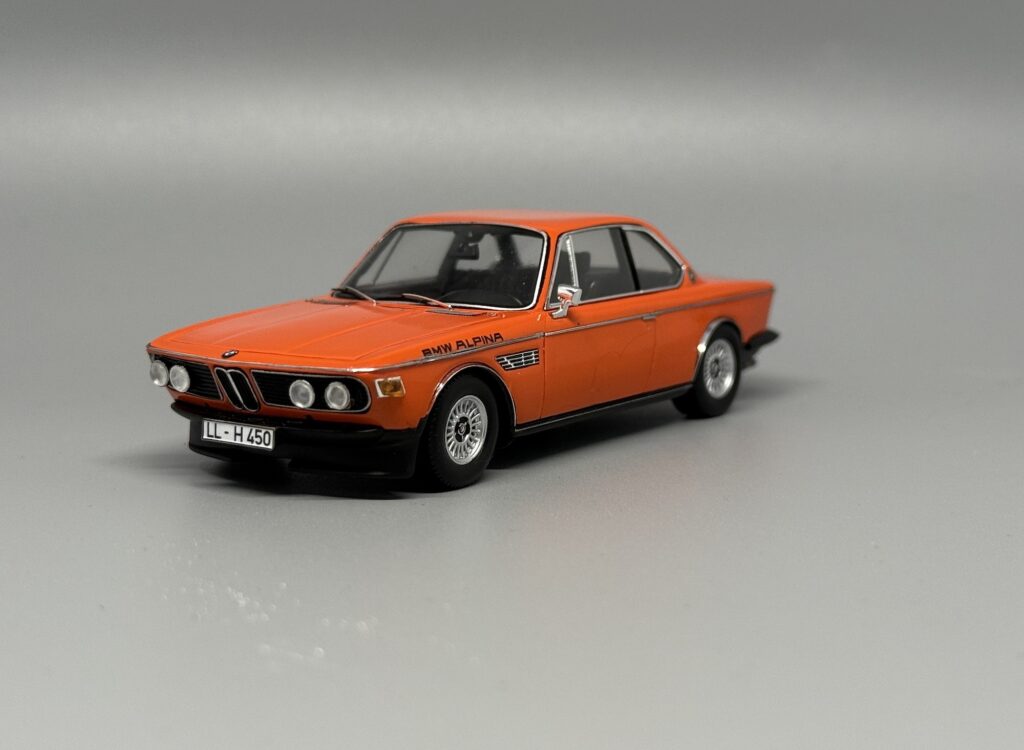
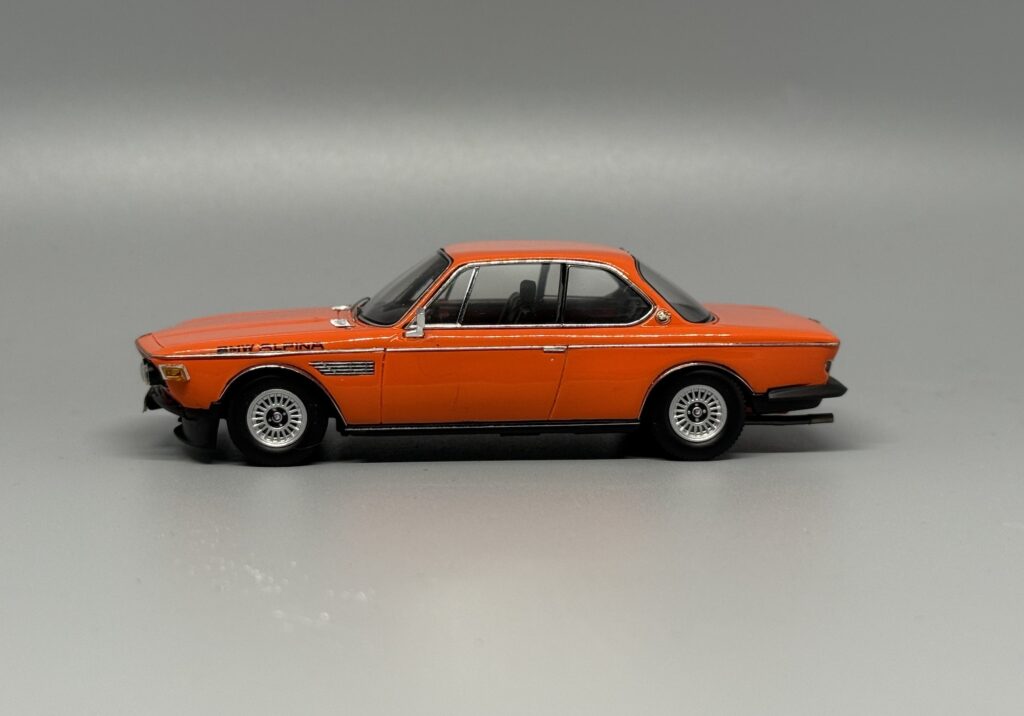
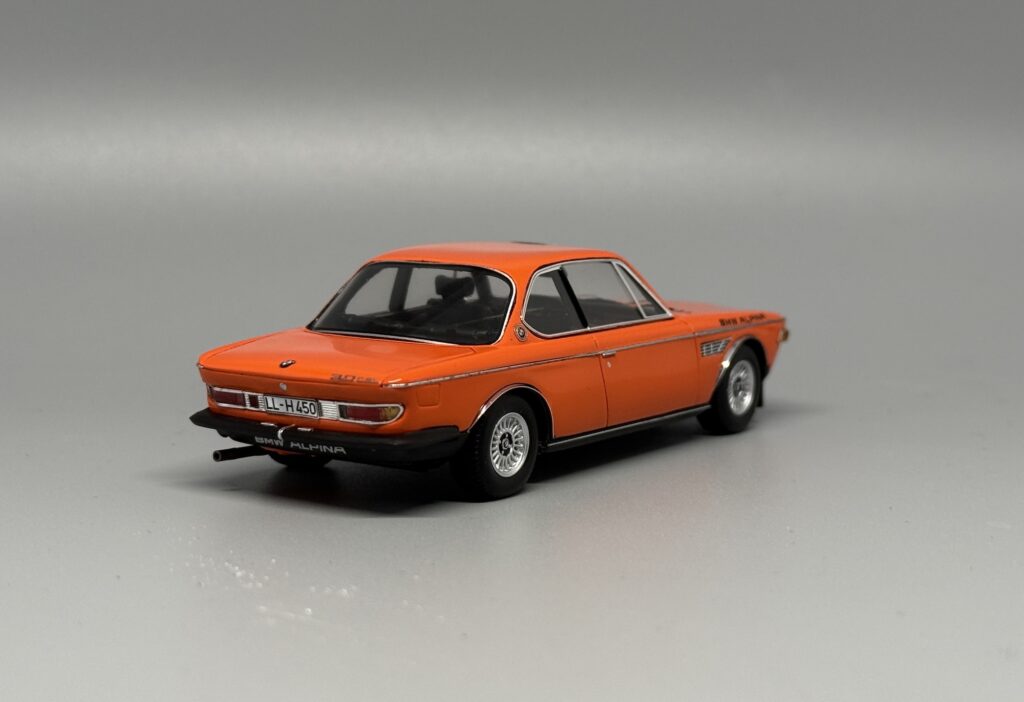
The model in my collection is produced by Spark.
Technical data in brief
Period: 1971–1975 across the development stages of the BMW 3.0 CSL
Base year: 1972
Base model: BMW 3.0 CSL (E9)
Body style: two-door sporting coupé
Engine: 3.0-litre six-cylinder in-line engine
Power: 180–206 hp in BMW 3.0 CSL road versions; in Alpina specifications, output depended on the individual car
Drivetrain: rear-wheel drive
Production number: total BMW 3.0 CSL production is usually given as 1265 cars; the exact number of Alpina-developed cars depends on interpretation and documentation
Special feature: Alpina interpretation of the BMW E9 CSL, combining a lightweight coupé, six-cylinder engine and a sportier character
Background
BMW Alpina CSL (E9) belongs to the group of models where BMW’s elegant 1970s coupé design and Alpina’s sporting interpretation meet in a particularly convincing way. The E9-bodied BMW coupés were already among the most characteristic and beautiful BMWs of their era, but Alpina added even more power, technical ambition and a distinctive sporting character to this basis.
The BMW E9 model family was important in the history of both BMW’s luxury coupés and its motorsport activities. The BMW 3.0 CSL became especially significant, as it was created as a lighter and sportier homologation model. Alpina’s role in the development of the CSL was important already at an early stage, as BMW involved Alpina in the development of a lightweight version of the 3.0 CS. This connects the Alpina name very directly with the origins and later sporting reputation of the BMW E9 CSL.
By the early 1970s, the Alpina name already meant more than just additional equipment or exterior details. Alpina further developed BMWs technically, offering better performance, a sportier driving feel and a distinctive appearance. The BMW Alpina CSL represents this period very well: in Alpina’s interpretation, the elegant E9 coupé gained a sharper and more competition-oriented character.
Design and concept
In terms of design, the BMW Alpina CSL retained the basic character of the E9 coupé. The long bonnet, low roofline, slim pillars and graceful side profile made the E9 one of BMW’s most beautiful classic coupés. Alpina added a sportier dimension to this, not changing the essence of the car, but emphasising its more powerful side.
The wheels, stripe graphics and sportier stance typical of Alpina cars gave the E9 a separate identity. This was not an ordinary luxury coupé, but a car whose appearance clearly suggested improved performance and Alpina’s technical involvement. At the same time, the elegance typical of the E9 remained, so the car did not appear as a raw racing machine, but rather as a highly refined sporting coupé.
The lighter body and sportier starting point of the CSL suited Alpina’s philosophy well. While the BMW 3.0 CSL had already been created with lower weight and improved competition suitability in mind, Alpina added its own technical interpretation. In this car, BMW’s factory-developed sporting foundation and Alpina’s independent development philosophy came together.
Technology
Technically, the BMW Alpina CSL was based on the six-cylinder engine of the BMW E9 generation. The basis was the BMW 3.0 CSL, whose heart was a 3.0-litre six-cylinder in-line engine. The power output of standard BMW 3.0 CSL road versions depended on the development stage and was approximately in the range of 180–206 hp.
In the case of Alpina, the exact technical specifications depended on the individual car, its specification and intended use. Alpina developments could include engine tuning, suspension modifications, wheels and other sporting details. For this reason, the technical data of the BMW Alpina CSL should be treated with some caution: it was not one clearly fixed factory version, but rather a CSL interpreted and further developed by Alpina.
Alpina’s aim was not to turn the BMW into something unrecognisable, but to further develop its strengths. The six-cylinder engine, rear-wheel drive, lighter body and more precise tuning formed a combination that fitted well with BMW’s sporting image of the 1970s. Cars like this helped shape Alpina’s reputation as a refined, but very serious, developer of BMW models.
Production
A total of 1265 BMW 3.0 CSL cars were produced between 1971 and 1975. CSLs further developed by Alpina or built to Alpina specification formed a much smaller and more difficult-to-define part of this number. These were not regular factory model versions in the same sense as BMW series-production models, but rather cars tuned, modified or made sportier by Alpina.
For this reason, production numbers for the BMW Alpina CSL should be treated carefully. Individual cars could differ in technical specification, intended use and equipment. This is precisely what makes early Alpina models interesting today, but also makes their exact classification more complicated.
Significance in BMW history
The significance of the BMW Alpina CSL lies above all in the fact that it represents an era when Alpina was not yet simply a name alongside BMW, but a rapidly emerging legend in its own right. Alpina models based on the E9 generation helped strengthen the sporting reputation of both Alpina and BMW, and today they are among the most desirable classic BMW-based sporting models.
This car shows well how Alpina was able to combine BMW’s technical basis, motorsport experience and a more refined grand tourer-like character. The BMW 3.0 CSL was already a very important model in its own right, but Alpina’s interpretation adds another special layer to it. It is an interesting chapter in both the history of the E9 model family and the early development of Alpina.
Model in the collection
The model in my collection is produced by Spark.
Technical data in brief
Period: 1971–1975 across the development stages of the BMW 3.0 CSL
Base year: 1972
Base model: BMW 3.0 CSL (E9)
Body style: two-door sporting coupé
Engine: 3.0-litre six-cylinder in-line engine
Power: 180–206 hp in BMW 3.0 CSL road versions; in Alpina specifications, output depended on the individual car
Drivetrain: rear-wheel drive
Production number: total BMW 3.0 CSL production is usually given as 1265 cars; the exact number of Alpina-developed cars depends on interpretation and documentation
Special feature: Alpina interpretation of the BMW E9 CSL, combining a lightweight coupé, six-cylinder engine and a sportier character
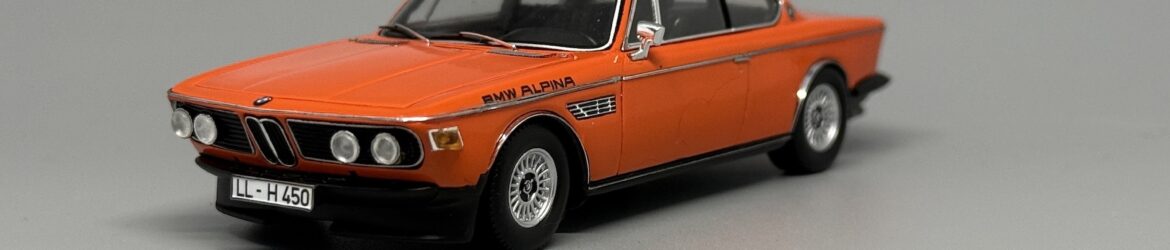
Photo of the real car. Source: e9coupe.com