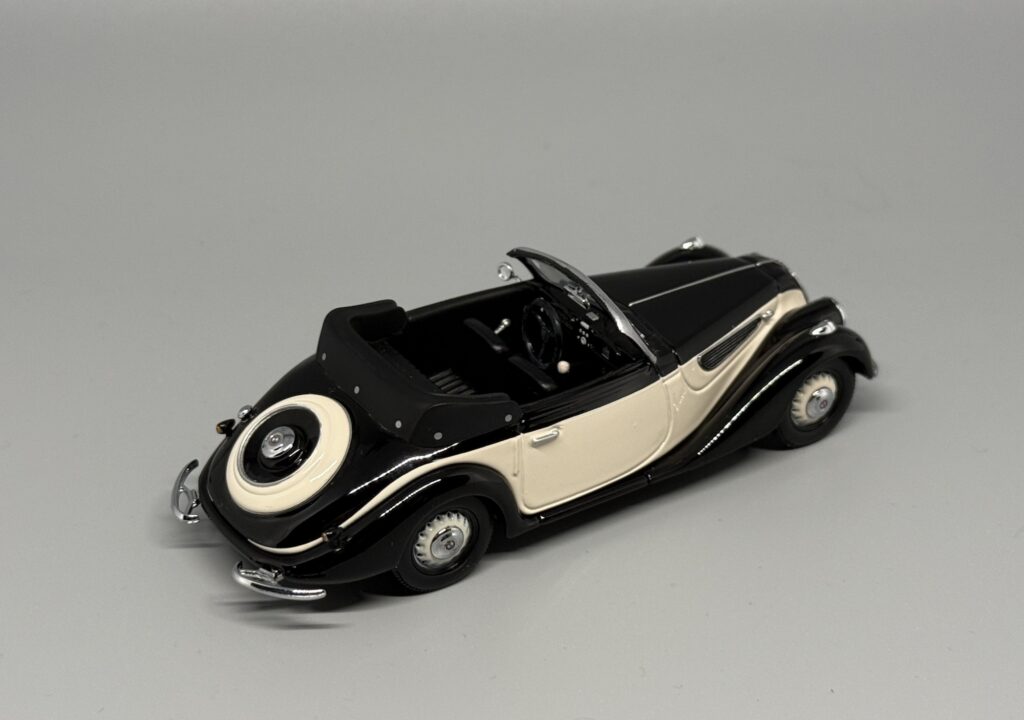
Background
BMW 327 Sports Convertible was one of the most elegant and exclusive cars produced by BMW before the Second World War. The model entered the market in 1937, at a time when BMW had already achieved considerable success with both sporting and more luxurious six-cylinder cars. Technically, the BMW 327 was based on the BMW 326, but its lower and shorter proportions and two-door 2+2-seat body gave it a clearly more sporting character. While the 326 was primarily a comfortable touring saloon, the 327 was designed to combine long-distance comfort with elegant styling and a more dynamic driving experience. The result was a car that BMW Group Classic today regards as one of the icons of the marque’s history.
Design and concept
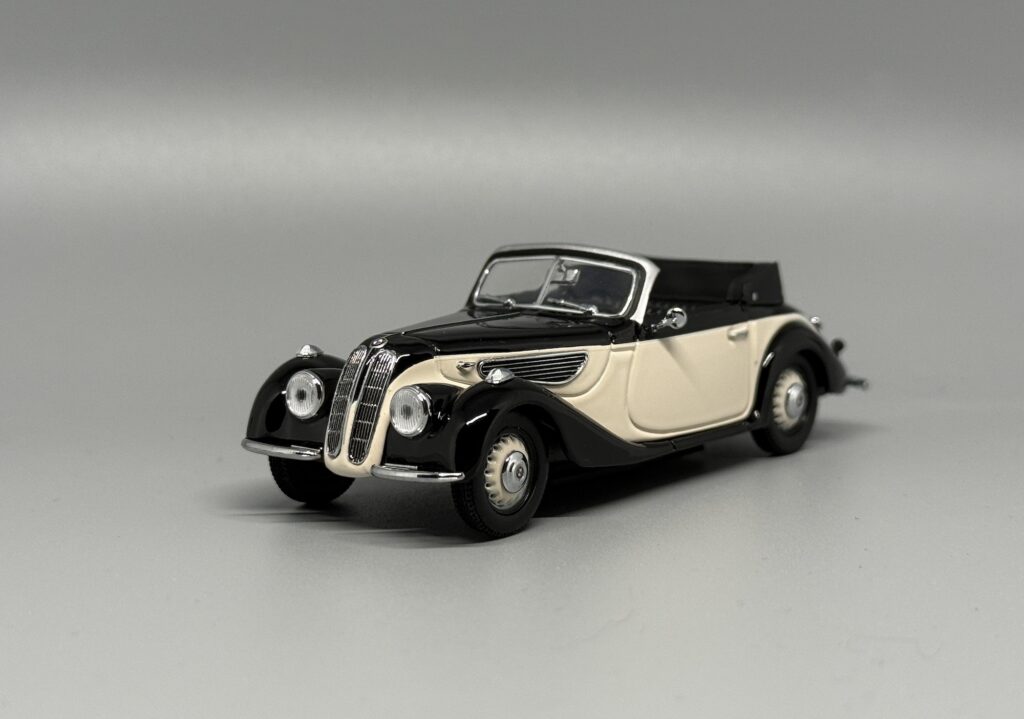
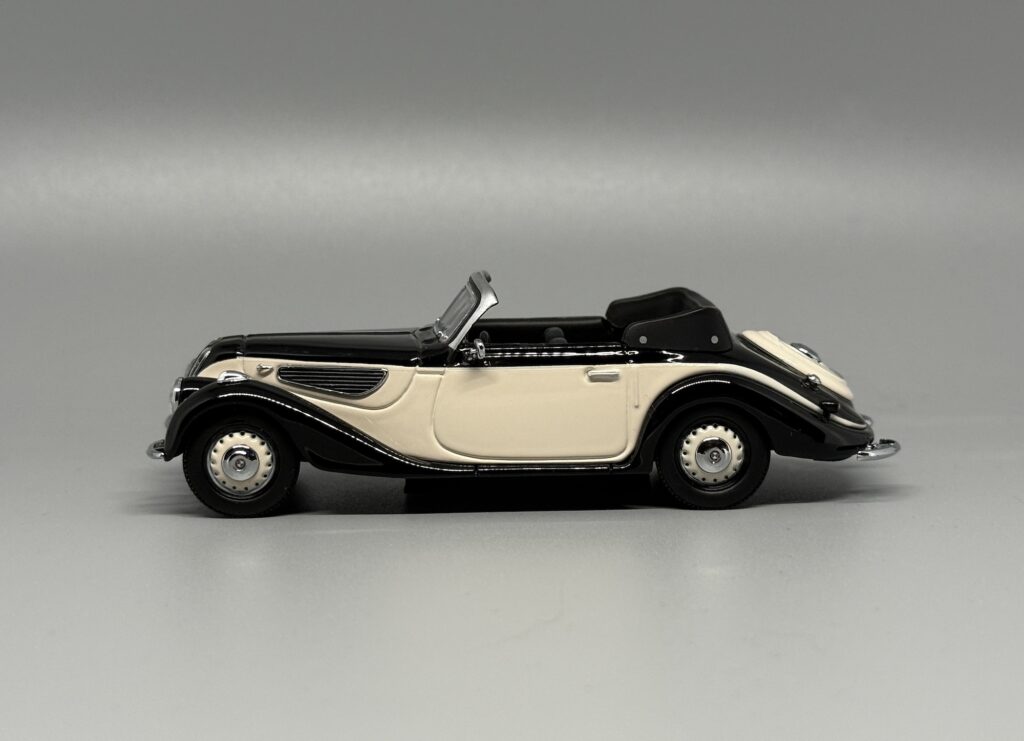
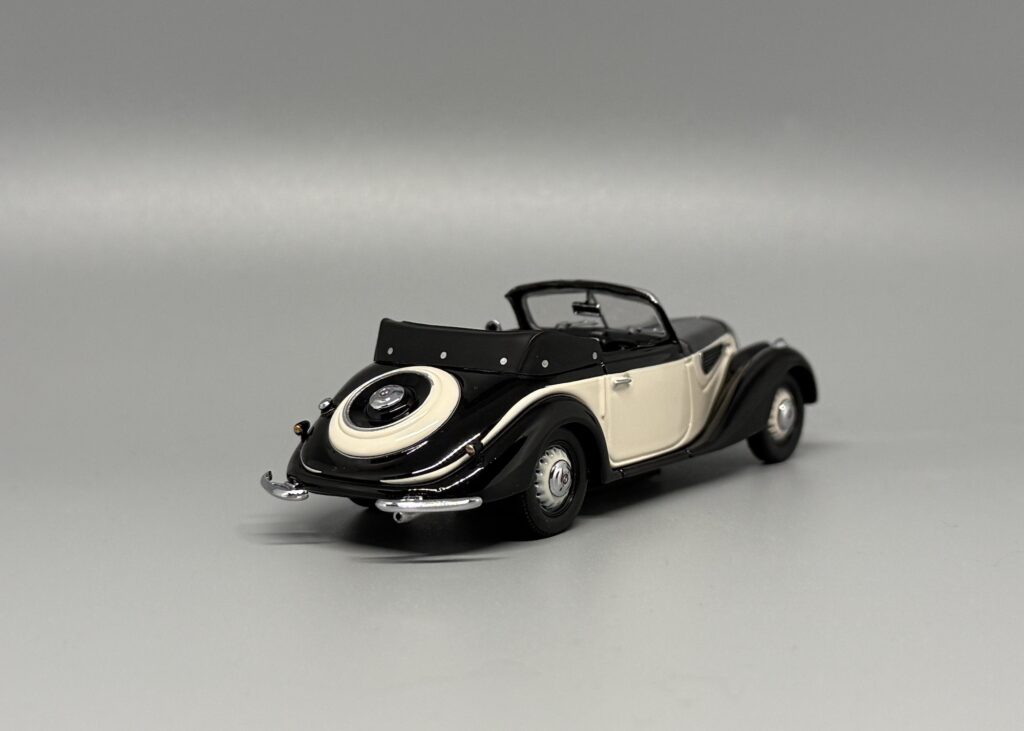
One of the greatest strengths of the BMW 327 Sports Convertible was its exceptionally harmonious design. The long bonnet, low windscreen, flowing wings and smoothly descending rear section gave the car a remarkably modern appearance for its time. The headlights were elegantly integrated into the front design, while the rear wheels were partially covered, creating an even cleaner side profile. Many cars were finished in two-tone colour schemes that emphasised the long, flowing body lines. The folding soft top was also designed so that the car retained its elegant appearance whether open or closed. The convertible bodies were built by the respected coachbuilder Autenrieth of Darmstadt. The BMW 327 was not intended as an uncompromising sports car like the 328, but as an elegant high-speed touring car in which sportiness and luxury were carefully balanced.
Technology
The BMW 327 Sports Convertible used a 1,971 cm³ six-cylinder in-line engine based on the BMW 326 power unit. The compression ratio was increased from 6.0:1 to 6.3:1, raising output to 55 hp at 4,500 rpm. Top speed was approximately 125 km/h, allowing the 327 to offer fast and comfortable long-distance travel by the standards of its era. Power was transmitted to the rear wheels through a four-speed gearbox, and customers could also order a fully synchronised ZF gearbox or a Hurth freewheel transmission. The chassis was closely related to that of the BMW 326, but the shorter proportions and more sporting body gave the 327 a more dynamic character and driving feel. For customers who wanted more than 55 hp, BMW introduced the more powerful 80 hp BMW 327/28 in 1938, using the sportier engine derived from the BMW 328.
Production
Pre-war production of the BMW 327 Sports Convertible lasted from 07/1937 to 04/1941. During this period, a total of 1,124 sports convertibles were built in Eisenach. The car cost 7,500 Reichsmarks when new, placing it among the more expensive and exclusive models in the BMW range. In 1938, the closed-body BMW 327 Sports Coupé was added to the range, although the Convertible remained the best-known and most characteristic version of the model line. The outbreak of the Second World War increasingly restricted civilian car production, and in 1941 production of the BMW 327 in its pre-war form came to an end.
Post-war continuation
The history of the BMW 327 did not end with the war. The Eisenach plant remained in the Soviet occupation zone after the Second World War and later came under the control of Awtovelo. According to BMW Group Classic, a further 17 BMW 327 Sports Convertibles were built between 1948 and 1950. At the same time, production of several cars based on pre-war BMW designs continued in Eisenach, even though the plant was no longer part of BMW AG in Munich. Following trademark disputes, the Eisenach company was renamed EMW – Eisenacher Motorenwerke in 1952, replacing the familiar blue-and-white emblem with a red-and-white badge. A further development of the 327 also became part of the EMW model range. This gives the BMW 327 a particularly unusual history, linking BMW’s pre-war automobile production with the development of the post-war East German motor industry.
Significance in BMW history
The BMW 327 Sports Convertible represents particularly well the direction BMW had reached by the end of the 1930s. The company was no longer producing only small cars or purely sporting models, but had become capable of combining elegant design, a six-cylinder engine, high levels of comfort and a sporting character in a single automobile. While the BMW 328 primarily represented the marque’s racing and sports-car heritage, the 327 showed another side of the same era – a fast, stylish and luxurious touring car. Its flowing bodywork and balanced proportions have made the 327 one of the best-known examples of pre-war BMW design, and the Sports Convertible is today regarded as one of BMW’s historic icons.
Model in the collection
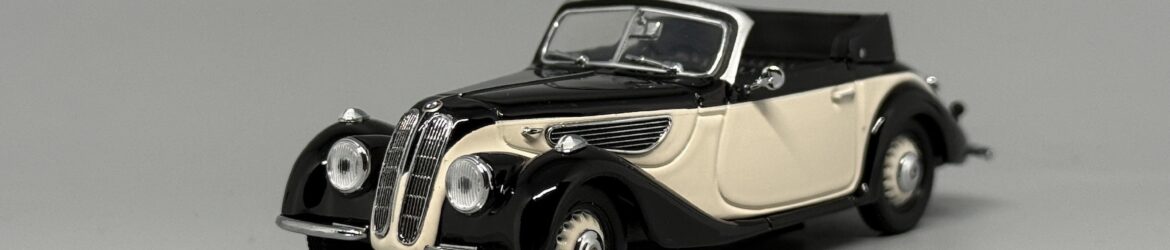
The model in my collection was produced by Universal Hobbies and represents a 1939 BMW 327 Sports Convertible.
Technical data in brief
Pre-war production period: 07/1937–04/1941
Post-war BMW 327 Sports Convertible production: 1948–1950
Place of production: Eisenach, Germany
Coachbuilder: Autenrieth, Darmstadt
Body style: two-door 2+2-seat sports convertible
Engine: 1,971 cm³ six-cylinder in-line engine
Power: 55 hp @ 4,500 rpm
Drivetrain: rear-wheel drive
Gearbox: 4-speed manual
Top speed: approximately 125 km/h
Pre-war production number: 1,124 cars
Post-war production under Awtovelo management: 17 cars
Price when new: 7,500 Reichsmarks
Special feature: one of BMW’s most elegant pre-war sporting luxury convertibles, with a production history that continued in Eisenach after the Second World War
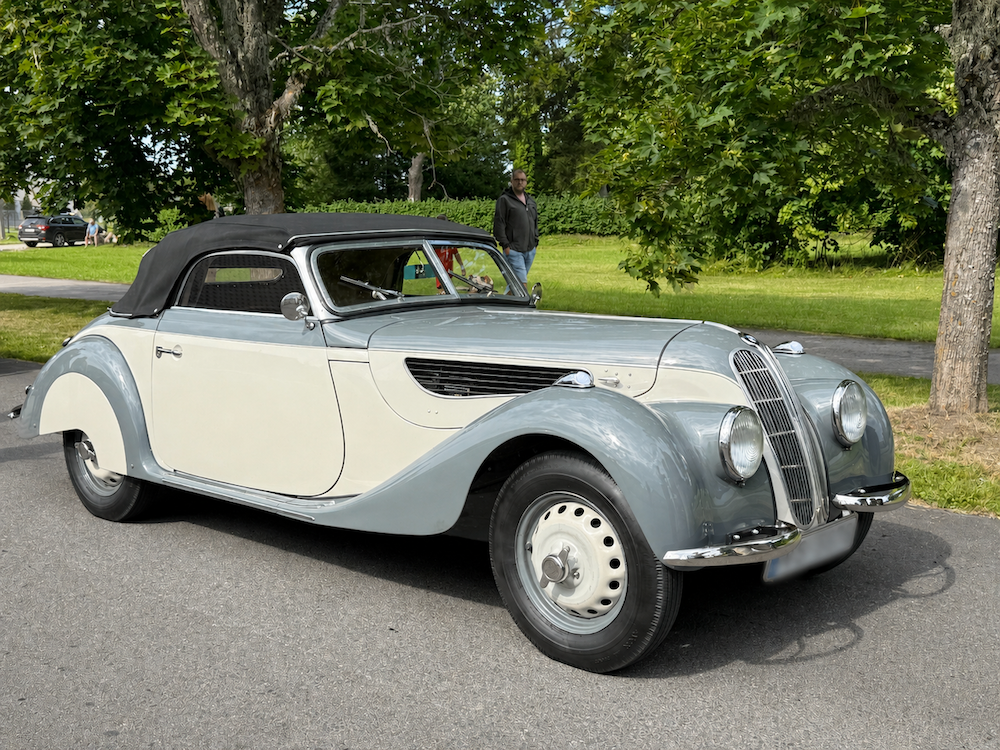
Photo of the real car. Photo: Sten-Patrick Kreek