
Background
BMW 503 Coupé was one of the most elegant and exclusive German luxury cars of the 1950s. BMW presented the model to the public at the Frankfurt IAA in September 1955, where the 503 was one of the company’s major new models alongside the new BMW 507 Roadster. Both cars reflected BMW’s ambition to re-establish itself after the war as a manufacturer of prestigious and high-performance luxury automobiles. While the BMW 507 was primarily a sporting two-seat roadster, the 503 was conceived as a luxurious 2+2 grand tourer combining a large V8 engine, elegant bodywork and high-quality craftsmanship.
Based on BMW 502 engineering
From a technical point of view, the BMW 503 was not an entirely new car. Its foundations came from BMW’s large 501/502 model family, and according to BMW Group Classic the 503 was technically based directly on the BMW 502 3.2 Liter Super. It used the same basic chassis concept and 3.2-litre light-alloy V8 engine, but the conservative luxury saloon body was replaced by a much lower and more elegant two-door design. This allowed BMW to use proven existing engineering in a luxury car with an entirely different character.
Design by Albrecht Graf Goertz
The BMW 503 was designed by Albrecht Graf Goertz, who was also responsible for the BMW 507 developed at the same time. The styling of the 503 was considerably more modern than the rounded “Baroque Angel” appearance of the BMW 501 and 502. A long bonnet, lower roofline, large glass area and clean body surfaces gave the car an elegant Gran Turismo character. Although the 503 and 507 shared several technical components and the same designer, their purposes were different: the 507 was a sporting two-seat roadster, while the 503 was a more comfortable and spacious luxury touring car.
Light-alloy body
One of the most distinctive features of the BMW 503 was its body, which was made largely from light alloy. BMW Group Classic describes the production model as having an elegant aluminium body. The purpose of this construction was to reduce the weight of the large luxury car, but the labour-intensive manufacturing process made production slow and expensive. Each 503 was built largely by hand, and this method of production contributed both to the model’s exclusivity and to its very high price.
3.2-litre V8
The BMW 503 was powered by a 3,168 cm³ light-alloy V8 engine producing 140 hp at 4,800 rpm. BMW’s V8 family had originated with the BMW 502 and became the technical centrepiece of the company’s most prestigious models during the 1950s. In the 503, a twin-carburettor 3.2-litre version was used, combining strong performance for the period with the smooth running characteristics associated with a V8 engine.
190 km/h
With 140 hp, the BMW 503 Coupé could reach a top speed of 190 km/h. Power was transmitted to the rear wheels through a four-speed manual gearbox. For a luxury car of the mid-1950s, this was an impressive figure, and the 503 was capable of combining the performance required for fast long-distance travel with the comfort expected of an exclusive luxury automobile. This combination makes the model one of BMW’s early Gran Turismo-type cars.
Luxurious 2+2 grand tourer
The BMW 503 was a 2+2-seater, offering a more practical and luxurious interior than the two-seat BMW 507. High-quality materials, leather upholstery and careful craftsmanship emphasised the car’s prestigious character. All side windows could be lowered completely into the body, creating a particularly open side profile without a fixed centre pillar. The BMW 503 was not intended to be an uncompromising sports car, but rather a fast, comfortable and highly exclusive long-distance touring car.
One of the most expensive BMWs of its era
At the beginning of production, the BMW 503 Coupé cost 29,500 Deutsche Mark. This made it one of the most expensive BMWs of its time, and even the BMW 507 was initially listed at a lower price. The high cost resulted from its complex construction, expensive V8 engineering and labour-intensive hand-built production. As a result, the potential customer base remained very small, and despite its technical sophistication and elegant design, the 503 was not a commercial success for BMW.
BMW 503 and BMW 507
The BMW 503 and 507 were presented together, and their histories are therefore closely connected. Both used BMW’s 3.2-litre V8 engineering, and both were styled by Albrecht Graf Goertz. Their characters, however, were very different. The BMW 507 was a sporting two-seat roadster and above all an image-building model, while the 503 offered more space and comfort for four occupants. The 503 was therefore much more of an elegant luxury grand tourer than a conventional sports car.
Only 273 Coupés
Series production of the BMW 503 began in May 1956 and ended in the spring of 1960. During this period, a total of only 412 BMW 503s were built, of which 273 were Coupés and 139 were Convertibles. The extremely small production volume was mainly the result of the car’s very high price and limited target market. Today, both body styles rank among BMW’s rarest and most desirable post-war classics.
The road to the BMW 3200 CS
The end of BMW 503 production did not mark the end of BMW’s large V8 coupé concept. In 1962, the BMW 3200 CS entered the market, continuing to use BMW’s 3.2-litre V8 engineering but with an entirely new body designed by Bertone. The BMW 503 therefore forms an important link in the development of BMW’s post-war luxury coupés, connecting the technical world of the earlier BMW 502 with the much more modern 3200 CS.
Historical significance
The significance of the BMW 503 Coupé lies not in its sales figures, but in what the car represented for BMW. It demonstrated that post-war BMW was once again capable of producing a highly sophisticated, fast and internationally styled luxury automobile. Albrecht Graf Goertz’s elegant bodywork, the light-alloy V8 engine and the largely hand-built interior made the 503 one of BMW’s most exclusive models of the 1950s. With only 273 Coupés produced, it is also one of the rarest production coupés in BMW history.
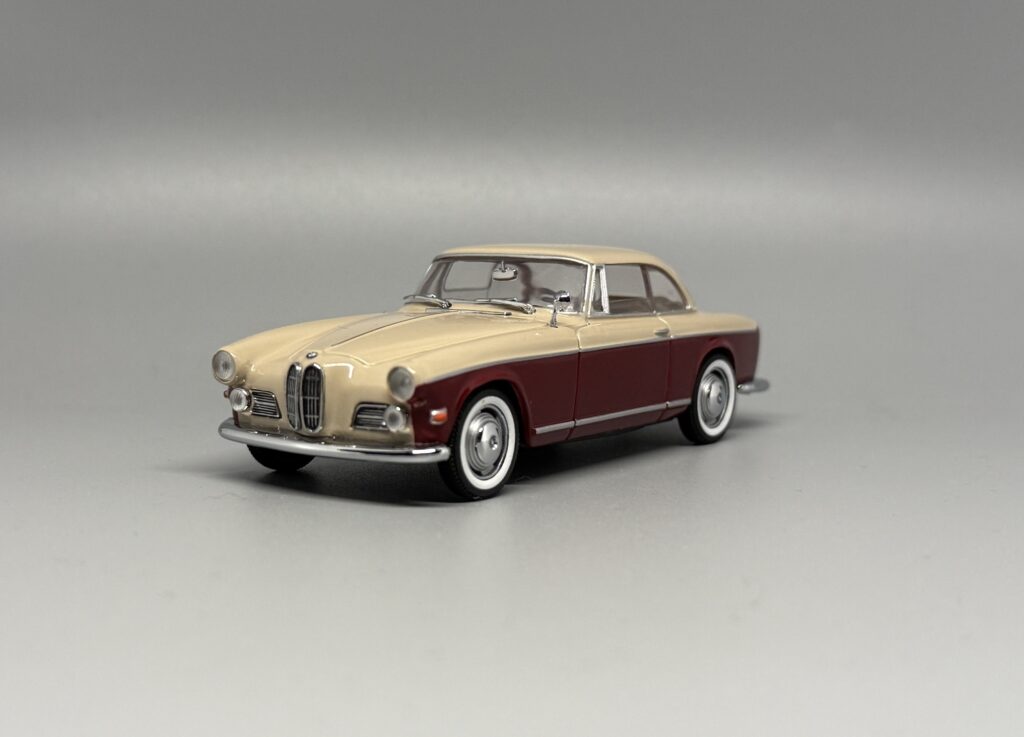
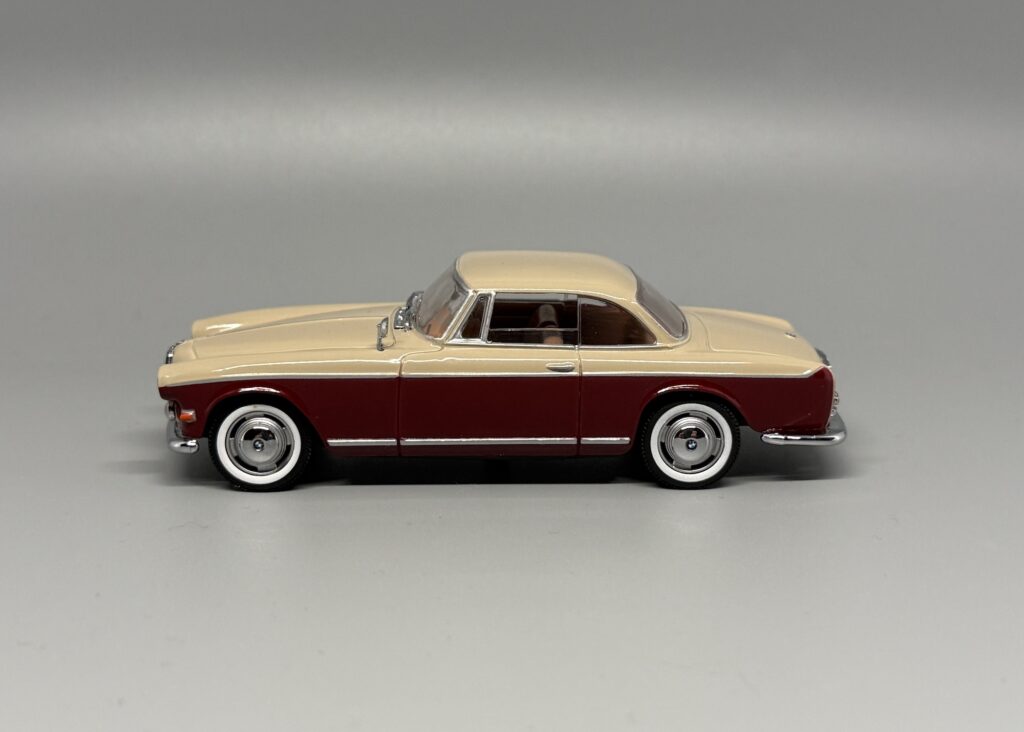
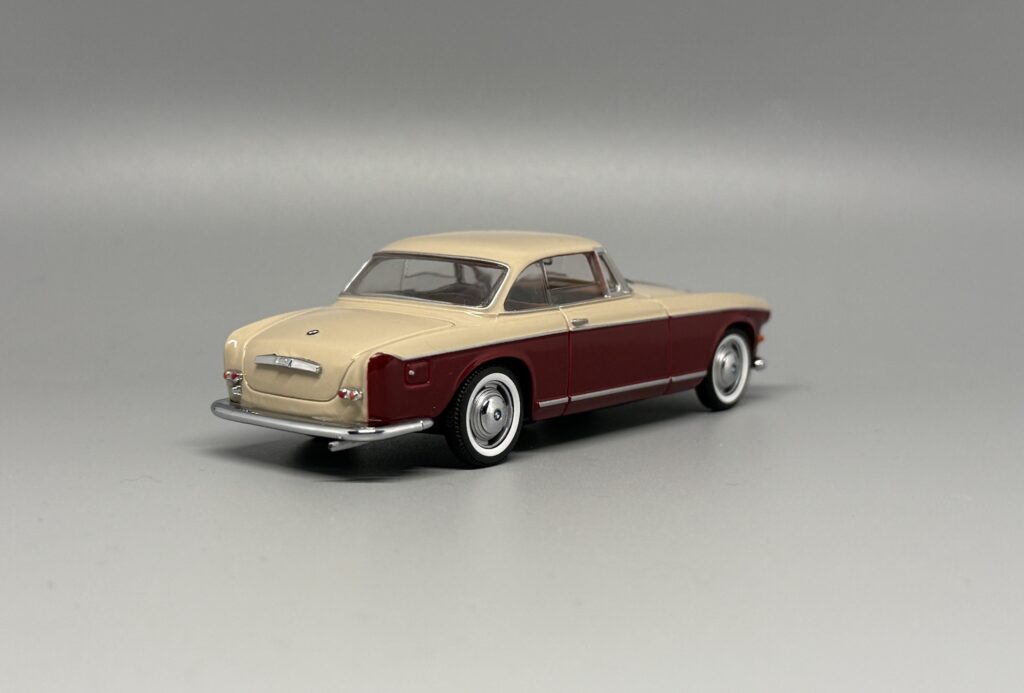
Model in the collection
The model in my collection was produced by Detail Cars. It is a promotional model made for BMW dealers and represents the BMW 503 Coupé.
Technical data in brief
Production period: May 1956 – May 1960
Body style: two-door 2+2 coupé
Designer: Albrecht Graf Goertz
Technical basis: BMW 502 3.2 Liter Super
Body: light-alloy construction
Engine: V8
Displacement: 3,168 cm³
Power: 140 hp @ 4,800 rpm
Transmission: 4-speed manual
Drivetrain: rear-wheel drive
Top speed: 190 km/h
Price when new: 29,500 Deutsche Mark
Total BMW 503 production: 412 cars
Coupé production: 273 cars
Special feature: largely hand-built BMW luxury coupé designed by Albrecht Graf Goertz, with light-alloy bodywork and a 3.2-litre V8 engine
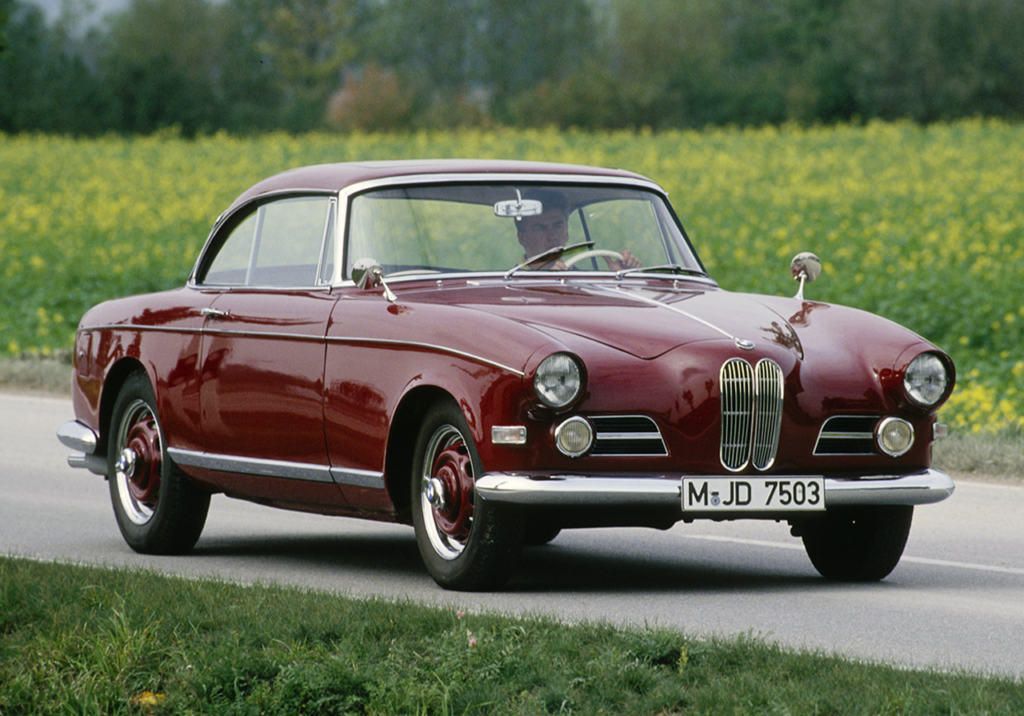
Photo of the real car. Source: bmwgroup-classic.com