
Background
BMW Z8 (E52) was the prestigious flagship of BMW’s Z Series and one of the most exclusive roadsters in the company’s history. Introduced in 1999, it was conceived to combine the elegance of a classic sports car with contemporary engineering and very high performance. The Z8 was never intended to be a high-volume model, but rather an exclusive car whose design and technical concept would retain their appeal for decades.
A modern interpretation of the BMW 507
The Z8 drew strong inspiration from the legendary BMW 507 of the 1950s. Its long bonnet, low beltline, rearward-positioned two-seat cabin and side vents clearly referenced the historic roadster. The production Z8 evolved from the BMW Z07 concept presented in 1997, whose highly positive reception encouraged BMW to put the idea into production.
Designed by Henrik Fisker
The exterior of the BMW Z8 was designed by Henrik Fisker. Despite its classic proportions, the design was distinctly modern and deliberately avoided short-lived styling trends. A removable hardtop was supplied as standard, allowing the open roadster to take on the appearance and comfort of a closed sports car when required.
Aluminium and lightweight construction
One of the Z8’s most important technical features was its aluminium spaceframe, combined with aluminium exterior body panels. The BMW Museum highlights the car’s systematic lightweight construction, which helped combine high structural rigidity with strong performance. Much of the Z8 was assembled by hand in Munich, using a production process that differed considerably from BMW’s conventional high-volume models.
BMW M GmbH V8
The BMW Z8 was powered by the 4,941 cm³ S62B50 V8 engine, developed by BMW M GmbH and also used in the E39-generation BMW M5. The naturally aspirated engine produced 400 hp, or 294 kW, at 6,600 rpm and 500 Nm of torque. Power was sent to the rear wheels through a six-speed manual transmission.
Under five seconds
According to the BMW Museum, the Z8 could accelerate from a standstill to 100 km/h in less than five seconds; BMW’s official technical figure was 4.7 seconds. Top speed was electronically limited to 250 km/h. Its large naturally aspirated V8, manual transmission, rear-wheel drive and aluminium construction made the Z8 much more than a luxury roadster – it was also a serious high-performance sports car.
James Bond and a future classic
The Z8 gained international recognition early in its life when it appeared in the 1999 James Bond film The World Is Not Enough. Its low production volume, connection with the BMW 507, unusual construction and powerful V8 engine quickly helped establish it as one of the most desirable modern BMW classics.
Only 5,703 cars
The BMW Z8 was produced in Munich from 1999 to 2003. Only 5,703 cars were built. Such limited production, combined with BMW M engineering and its distinctive aluminium construction, confirmed the Z8’s position as the most exclusive model in the Z Series.
Model in the collection
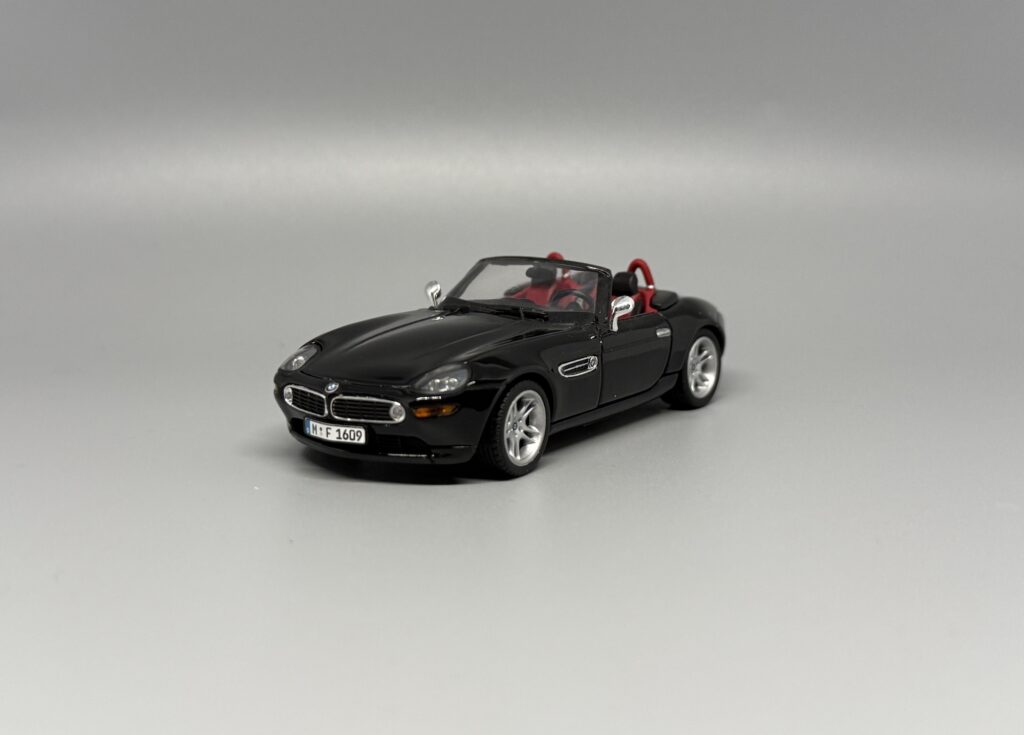
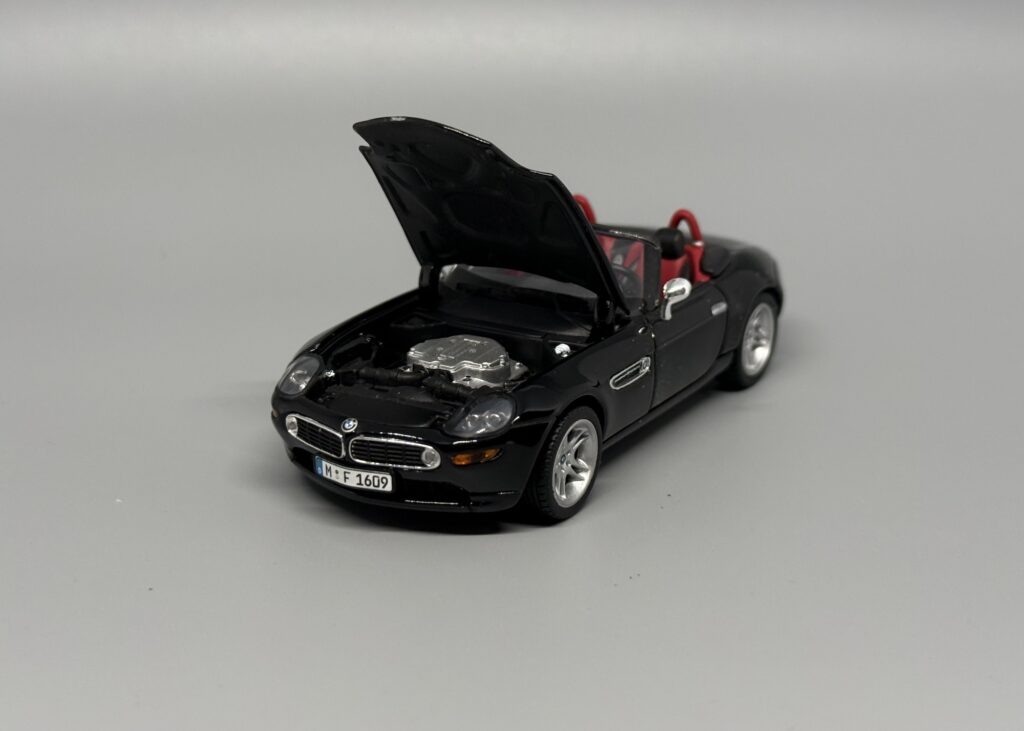
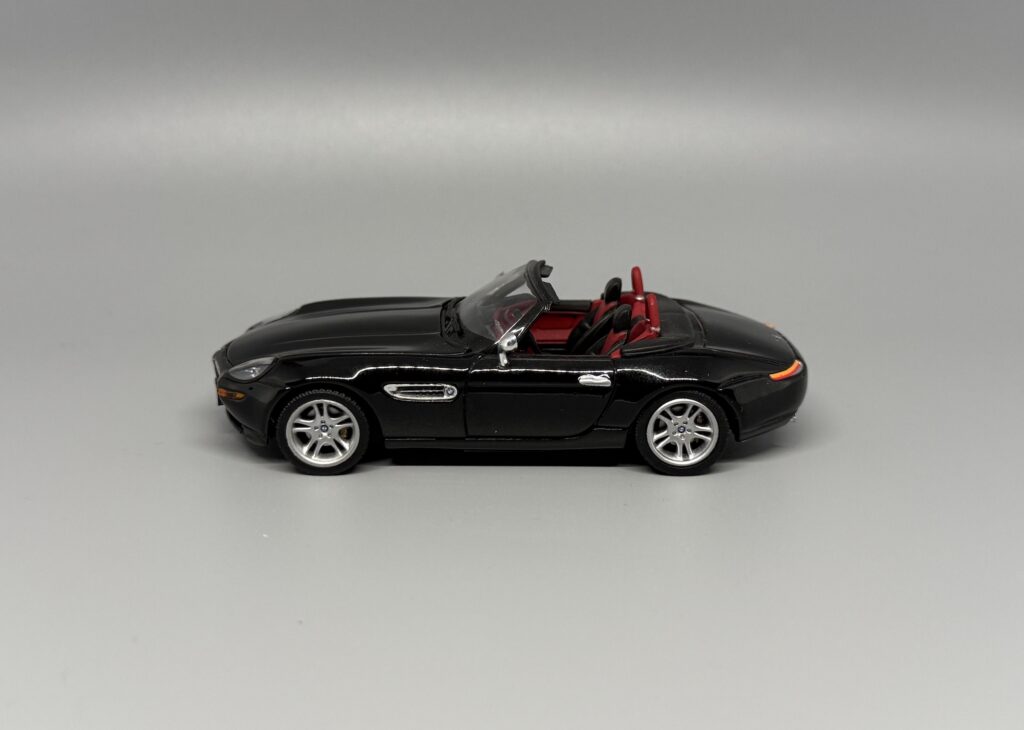
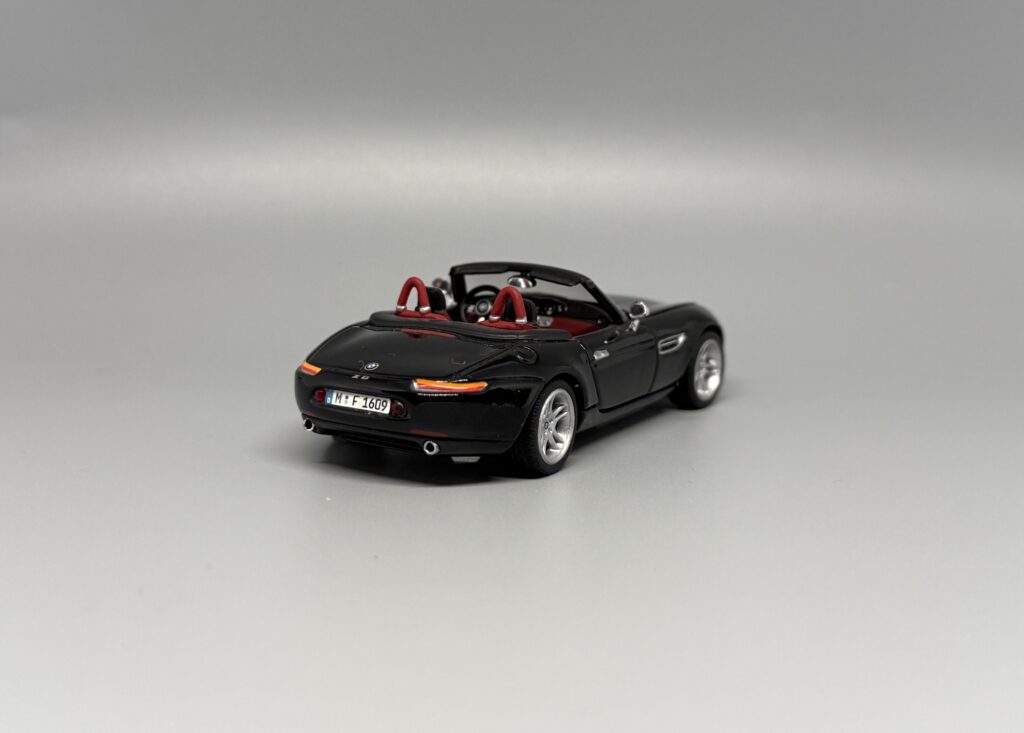
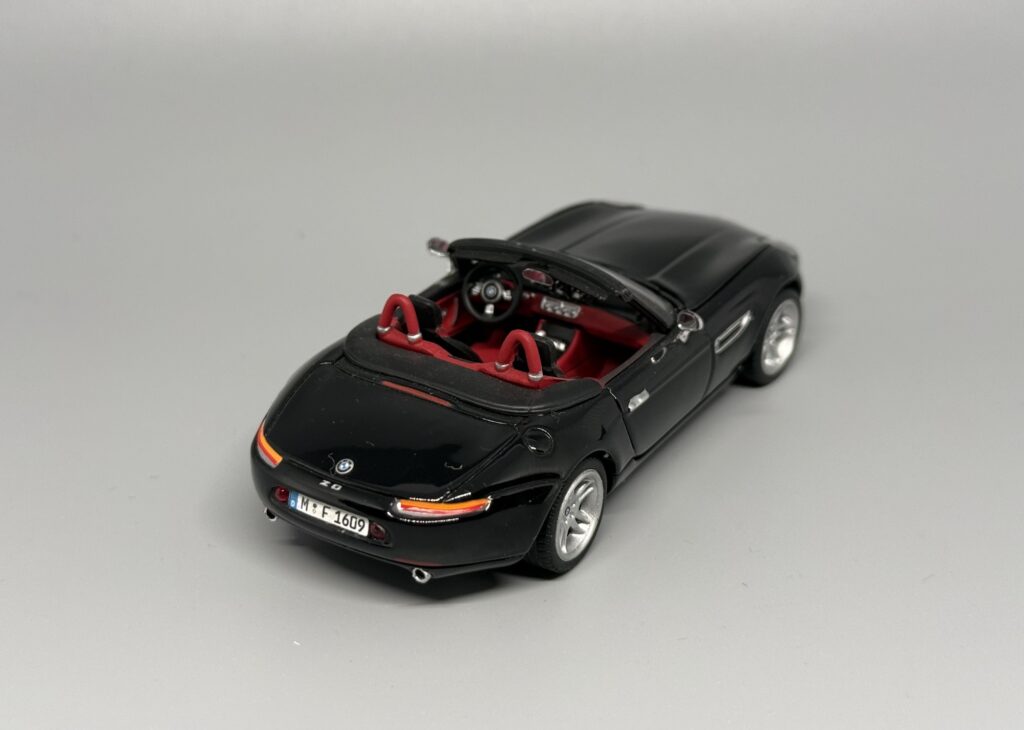
The BMW Z8 (E52) in my collection was produced by Minichamps and represents a 1999 car from the earliest period of Z8 production. It is an official BMW dealer model.
Technical data in brief
Production period: 1999–2003
Production location: BMW Plant Munich, Germany
Body style: two-seat roadster
Engine: S62B50 naturally aspirated V8
Displacement: 4,941 cm³
Power: 400 hp / 294 kW @ 6,600 rpm
Torque: 500 Nm
Transmission: 6-speed manual
Drivetrain: rear-wheel drive
0–100 km/h: 4.7 seconds
Top speed: 250 km/h, electronically limited
Weight: approximately 1,660 kg
Production: 5,703 cars
Design: Henrik Fisker
Special feature: a modern interpretation of the BMW 507 with an aluminium spaceframe and BMW M GmbH-developed S62 V8
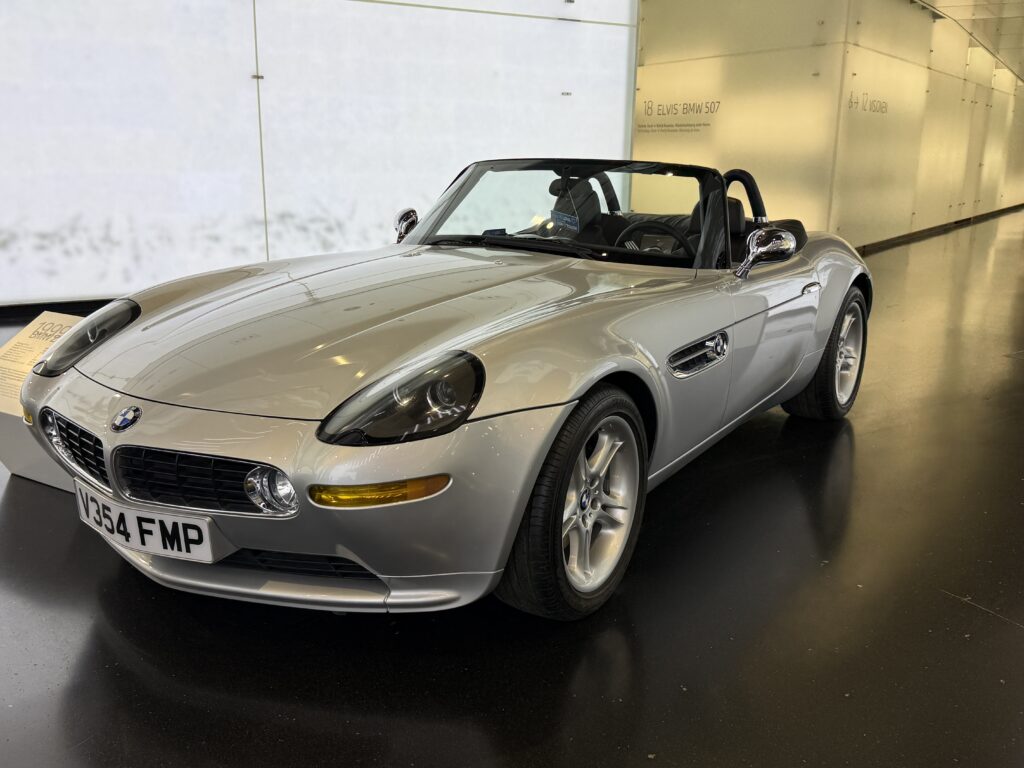
Photo of the real car, BMW Museum. Photo: Sten-Patrick Kreek