Prototypes and Coachbuilt Models

Prototypes and Coachbuilt Models brings together the rarest, most unusual and often least well-known automobiles in BMW history — cars created as prototypes, small-series specials or in cooperation with independent coachbuilders. These are models that did not follow the normal logic of series production, but instead reflected experimentation, design boldness and technical exploration. It is through such cars that one can see the side branches of BMW history — ideas and forms that sometimes remained one-off exercises, yet still reveal much about the development of the marque.

Within this category, models of very different background come together. It includes pre-war aerodynamic experimental cars, post-war small-series roadsters, special bodies created by Italian design houses such as Frua, Michelotti, Ghia and Vignale, as well as later technical and stylistic studies. Some of these cars were built as single examples, others reached limited production, but almost all remained outside BMW’s main production path. That is precisely what makes them so interesting, because they show which alternative directions BMW considered in different eras and how the brand’s technical foundations allowed for very different interpretations.

This page presents models that offer a strong overview of BMW’s most individual and experimental side. Whether they are aerodynamic studies by Wendler, elegant coupés by Frua, design exercises by Michelotti and Vignale, or unusual creations linked to the Glas heritage, together these cars form one of the most fascinating and collector-valued branches of BMW history. They are not simply rare models, but often windows into possible BMW futures that might have taken the marque in very different directions.

Click on the model image or name to open the gallery and description

BMW 326 Stromlinie by Wendler

Background BMW 326 Stromlinie by Wendler belongs to a small group of rare pre-war BMW special-bodied cars that illustrate how important aerodynamics, coachbuilding and technical experimentation had become during the 1930s. The BMW 326 itself was a highly significant model for the company, as it was BMW’s first four-door production car and marked an important …

BMW Kamm K4

Background BMW Kamm K4 was one of the most remarkable German aerodynamic research cars of the late 1930s. Behind the project was Professor Wunibald Kamm, one of the most important pioneers of early automotive aerodynamics. The K4 was not intended for series production or motor racing, but as an experimental vehicle for studying reduced aerodynamic …

BMW 328 Bügelfalte Roadster

Background BMW 328 Bügelfalte Roadster is one of the most distinctive pre-war racing cars in BMW history. It was not a separate production model, but one specific BMW 328, chassis number 85032, whose history began as early as 1937. The car was originally prepared for BMW competition use and took part in several international races. …

BMW 340/1 Roadster

Background BMW 340/1 Roadster was one of the rarest post-war prototypes to carry the BMW name and an important link between BMW’s pre-war heritage and the post-war automobile industry in Eisenach. The car was completed in 1949, at a time when the former BMW plant in Eisenach was located in the Soviet occupation zone and …

BMW S1

Background BMW S1 was one of the most remarkable post-war racing prototypes developed in Eisenach. The car was completed in 1949, at a time when the former BMW automobile plant was operating under Soviet control as SAG Awtowelo Werk BMW Eisenach. Although the factory was no longer part of BMW AG in Munich, development of …

BMW 531

Background BMW 531 was one of the most important prototypes from BMW’s early post-war period because it shows that the company’s future direction was still far from certain in the late 1940s. Post-war Germany had a strong demand for small, inexpensive and economical cars, and BMW had to decide whether to target this mass market …

BMW 505 Pullman Ghia Aigle

Background BMW 505 Pullman Ghia Aigle was one of BMW’s most ambitious prototypes of the 1950s. After the war, BMW had returned to automobile production with the large BMW 501 and 502 models and wanted to strengthen its position in the luxury-car market even further. The purpose of the 505 was to create an exceptionally …

BMW 507 Raymond Loewy

Background BMW 507 Raymond Loewy was one of the most unusual cars ever created on the basis of the BMW 507 and one of the most fascinating special-bodied BMWs of the 1950s. The standard BMW 507 was an elegant two-seat Roadster designed by Albrecht Graf Goertz and later became one of the most celebrated design …

BMW 3200 Michelotti Vignale Roadster

Background BMW 3200 Michelotti Vignale Roadster was one of the most interesting special-bodied cars created on the basis of the BMW 507 and a remarkable example of the meeting between German engineering and Italian automotive design at the end of the 1950s. The car originated from the personal initiative of Italian designer Giovanni Michelotti and …

BMW Hurrican

Background BMW Hurrican is one of the most unusual special cars ever built using BMW mechanical components. It was not an official BMW prototype or factory concept car, but an ambitious final-year project created by students studying coachbuilding and vehicle construction at the Pfälzische Meisterschule für Handwerker in Kaiserslautern. The project was initiated by 22-year-old …

Martini-BMW 700 Typ 4

Background Martini-BMW 700 Typ 4 belonged to a small but very interesting family of competition cars created on the basis of BMW 700 components. The man behind these cars was Willi Martini, a BMW dealer, mechanic, constructor and racing driver based near the Nürburgring. The BMW 700 was an exceptionally important model for BMW in …

BMW-Glas 3000 V8

Background BMW-Glas 3000 V8 emerged during a very unusual transition period in the history of BMW and Hans Glas GmbH. Glas, based in Dingolfing, had achieved success in the 1950s with the Goggomobil and other small cars, but by the mid-1960s the company was also attempting to enter the market for larger and more powerful …

BMW 1600 GT

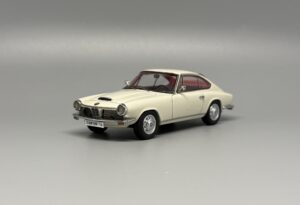
Background BMW 1600 GT was one of the most unusually originated BMW models of the late 1960s. The car was not originally developed by BMW, but emerged after BMW took over Hans Glas GmbH in Dingolfing at the end of 1966. Glas had already created the Pietro Frua-designed 1300 GT and 1700 GT sports coupés, …

BMW 1600-2 Baur Coupé

Background BMW 1600-2 Baur Coupé was a rare prototype created in 1967 and represents one of the alternative ideas considered during the early development of the BMW 02 Series. Karosserie Baur developed both an open Convertible and a fixed-roof Coupé based on the BMW 1600-2. While BMW approved the Baur Convertible for production, the Coupé …

BMW 2000 TI Coupé Frua

Background BMW 2000 TI Coupé Frua was a unique special-bodied coupé created in 1968 by the Italian designer and coachbuilder Pietro Frua. It was not an official BMW production model and, as far as is known, was not commissioned by BMW as a factory prototype. Instead, it was an independent Frua project demonstrating how differently …

BMW 2002 GT4 Frua

Background BMW 2002 GT4 Frua was one of the most elegant and rare special-bodied cars created using BMW 02 Series mechanical components. Italian designer Pietro Frua developed the project on his own initiative, aiming to show what a lower, more luxurious and more Gran Turismo-like coupé based on BMW 2002 engineering could look like. Frua …

BMW 1600 ti Coupé Paul Bracq

Background BMW 1600 ti Coupé Paul Bracq was a BMW sports-car project developed in the late 1960s and illustrates the company’s ambition to expand its model range with a new and more elegant two-seat car. The project was designed by French designer Paul Bracq, who at the time worked for the coachbuilding company Brissonneau & …

BMW 2800 GTS Coupé Frua

Background BMW 2800 GTS Coupé Frua was one of the most elegant and rare special-bodied cars created on the technical basis of the BMW E9. The car was completed in 1969 as an independent project by Italian designer and coachbuilder Pietro Frua, at a time when Frua was trying to continue his relationship with BMW …

BMW 528 GT Coupé Frua

Background BMW 528 GT Coupé Frua was one of the last and most mature BMW-based special projects created by Pietro Frua. Developed during 1976–1977 on the technical basis of the first-generation BMW 5 Series, the E12, it represented another attempt by Frua to offer BMW an alternative vision of an elegant Gran Turismo coupé. Its …