Background
BMW M4 Coupé (F82) entered production in 2014 and was the first BMW M coupé to carry the M4 name. Previously, the two-door high-performance version of the 3 Series had been known as the M3 Coupé, but with the creation of the 4 Series the M3 name remained with the saloon while the coupé and convertible became M4 models. The F82 therefore continued the tradition of earlier M3 Coupés while introducing both a new model name and a major technical change – the move from a naturally aspirated engine to a turbocharged straight-six.
Return to the straight-six
The previous E92 M3 had used a naturally aspirated V8, but the F82 marked BMW M’s return to the classic straight-six engine. The 2,979 cm³ S55 used two turbochargers and produced 431 hp and 550 Nm of torque. Peak torque increased by around 40 per cent compared with its predecessor and was available from only 1,850 rpm.
Lighter and stiffer
Weight reduction played an important role in the development of the M4. BMW used a CFRP carbon-fibre roof, a carbon-fibre driveshaft and numerous aluminium chassis and body components. According to BMW, the M4 was around 80 kilograms lighter than a comparably equipped predecessor. Flared wheel arches, M-specific aerodynamic components and a more aggressive front end also distinguished it clearly from the regular 4 Series Coupé.
4.1 seconds
The BMW M4 Coupé was available with a six-speed manual gearbox or an optional seven-speed M DCT dual-clutch transmission. With the manual gearbox it accelerated from 0 to 100 km/h in 4.3 seconds, while the M DCT reduced the time to 4.1 seconds. Top speed was electronically limited to 250 km/h, or 280 km/h with the optional M Driver’s Package. All F82 M4 versions were rear-wheel drive.
Competition and special editions
During the F82’s production life, the range expanded to include several more powerful and focused versions. The M4 Competition increased output to 450 hp and received revised chassis settings. More specialised limited-production derivatives included the M4 GTS, M4 CS and M4 DTM Champion Edition. These models demonstrated the considerable development potential of the F82 platform, while the original 431 hp version remained the foundation of the range.
The significance of the first M4
The F82 M4 represented an important transition in BMW M history. It retained traditional rear-wheel drive, a six-cylinder engine and the availability of a manual gearbox, while combining these features with turbocharging, extensive lightweight construction and substantially greater torque. It also firmly established the M4 name within the BMW range and created a distinct identity for BMW’s high-performance coupé.
Model in the collection
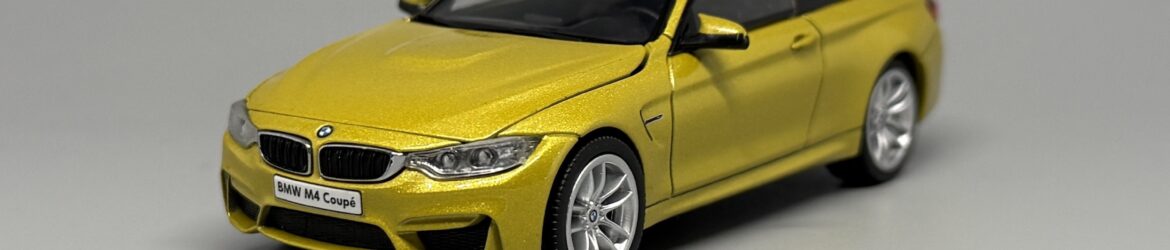
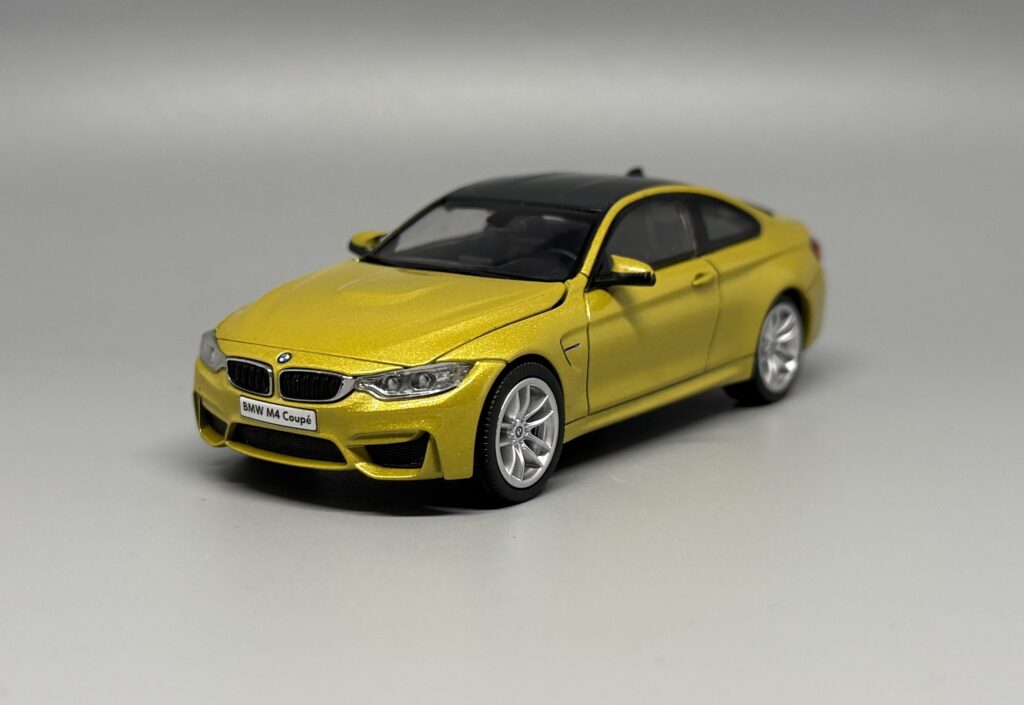
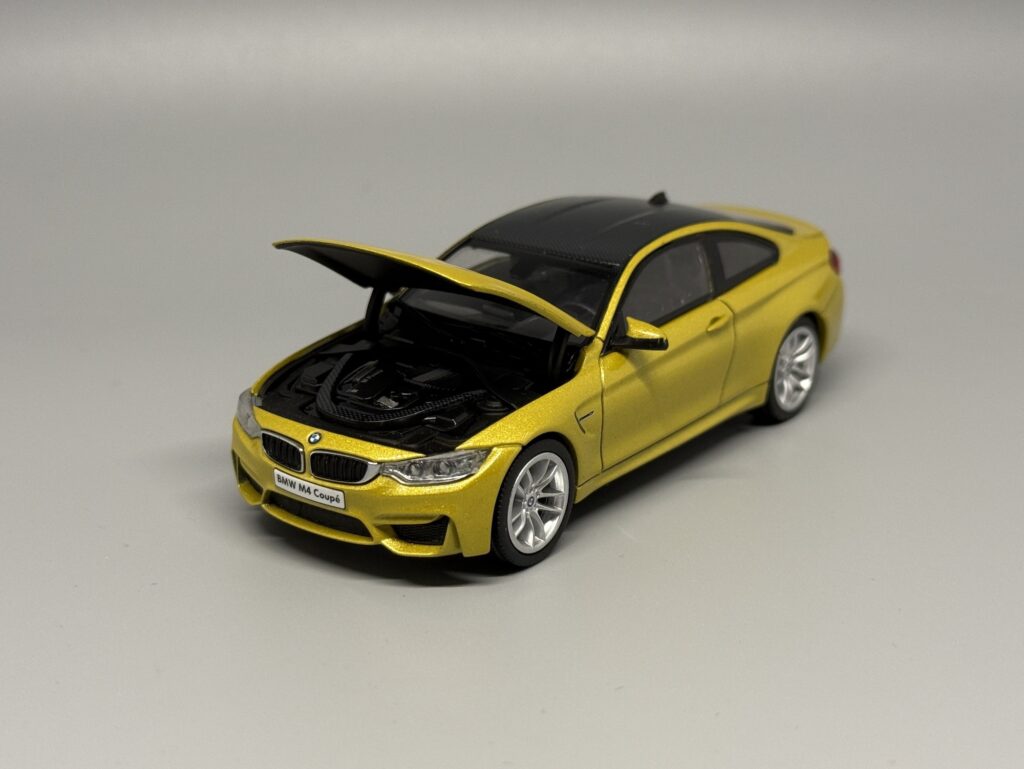
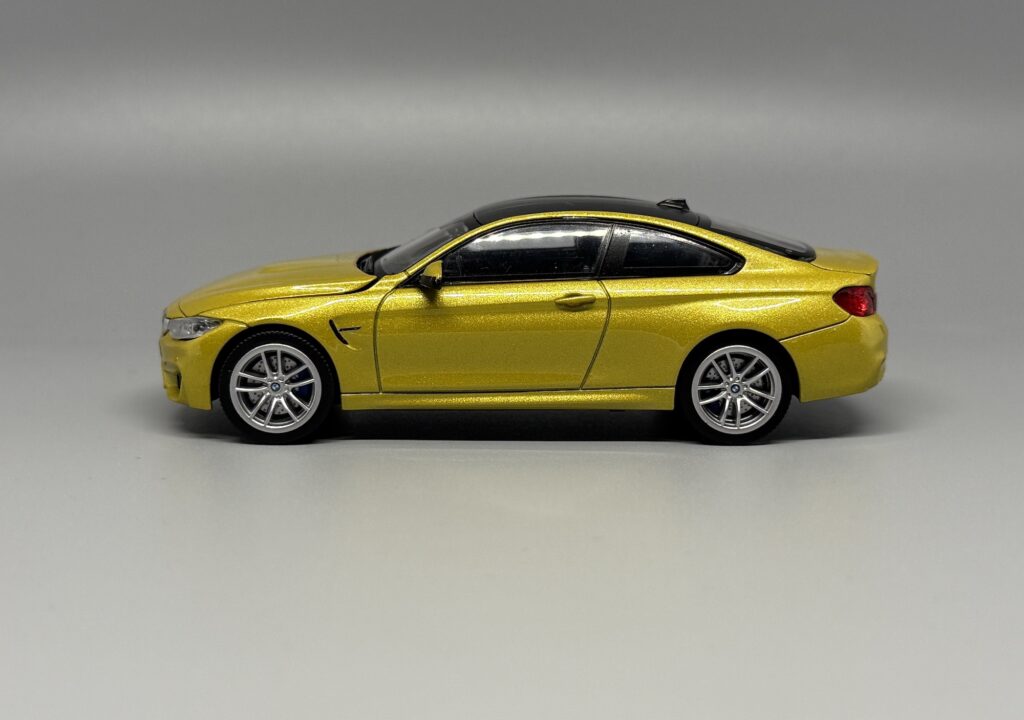
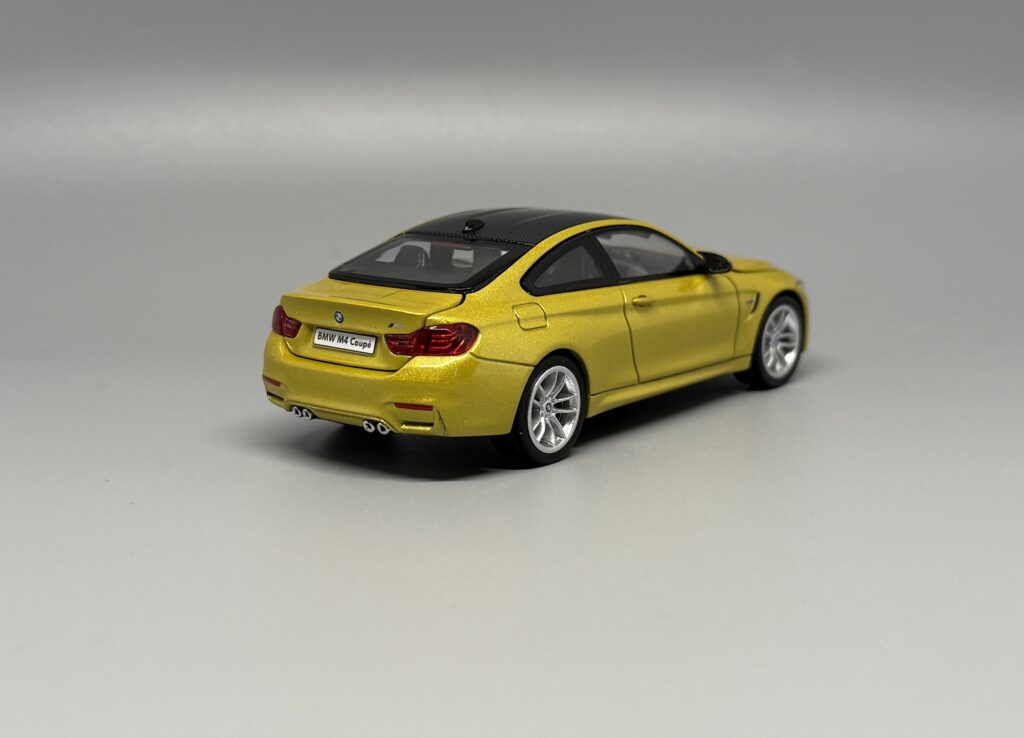
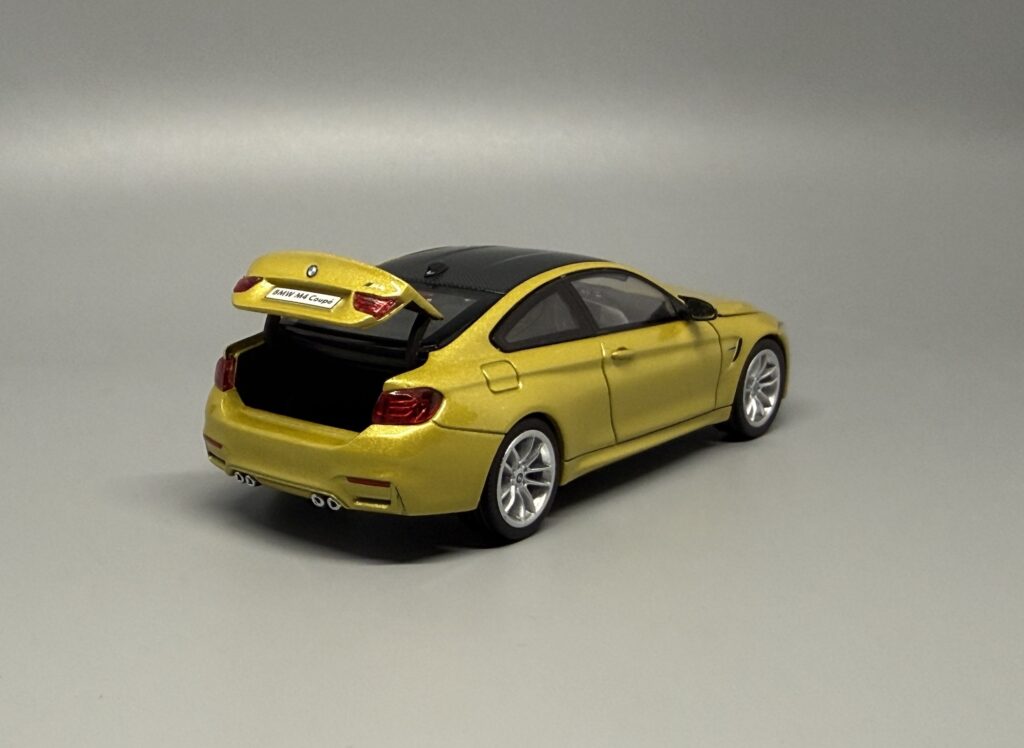
The BMW M4 Coupé (F82) in my collection was produced by Herpa.
Technical data in brief
Production period: 2014–2020
Production location: BMW Plant Munich, Germany
Body style: two-door four-seat coupé
Engine: S55, 3.0-litre twin-turbocharged straight-six
Displacement: 2,979 cm³
Power: 431 hp
Torque: 550 Nm
Transmission: 6-speed manual or 7-speed M DCT
Drivetrain: rear-wheel drive
0–100 km/h: 4.3 seconds with manual transmission, 4.1 seconds with M DCT
Top speed: 250 km/h, 280 km/h with M Driver’s Package
Production: approximately 57,500 F82 M4 Coupés
Special feature: the first BMW M coupé to carry the M4 name