BMW 2500 (E3) marked the beginning of a new era in BMW history in the late 1960s. With this model, BMW made a serious return to the large luxury saloon segment, from which the company had withdrawn for a time following the era of its earlier V8 models. The BMW 2500 was the first model in a new family of large saloons known internally as the E3 and often referred to as the New Six.
The BMW 2500 went on sale in August 1968. It was the entry model of the E3 range and laid the foundation for BMW’s new approach to large saloons. The car was not intended merely to be a comfortable executive saloon, but also to offer the driver-focused character associated with BMW. This distinguished the E3 family from many more traditional competitors and helped shape BMW’s reputation as a manufacturer of sporting luxury cars.
The E3 was also important in the broader development of BMW’s model range. It was the direct predecessor of the later BMW 7 Series and pointed the way for future large BMW saloons: six-cylinder engines, elegant styling, strong handling and a more clearly defined position in the luxury-car segment.
Design and concept
The BMW 2500 had a clean and dignified design. Its straight-lined body, long bonnet, spacious passenger compartment, large glass area and distinctive BMW kidney grille gave the car an elegant but restrained appearance. The E3 did not attempt to convey luxury through excessive ornamentation or visual heaviness, but instead presented itself as a sporting and modern large saloon.
Balance was at the heart of the BMW 2500 concept. The car had to be spacious and comfortable enough to serve as an executive saloon, while remaining responsive and precise enough to retain BMW’s characteristic driving experience. This combination later became one of the defining qualities of BMW’s large saloons.
Compared with many luxury saloons of the same era, the BMW 2500 was noticeably more driver-oriented. It was not simply a car designed for passengers in the rear seats, but a large BMW that was also enjoyable to drive. This philosophy later developed into an important part of the 7 Series identity: a luxurious large saloon that remained focused on the driver.
Engineering
From a technical perspective, the BMW 2500 was particularly significant because of its new six-cylinder engine. The car used a 2.5-litre inline-six from the M30 engine family, with a displacement of 2,494 cm³. It produced 150 hp, a strong figure for its time that gave the large saloon very respectable performance.
The M30 inline-six later became one of BMW’s most important engine families. In the BMW 2500, it offered a strong combination of smoothness, durability and sporting character. It suited the E3 concept perfectly: the car was intended to be comfortable and refined, while still being fast and enjoyable to drive.
The BMW 2500 had a top speed of approximately 190 km/h. This demonstrated that it was not merely a relaxed luxury saloon, but a car with a distinctly sporting character within its class. The combination of the six-cylinder engine, rear-wheel drive and well-balanced chassis made the E3 a natural expression of BMW’s emerging image of sporting luxury.
Production
Production of the BMW 2500 lasted from August 1968 until February 1977. The model remained part of the E3 family throughout its entire production life and, according to BMW Group Classic, became the most popular version of the E3 series. This demonstrates how well the BMW 2500 fulfilled its role as the foundation of BMW’s new large-saloon range.
The BMW E3 model family expanded over time. More powerful and larger-engined versions joined the 2500, including the 2800, 3.0 S and 3.0 Si, as well as long-wheelbase L versions. Nevertheless, the BMW 2500 remained the central and best-known starting point of the model family.
Although the exact production figure for the BMW 2500 is not stated consistently across all sources, a figure of more than 92,000 cars is frequently quoted. Total production of the entire E3 family was considerably higher, and the success of the series helped prepare the way for the first BMW 7 Series, introduced in 1977.
Significance in BMW history
The importance of the BMW 2500 in BMW history lies in the fact that it brought the marque back into the large luxury saloon segment and did so in a distinctly BMW way. The car was not only comfortable and prestigious, but also lively to drive and technically modern. This helped BMW distinguish itself from competitors whose luxury cars were often heavier and less driver-focused.
The E3 established the tradition of the large BMW saloon that would later be continued by the 7 Series. Many of the principles that defined the BMW 2500 — a six-cylinder engine, sporting handling, elegant design and a luxurious yet driver-oriented character — became central qualities of later large BMW models.
Today, the BMW 2500 is particularly interesting because of its historical role. It was neither the most powerful nor the rarest version of the E3, but it was the model with which BMW’s new generation of large saloons truly began. For this reason, the BMW 2500 represents an important link in the development of BMW’s luxury cars and the later 7 Series.
Model in the collection
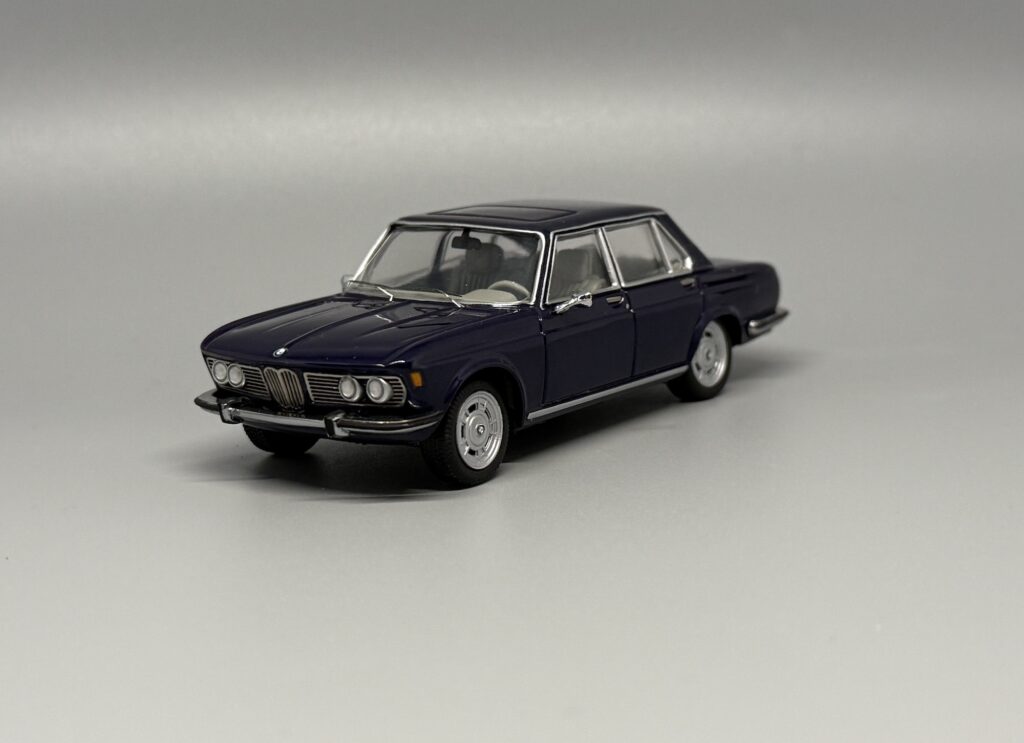
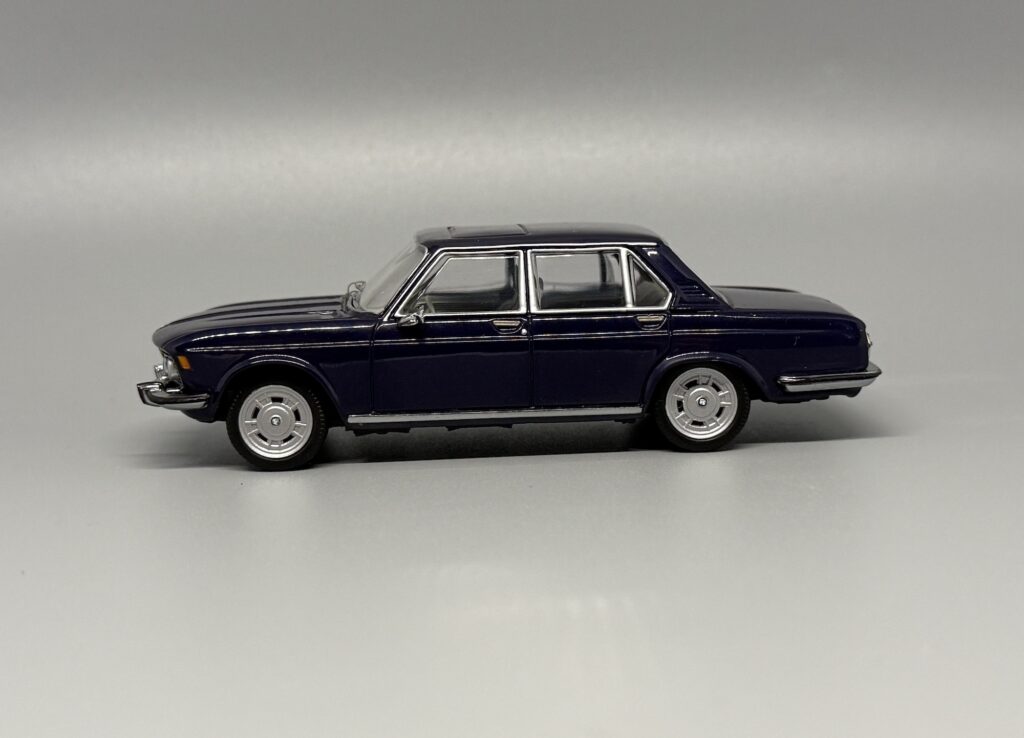
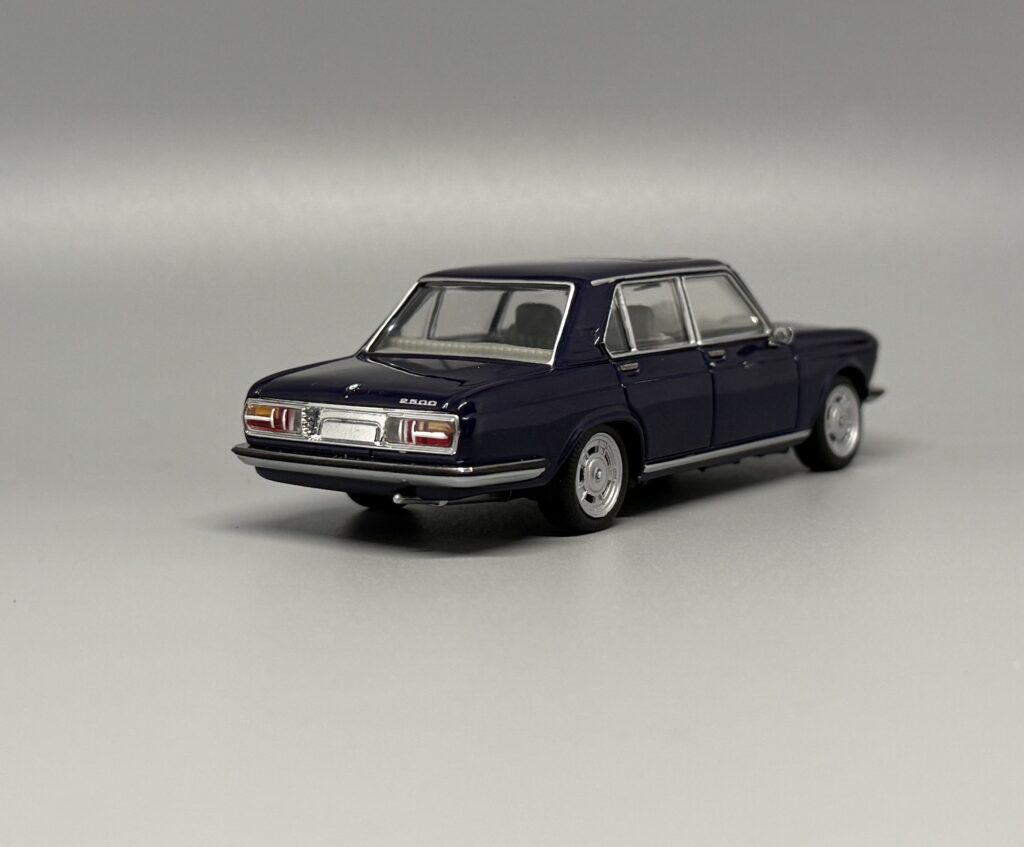
The model in my collection was produced by Schuco. It is a limited-edition model, with a total production run of 1,000 examples.
Technical specifications
Production period: 08/1968–02/1977
Place of production: Germany
Model code: E3
Body style: four-door large saloon
Engine: 2.5-litre inline-six, 2,494 cm³
Power: 150 hp
Engine family: BMW M30
Drivetrain: rear-wheel drive
Top speed: approximately 190 km/h
Production: more than 92,000 BMW 2500s are frequently quoted
Special feature: the first E3 “New Six” model and the direct predecessor of the later BMW 7 Series

Background
BMW 2500 (E3) marked the beginning of a new era in BMW history in the late 1960s. With this model, BMW made a serious return to the large luxury saloon segment, from which the company had withdrawn for a time following the era of its earlier V8 models. The BMW 2500 was the first model in a new family of large saloons known internally as the E3 and often referred to as the New Six.
The BMW 2500 went on sale in August 1968. It was the entry model of the E3 range and laid the foundation for BMW’s new approach to large saloons. The car was not intended merely to be a comfortable executive saloon, but also to offer the driver-focused character associated with BMW. This distinguished the E3 family from many more traditional competitors and helped shape BMW’s reputation as a manufacturer of sporting luxury cars.
The E3 was also important in the broader development of BMW’s model range. It was the direct predecessor of the later BMW 7 Series and pointed the way for future large BMW saloons: six-cylinder engines, elegant styling, strong handling and a more clearly defined position in the luxury-car segment.
Design and concept
The BMW 2500 had a clean and dignified design. Its straight-lined body, long bonnet, spacious passenger compartment, large glass area and distinctive BMW kidney grille gave the car an elegant but restrained appearance. The E3 did not attempt to convey luxury through excessive ornamentation or visual heaviness, but instead presented itself as a sporting and modern large saloon.
Balance was at the heart of the BMW 2500 concept. The car had to be spacious and comfortable enough to serve as an executive saloon, while remaining responsive and precise enough to retain BMW’s characteristic driving experience. This combination later became one of the defining qualities of BMW’s large saloons.
Compared with many luxury saloons of the same era, the BMW 2500 was noticeably more driver-oriented. It was not simply a car designed for passengers in the rear seats, but a large BMW that was also enjoyable to drive. This philosophy later developed into an important part of the 7 Series identity: a luxurious large saloon that remained focused on the driver.
Engineering
From a technical perspective, the BMW 2500 was particularly significant because of its new six-cylinder engine. The car used a 2.5-litre inline-six from the M30 engine family, with a displacement of 2,494 cm³. It produced 150 hp, a strong figure for its time that gave the large saloon very respectable performance.
The M30 inline-six later became one of BMW’s most important engine families. In the BMW 2500, it offered a strong combination of smoothness, durability and sporting character. It suited the E3 concept perfectly: the car was intended to be comfortable and refined, while still being fast and enjoyable to drive.
The BMW 2500 had a top speed of approximately 190 km/h. This demonstrated that it was not merely a relaxed luxury saloon, but a car with a distinctly sporting character within its class. The combination of the six-cylinder engine, rear-wheel drive and well-balanced chassis made the E3 a natural expression of BMW’s emerging image of sporting luxury.
Production
Production of the BMW 2500 lasted from August 1968 until February 1977. The model remained part of the E3 family throughout its entire production life and, according to BMW Group Classic, became the most popular version of the E3 series. This demonstrates how well the BMW 2500 fulfilled its role as the foundation of BMW’s new large-saloon range.
The BMW E3 model family expanded over time. More powerful and larger-engined versions joined the 2500, including the 2800, 3.0 S and 3.0 Si, as well as long-wheelbase L versions. Nevertheless, the BMW 2500 remained the central and best-known starting point of the model family.
Although the exact production figure for the BMW 2500 is not stated consistently across all sources, a figure of more than 92,000 cars is frequently quoted. Total production of the entire E3 family was considerably higher, and the success of the series helped prepare the way for the first BMW 7 Series, introduced in 1977.
Significance in BMW history
The importance of the BMW 2500 in BMW history lies in the fact that it brought the marque back into the large luxury saloon segment and did so in a distinctly BMW way. The car was not only comfortable and prestigious, but also lively to drive and technically modern. This helped BMW distinguish itself from competitors whose luxury cars were often heavier and less driver-focused.
The E3 established the tradition of the large BMW saloon that would later be continued by the 7 Series. Many of the principles that defined the BMW 2500 — a six-cylinder engine, sporting handling, elegant design and a luxurious yet driver-oriented character — became central qualities of later large BMW models.
Today, the BMW 2500 is particularly interesting because of its historical role. It was neither the most powerful nor the rarest version of the E3, but it was the model with which BMW’s new generation of large saloons truly began. For this reason, the BMW 2500 represents an important link in the development of BMW’s luxury cars and the later 7 Series.
Model in the collection
The model in my collection was produced by Schuco. It is a limited-edition model, with a total production run of 1,000 examples.
Technical specifications
Production period: 08/1968–02/1977
Place of production: Germany
Model code: E3
Body style: four-door large saloon
Engine: 2.5-litre inline-six, 2,494 cm³
Power: 150 hp
Engine family: BMW M30
Drivetrain: rear-wheel drive
Top speed: approximately 190 km/h
Production: more than 92,000 BMW 2500s are frequently quoted
Special feature: the first E3 “New Six” model and the direct predecessor of the later BMW 7 Series
Photo of the real car. Original source: mbclassic.nl