
Background
Martini-BMW 700 Typ 4 belonged to a small but very interesting family of competition cars created on the basis of BMW 700 components. The man behind these cars was Willi Martini, a BMW dealer, mechanic, constructor and racing driver based near the Nürburgring. The BMW 700 was an exceptionally important model for BMW in the early 1960s, as its sales success helped the company recover from a difficult financial period. At the same time, its low weight, rear-mounted engine, simple construction and good handling made the 700 an excellent basis for motorsport.
Willi Martini
Willi Martini was far more than a BMW dealer. He was also an active racing driver and technical developer who prepared various competition parts, engines and complete racing cars for the BMW 700. Martini-prepared BMWs achieved success especially at the Nürburgring, and his modified BMW 700s also found customers outside Germany. By the early 1960s, the Martini name had become closely associated with small BMW competition cars.
Martini’s own racing coupé
In 1962, Martini went a step beyond improving the standard BMW 700 and began developing a competition coupé of his own design. The car used BMW 700 production components and mechanical parts, but the body and supporting structure were Martini’s own solution. The construction combined a platform frame, a steel-tube superstructure and a lightweight plastic body. The result was a sports car that was considerably lower, lighter and more aerodynamic than the standard BMW 700 Coupé.
Clemens Ahrend and Otto Betzner
Martini did not develop the new coupés entirely on his own. In creating the plastic bodies, he worked with Clemens Ahrend, who specialised in plastic constructions, and Otto Betzner. The aim was to produce a body that was as light and easy to manufacture as possible, allowing the modest displacement of the BMW 700 engine to be used as effectively as possible on the racetrack. There were even hopes of producing the car in a small series, but regular production never followed.
1963 Nürburgring 1000 km
The Martini-BMW coupés reached international competition in the 1963 Nürburgring 1000 km race. Three Martini-BMW prototypes with plastic bodies were entered, two by Renngemeinschaft Martini and one by Walter Schneider. The cars competed in the sports-prototype class for engines up to 850 cm³ and demonstrated that the combination of a very small engine and exceptionally low weight could still be highly effective on the long and demanding Nürburgring circuit.
Low weight
The first Martini-BMW racing coupés weighed only about 470 kg. This low weight was one of their greatest advantages. The BMW 700 was already light in production form, but Martini’s plastic bodywork and tubular structure reduced the weight even further. This allowed the relatively small engine to provide surprisingly strong performance on the racetrack.
Engines
Different BMW two-cylinder boxer engines were used in Martini-BMW competition cars. The 1963 cars used both an approximately 60 hp OHV engine and a more powerful OHC racing engine producing around 80 hp. With suitable gearing, the latter could reportedly allow speeds of more than 200 km/h, an exceptional figure for such a small-displacement car. The exact engine configuration of the 1964 Typ 4 is not sufficiently well documented, however, so it is better not to assign one definite power figure to this particular version.
Typ 4
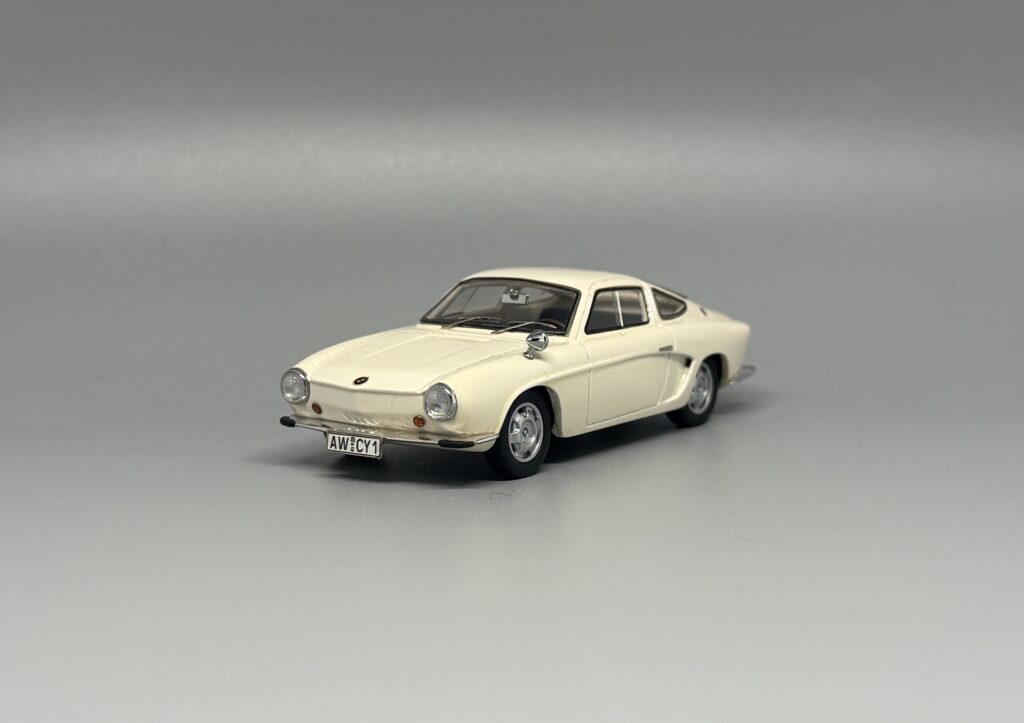
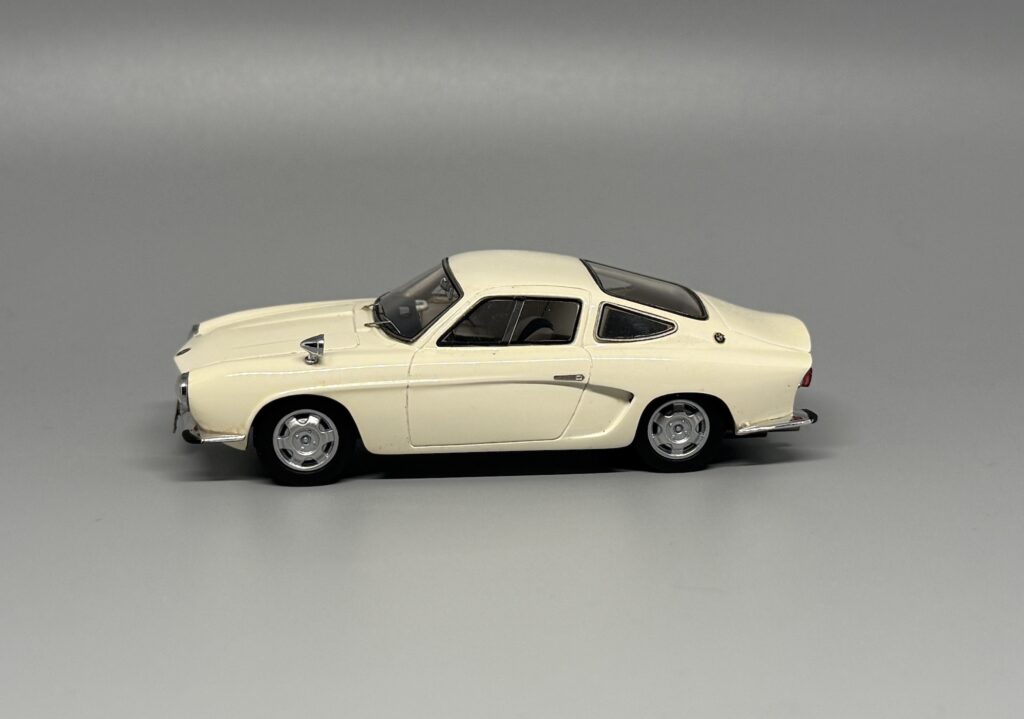
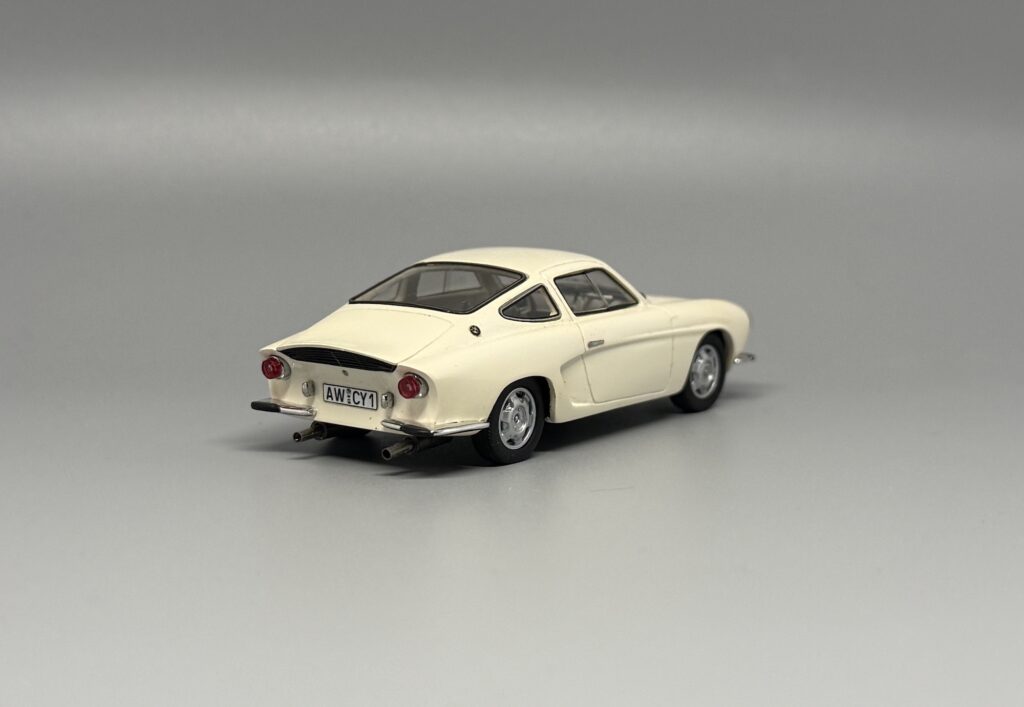
Martini continued to develop his plastic-bodied coupés, gradually refining both their design and construction. The Avenue 43 model represents the 1964 Typ 4, one of the later versions in this development line. Compared with the earlier prototypes, the body had evolved further and the car appeared more like a complete small GT racing car. Surviving information shows that Martini built several such coupés, but the exact number produced in the various Typ 1–4 versions is not reliably documented.
BMW 700 RS and Martini-BMW were different cars
The Martini-BMW coupés should not be confused with the BMW 700 RS factory racing car. BMW built two extremely lightweight 700 RS sports prototypes and later sold them to Willi Martini, who continued to develop and race them alongside his own plastic-bodied coupés. Because the BMW 700 RS cars later also carried Martini lettering, they have sometimes been incorrectly described as Martini’s own constructions. In reality, the BMW 700 RS and the Martini-BMW 700 Coupé represented two separate development lines.
From racing car to road car
Martini did not concentrate exclusively on pure racing cars. In 1964, he also presented a plastic-bodied BMW 700 coupé intended for road use. This version also failed to reach series production, and Martini’s special-bodied cars remained a small group of hand-built vehicles. Today, they are rare examples of an era when independent constructors could transform production-car mechanical components into an almost entirely new automobile.
Historical significance
The importance of the Martini-BMW 700 lies in the way it reveals a much less familiar sporting side of the BMW 700 family. The production BMW 700 helped BMW survive financially, while its simple and lightweight mechanical layout also provided an excellent basis for competition. Willi Martini exploited that potential creatively, and his plastic-bodied coupés remain among the most interesting independently developed racing cars based on BMW components.
Model in the collection
The model in my collection was produced by Avenue 43 and represents the white Martini-BMW 700 Typ 4 from 1964. It depicts one of the later stages in the development of Martini’s special-bodied sports cars based on BMW 700 mechanical components. The model manufacturer identifies this version as the “Martini-BMW 700 Typ 4”.
Technical data in brief
Year: 1964
Builder and developer: Willi Martini
Technical basis: BMW 700
Version: Typ 4
Body style: two-seat sports and racing coupé
Construction: platform frame, steel-tube superstructure and plastic body
Engine: BMW 700-based two-cylinder boxer engine
Engine location: rear
Drivetrain: rear-wheel drive
Power of earlier Martini racing versions: approximately 60–80 hp depending on engine
Exact power of the Typ 4: not reliably documented
Weight of earlier racing coupés: approximately 470 kg
Production: several hand-built cars, exact number of Typ 4 cars unknown
Special feature: lightweight plastic-bodied sports coupé developed by Willi Martini using BMW 700 mechanical components