
Background
BMW 1 Series M Coupé (E82), widely known simply as the BMW 1M Coupé, was introduced in 2011 and brought the philosophy of BMW M GmbH to the compact BMW 1 Series Coupé for the first time. The official name was deliberately chosen as 1 Series M Coupé rather than BMW M1, since the M1 name already belonged to BMW’s legendary mid-engined sports car of the late 1970s. Among enthusiasts, however, the shorter designation 1M quickly became established. The car was based on the BMW 1 Series Coupé (E82), but BMW M GmbH modified it extensively. The aim was not simply to create a more powerful 135i, but to build a compact, lightweight and highly direct M car. Rear-wheel drive, a manual gearbox only and a large amount of technology derived from larger M models gave the 1 Series M Coupé a particularly pure and mechanical driving character.
Design and concept
The BMW 1 Series M Coupé was immediately distinguishable from the standard E82 Coupé. It received much wider front and rear wheel arches, larger air intakes in the front apron, M-specific exterior mirrors, four exhaust outlets and a small rear spoiler integrated into the boot lid. The body was more than five centimetres wider than that of the 135i Coupé, mainly to accommodate the wider track and more serious M chassis components. One of the most characteristic details was the so-called Air Curtain system in the front bumper, used by BMW on a production car for the first time. These air channels directed airflow around the front wheels and helped reduce turbulence in the wheel arches. The visual appearance was therefore not merely aggressive for styling purposes – many of the body changes had a functional role related to cooling, aerodynamics or the wider suspension layout. Despite its muscular appearance, the 1 Series M Coupé remained a compact four-seat car. This contrast between relatively small exterior dimensions and very serious M engineering became one of the defining features of the model.
Engine and drivetrain
The BMW 1 Series M Coupé used a 2,979 cm³ N54 six-cylinder in-line engine with two turbochargers, direct fuel injection and Double-VANOS. The engine produced 340 hp at 5,900 rpm and 450 Nm of torque from just 1,500 rpm. An overboost function temporarily increased maximum torque to 500 Nm. Power was sent to the rear wheels exclusively through a six-speed manual gearbox. No automatic or dual-clutch transmission was offered. This was a deliberate decision that reinforced the car’s driver-focused and mechanical character. Acceleration from 0 to 100 km/h took 4.9 seconds, while top speed was electronically limited to 250 km/h. The performance of the 1 Series M Coupé was therefore very close to that of larger M models, while its more compact dimensions and lower mass gave it a particularly immediate and agile character.
Chassis and M3 technology
BMW M GmbH did not simply install a more powerful engine. The 1 Series M Coupé received a significant amount of chassis technology associated with the contemporary BMW M3 (E9x) family. Both the double-joint front axle and the five-link rear axle used extensive aluminium construction and were specially adapted to the smaller 1 Series body. Standard equipment included a variable M differential lock, capable of providing up to 100 per cent locking when required. The car also used a high-performance compound braking system related to that of the M3, with 360 mm front discs and 350 mm rear discs. The track was considerably wider than on the standard 135i, while kerb weight was approximately 1,495 kilograms. Nineteen-inch M alloy wheels were fitted as standard and were closely related to wheel designs used on high-performance versions of the M3. These changes meant that the 1 Series M Coupé was not merely a faster 1 Series, but a genuine BMW M car in technical terms.
Driving character
One of the greatest strengths of the 1 Series M Coupé was its direct and relatively unfiltered driving experience. Hydraulic Servotronic steering, a manual gearbox, rear-wheel drive and a mechanically operating M differential created a combination that required active involvement from the driver. The electronic stability-control system included M Dynamic Mode, which allowed greater wheel slip before intervention, while DSC could also be switched off completely. As a result, the car was equally capable as an everyday road car and as a highly entertaining machine on a race track. BMW M has subsequently highlighted the 1 Series M Coupé as an important compact high-performance model and as a particularly pure expression of the traditional M formula. The simple combination of a six-cylinder turbocharged engine, manual gearbox and rear-wheel drive is one of the main reasons why the model quickly gained cult status.
Production
The BMW 1 Series M Coupé was produced from 2011 to 2012 at BMW Group Plant Leipzig. It was originally conceived as a relatively limited-production special model, but demand proved stronger than expected and production was extended. According to the official production statistics of BMW Group Plant Leipzig, a total of 6,342 BMW 1 Series M Coupés were built. Some later BMW M historical overviews use a slightly different figure of 6,331 cars, referring to customer deliveries rather than total production. For production figures, the Leipzig factory total of 6,342 is therefore the most appropriate number to use. The model was offered in only a small number of exterior colours, with Valencia Orange Metallic becoming the most distinctive and closely associated with the car. Its short production period, relatively low total output and unique technical concept helped make the 1M a desirable modern BMW classic soon after production ended.
Significance in BMW M history
The significance of the BMW 1 Series M Coupé extends far beyond its modest production volume. It demonstrated that a full-blooded M car did not require a large body or exceptionally complex technology. A compact platform, powerful six-cylinder engine, manual gearbox, rear-wheel drive and carefully tuned chassis were enough to create one of the most memorable M cars of its era. The 1 Series M Coupé became the direct spiritual predecessor of the later BMW M2. BMW M itself places the car within the same development line of compact high-performance BMWs as the BMW 2002 turbo, the E30 M3 and the later M2. Today, the 1 Series M Coupé is widely regarded as one of the most distinctive modern BMW M models – a car created from a relatively simple formula, yet one that developed an exceptionally strong identity.
Model in the collection
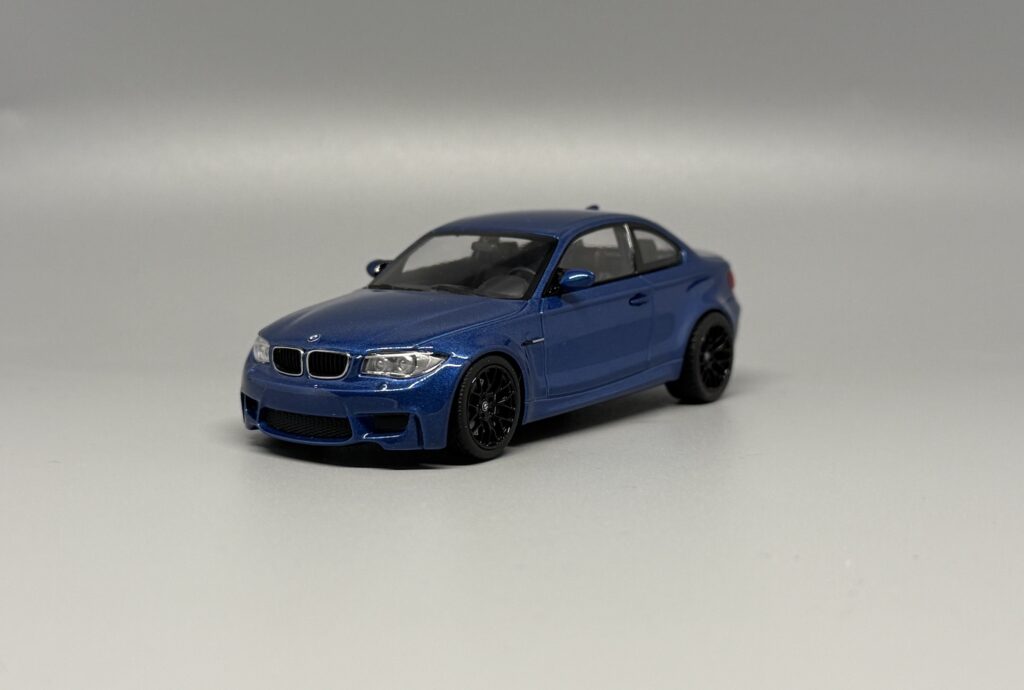
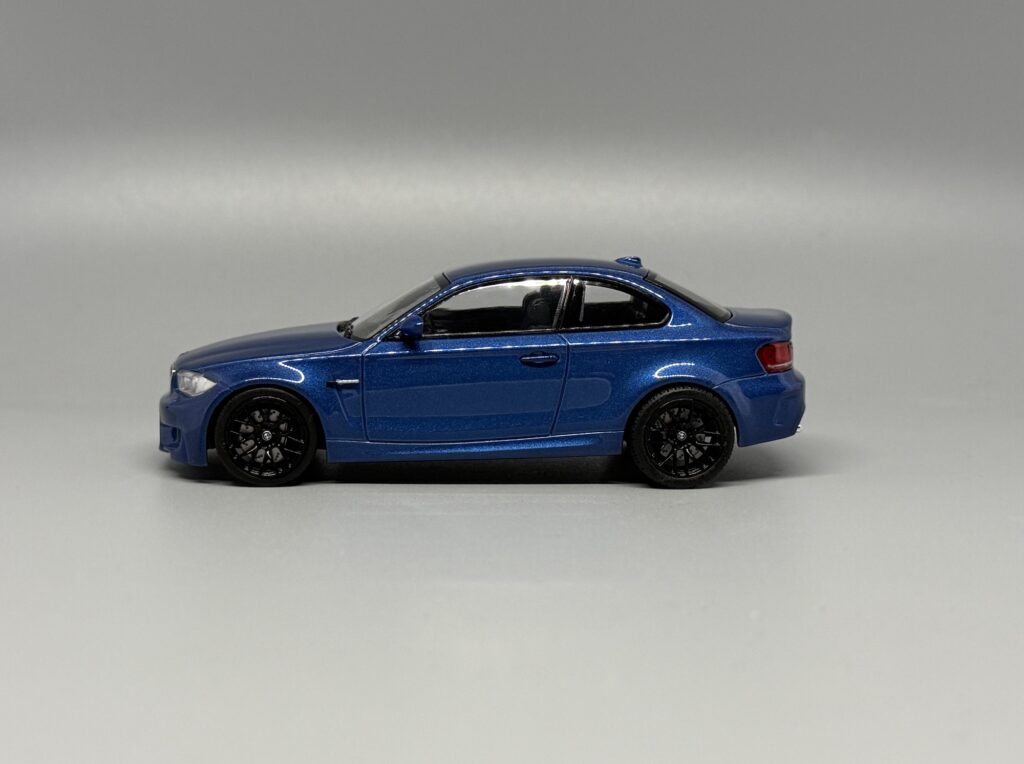
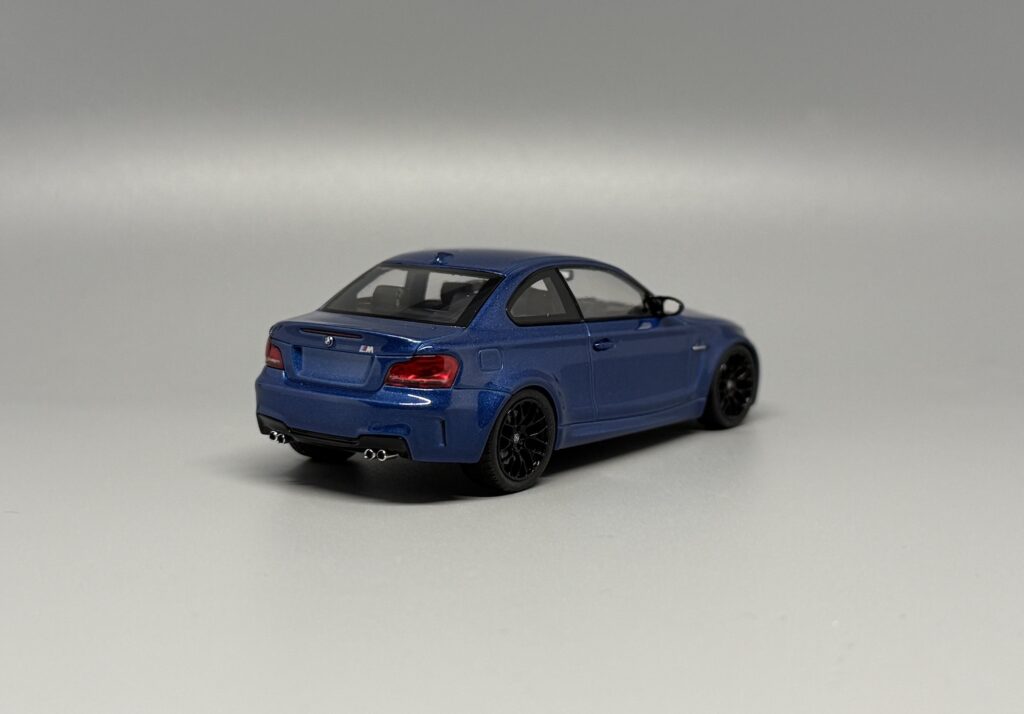
The model in my collection was produced by Minichamps and represents a 2011 BMW 1 Series M Coupé. It is a limited-edition model, with 1,008 examples produced.
Technical data in brief
Production period: 2011–2012
Place of production: BMW Group Plant Leipzig, Germany
Body style: two-door four-seat Coupé
Engine: 2,979 cm³ N54 twin-turbo six-cylinder in-line engine
Power: 340 hp @ 5,900 rpm
Torque: 450 Nm, up to 500 Nm with overboost
Drivetrain: rear-wheel drive
Gearbox: 6-speed manual
0–100 km/h: 4.9 s
Top speed: 250 km/h, electronically limited
Kerb weight: approximately 1,495 kg
Production number: 6,342 cars
Special feature: the first BMW M model based on the 1 Series and a compact manual rear-wheel-drive M coupé that became an important predecessor to the later BMW M2
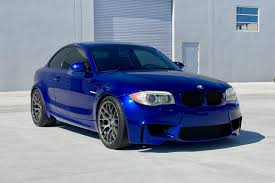
Photo of the real car. Source: garagedreamauctions.com