
Background
BMW 502 represented a major technological step forward for BMW during the 1950s and took the company’s post-war luxury-car production to a new level. The model was presented at the 1954 Geneva Motor Show, with series production beginning in September of the same year. The BMW 502 was based on the BMW 501 introduced two years earlier, but received considerably more luxurious equipment and an entirely new eight-cylinder engine. Visually, it retained the elegant flowing body shape of the 501 and therefore also belonged to BMW’s so-called “Baroque Angel” family.
A more luxurious development of the BMW 501
The basic construction of the BMW 502 was closely related to the BMW 501. Its four-door body, strong chassis frame and spacious interior accommodating up to six people remained largely unchanged, but the 502 was positioned clearly above the 501 in the model range. Externally, it could be distinguished by richer chrome detailing and additional fog lamps, while the standard equipment was also more extensive. BMW intended the 502 to be a prestigious luxury saloon that combined comfort with performance more appropriate for a large executive car.
BMW’s first V8
The most important innovation of the BMW 502 was its completely new 2,580 cm³ V8 engine. It was BMW’s first V8 used in a production car and also the first eight-cylinder automobile engine to be produced in Germany after the Second World War. The engine developed 100 hp at 4,800 rpm, considerably more than the 65 hp six-cylinder engine of the BMW 501. The new power unit transformed the character of the large and heavy saloon and provided performance much better suited to a luxury automobile.
The world’s first all-alloy production-car engine
The V8 was particularly remarkable for its construction. Both the engine block and cylinder heads were made from aluminium alloy, and BMW describes it as the world’s first all-alloy engine used in a series-production automobile. At a time when cast-iron engine blocks were still the norm, this was a highly advanced solution. The use of light alloy helped reduce the weight of the large V8 and the engine subsequently became the basis for several of BMW’s next prestigious models.
A 160 km/h luxury saloon
The 100 hp V8 allowed the BMW 502 to reach a top speed of 160 km/h. In 1954, this was an impressive figure for a large six-seat luxury saloon and clearly demonstrated the difference between the new V8 and the earlier six-cylinder engine of the BMW 501. The 502 was not intended to be a sports car, but it combined a smooth eight-cylinder engine, excellent ride comfort and very respectable performance for its class.
A V8 that formed the basis of an entire model family
BMW continued to develop the new V8 engine over the following years. Displacement was later increased to 3.2 litres, and more powerful versions were used in the BMW 503 and BMW 507. The same V8 engine family remained in use in various BMW luxury cars into the early 1960s, with later versions producing up to 160 hp. The BMW 502 was therefore important not only as a new model, but also as the beginning of BMW’s post-war V8 era.
Changing model names
The original 2.6-litre, 100 hp BMW 502 was produced from September 1954 until September 1958. BMW subsequently changed the names of its large V8 saloons. From October 1958, the 2.6-litre luxury version was known as the BMW 2.6 Luxus, while from 1961 the same model family continued as the BMW 2600 L. At the same time, 3.2-litre versions were also offered. The history of the wider 502 saloon family therefore continued until 1963, although the original BMW 502 name was not used throughout the entire period.
The “Baroque Angel”
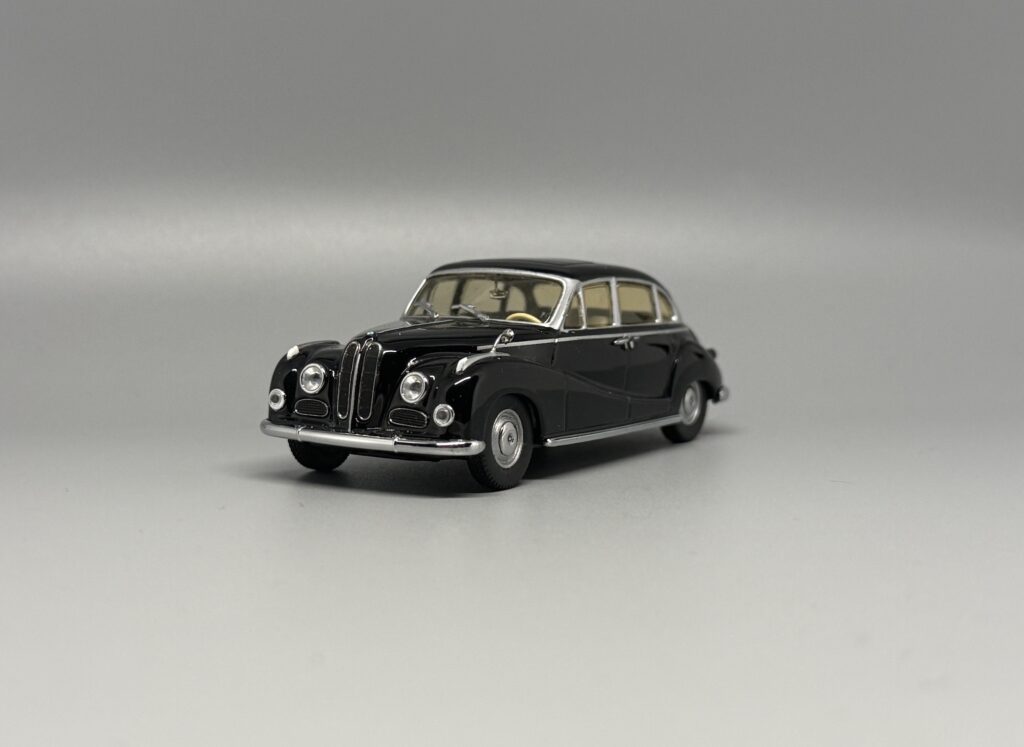
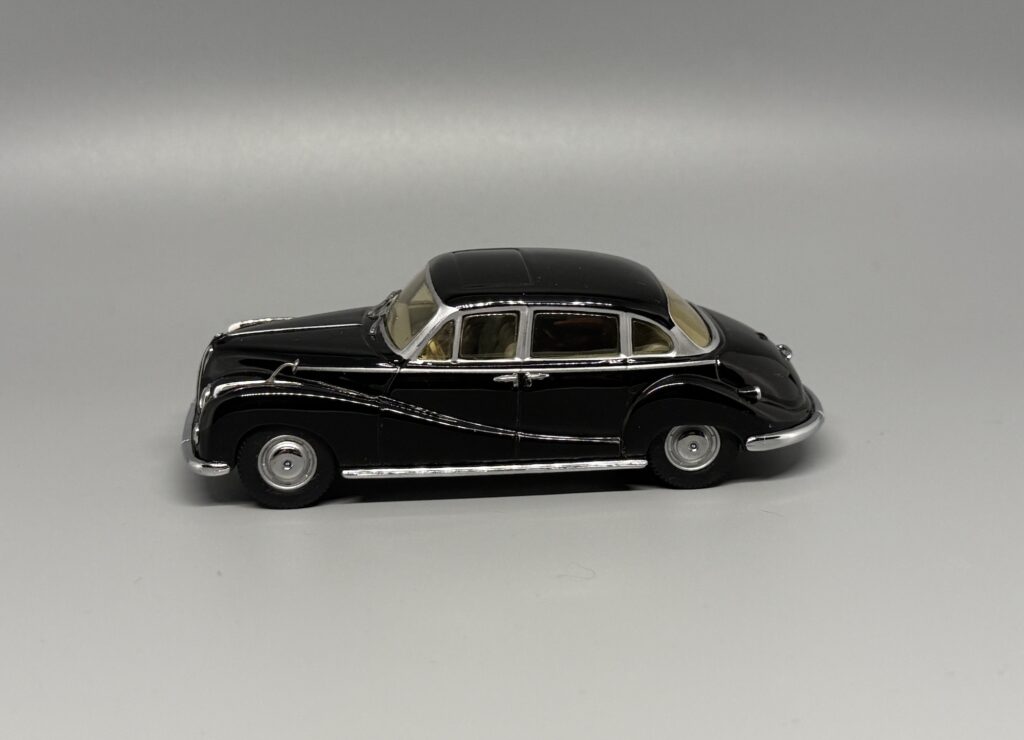
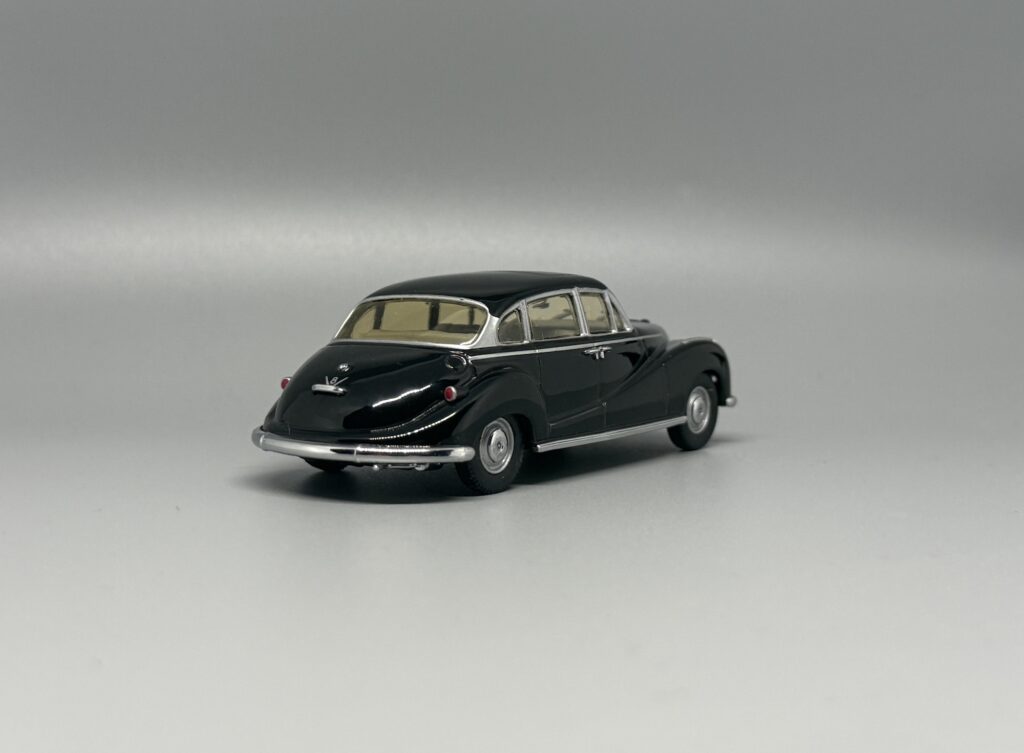
Like the BMW 501, the 502 belonged to the model family popularly known as the “Barockengel”, or “Baroque Angel”. Its rounded wings, high roofline and curved rear gave the car a very distinctive and dignified appearance. The richer chrome detailing of the 502 suited its more luxurious position and made it one of the most recognisable large BMW saloons of the post-war period.
An expensive technological statement
The BMW 502 was technically impressive, but it was expensive to manufacture and its purchase price was also very high. The original BMW 502 cost 17,800 Deutsche Mark in Germany. Sales volumes of BMW’s large luxury cars remained below expectations, and their high development and production costs did little to solve the company’s financial problems during the 1950s. Technical ambition therefore did not yet translate into sufficient commercial success.
Historical significance
The significance of the BMW 502 extends far beyond its sales figures. It introduced BMW’s first V8 engine and demonstrated the company’s ability to develop an exceptionally advanced lightweight power unit for its time. The engine subsequently evolved into the units used in the BMW 503 and BMW 507 and became the technical heart of BMW’s most prestigious cars of the 1950s. The BMW 502 clearly demonstrated the company’s determination to return to the technological elite of the German luxury-car market after the war.
Model in the collection
The model in my collection was produced by Minichamps. The model manufacturer identifies it as the BMW 502 V8, and it represents the original BMW 502 saloon with the 2.6-litre, 100 hp V8 engine.
Technical data in brief
Public debut: Geneva Motor Show 1954
Production period of the original BMW 502: September 1954 – September 1958
Production period of the wider BMW 502 saloon family: September 1954 – December 1963
Body style: four-door luxury saloon
Seating capacity: up to 6
Engine: V8
Displacement: 2,580 cm³
Engine construction: light-alloy block and cylinder heads
Power: 100 hp @ 4,800 rpm
Drivetrain: rear-wheel drive
Top speed: 160 km/h
Price when new: 17,800 Deutsche Mark
Production of the BMW 502 saloon family: more than 7,200 cars
Special feature: BMW’s first V8-powered production model and the first series-production car to use an all-alloy automobile engine
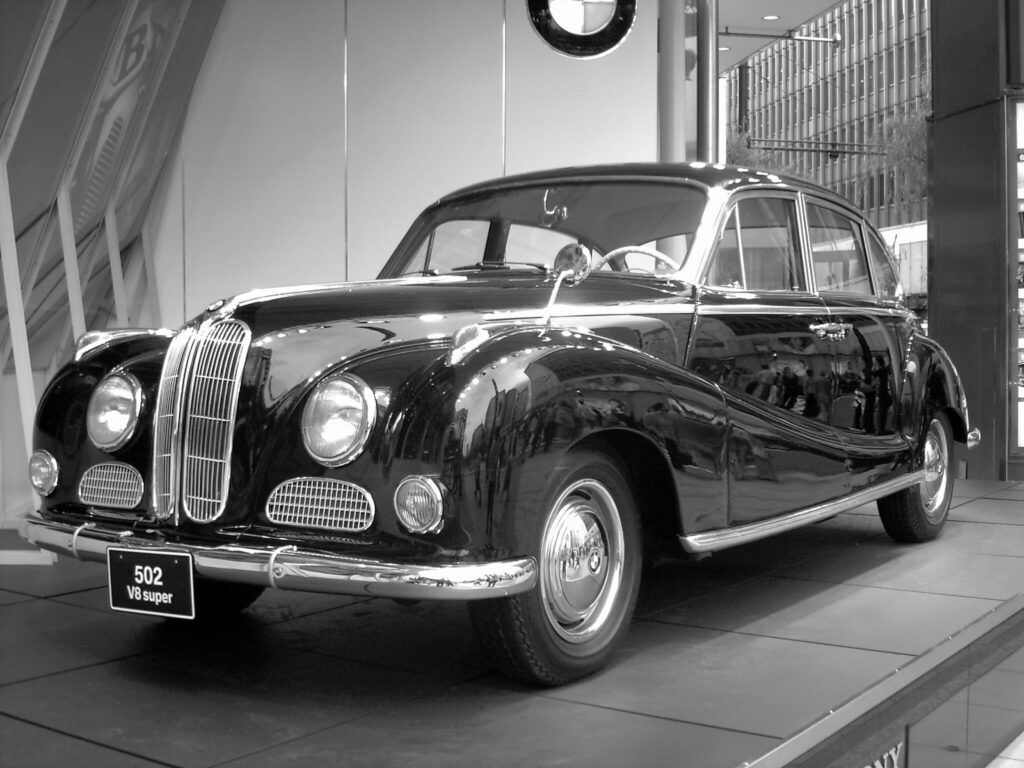
Photo of the real car. Source: commons.wikimedia.org