Background
BMW 3.0 CSL (E9) is one of the most legendary classic BMWs and a model in which the elegance of the E9 coupé, lightweight construction and motorsport-derived engineering came together especially clearly. The CSL was developed as a homologation model to make BMW’s large coupé more competitive in international touring-car racing. The designation CSL stood for “Coupé Sport Leichtbau”, or lightweight sports coupé. While the standard BMW 3.0 CS was primarily a fast and luxurious Gran Turismo, the CSL brought the same basic concept much closer to a racing car.
The need for a lighter competition car
The BMW E9 coupés were powerful and elegant, but their relatively high weight became a significant disadvantage on the race track. Alpina and other teams racing BMWs had already developed E9 coupés for motorsport by the late 1960s, and BMW therefore decided to create a specially lightened production version for homologation. In 1971, BMW commissioned Alpina to develop a lightweight version of the BMW 3.0 CS. The result was the BMW 3.0 CSL, which soon became one of the most important cars in BMW’s growing motorsport programme.
Lightweight construction
The most important difference between the CSL and the standard E9 coupé was weight reduction. Aluminium was used for the doors, bonnet and boot lid, while thinner-gauge steel was used for several body panels. Lighter side and rear windows were also fitted, sound insulation was reduced and some comfort equipment was removed. Depending on the version, these changes saved up to approximately 200 kilograms. The CSL’s improved performance therefore came not only from engine output but also from its lower weight, resulting in better acceleration, handling and braking.
The first 180 hp version
The first BMW 3.0 CSL used the 2,985 cm³ six-cylinder in-line engine from the BMW 3.0 CS, equipped with two carburettors. The engine produced 180 hp at 6,000 rpm and the car had a top speed of approximately 213 km/h. Mechanically, the engine was very similar to that of the standard 3.0 CS, and the CSL’s greatest advantage was therefore its considerably lower weight. According to BMW Group Classic, only 169 examples of this first carburettor-equipped version were produced.
The 200 hp fuel-injected CSL
In 1972, the BMW 3.0 CSL received its next major development stage. The engine was based on the unit used in the BMW 3.0 CSi and was fitted with electronic fuel injection. For homologation purposes, displacement was increased slightly from 2,985 cm³ to 3,003 cm³. The engine produced 200 hp or 147 kW at 5,500 rpm, while top speed increased to 220 km/h. The basic lightweight-construction principles remained unchanged, and externally the fuel-injected model was relatively difficult to distinguish from the earlier carburettor version.
BMW Motorsport GmbH
BMW Motorsport GmbH was established in 1972, and the 3.0 CSL became one of the new company’s first and most important competition projects. Under the leadership of Jochen Neerpasch, the CSL was developed into increasingly capable racing cars and played an important role in the formation of BMW’s organised factory motorsport programme. Although the road-going CSL did not yet carry an M badge, it already embodied several principles later associated with BMW M models: lower weight, competition-derived engineering, greater performance and a direct connection with motorsport.
Racing success
The BMW 3.0 CSL became one of the most successful touring cars of the 1970s. The CSL won the 1973 European Touring Car Championship, and BMW achieved several further titles with the model in the following years. Success also came at the Nürburgring, Le Mans and in the United States. The competition cars developed far beyond the specification of the road-going versions, but the lightweight construction and homologation concept of the CSL formed a strong foundation for BMW Motorsport GmbH’s international reputation.
The beginning of the BMW Art Car tradition
The BMW 3.0 CSL also occupies an important place in BMW’s cultural history. In 1975, American artist Alexander Calder designed a BMW 3.0 CSL racing car that Hervé Poulain entered in the 24 Hours of Le Mans. This became the first BMW Art Car and marked the beginning of a tradition in which BMW competition and sports cars have been designed by some of the world’s best-known artists. One year later, Frank Stella created another BMW 3.0 CSL Art Car.
The sporting side of the E9
The BMW 3.0 CSL demonstrated how far the elegant E9 luxury-coupé concept could be developed without losing its original character. The frameless side windows, slender pillars and elegant Gran Turismo silhouette remained, but the lighter body, reduced equipment and competition-oriented engineering fundamentally changed the character of the car. The CSL was not simply a more powerful BMW 3.0 CS, but a homologation model created for a specific sporting purpose.
Historical significance
The BMW 3.0 CSL was one of the most important cars in the development of BMW’s sporting identity. It connected the worlds of production cars and competition at a time when BMW Motorsport GmbH was only beginning its activities and established a pattern later followed by many BMW homologation and M models. Its lightweight construction, six-cylinder engines and remarkable racing success made the CSL one of the best-known sporting coupés in BMW history. BMW later reused the CSL designation only for a small number of particularly focused high-performance models.
Model in the collection
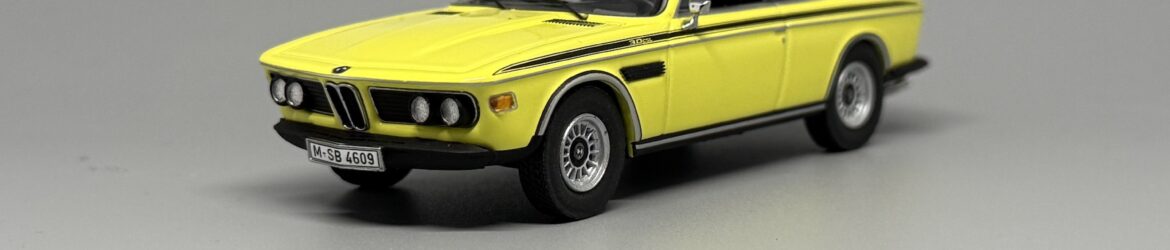
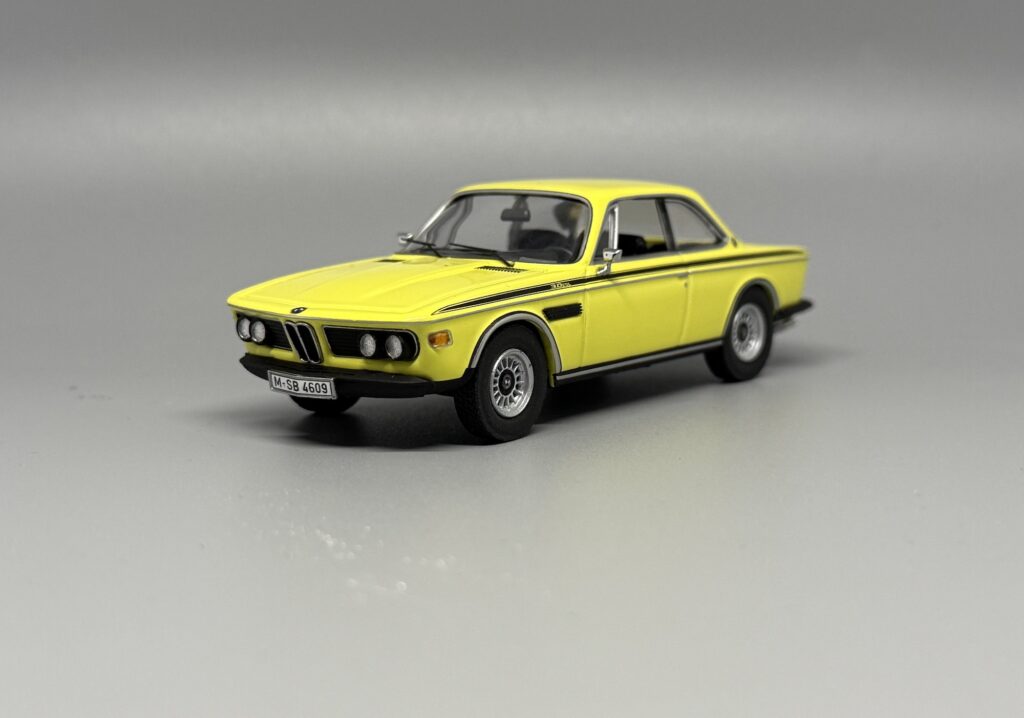
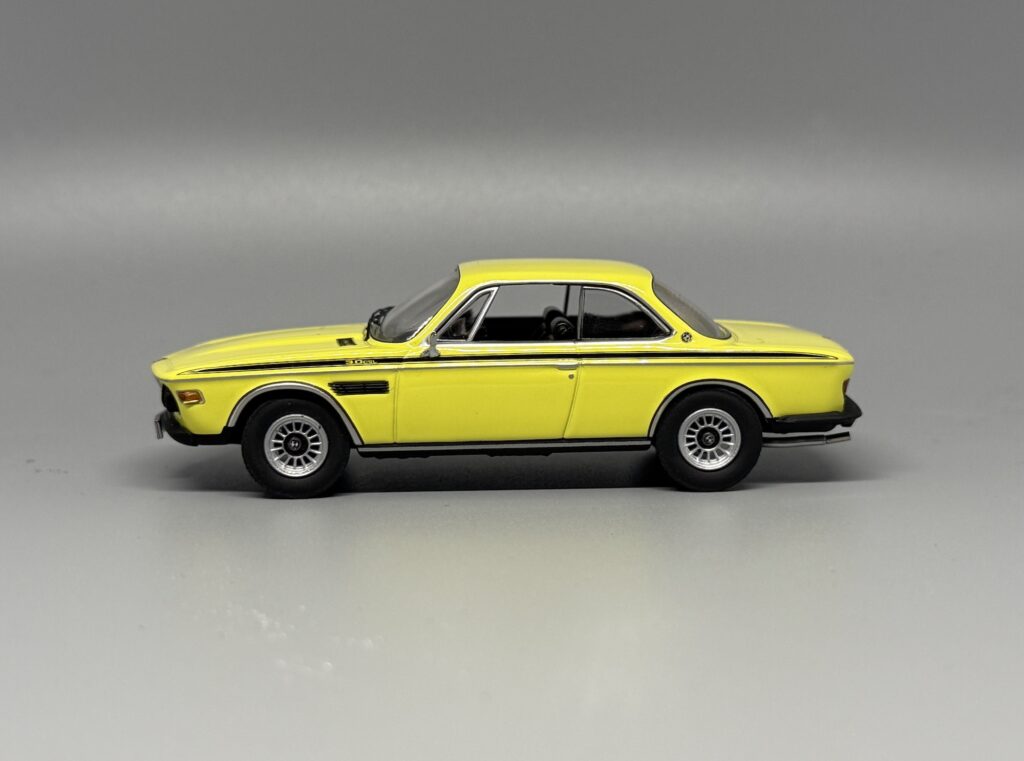
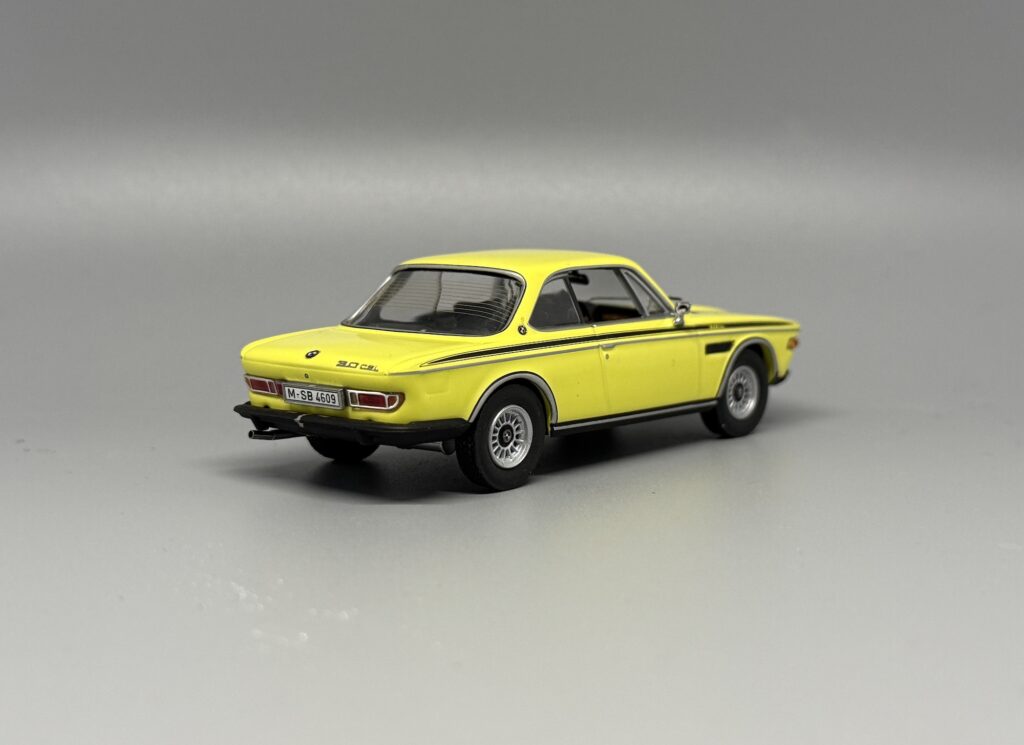
The model in my collection was produced by Schuco. It was produced in a limited edition of 1,000 examples.
Technical data in brief
Production period: 1971–1973
Body style: two-door lightweight coupé
Engine: six-cylinder in-line engine
Displacement: 2,985–3,003 cm³
Fuel system: twin carburettors or electronic fuel injection depending on version
Power: 180–200 hp
Transmission: 4-speed manual
Drivetrain: rear-wheel drive
Top speed: 213–220 km/h
Lightweight construction: aluminium doors, bonnet and boot lid, thinner body panels and lighter windows
Production of the first 180 hp version: 169 cars
Special feature: lightweight E9 homologation model and one of the most important cars in the early history of BMW Motorsport GmbH
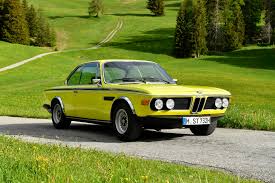
Photo of the real car. Source: bmwblog.com