
Background
BMW 3/15 PS DA2 Limousine belongs to the model family with which BMW began its history as an automobile manufacturer in 1929. Its roots can be traced back to the British Austin Seven, which Fahrzeugfabrik Eisenach initially produced under licence as the Dixi 3/15 PS DA1. BMW acquired the Eisenach automobile factory together with the Dixi brand in October 1928 and initially continued production of the existing small car. Under BMW ownership, the design was further developed, resulting in the BMW 3/15 PS DA2 in 1929, with the abbreviation DA standing for “Deutsche Ausführung”, or German version. The first DA2 cars were completed in March 1929, and in July of the same year the model was officially presented with the BMW name and emblem. It became BMW’s first series-production passenger car and an important starting point for the company’s entire later history as an automobile manufacturer.
Design and concept
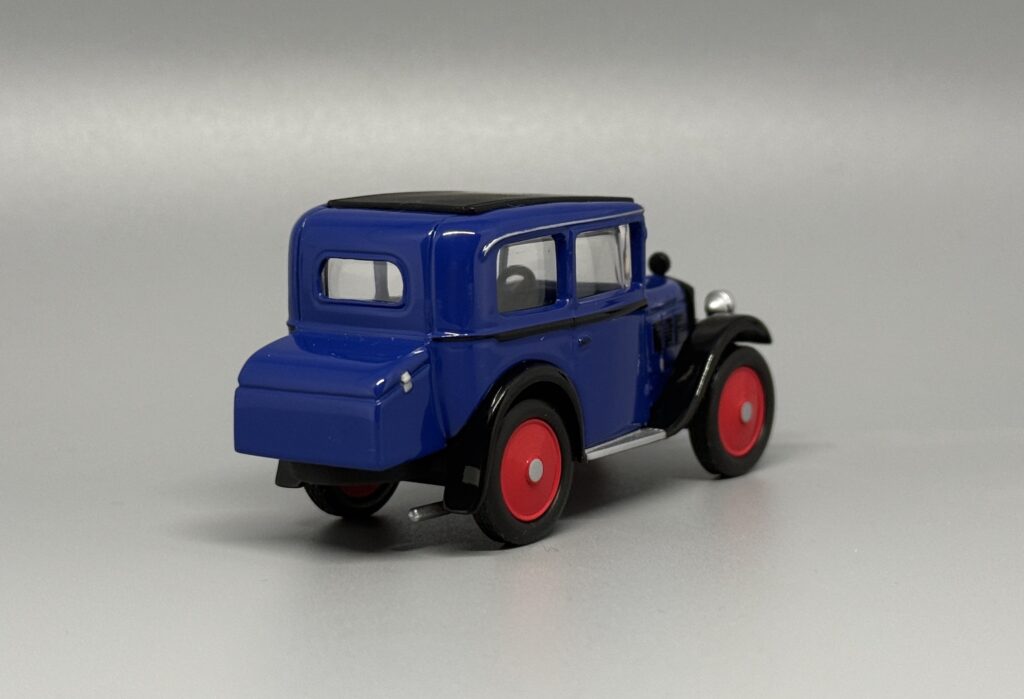
The BMW 3/15 PS DA2 Limousine was very compact in size, but BMW aimed to offer a practical and fully usable family car. The Limousine received a modern all-steel body, wide doors, wind-down side windows and an enclosed passenger compartment that provided considerably better weather protection than the simpler open small cars of the period. BMW even advertised the car with the slogan “Innen größer als außen” – “bigger inside than outside”. The interior provided space for three adults, or two adults with children, while a small separate luggage compartment was located at the rear. This small rear luggage extension is one of the details that helps distinguish the DA2 Limousine from the later DA4, in which the luggage compartment was removed and the passenger compartment was extended by around 20 centimetres to provide more space for rear-seat passengers.
Technology
Technically, the BMW 3/15 PS DA2 remained faithful to the simple and economical basic concept inherited from the Austin Seven, but BMW introduced several important improvements. The car used a 748.75 cm³ four-cylinder in-line engine producing 15 hp at 3,000 rpm. Power was transmitted to the rear wheels, and top speed was approximately 75 km/h. Compared with the earlier Dixi DA1, the DA2 received brakes on all four wheels, an improved body, better interior trim, adjustable seats and more practical wind-down windows. The strength of the car did not lie in high power, but in its low weight, simple engineering, low running costs and affordability. These characteristics helped BMW reach a much broader customer base than would have been possible with larger and more expensive cars.
Production
Production of the BMW 3/15 PS DA2 model family began in March 1929, while according to BMW Group Classic the specific closed-body Limousine version remained in production until November 1930. The Limousine’s all-steel body was produced by the Berlin coachbuilding company Ambi-Budd, and the first BMW cars were assembled at its Berlin-Johannisthal factory. The Eisenach plant, meanwhile, remained the technical and manufacturing centre of the model family. Production of the DA2 Limousine is generally given as approximately 6,600 cars, making it one of the most important body variants of BMW’s first model family. In 1931, it was replaced by the further-developed DA4 Limousine, which featured a longer passenger compartment and a new front-axle design.
Significance in BMW history
The importance of the BMW 3/15 PS DA2 in BMW history is exceptionally great, because it was with this model that the company, previously known mainly for aircraft engines and motorcycles, officially became an automobile manufacturer. Although the car’s technical origins lay in the Austin Seven and Dixi DA1, BMW had already begun adapting and improving the model to its own requirements with the DA2. Four-wheel brakes, a new all-steel body and a higher-quality interior showed the direction in which BMW wanted to develop the car. The DA2 Limousine was especially important because it was a practical and relatively affordable closed family car that introduced the BMW name to a new group of customers. Within a few years, BMW would begin creating increasingly independent automobile designs, but the 3/15 PS DA2 remains the model with which BMW’s automobile story truly began.
Model in the collection
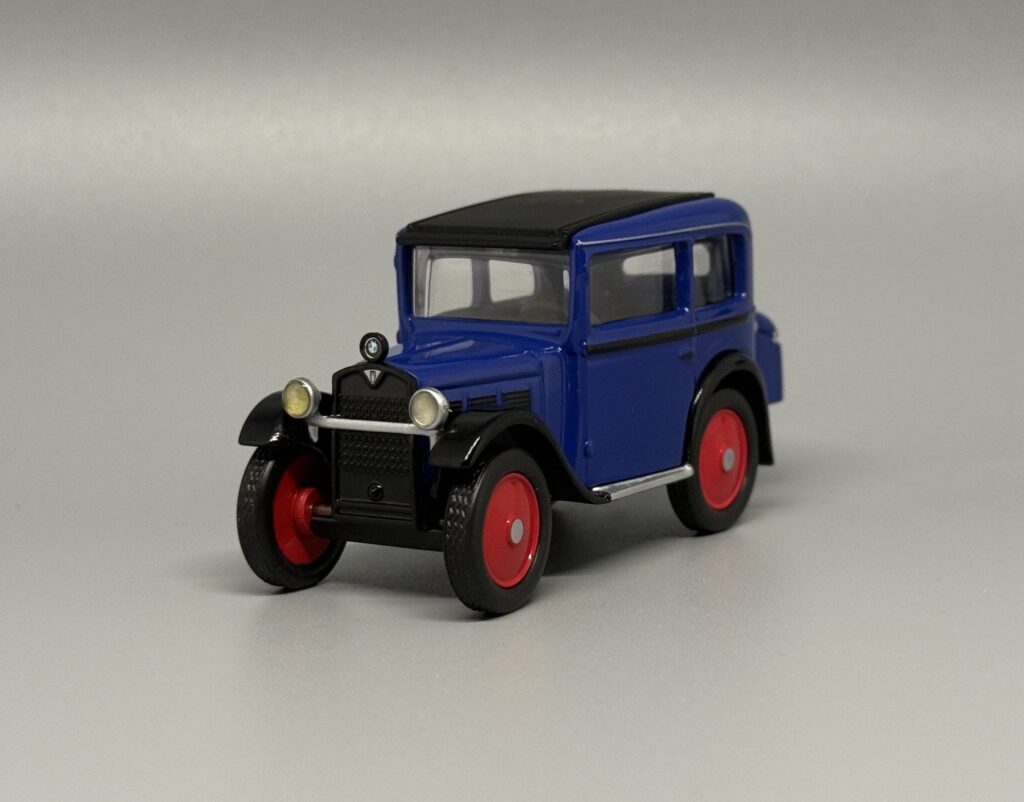
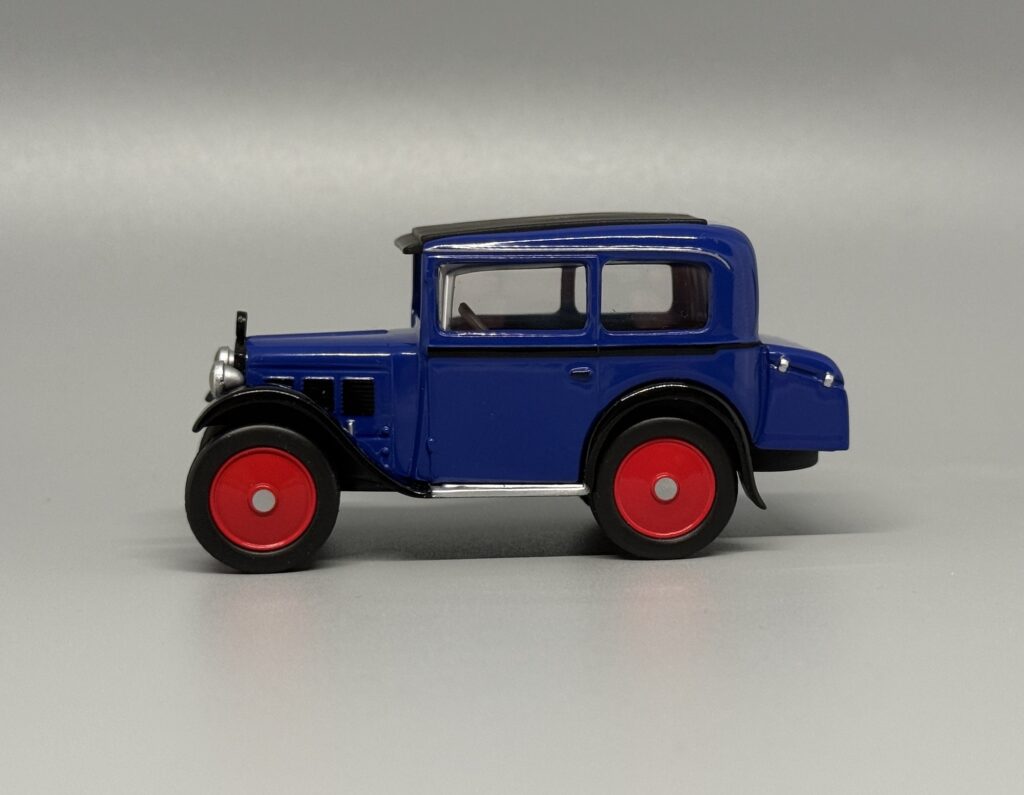
The model in my collection was produced by Schuco and represents the BMW 3/15 PS DA2 Limousine.
Technical data in brief
Production period: 03/1929–11/1930
Place of production: Eisenach and Berlin-Johannisthal, Germany
Body style: closed Limousine / saloon
Body construction: all-steel body
Engine: 748.75 cm³ four-cylinder in-line engine
Power: 15 hp @ 3,000 rpm
Drivetrain: rear-wheel drive
Top speed: approximately 75 km/h
Production number: approximately 6,600 Limousines
Price when new: 2,475 Reichsmarks
Special feature: BMW’s first series-production passenger car; the DA2 Limousine was characterised by a small separate luggage compartment, which was removed on the later DA4 to provide more passenger space
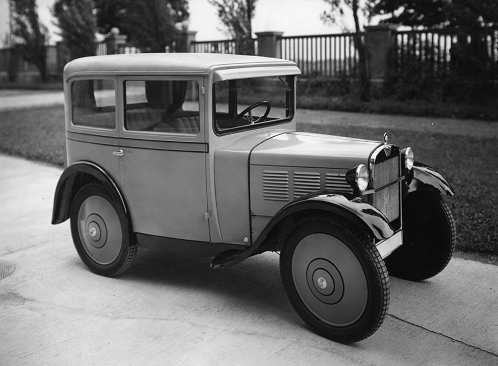
Photo of the real car. Source: dixi-ig.de