
Background
BMW 1600 GT was one of the most unusually originated BMW models of the late 1960s. The car was not originally developed by BMW, but emerged after BMW took over Hans Glas GmbH in Dingolfing at the end of 1966. Glas had already created the Pietro Frua-designed 1300 GT and 1700 GT sports coupés, and BMW decided to continue using their elegant body design while combining it with its own mechanical components and brand identity. The result was the BMW 1600 GT – a rare combination of Italian design, Glas coachwork and BMW engineering.
Glas 1300 GT and 1700 GT
The direct predecessors of the BMW 1600 GT were the Glas 1300 GT and Glas 1700 GT. The first was presented in 1963, with series production beginning in 1964, while the more powerful 1700 GT followed later. These were small sporting Gran Turismo cars and represented a significant departure from the smaller vehicles for which Glas was better known. The GT models reflected the company’s ambition to move into a more prestigious and sporting sector of the market.
Pietro Frua design
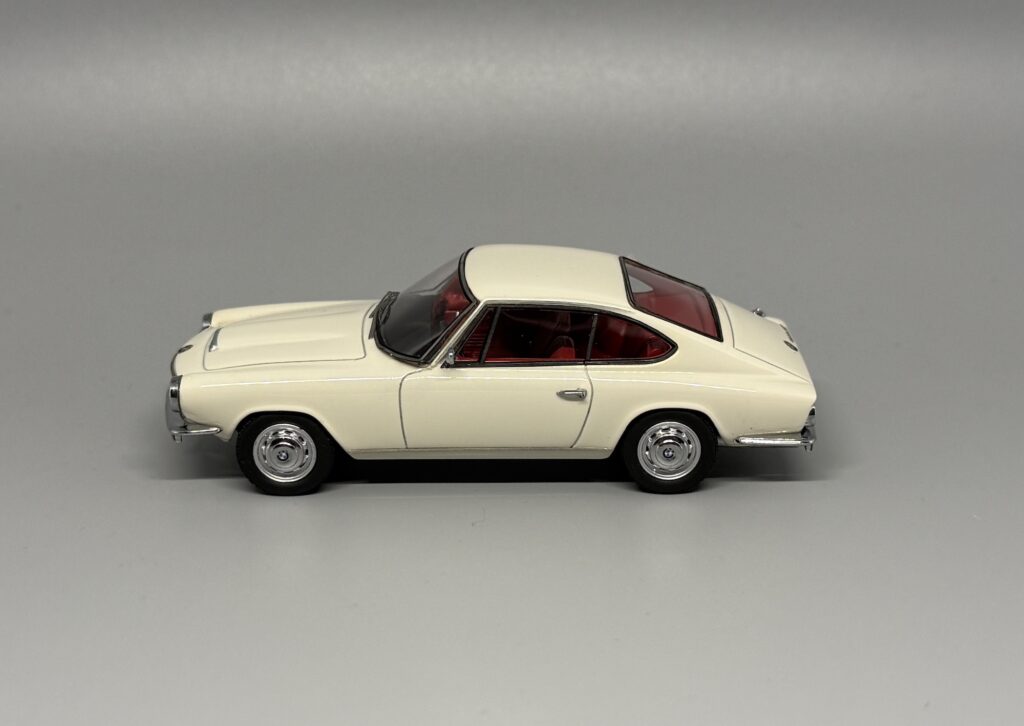
The elegant body of the Glas GT was designed by Italian stylist Pietro Frua. Its low nose, long bonnet, flowing roofline and compact rear section gave the car a distinctly Italian sports-coupé character. Frua’s basic design was largely retained for the BMW 1600 GT, which is why the car looks noticeably different from contemporary BMW Neue Klasse and 02 Series models. BMW did not attempt to redesign the overall shape, but adapted it to suit its own brand identity.
BMW takes over Glas
BMW acquired Hans Glas GmbH at the end of 1966. The takeover gave BMW access to both Glas models and its production facilities in Dingolfing. This was an important step for BMW in the long term, as Dingolfing would later grow into one of the company’s largest and most important manufacturing plants. Glas models were gradually discontinued, but BMW decided to make use of the potential of several existing designs. One of these was the small Frua-designed GT coupé.
From Glas GT to BMW 1600 GT
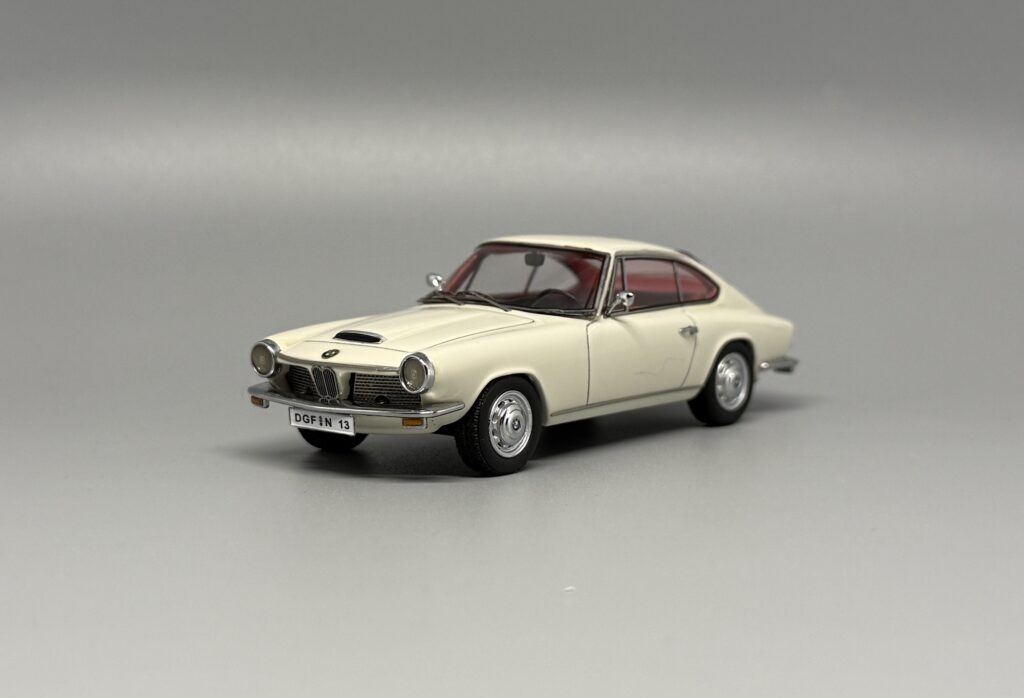
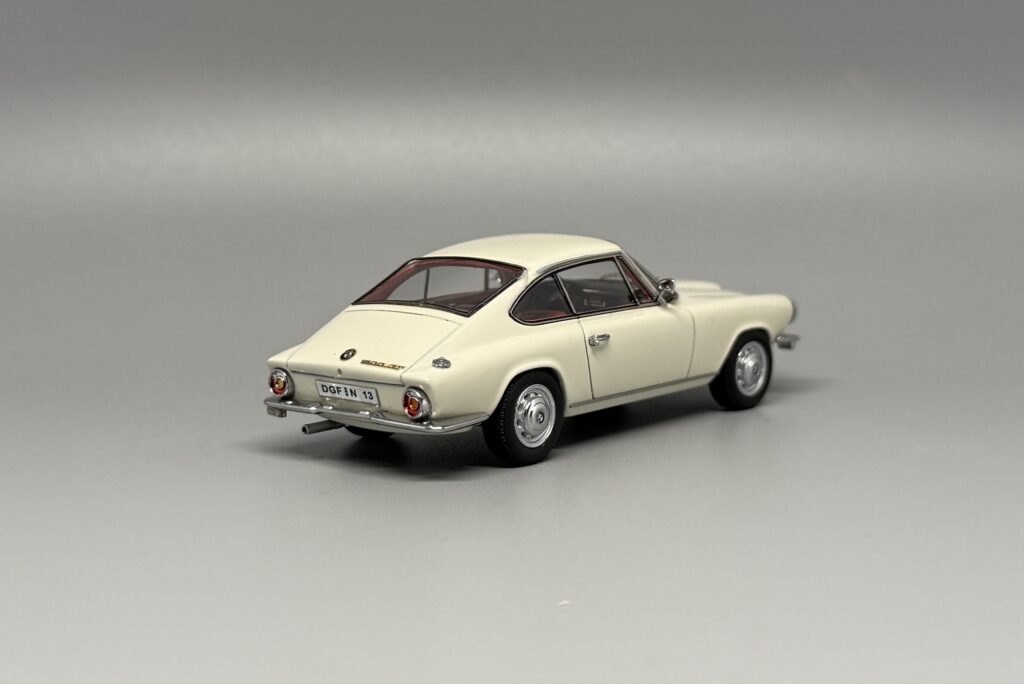
BMW did far more than simply replace the badges on the Glas GT. The front of the car received BMW’s characteristic twin kidney grille, while round rear lights similar to those used on the BMW 02 Series were fitted at the back. BMW materials and components were also introduced into the interior. The most significant changes, however, took place underneath the body: the BMW 1600 GT received its engine, gearbox and rear axle from the BMW 1600 TI. As a result, the car became technically much more of a BMW than its Glas-derived appearance might initially suggest.
BMW 1600 TI engineering
The BMW 1600 GT was powered by a 1,573 cm³ four-cylinder in-line engine also used in the BMW 1600 TI. Equipped with two Solex twin-choke carburettors, it produced 105 hp or 77 kW at 6,000 rpm. Power was transmitted to the rear wheels through a four-speed manual gearbox. The rear suspension was also taken from the BMW 1600 TI, using semi-trailing arms and coil springs in place of the earlier Glas GT’s rigid rear axle and leaf springs. The basic front suspension design, however, remained of Glas origin.
Performance
BMW engineering made the small Frua coupé a very fast car for its time. According to factory figures, top speed reached 190 km/h, while acceleration from 0 to 100 km/h took approximately 11 seconds. The car weighed around 960–970 kilograms, giving the 105 hp engine a very favourable power-to-weight ratio. The BMW 1600 GT was therefore more than simply a stylish coupé – it was a genuinely capable small Gran Turismo sports car.
Expensive and exclusive
In Germany, the BMW 1600 GT cost 15,850 Deutsche Mark. This was a high price for a small coupé and considerably more than a BMW 1600 TI saloon. The high purchase price limited its potential customer base and contributed to the relatively small production total. The BMW 1600 GT was never intended to be a mass-market model and remained an exclusive and unusual addition to the BMW range.
Convertible prototypes
Although the BMW 1600 GT was offered in production only as a coupé, an open version was also considered. At the suggestion of American BMW importer Max Hoffman, Pietro Frua created two BMW 1600 GT Convertible prototypes in 1967. One was destroyed during testing, while the other was given to BMW major shareholder Herbert Quandt. Decades later, the surviving car was restored by apprentices at BMW’s Dingolfing plant and is now part of the BMW Group Classic collection.
Short production period
Production of the BMW 1600 GT began in September 1967 and ended in August 1968. During this short period, approximately 1,255 coupés were built. Some sources give a figure of 1,259, but Glas production records most commonly use 1,255 cars. In either case, the BMW 1600 GT remained one of BMW’s lowest-production series models of the 1960s.
The importance of Dingolfing
The BMW 1600 GT is also significant in the history of the Dingolfing plant. By acquiring Glas, BMW gained a manufacturing base that was rapidly expanded in the following years. Dingolfing later developed into one of BMW’s most important production centres, building many of the company’s larger and more luxurious model ranges. The 1600 GT therefore represents not only the transition from Glas to BMW products, but also an early chapter in BMW’s industrial expansion in Dingolfing.
Historical significance
The BMW 1600 GT remained an exceptional model in BMW history. Its body had been created before BMW became involved, its designer was the Italian Pietro Frua, and much of its mechanical specification came from the BMW 1600 TI. It did not belong directly to either the Neue Klasse or 02 Series model families, but instead formed a separate branch of its own. This combination of Glas origins, Frua styling, BMW engineering and a very short production period makes the 1600 GT one of the most interesting transitional models in BMW history.
Model in the collection
The model in my collection was produced by Neo Scale Models and represents the BMW 1600 GT coupé. The model clearly shows the low silhouette characteristic of Frua’s design and the BMW twin kidney grille added to the front, which distinguishes the BMW 1600 GT from the earlier Glas GT models.
Technical data in brief
Production period: September 1967 – August 1968
Production location: Dingolfing, Germany
Basis: Glas 1300/1700 GT
Designer: Pietro Frua
Body style: two-door sports coupé
Engine: four-cylinder in-line engine
Displacement: 1,573 cm³
Power: 105 hp / 77 kW @ 6,000 rpm
Transmission: 4-speed manual
Drivetrain: rear-wheel drive
Rear suspension: BMW independent semi-trailing-arm suspension
Length: 4,050 mm
Width: 1,550 mm
Height: 1,280 mm
Wheelbase: 2,320 mm
Weight: approximately 960 kg
Top speed: 190 km/h
Price when new: 15,850 Deutsche Mark
Production: approximately 1,255 cars
Special feature: development of the Pietro Frua-designed Glas GT combining the Glas coupé body with BMW 1600 TI mechanical components and BMW styling elements