Background
Dixi R8 6/14 PS Doppelphaeton belongs to the early period of the German automotive industry, when the automobile was still an expensive and relatively rare luxury product. The model was produced in Eisenach by Fahrzeugfabrik Eisenach, a company that had already begun manufacturing cars in the late 1890s and used the Dixi brand name from 1904 onwards. The R8 entered production in 1908 and belonged to the larger and more prestigious Dixi models of its time. Its open Doppelphaeton body offered seating for four people and reflected the expectations of wealthier customers, for whom the automobile was not only a means of transport but also a symbol of status and prestige. The Dixi R8 dates from a period when the Eisenach factory was still completely independent of BMW – BMW did not acquire the company until 1928. For this reason, the R8 is not a BMW model, but it forms part of the history of the same factory that later became BMW’s first automobile production centre.
Design and Doppelphaeton body
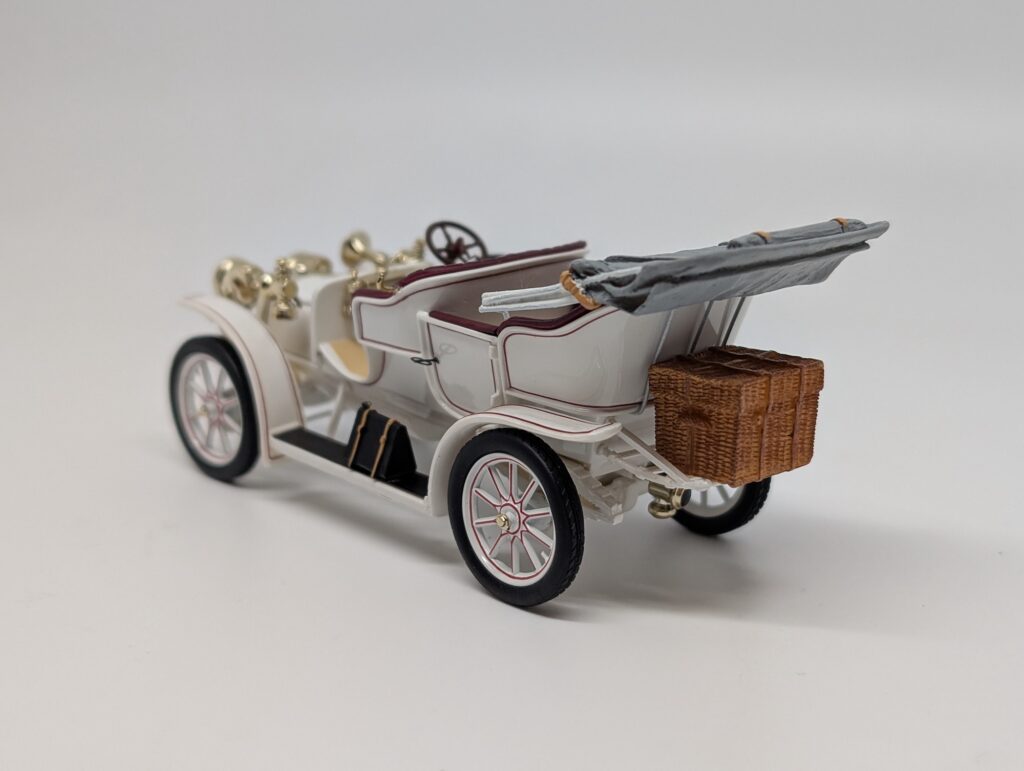
The R8 belongs to an era when automobile body styles still drew heavily on traditional horse-drawn carriage design. The term Doppelphaeton referred to an open touring car with two rows of seats and folding or removable weather protection. The R8’s tall upright radiator, separate mudguards, large headlamps and wooden-spoked wheels were typical of cars from the first decade of the 20th century. At the same time, it was a prestigious and carefully finished vehicle by the standards of its era. Surviving examples from around 1910 show clearly how closely early automobiles still resembled traditional carriages while already incorporating the technical layout that would define the modern motor car.
Engineering
The Dixi R8 6/14 PS used a front-mounted 1,569 cm³ four-cylinder side-valve engine with a bore of 74.5 mm and a stroke of 90 mm. The engine produced 14 hp at 1,600 rpm, with power transmitted to the rear wheels through a three-speed manual gearbox. The engine used liquid cooling and a carburettor for fuel mixture preparation. The car had a wheelbase of 2,500 mm, front and rear track widths of 1,200 mm and a kerb weight of approximately 925 kilograms. Its top speed was around 65 km/h, a respectable figure for a four-seat touring car more than a century ago.
Production
Production of the Dixi R8 6/14 PS began in 1908 and continued until 1914. Approximately 650 cars were built, which was a considerable number for a relatively expensive and labour-intensive vehicle of the period. During these years, the Eisenach factory produced a variety of Dixi models and had become one of the important centres of Germany’s early automobile industry. In the years before the First World War, the Dixi range expanded significantly and included not only passenger cars but also commercial vehicles and buses. The R8 represents an earlier phase of this development, when Dixi was particularly associated with larger and more prestigious automobiles.
Connection with BMW history
The Dixi R8 is not a BMW in the strict sense, as it was produced almost two decades before BMW became involved in automobile manufacturing in Eisenach. Its relevance to BMW history lies mainly in the continuity of the factory and its location. In 1927, Fahrzeugfabrik Eisenach began producing the Austin Seven under licence as the Dixi 3/15, and BMW acquired the company in 1928, thereby entering automobile production for the first time. Early Dixi models such as the R8 therefore form an important prehistory to BMW automobile manufacturing in Eisenach. Within the collection, the R8 helps illustrate that BMW’s car-making history did not begin from nothing – by the time BMW arrived, the Eisenach factory already had decades of experience in building automobiles.
Model in the collection
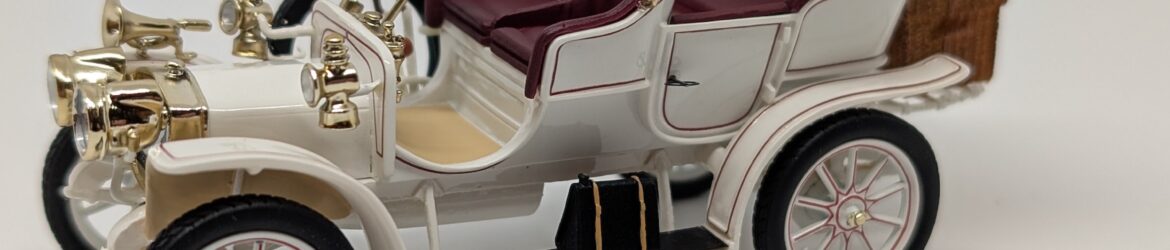
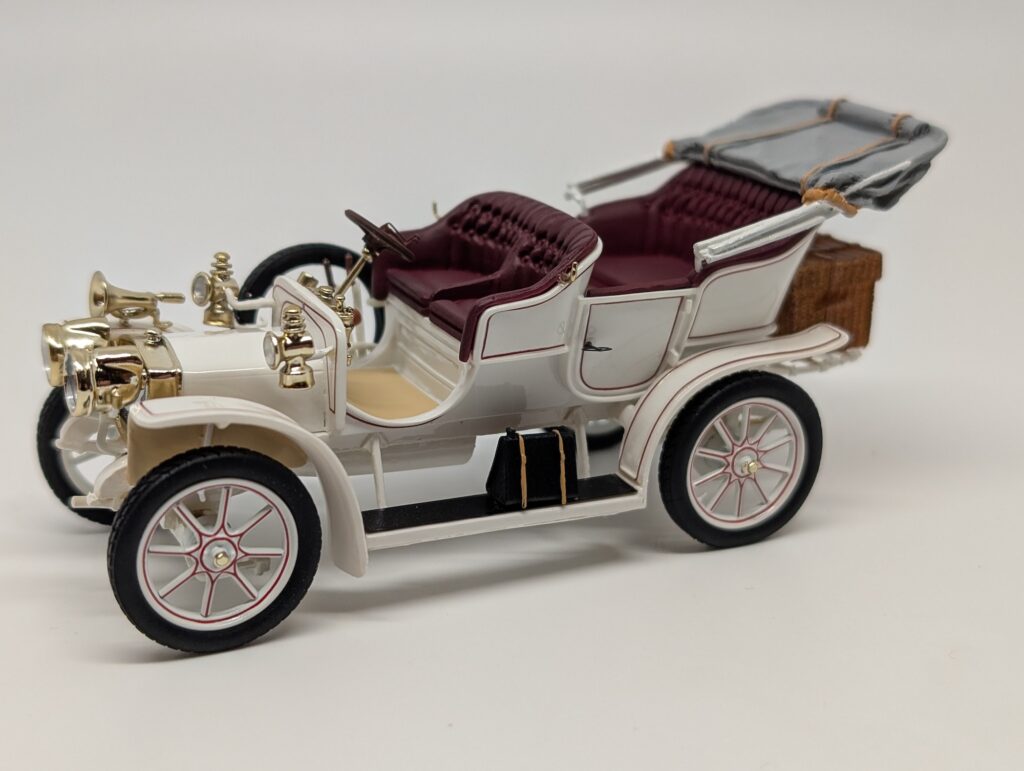
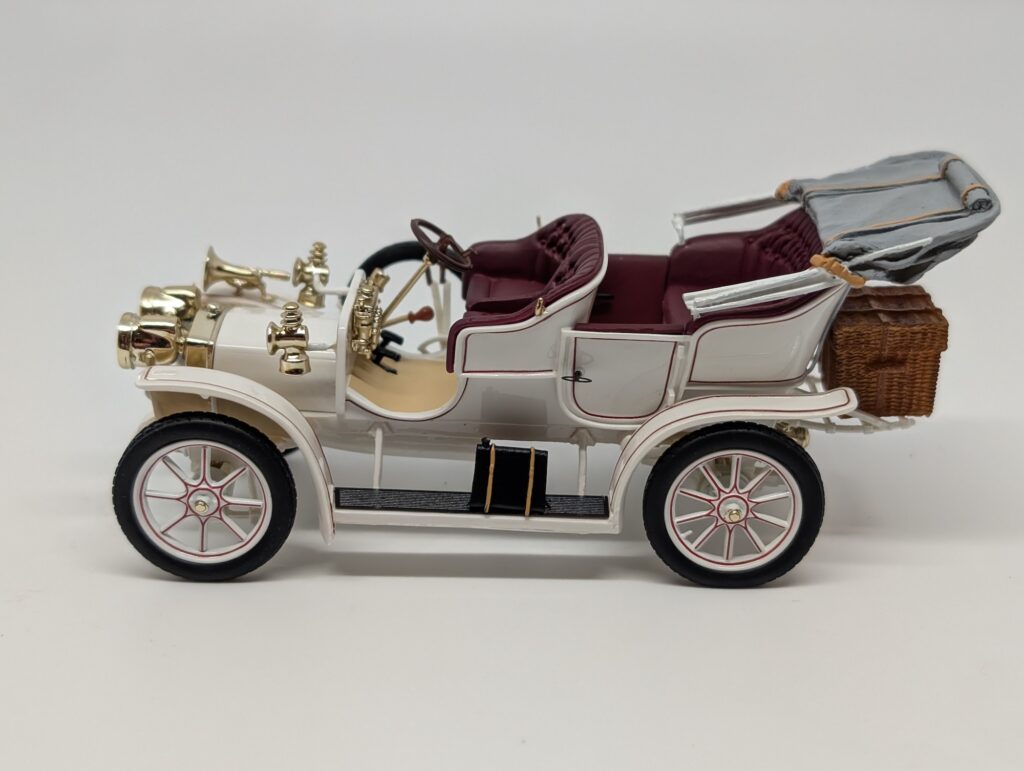
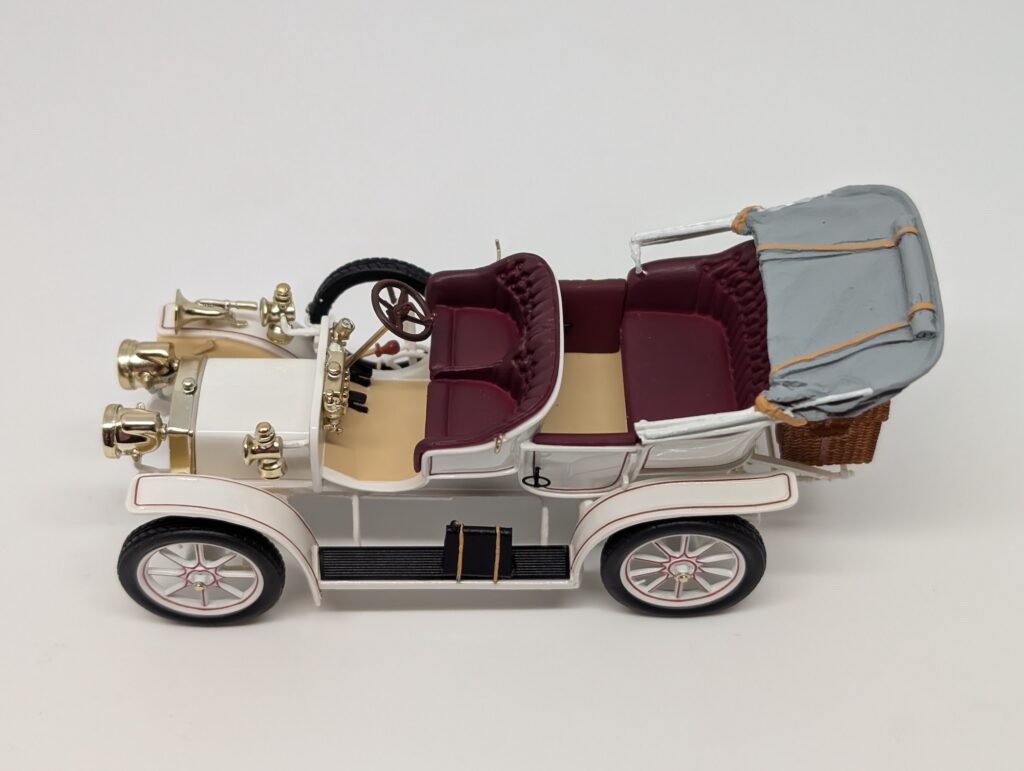
The model in my collection was produced by AutoCult and represents the 1910 Dixi R8 6/14 PS Doppelphaeton. It belongs to AutoCult’s “Early Beginnings” series and was produced in a limited edition of 333 examples.
Technical specifications
Production period: 1908–1914
Place of production: Eisenach, Germany
Body style: four-seat Doppelphaeton
Engine: 1.569-litre four-cylinder side-valve engine
Power: 14 hp @ 1,600 rpm
Drivetrain: rear-wheel drive
Gearbox: 3-speed manual
Wheelbase: 2,500 mm
Kerb weight: approximately 925 kg
Top speed: approximately 65 km/h
Production: approximately 650 cars
Special feature: an early luxury open touring car built by Dixi in Eisenach, forming part of the history of the same factory that became BMW’s first automobile production centre in 1928
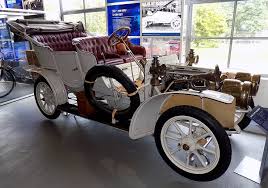
Photo of the real car. Source: auta5p.eu