
Background
BMW 740d (E38) was one of the most technically distinctive versions of the third-generation BMW 7 Series. Introduced in 1999, it was the first BMW to feature a twin-turbocharged V8 diesel engine. The 740d combined the comfort and elegant appearance of a luxury saloon with exceptional torque and impressive fuel efficiency for its class. It marked an important milestone in the development of BMW’s high-performance diesel engines.
The updated E38 generation
The BMW 740d entered the market following the E38’s 1998 model update. The revised generation featured redesigned headlights, indicators and rear lights, together with improvements to comfort and safety equipment. It retained the E38’s classic appearance, characterised by its long bonnet, low beltline and balanced proportions. Its luxurious interior and characteristic BMW driver-focused ergonomics made the 740d equally suitable for executive use and long-distance driving.
BMW’s first V8 diesel engine
The BMW 740d was powered by the 3,901 cm³ M67 V8 diesel engine, featuring two turbochargers, 32 valves and common-rail direct injection. By the time the model reached the market, its rated output was 245 PS, accompanied by an impressive 560 Nm of torque. Maximum torque was available from just 1,750 rpm, allowing the large luxury saloon to accelerate strongly even at low engine speeds.
242 km/h
Power was transmitted to the rear wheels through a five-speed Steptronic automatic transmission. The BMW 740d accelerated from 0 to 100 km/h in 8.4 seconds and reached a top speed of 242 km/h. This was only slightly below the electronically limited 250 km/h maximum speed of the petrol-powered 740i and 750i. Official combined fuel consumption was approximately 9.8 litres per 100 kilometres under the test cycle used at the time.
The development of powerful diesel engines
BMW introduced its first diesel-powered 7 Series in 1996 with the six-cylinder 725tds. This was followed in 1998 by the 730d, featuring common-rail injection. The introduction of the 740d one year later demonstrated the rapid development of BMW diesel technology. Its twin-turbocharged V8 delivered performance approaching that of large petrol-powered luxury saloons while offering the substantial low-speed torque characteristic of diesel engines.
A rare E38 version
The BMW 740d was produced from May 1999 to July 2001 at BMW Plant Dingolfing in Germany. According to published production statistics, just 3,450 cars were manufactured, making it one of the rarer regular-production E38 versions. Total production of the E38 generation reached 327,598 cars. Its relatively small production volume and historical significance as BMW’s first V8 diesel give the 740d a distinctive place in 7 Series history.
Model in the collection
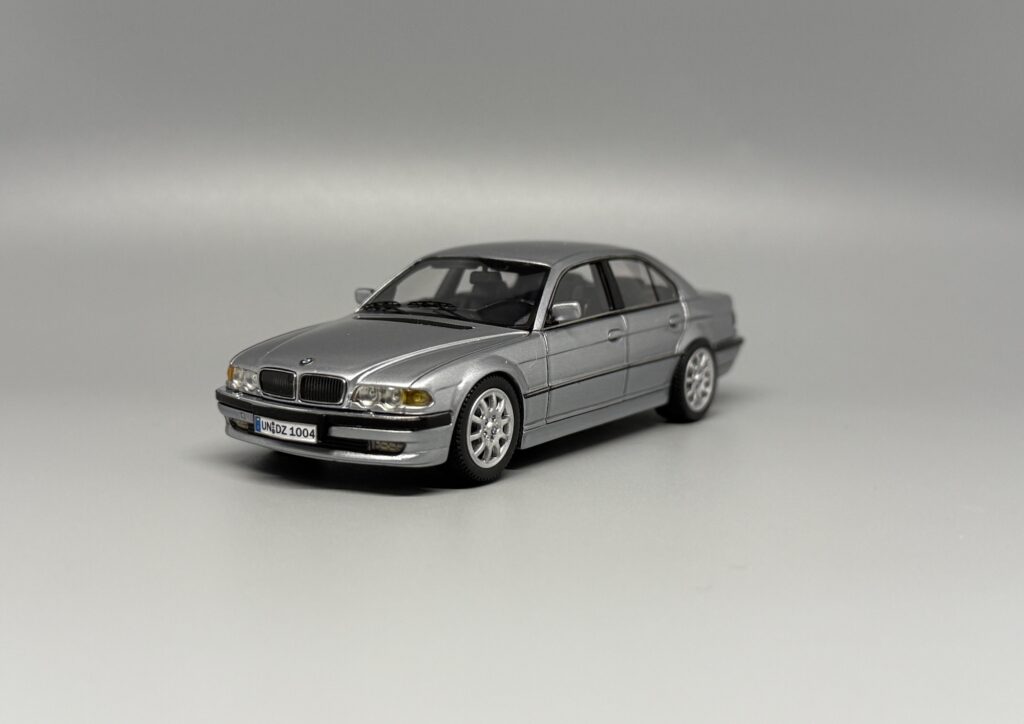
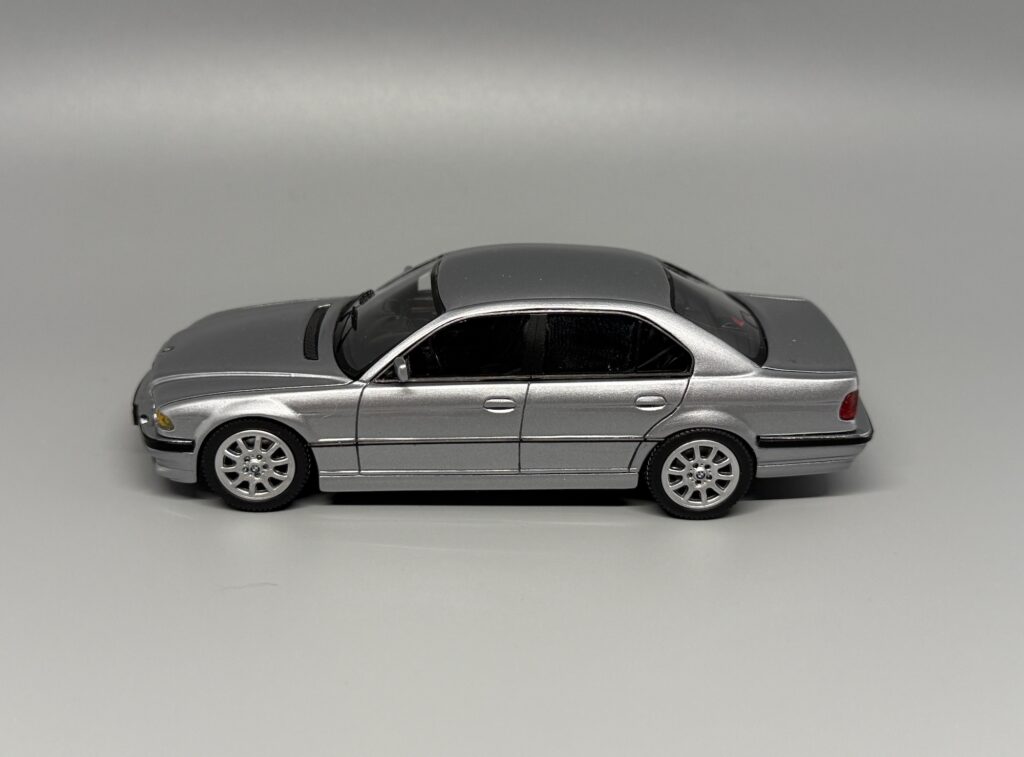
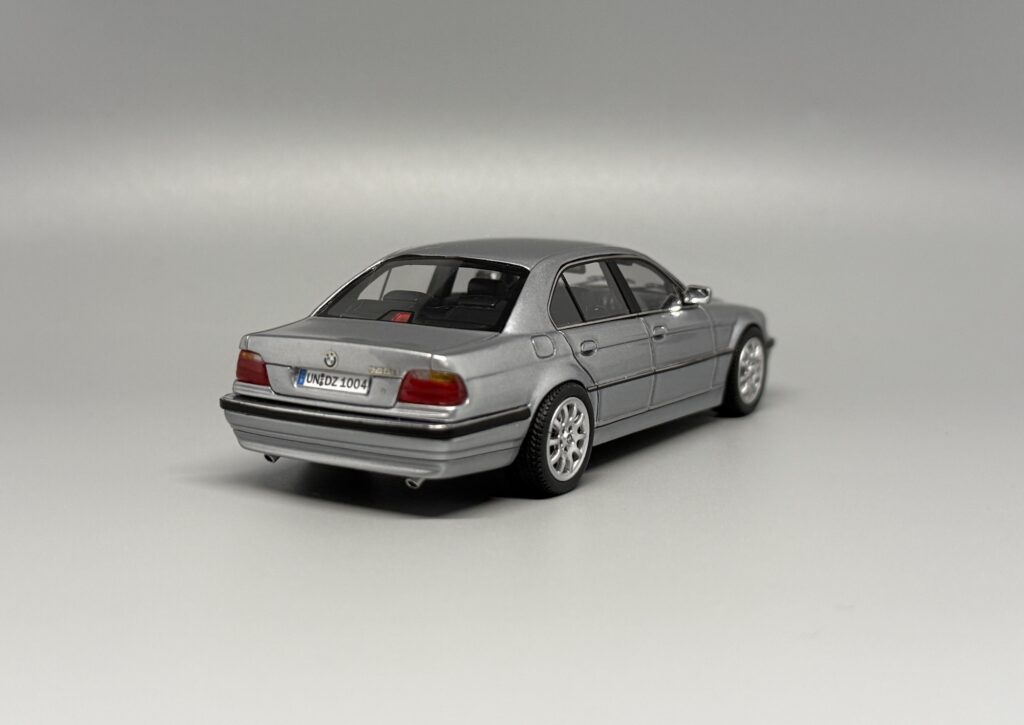
The BMW 740d (E38) in my collection was produced by Neo Scale Models and represents a 2000 car.
Technical data in brief
Production period: May 1999 – July 2001
Production location: BMW Plant Dingolfing, Germany
Body style: four-door luxury saloon
Engine: M67D40, 3.9-litre twin-turbocharged V8 diesel
Displacement: 3,901 cm³
Valves: 32
Fuel injection: common rail
Power: 245 PS / 180 kW @ 4,000 rpm
Torque: 560 Nm @ 1,750–2,500 rpm
Transmission: 5-speed Steptronic automatic
Drivetrain: rear-wheel drive
0–100 km/h: 8.4 seconds
Top speed: 242 km/h
Combined fuel consumption: 9.8 l/100 km under the original test cycle
Wheelbase: 2,930 mm
Weight: approximately 1,960 kg
Production: 3,450 cars according to published production statistics
Special feature: BMW’s first production V8 diesel, featuring twin turbochargers and exceptionally high torque