Background
BMW 502 Convertible by Autenrieth represented one of the most exclusive and handcrafted expressions of BMW’s model range during the 1950s. The car was based on the technical platform of the BMW 502, but its two-door open body was built by the renowned German coachbuilder Autenrieth of Darmstadt. While the standard BMW 502 was already an expensive and prestigious V8 luxury saloon, the Autenrieth Convertible took the same technical foundation into the even rarer world of coachbuilt automobiles, where each car was produced largely by hand and in extremely small numbers.
Autenrieth
Erste Darmstädter Karosseriewerke Georg Autenrieth was one of Germany’s well-known independent coachbuilders. The company created bespoke coupé and convertible bodies for several German marques, and its work was characterised by high-quality craftsmanship and proportions that were often considerably more elegant than those of standard production cars. On the basis of the BMW 501 and 502, Autenrieth produced a number of different open and closed special bodies. These cars were even rarer than the coupés and convertibles offered through BMW’s official sales network in cooperation with Baur.
Two-door Sport Convertible
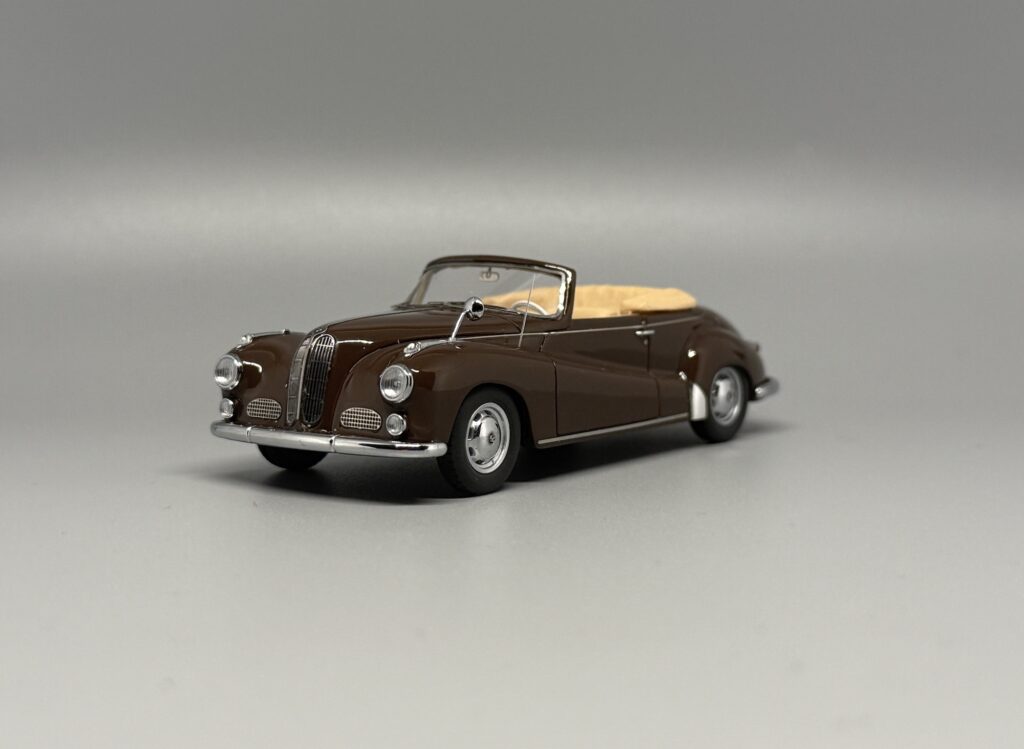
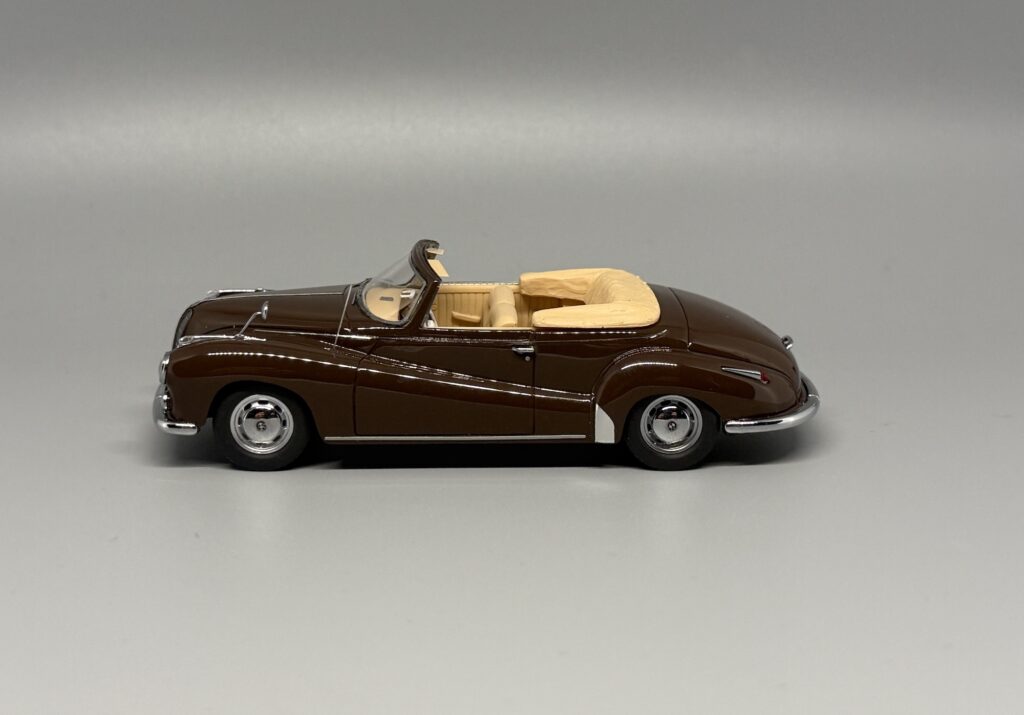
The Autenrieth BMW 502 Sport Convertible differed clearly from the more conventional Baur-built convertible. The body was two-door, with a lower and more sporting profile and without the rear doors of the saloon. The lower beltline, long doors and open body made the large BMW appear considerably more slender and elegant. The headlamps were also positioned further towards the outer edges of the front wings, giving the car a wider and lower visual appearance. Some Autenrieth cars were also fitted with a distinctive panoramic windscreen.
Connection with the BMW 502
Beneath the bespoke body, the car retained the basic engineering of the BMW 502. The 502 was the more luxurious development of the BMW 501 and introduced BMW’s new V8 engine in 1954. Its strong separate chassis frame made it particularly suitable as a basis for independent coachbuilders, because the standard saloon body could be replaced by an entirely new coupé or convertible body. This type of construction was still relatively common among luxury cars of the 1950s but became increasingly rare as unitary body construction became dominant.
Light-alloy V8
The technical heart of the BMW 502 Convertible was a 2,580 cm³ V8 engine with a light-alloy block and cylinder heads. The engine produced 100 hp at 4,800 rpm. The BMW 502 V8 was a highly advanced power unit for its time, and its all-alloy construction helped reduce the weight of the large eight-cylinder engine. The same BMW V8 family was later developed into larger and more powerful versions for other prestigious BMW models.
Performance
The 2.6-litre V8 allowed the Autenrieth BMW 502 Convertible to reach approximately 160 km/h. Power was transmitted to the rear wheels through a four-speed manual gearbox. It was not a sports car in the modern sense, but its performance was very respectable for a large luxury convertible in the mid-1950s. The smooth-running V8 suited the car’s relaxed and exclusive Gran Turismo character particularly well.
Craftsmanship and individuality
Autenrieth-built BMWs were not conventional series-production automobiles. Their bodies were produced largely by hand, and customers could influence exterior colour, interior materials and finishing details. High-quality leather, wood and numerous hand-finished elements were used in the interiors. Because the cars were effectively produced to individual orders, different Autenrieth BMW 502 Convertibles could vary in detail from one another.
Baur and Autenrieth
When discussing open versions of the BMW 502, it is important to distinguish between two different stories. Baur in Stuttgart produced BMW 502 Convertibles that were offered through BMW’s official sales network, and BMW’s historical records state that 57 were built in 1955 and 1956, including 11 four-door examples. Autenrieth cars were even more exclusive bespoke creations, and the two-door Sport Convertible represented a separate body design rather than simply another version of the Baur convertible.
Extremely rare
BMW’s publicly available historical records do not provide an exact production figure for the two-door Autenrieth BMW 502 Sport Convertible. Specialist sources dealing with Autenrieth and surviving cars indicate, however, that this particular 2.6-litre version was probably produced in only around five examples. It was therefore exceptionally rare even when new, and surviving cars today rank among the most unusual luxury BMWs of the post-war period.
Historical significance
The BMW 502 Convertible by Autenrieth brings together two important aspects of the 1950s automotive world: BMW’s technically ambitious post-war luxury car and the traditional craft of independent coachbuilding. While the BMW 502 V8 demonstrated the company’s engineering capabilities, the Autenrieth body added individuality and craftsmanship that a standard production car could not offer. The model recalls a period when particularly wealthy customers could still commission a unique body on the chassis of an established manufacturer – a tradition that almost completely disappeared over the following decades.
Model in the collection
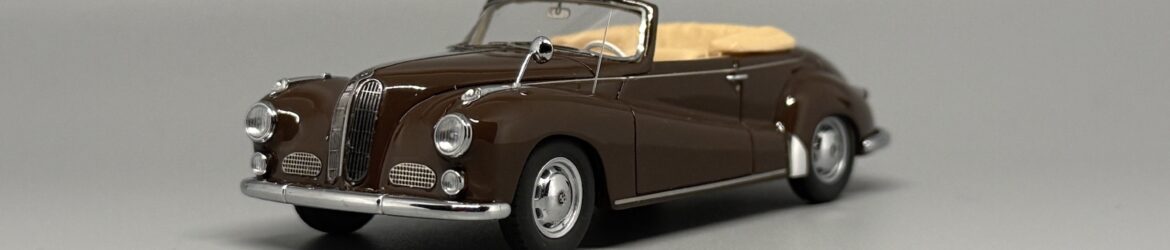
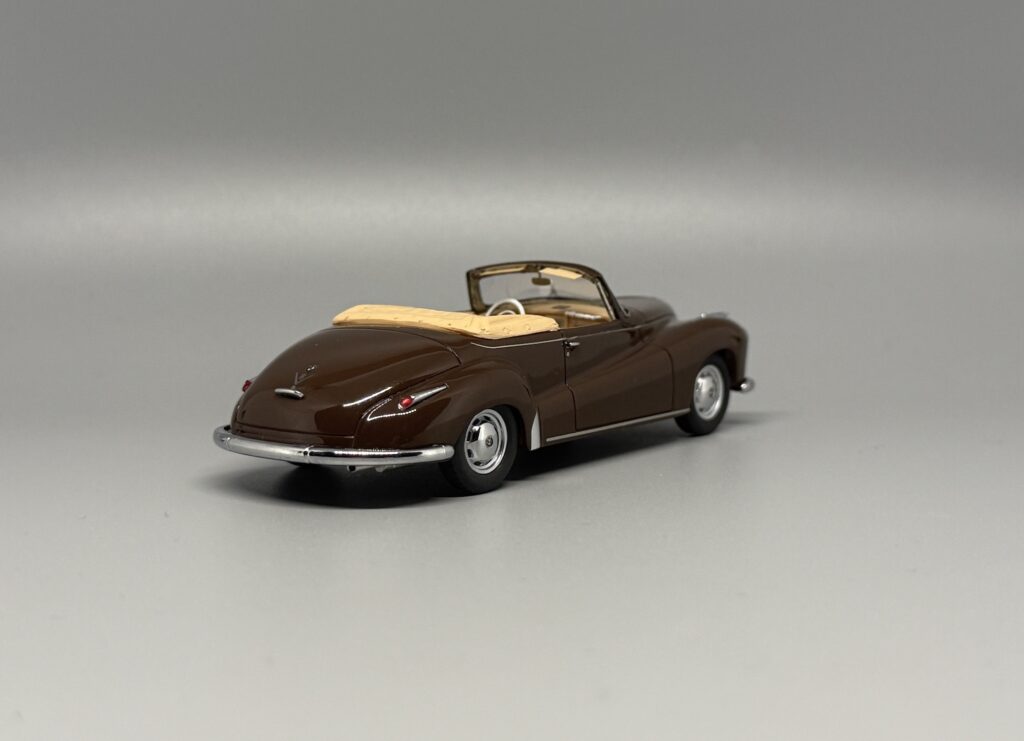
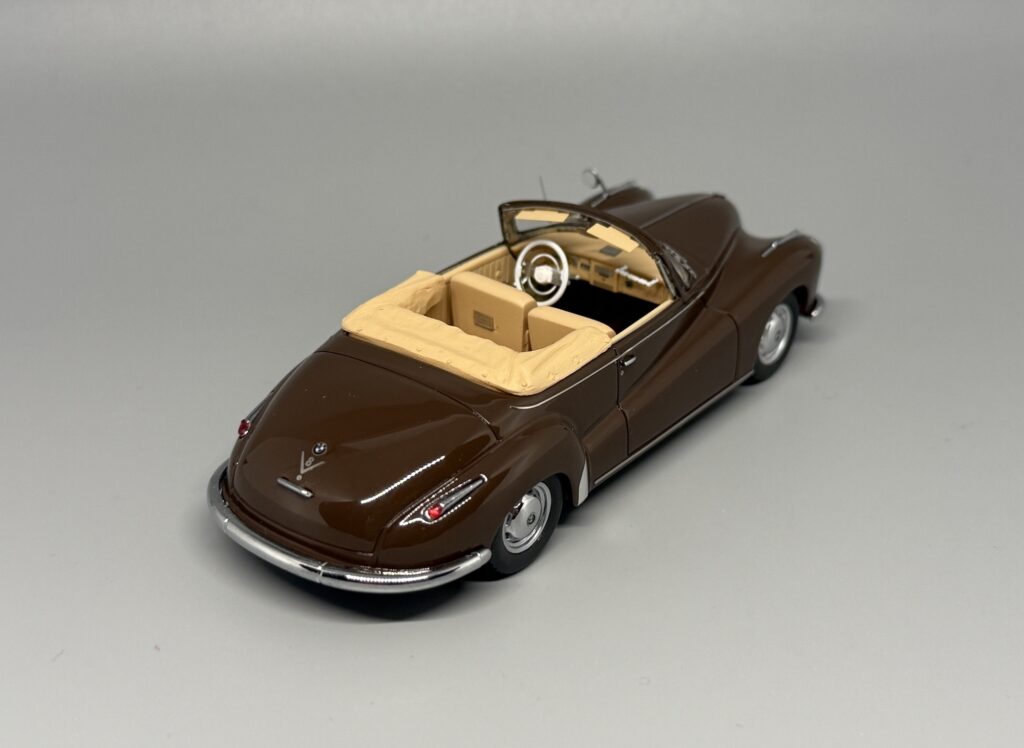
The model in my collection was produced by Neo Scale Models and represents a 1956 BMW 502 Convertible by Autenrieth in its two-door configuration.
Technical data in brief
Model year represented: 1956
Body style: two-door 2+2-seat Sport Convertible
Coachbuilder: Autenrieth, Darmstadt, Germany
Base model: BMW 502
Engine: V8
Displacement: 2,580 cm³
Engine construction: light-alloy block and cylinder heads
Power: 100 hp @ 4,800 rpm
Transmission: 4-speed manual
Drivetrain: rear-wheel drive
Top speed: approximately 160 km/h
Production: probably around 5 cars
Special feature: extremely limited-production two-door BMW 502 Convertible with a bespoke Autenrieth body
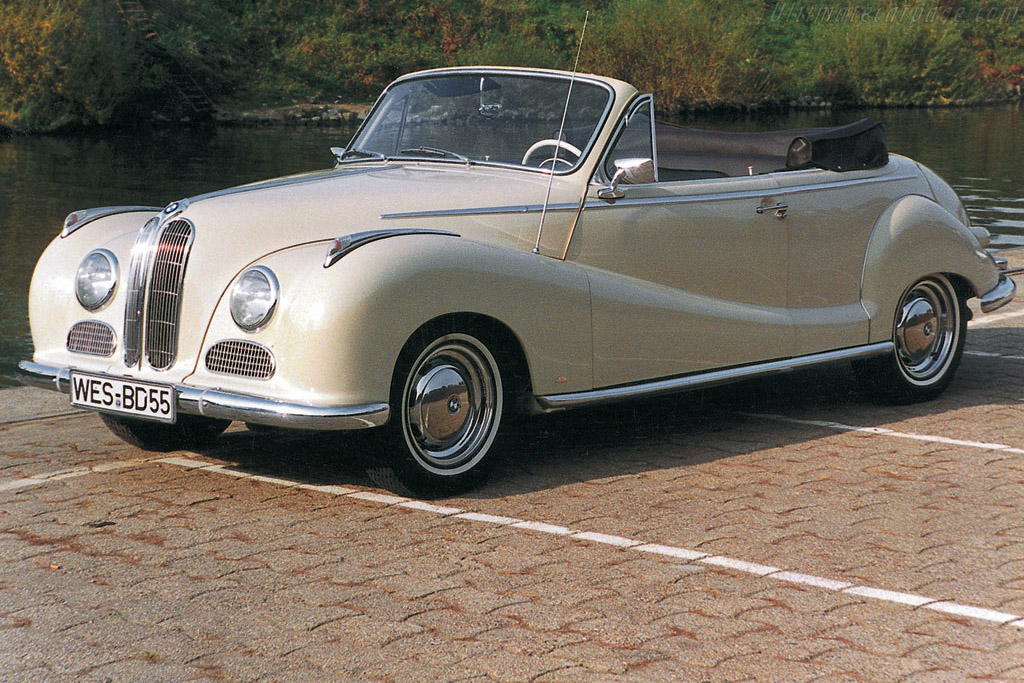
Photo of the real car. Source: ultimatecarpage.com