
Background
BMW Z4 Roadster (E85) represented the next stage in the development of BMW’s Z Series and brought the two-seat roadster into a much more modern era. Unveiled at the Paris Motor Show in September 2002, it succeeded the Z3 Roadster. The new model was larger, structurally stiffer and far more expressive in its design, while retaining the essential roadster formula of a long bonnet, short rear end, low seating position and rear-wheel drive.
A new design language
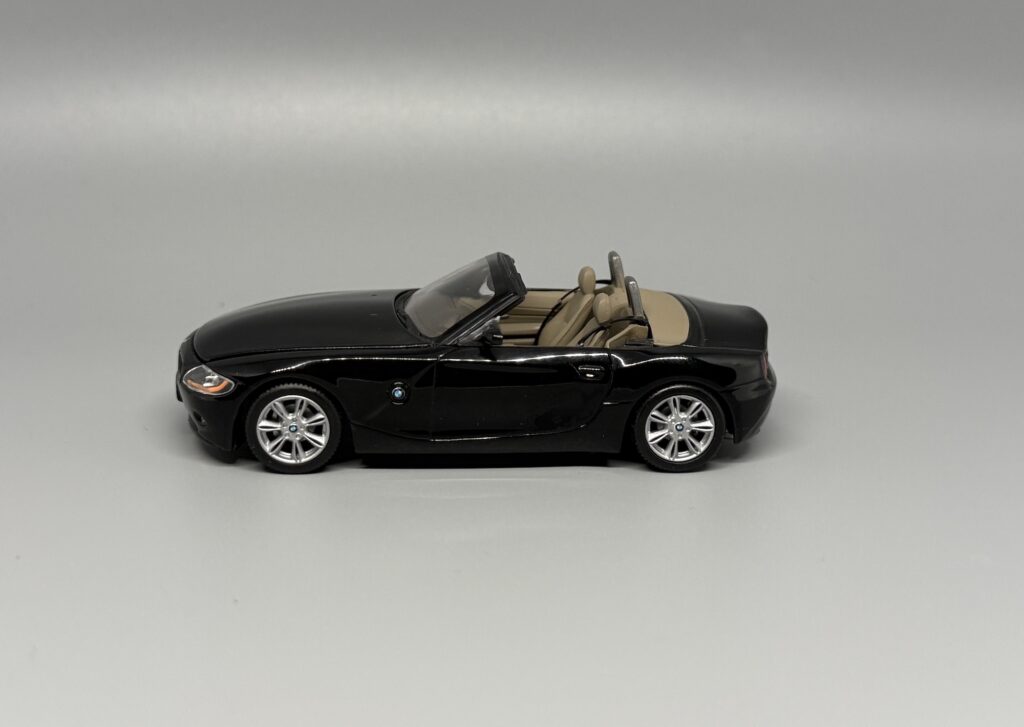
The Z4 introduced a striking expression of BMW’s design language of the early 2000s, combining concave and convex surfaces, sharp edges and strong character lines. Its long bonnet, short overhangs and set-back passenger compartment created classic sports-car proportions. The dramatic side surfacing clearly distinguished the E85 from the softer-looking Z3 and made it one of the most recognisable BMW designs of its era.
Authentic roadster character
BMW placed particular emphasis on driver involvement. The driver and passenger sat low in the car, just ahead of the rear axle, allowing the movements of the chassis to be felt very directly. A wide track, low centre of gravity and approximately 50:50 weight distribution gave the Z4 excellent balance and precise handling. BMW also stated that the car set new standards for torsional rigidity in the roadster and convertible segment.
Straight-six engines at launch
When the Z4 reached the market in 2002, it was offered with two straight-six petrol engines. The Z4 2.5i produced 192 hp, while the Z4 3.0i developed 231 hp. Four-cylinder versions were added later, and the 2006 model update introduced the 265 hp Z4 3.0si. Above the regular range sat the considerably more powerful Z4 M Roadster.
The 2006 model update
The Z4 received a major update in 2006, bringing revised front and rear styling, interior improvements and a new engine range. The most powerful regular Roadster became the Z4 3.0si, whose new 3.0-litre N52 straight-six produced 265 hp. The same year also saw the introduction of the fixed-roof Z4 Coupé (E86), adding a sporting coupé to the Z4 family.
Built in Spartanburg
The BMW Z4 E85 was produced at BMW Plant Spartanburg in South Carolina, USA. Roadster production ran from September 2002 until November 2008. A total of 180,856 Z4 Roadsters were built. Together with the E86 Coupé, total production of the first-generation Z4 reached 197,950 cars.
Historical significance
The BMW Z4 E85 firmly established the Z models as a permanent sports-car family within the BMW range. Compared with the Z3, it introduced a stiffer body, more mature engineering and a much bolder design while retaining the classic two-seat rear-wheel-drive roadster concept. The E85 also provided the basis for the later Z4 M Roadster and Z4 Coupé.
Model in the collection
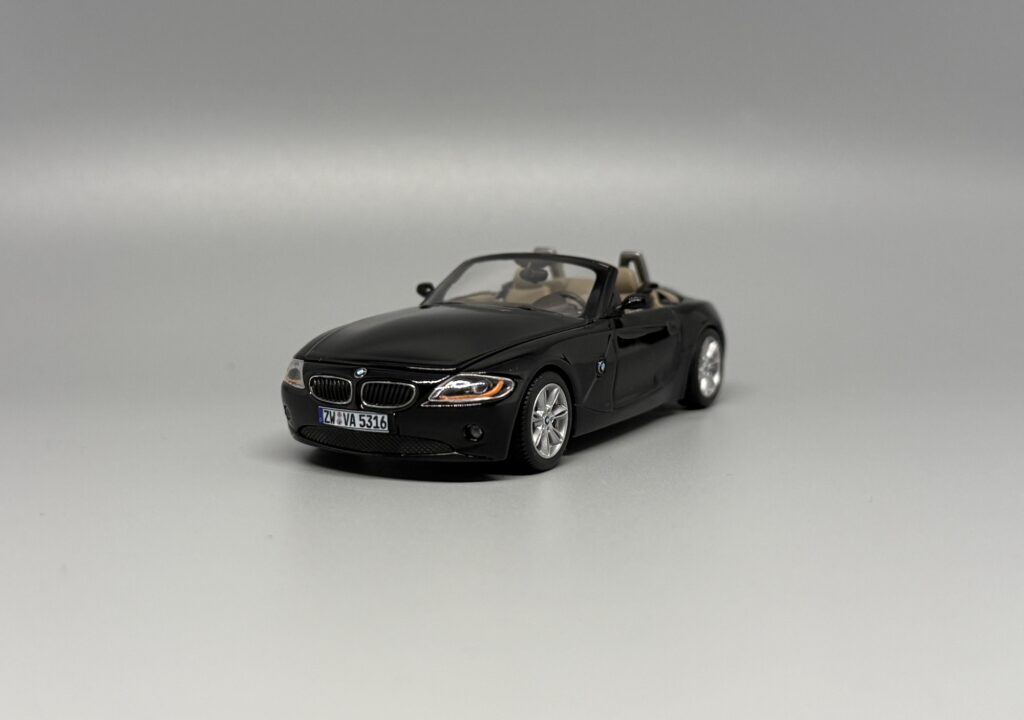
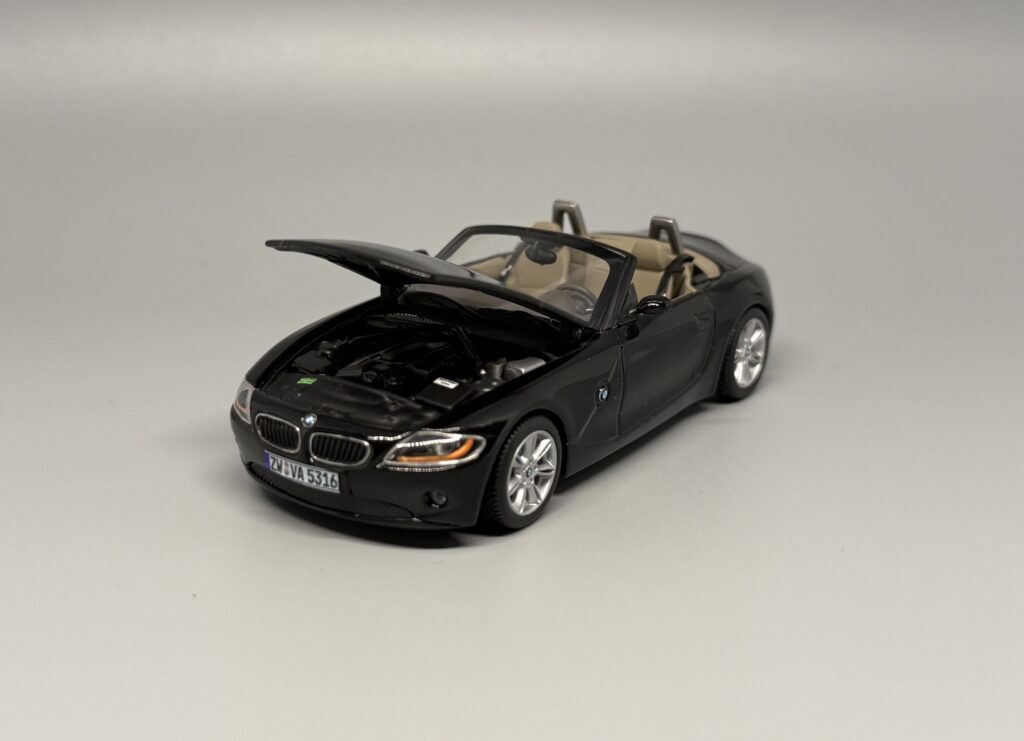
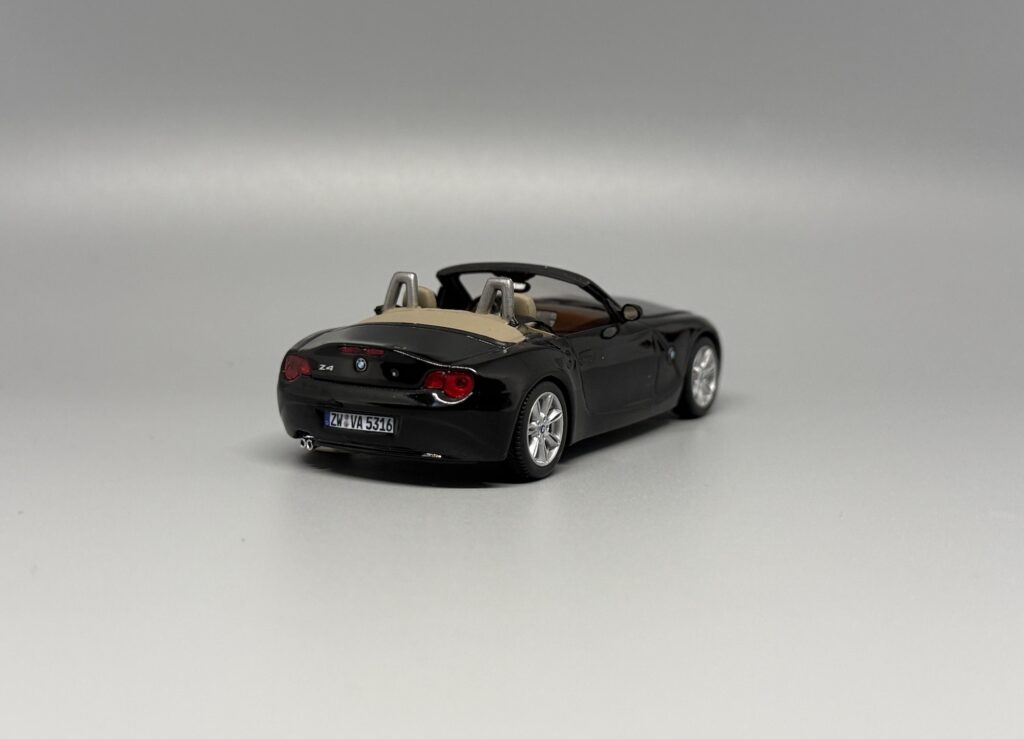
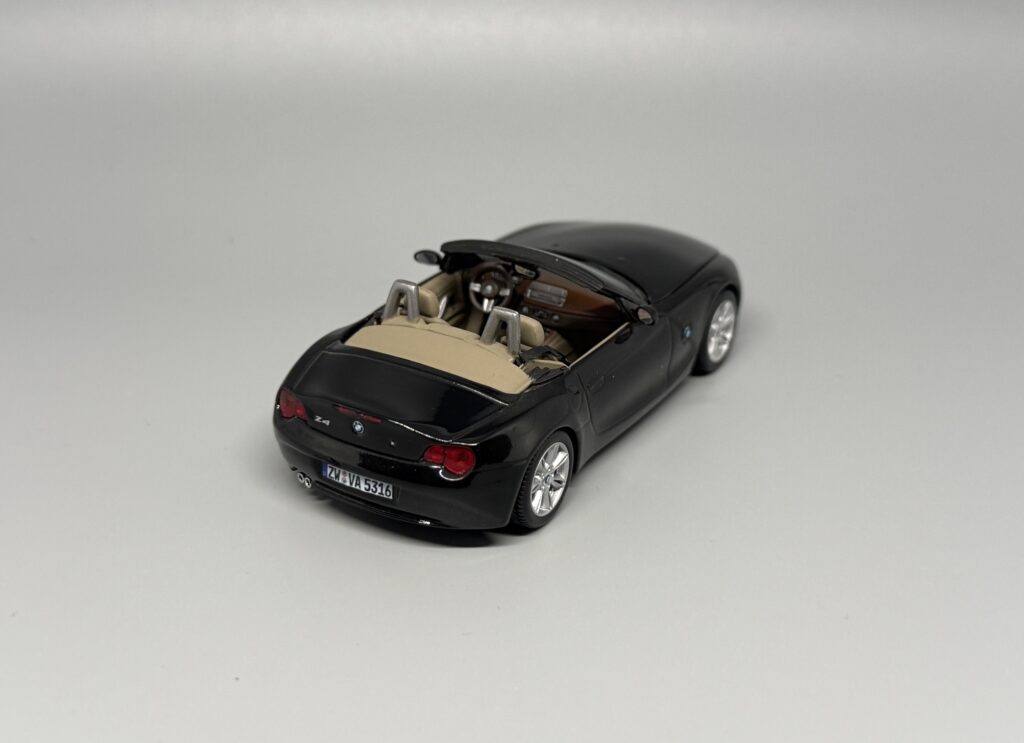
The BMW Z4 Roadster (E85) in my collection was produced by Minichamps and represents a 2002 car from the Z4’s first year of production. It is a limited-edition model, with a total production run of 1,008 examples.
Technical data in brief
Public debut: September 2002
Production period: September 2002 – November 2008
Production location: BMW Plant Spartanburg, South Carolina, USA
Body style: two-seat roadster
Engines: four- and six-cylinder petrol engines
Launch versions: Z4 2.5i with 192 hp and Z4 3.0i with 231 hp
Power: up to 265 hp in regular versions with the Z4 3.0si
Drivetrain: rear-wheel drive
Weight distribution: approximately 50:50
Z4 Roadster production: 180,856 cars
Total first-generation Z4 production: 197,950 cars
Special feature: successor to the Z3, introducing a stiffer structure and a much more expressive BMW design language
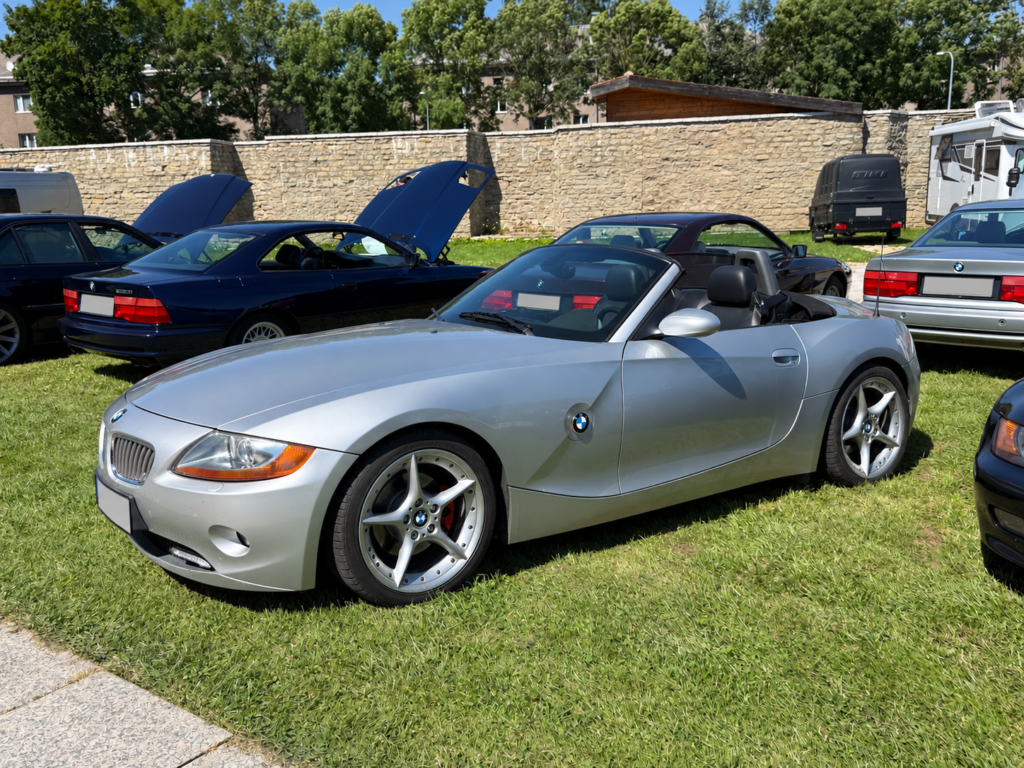
Photo of the real car. Photo: Sten-Patrick Kreek