Background
BMW 2002 GT4 Frua was one of the most elegant and rare special-bodied cars created using BMW 02 Series mechanical components. Italian designer Pietro Frua developed the project on his own initiative, aiming to show what a lower, more luxurious and more Gran Turismo-like coupé based on BMW 2002 engineering could look like. Frua did not merely modify the existing 02 Series body, but created an entirely new 2+2 fastback coupé that combined compact BMW mechanical components with the elegance of an Italian GT car.
Pietro Frua and BMW
During the late 1960s, Pietro Frua was seeking closer cooperation with BMW and created several special projects using BMW mechanical components. His earlier work included the Glas GT models, the BMW-Glas 3000 V8 and the BMW 2000 TI Coupé Frua. The BMW 2002 GT4 represented the next step in this development and became one of Frua’s most complete BMW-based designs.
BMW 2002 ti technical basis
The GT4 was based mechanically on the BMW 2002 ti. It used BMW’s 1,990 cm³ M10 four-cylinder engine with twin Solex carburettors, producing 120 hp or 88 kW. Power was transmitted to the rear wheels through a manual gearbox, while the basic chassis layout was also derived from the 02 Series. Mechanically, therefore, the car remained clearly BMW even though its appearance differed almost completely from the production BMW 2002.
An entirely new body
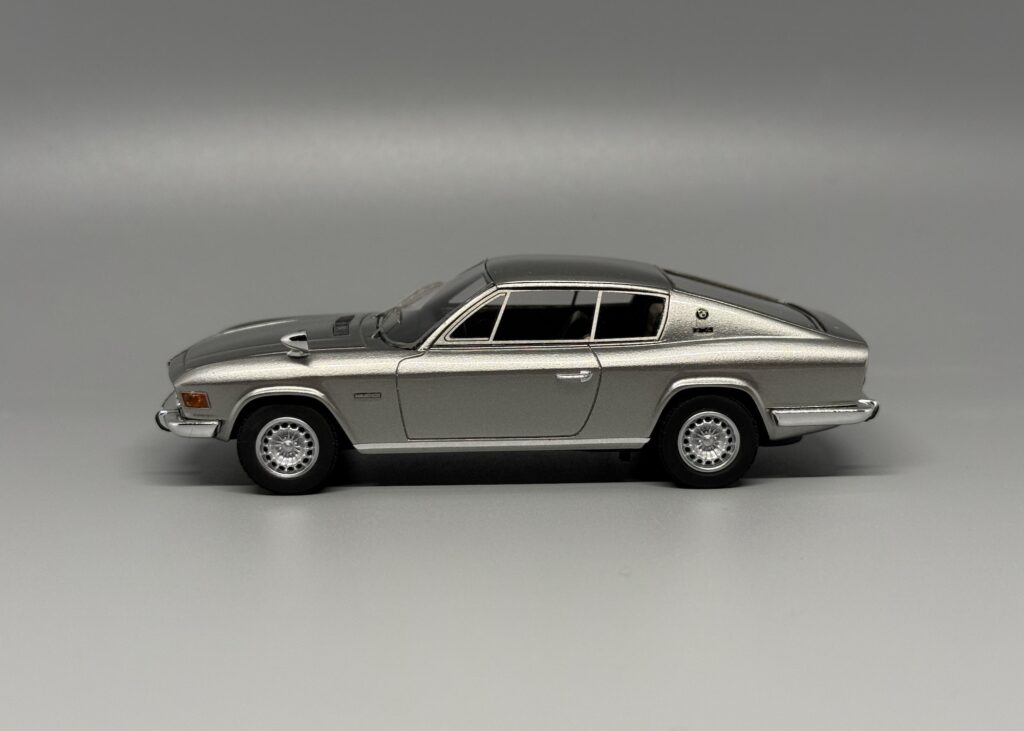
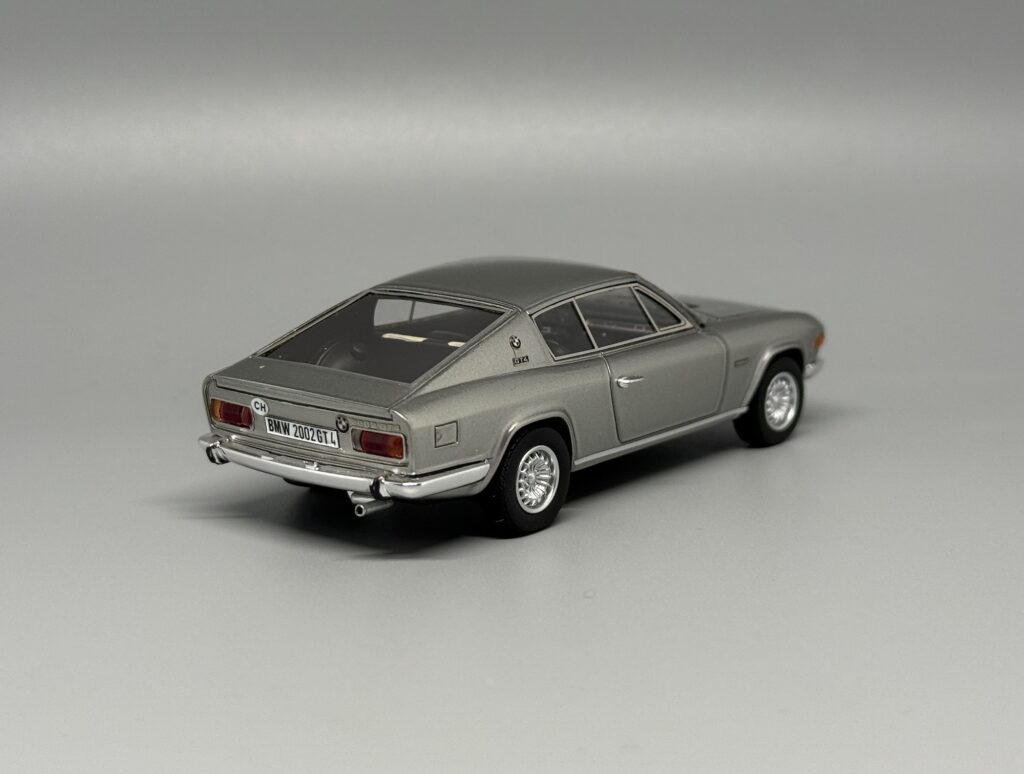
Frua’s body was noticeably lower, wider and longer than that of the standard BMW 2002. The GT4 was approximately eight centimetres longer, 15 centimetres wider and 14 centimetres lower than the production 02 Series car. Its large glazed fastback rear section combined sporting appearance with practicality, while the luggage compartment offered approximately 450 litres of space. The low roofline and elongated side profile gave the car the appearance of a classic Gran Turismo rather than a compact BMW saloon.
2+2 Gran Turismo
The BMW 2002 GT4 was designed as a four-seat 2+2 coupé, and the designation GT4 referred to its four seats. The intention was not to create a pure two-seat sports car, but a practical Gran Turismo combining the sporting mechanical character of the BMW 2002 with greater comfort and a more elegant body. In this respect, the GT4 differed from many other show cars and prototypes of the period.
BMW and other production-car components
Although the body itself was Frua’s own design, a number of existing production-car components were used. The windscreen wipers, door handles and indicators came from the BMW 2800 CS, while the rear lights were sourced from the Alfa Romeo 1750 Berlina. Much of the leather-trimmed interior was connected with the BMW 2002, while the dashboard incorporated elements from the BMW 2500 E3, including large circular instruments and wood trim. This combination of production components from different cars was quite typical for low-volume coachbuilt vehicles.
The first GT4 – 1969
The first BMW 2002 GT4 carried Frua project number 361/1 and was presented at the Paris Motor Show in October 1969. The car later belonged to Pietro Frua himself. After Frua’s death, it was sold to Japan during the 1980s and entered a private collection. This first car represented Frua’s original fully realised interpretation of a Gran Turismo coupé based on BMW 2002 engineering.
The second GT4 – 1970
A second car followed one year later, carrying Frua project number 361/2. It was also presented at the Paris Motor Show, this time in 1970. The second GT4 differed from the first in a number of smaller body and detail treatments and represented a further development of the original concept. This 1970 version is often referred to as the BMW 2002 GT4 II Frua.
Two surviving cars
Only two BMW 2002 GT4s were built, and both have survived. The first car went to Japan after having belonged to Frua, while the second remained in Switzerland for many years before being acquired by BMW Mobile Tradition in 2002. It subsequently became part of BMW’s historic collection and has appeared at various classic-car events.
Performance and chassis
The two-litre twin-carburettor engine produced approximately 120 hp at 5,500 rpm. The car weighed around 1,050–1,060 kilograms. Disc brakes were fitted at the front and drum brakes at the rear, while 13-inch Campagnolo wheels were used. The combination of relatively low weight, BMW 2002 ti power and the lower aerodynamic body gave the GT4 a genuinely sporting character for its time.
Why was there no series production?
Frua hoped that the GT4 might attract BMW’s interest and lead to production of a small sporting coupé, but BMW did not adopt the project for its model range. The company was already developing its own coupés and continuing the evolution of the 02 Series, and an independently designed Italian body did not fit its production strategy. As a result, the two GT4s remained hand-built special cars.
Historical significance
The BMW 2002 GT4 Frua is one of the most interesting examples of how BMW 02 Series engineering could be interpreted in a completely different way. While the standard BMW 2002 was a compact and sporting two-door saloon, Frua transformed the same mechanical concept into a low Italian-style Gran Turismo coupé. With only two cars built, the GT4 remained exceptionally rare, but it perfectly illustrates the creative freedom enjoyed by independent coachbuilders during the late 1960s.
Model in the collection
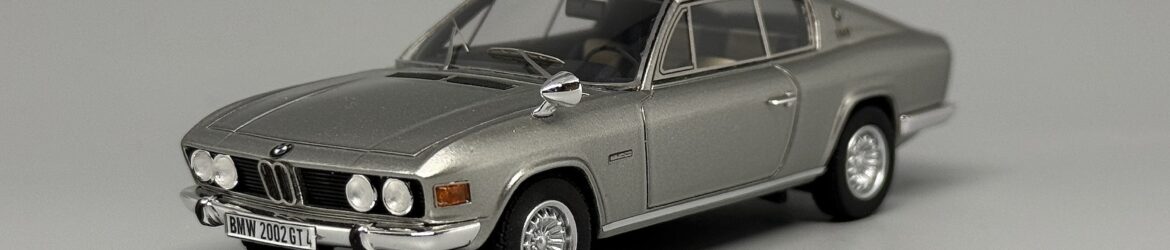
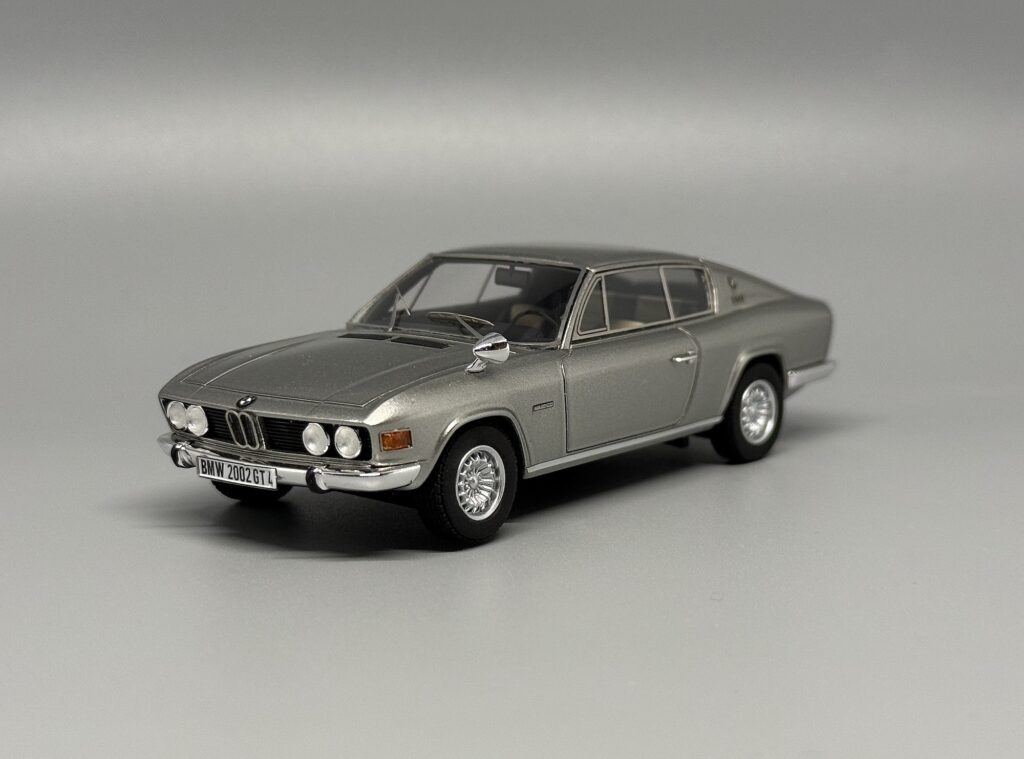
The model in my collection was produced by Matrix Scale Models and represents the 1970 BMW 2002 GT4 II Frua, the second version of the car. The model comes from a limited and individually numbered edition of 406 examples. The model in my collection is number 43.
Technical data in brief
First car: 1969
Second car: 1970
Designer and coachbuilder: Pietro Frua
Frua project numbers: 361/1 and 361/2
Construction location: Turin, Italy
Technical basis: BMW 2002 ti
Body style: four-seat 2+2 fastback coupé
Engine: four-cylinder in-line engine
Displacement: 1,990 cm³
Power: 120 hp / 88 kW
Drivetrain: rear-wheel drive
Brakes: front discs, rear drums
Wheels: 13-inch Campagnolo
Weight: approximately 1,050–1,060 kg
Luggage capacity: approximately 450 l
Public debut: Paris Motor Show 1969 and 1970
Production: 2 cars
Special feature: Gran Turismo coupé designed by Pietro Frua and built in two examples using BMW 2002 ti mechanical components
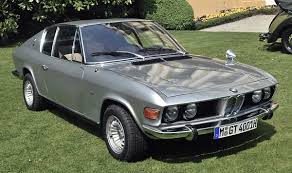
Photo of the real car. Source: gtplanet.net