Background
BMW 3.2 Super Convertible by Autenrieth was one of the rarest and most exclusive luxury BMWs of the late 1950s. The car was based on the technical platform of the BMW 502 model family, but its two-door open body was built by the independent German coachbuilder Autenrieth of Darmstadt. While the standard BMW 502 was already an expensive and prestigious V8 luxury saloon, the Autenrieth Convertible took the same technical foundation into the even more exclusive world of coachbuilt automobiles, combining BMW engineering with hand-built bodywork and highly individual craftsmanship.
Development of the BMW 502 model family
The BMW 502 had introduced BMW’s first V8 engine in 1954 and became the foundation of an entire family of luxury cars. A 3.2-litre V8 followed in 1955, and in the spring of 1957 BMW introduced the more powerful BMW 502 3.2 Liter Super. Its twin-carburettor V8 produced 140 hp. From the autumn of 1958, BMW marketed this flagship version under the simplified name BMW 3.2 Super. For a 1959 car, this is therefore the historically more accurate model designation.
Coachwork by Autenrieth
Erste Darmstädter Karosseriewerke Georg Autenrieth was one of Germany’s best-known independent coachbuilders. The company produced bespoke coupé and convertible bodies on the chassis of several German manufacturers and also worked extensively with BMW 501 and 502-based cars. Autenrieth’s BMW convertibles were not part of BMW’s normal series production, but rather individually built special-bodied cars. Their two-door Sport Convertible differed from the more conventional Baur-built BMW 502 Convertibles through its lower body line, long doors and more sporting proportions.
Two-door Sport Convertible
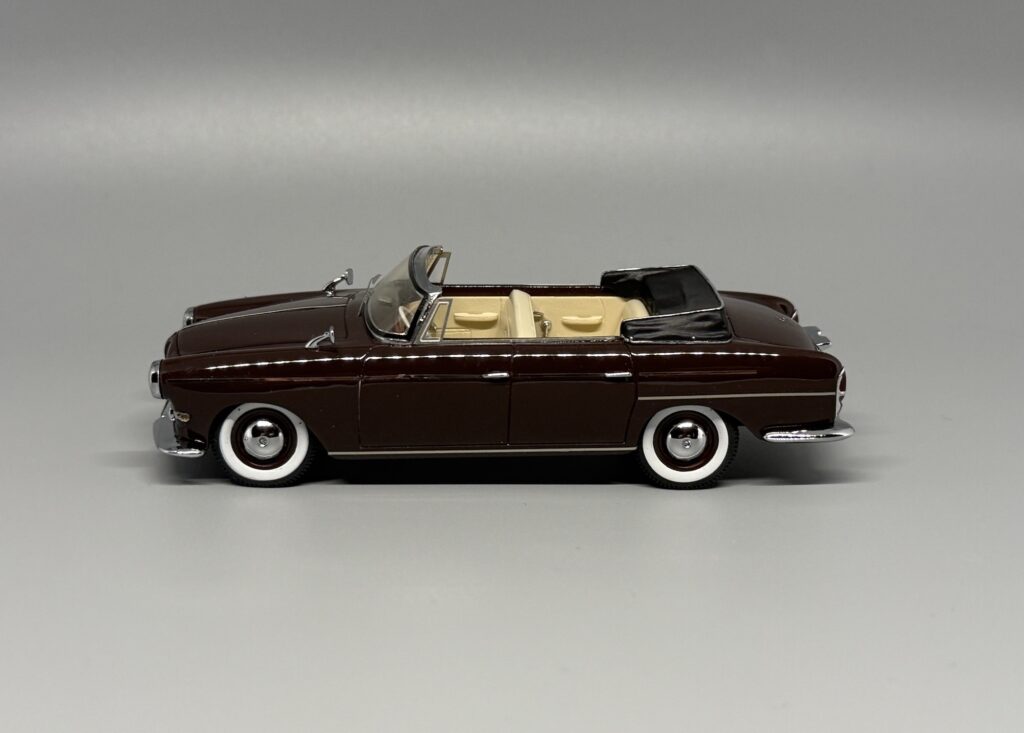
The Autenrieth body transformed the appearance of the large BMW 502. Instead of the four-door saloon layout, the car featured a two-door 2+2-seat open body with long doors, a lower beltline and a more elegant rear section, giving it a stronger Gran Turismo character. The body was produced largely by hand, and individual cars could differ in detail depending on the customer’s specification. Such individuality was still possible in the luxury-car world of the 1950s but became increasingly rare as series production became more standardised.
3.2-litre V8
The 1959 BMW 3.2 Super used a 3,168 cm³ light-alloy V8 engine. Equipped with two carburettors, it produced 140 hp at 4,800 rpm. It was one of the most powerful versions of BMW’s 1950s V8 family, and the same basic engine architecture was also used in the BMW 503 and BMW 507. The lightweight alloy construction helped reduce the mass of the large eight-cylinder engine, while its smooth power delivery was particularly well suited to a luxurious open touring car.
Performance
The standard BMW 3.2 Super was capable of a top speed of 180 km/h, a very impressive figure for a large luxury car in the late 1950s. Power was transmitted to the rear wheels through a four-speed manual gearbox. Although the Autenrieth Convertible was not intended as a pure sports car, it combined strong V8 performance, an open body and an exclusive Gran Turismo character in a way that the standard BMW 502 saloon could not.
Baur and Autenrieth
When discussing BMW 502-based convertibles, it is important to distinguish between cars built by Baur and those built by Autenrieth. Baur produced 57 BMW 502 Convertibles for BMW’s official sales network in 1955 and 1956, of which 11 were four-door cars. These were fitted with the 2.6-litre 100 hp V8. Autenrieth cars, by contrast, were bespoke special-bodied vehicles, including the two-door Sport Convertible. The Baur production figure of 57 cars therefore cannot be applied to the 3.2-litre Autenrieth Convertible.
An extremely rare special model
BMW’s publicly available historical records do not provide an exact production figure for the 3.2-litre Autenrieth Sport Convertibles. Sources dealing with surviving cars and the history of Autenrieth indicate, however, that only a very small number were built, probably just a handful of examples. This makes the Autenrieth-bodied V8 convertibles some of the rarest luxury BMWs of the post-war era.
Differences in model designation
This car appears under several different names in collector-model catalogues and specialist sources. Matrix identifies its model as the BMW 502 3200 V8 Super Cabriolet Autenrieth and gives the year as 1959. According to BMW’s own model history, however, the 3.2-litre 140 hp flagship was officially known as the BMW 3.2 Super in 1959. The BMW 3200 S designation was introduced only in 1961 and referred to a later 160 hp version. For this reason, this page uses the historically more accurate name BMW 3.2 Super Convertible by Autenrieth.
Historical significance
The BMW 3.2 Super Convertible by Autenrieth combines the technical ambition of BMW’s 1950s luxury cars with the traditional craftsmanship of Germany’s independent coachbuilding industry. Its large light-alloy V8, extremely limited production and individually built two-door open body made it an exceptionally exclusive automobile even when new. Today, Autenrieth-bodied BMWs represent a period when a wealthy customer could still combine the engineering of a major manufacturer with the almost bespoke creation of an independent coachbuilder.
Model in the collection
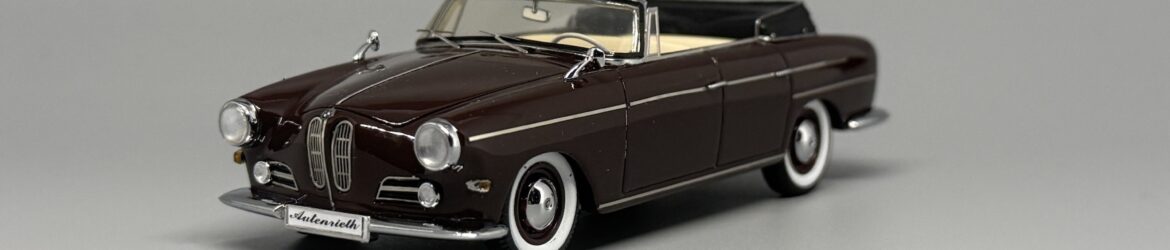
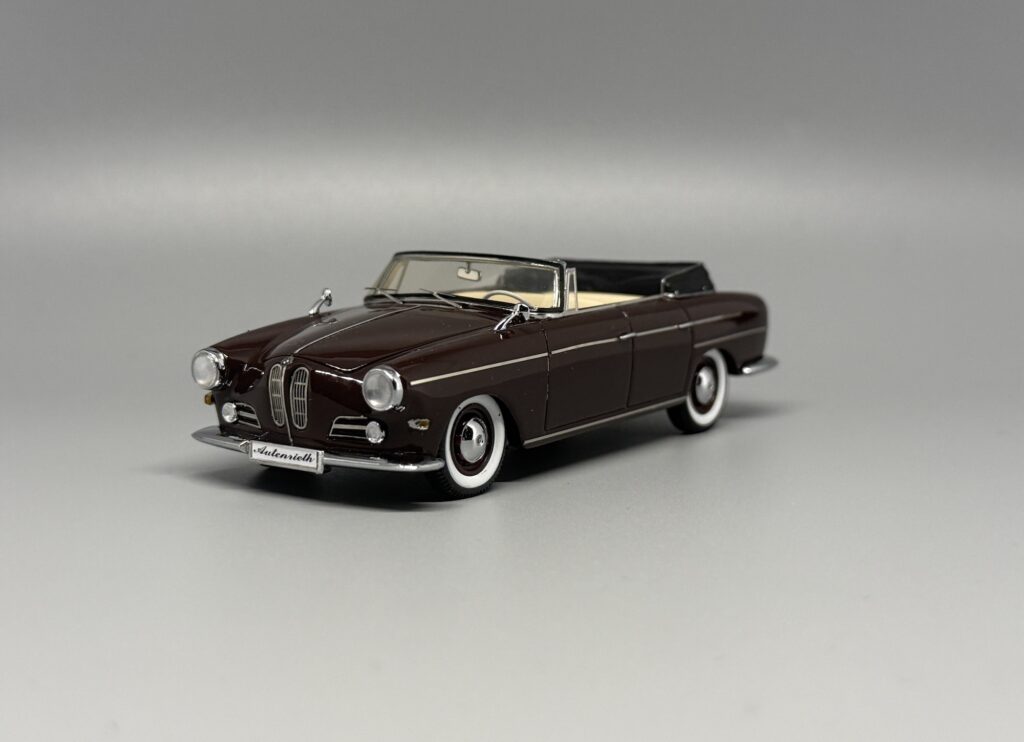
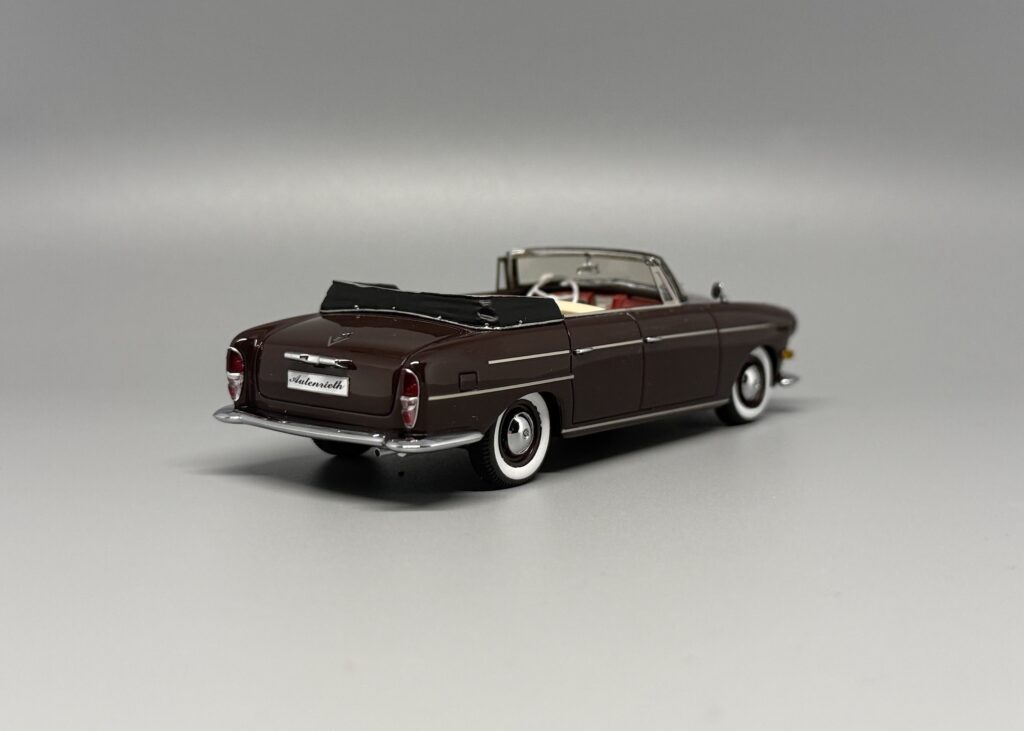
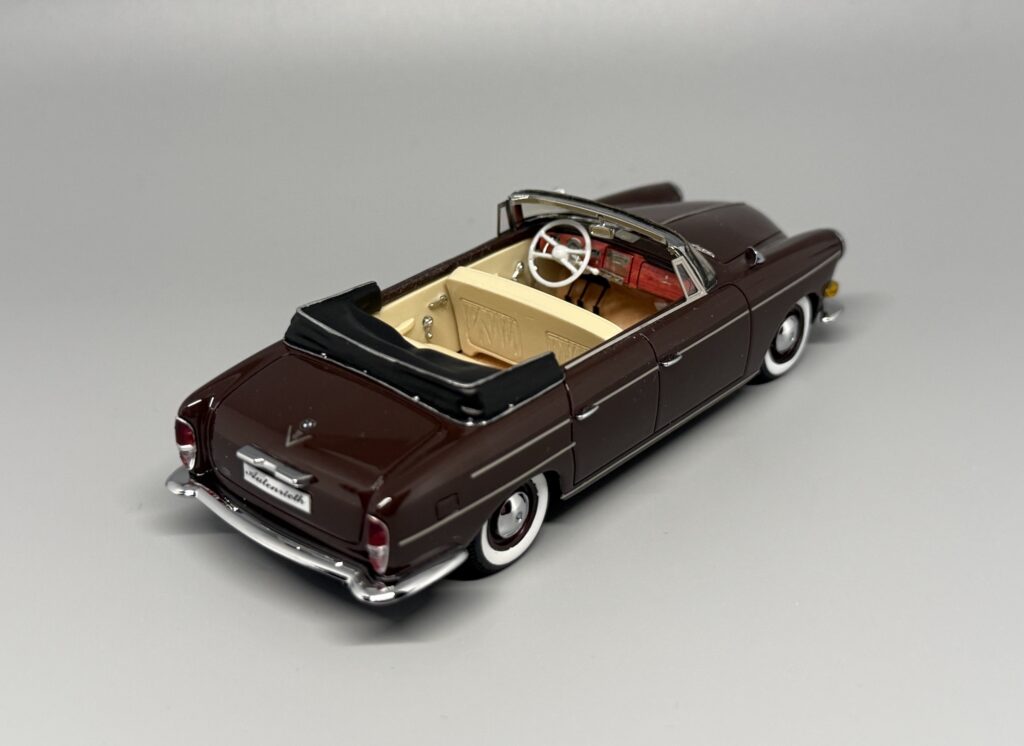
The model in my collection was produced by Matrix and represents a 1959 BMW V8 Convertible with bodywork by Autenrieth. Matrix identifies the model as the BMW 502 3200 V8 Super Cabriolet Autenrieth. It was produced in a limited edition of 408 examples.
Technical data in brief
Model year represented: 1959
Historically correct model designation: BMW 3.2 Super
Body style: two-door 2+2-seat Sport Convertible
Coachbuilder: Autenrieth, Darmstadt, Germany
Technical basis: BMW 502 model family
Engine: light-alloy V8
Displacement: 3,168 cm³
Fuel system: two carburettors
Power: 140 hp @ 4,800 rpm
Transmission: 4-speed manual
Drivetrain: rear-wheel drive
Top speed: 180 km/h for the standard BMW 3.2 Super
Production: exact figure unknown, only a very small number built
Special feature: hand-built two-door Autenrieth coachwork on BMW 502/3.2 Super V8 engineering
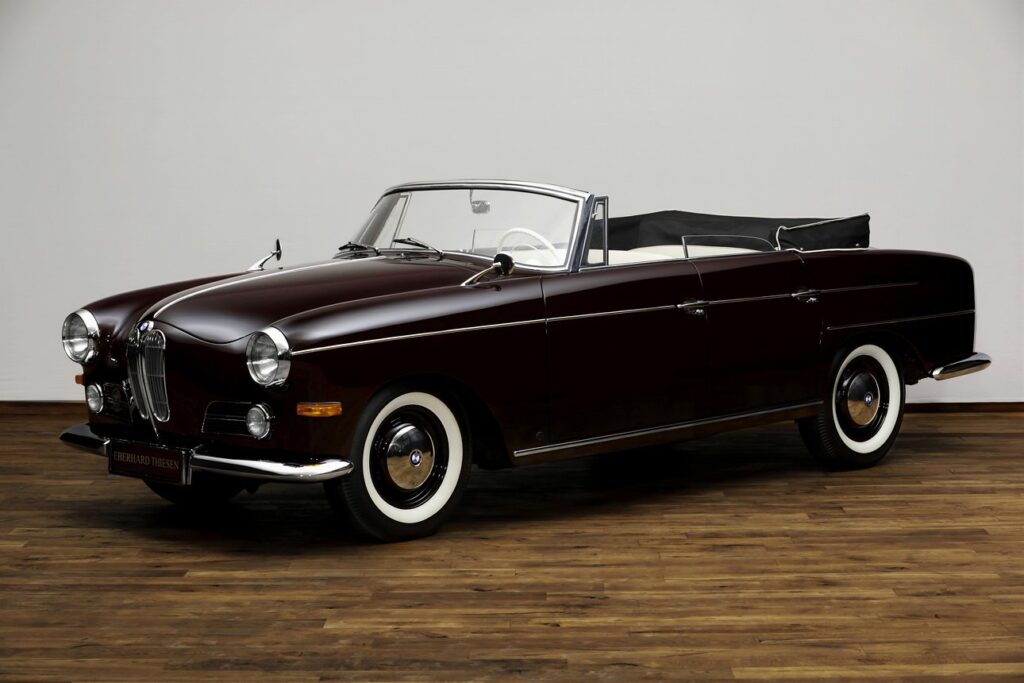
Photo of the real car. Source: classicdriver.com