
Background
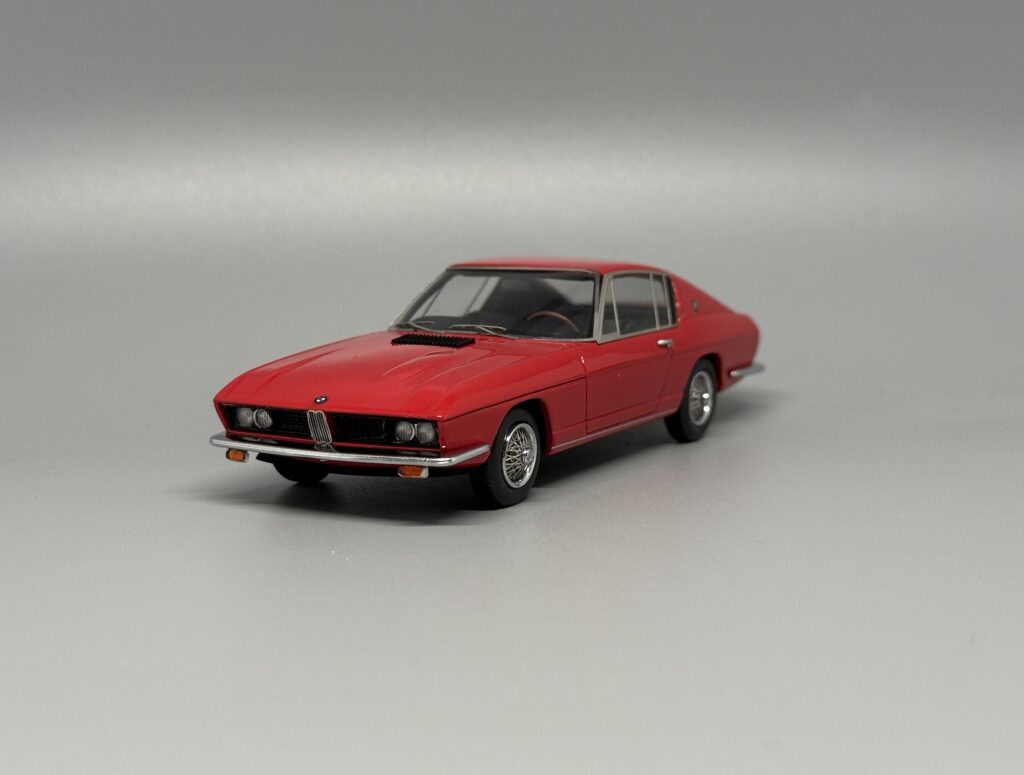
BMW 2000 TI Coupé Frua was a unique special-bodied coupé created in 1968 by the Italian designer and coachbuilder Pietro Frua. It was not an official BMW production model and, as far as is known, was not commissioned by BMW as a factory prototype. Instead, it was an independent Frua project demonstrating how differently the mechanical basis of the BMW Neue Klasse could be interpreted. Low, elegant and clearly influenced by the Italian Gran Turismo tradition, the car looked markedly different from contemporary BMW saloons and coupés.
Pietro Frua and BMW
Pietro Frua was connected with BMW through several unusual projects during the late 1960s. His work included the Glas GT models, the BMW-Glas 3000 V8 and a number of later special-bodied BMW-based cars and prototypes. The BMW 2000 TI Coupé carried Frua project number 350 and became the starting point for a longer line of BMW-based coupé ideas. Frua would later develop similar design themes further on larger BMW-based projects.
Connection with the Monteverdi 2000 GTI
The design of the BMW 2000 TI Coupé was closely related to the Monteverdi 2000 GTI, which Frua had created for Swiss car manufacturer and BMW dealer Peter Monteverdi. The Monteverdi 2000 GTI also used BMW two-litre mechanical components and featured a low fastback body that reflected Frua’s interpretation of a compact Gran Turismo. The BMW 2000 TI Coupé shown later in 1968 continued the same general design idea but was adapted with details identifying it more clearly as a BMW.
Adapted for BMW
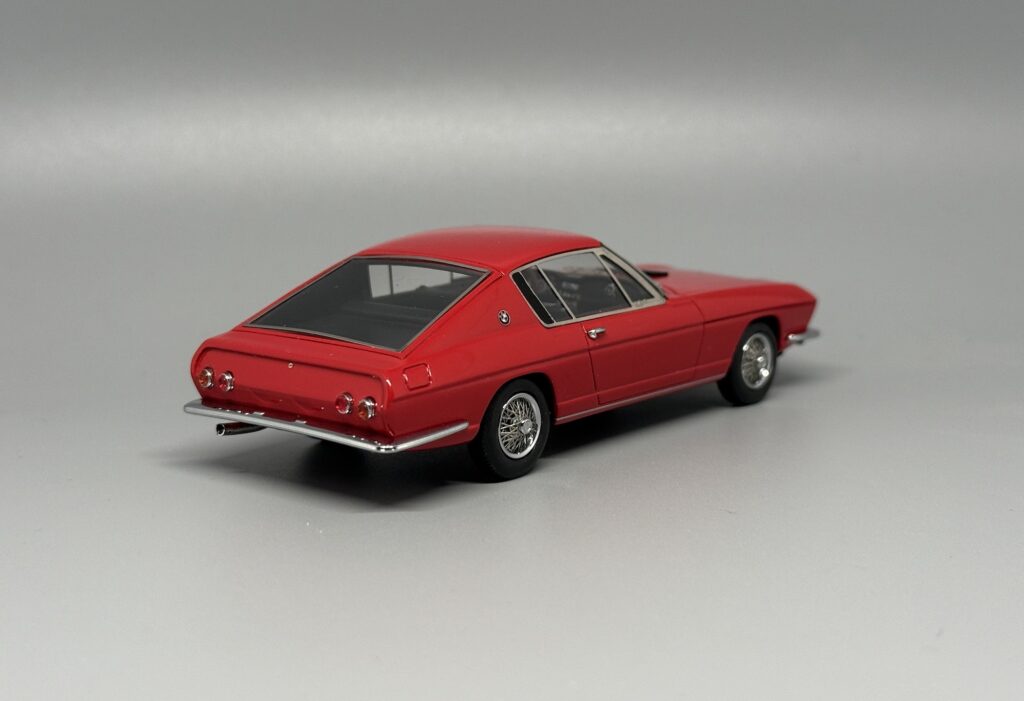
The most obvious change compared with the Monteverdi project was the front end. The BMW 2000 TI Coupé received BMW’s twin kidney grille, BMW badges on the bonnet and rear pillars, and several smaller detail changes. Wire-style wheels further emphasised the car’s exclusive Gran Turismo character. Frua did not attempt to make the car resemble a conventional BMW, but instead combined his own Italian design language with a number of clearly recognisable BMW elements.
Fastback coupé
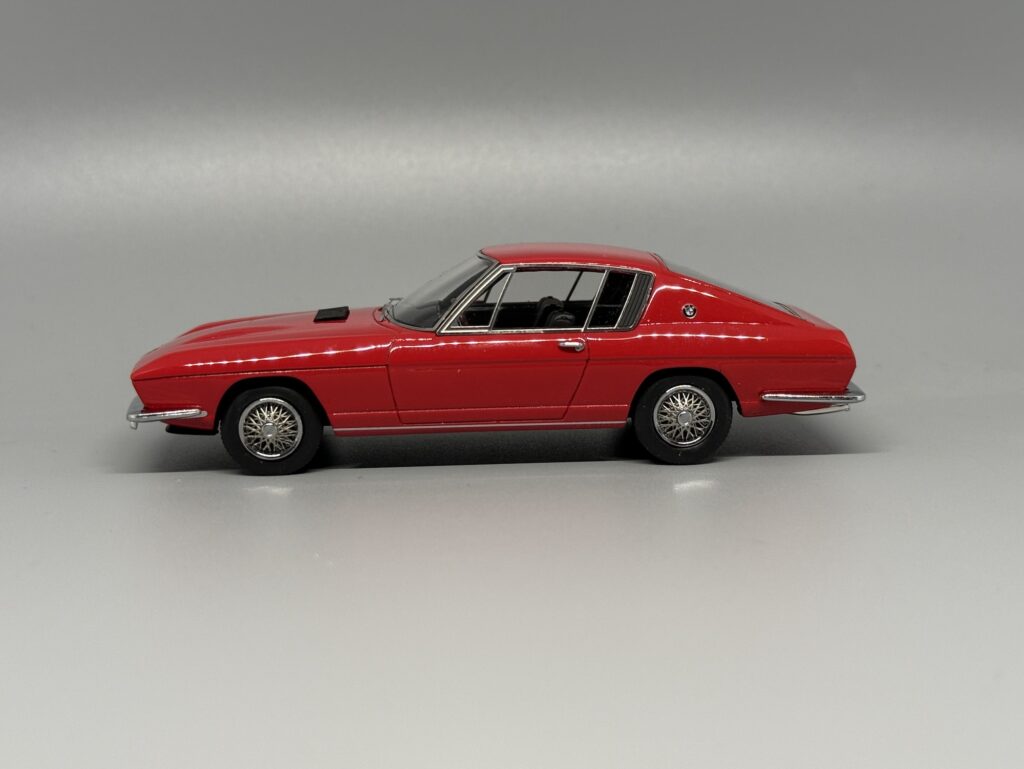
One of the car’s most distinctive features was its low and smoothly descending fastback rear section. The long bonnet, compact glazed cabin and sloping roofline gave it classic Italian GT proportions. The body was significantly lower and visually more sporting than the BMW Neue Klasse saloons on whose mechanical components it was based. The result looked more like a small exclusive Italian sports car than a member of the regular BMW model range.
BMW Neue Klasse mechanical basis
The BMW 2000 TI Coupé used BMW Neue Klasse mechanical components. Power came from a 1,990 cm³ BMW four-cylinder engine. In the production BMW 2000 TI, the same-displacement engine with twin Solex carburettors produced 120 hp or 88 kW. Surviving sources are not entirely consistent about the exact origin of the engine fitted to the Frua car, however. Some refer to the BMW 2000 TI, while others mention the BMW 2000 SA. It is therefore safest to describe the car as a special-bodied coupé based on BMW’s two-litre Neue Klasse mechanical components.
1968 Paris Motor Show
The BMW 2000 TI Coupé was presented to the public at the Paris Motor Show in October 1968. It was shown as a Frua display car, demonstrating the designer’s vision of a compact and luxurious sports coupé based on BMW engineering. The car attracted attention because of its highly distinctive appearance, but the project did not lead to a BMW production model.
A one-off
Only one BMW 2000 TI Coupé Frua is known to have been built. It remained an example of independent Italian coachbuilding and never became part of BMW’s official model programme. This also distinguishes it from the Karmann-built BMW 2000 C and 2000 CS coupés, which were regular BMW production models. The Frua car instead represented an alternative interpretation of what a compact Gran Turismo using BMW mechanical components could look like.
Starting point for later Frua BMW coupés
The BMW 2000 TI Coupé was also significant in relation to Frua’s later BMW-based projects. Design ideas from project number 350 continued in larger Frua coupés developed during the following years, including the BMW 2800 GTS. This shows that the 1968 car was not merely an isolated styling exercise, but part of a broader series of Frua designs using BMW mechanical foundations.
Historical significance
The significance of the BMW 2000 TI Coupé Frua lies mainly in its independent origins and in the combination of Italian styling with BMW Neue Klasse engineering. It was not a direct prototype for a future BMW production model, but one of Pietro Frua’s numerous attempts to create an entirely new body and character around an existing technical platform. Today, it remains a fascinating example of a period when independent Italian design houses freely explored alternative body and model concepts for established manufacturers and private clients.
Model in the collection
The model in my collection was produced by Kess Models and represents the red 1968 BMW 2000 TI Coupé Frua. The model was produced in a limited edition of 400 examples.
Technical data in brief
Year: 1968
Designer and coachbuilder: Pietro Frua
Frua project number: 350
Construction location: Turin, Italy
Body style: two-door fastback coupé
Technical basis: BMW Neue Klasse
Engine: four-cylinder in-line engine
Displacement: 1,990 cm³
Power of the production BMW 2000 TI engine: 120 hp / 88 kW
Transmission: manual
Drivetrain: rear-wheel drive
Public debut: Paris Motor Show, October 1968
Production: 1 car
Special feature: unique Gran Turismo coupé designed by Pietro Frua and built using BMW mechanical components
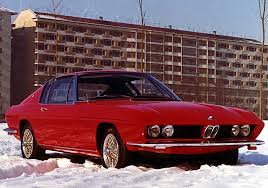
Photo of the real car. Source: diariodelosclasicos.com