Background
BMW 326 Stromlinie by Wendler belongs to a small group of rare pre-war BMW special-bodied cars that illustrate how important aerodynamics, coachbuilding and technical experimentation had become during the 1930s. The BMW 326 itself was a highly significant model for the company, as it was BMW’s first four-door production car and marked an important step towards larger, more comfortable and more prestigious passenger cars. Introduced in 1936, the 326 helped BMW move further upmarket and also provided the technical basis for several other important pre-war models.
The streamline era
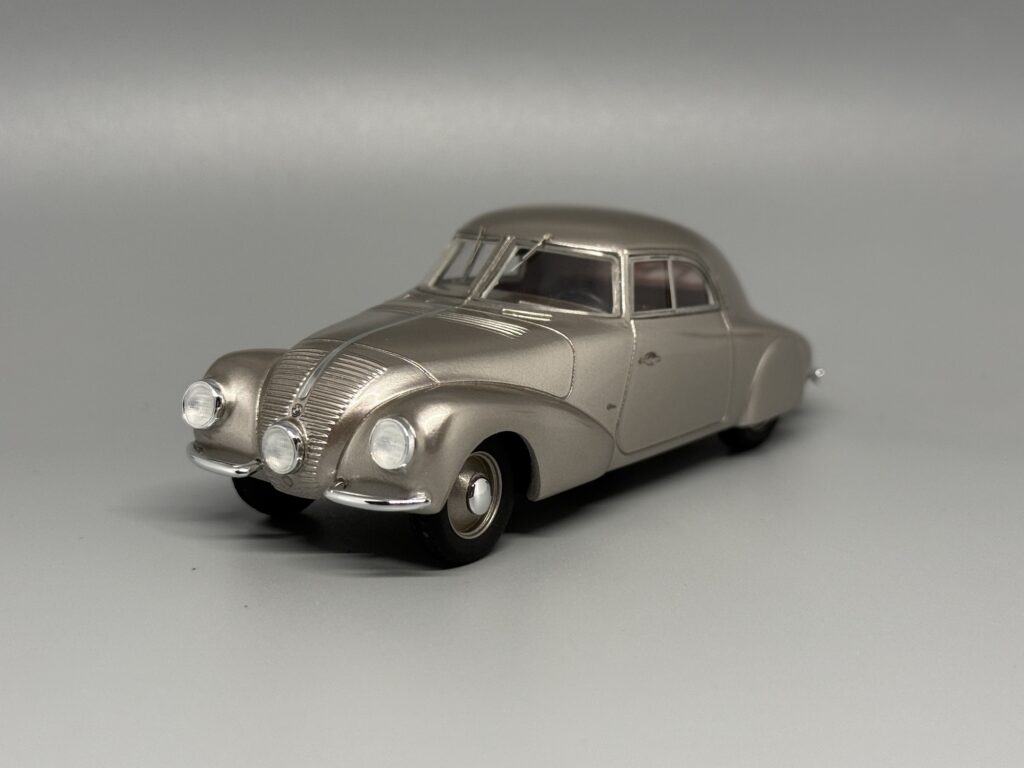
During the 1930s, streamlined body design became an increasingly important theme throughout the European motor industry. Aerodynamics was no longer associated only with record-breaking cars and racing machines, but also with modernity, technical progress and forward-looking design. The BMW 326 Stromlinie by Wendler emerged from this environment. Instead of the more conventional body of the standard 326, it received a much smoother, lower and more modern special body. This made the car more than simply a rebodied BMW 326 – it became an expression of the aerodynamic design philosophy that was influencing many of the most progressive cars of the period.
Coachwork by Wendler
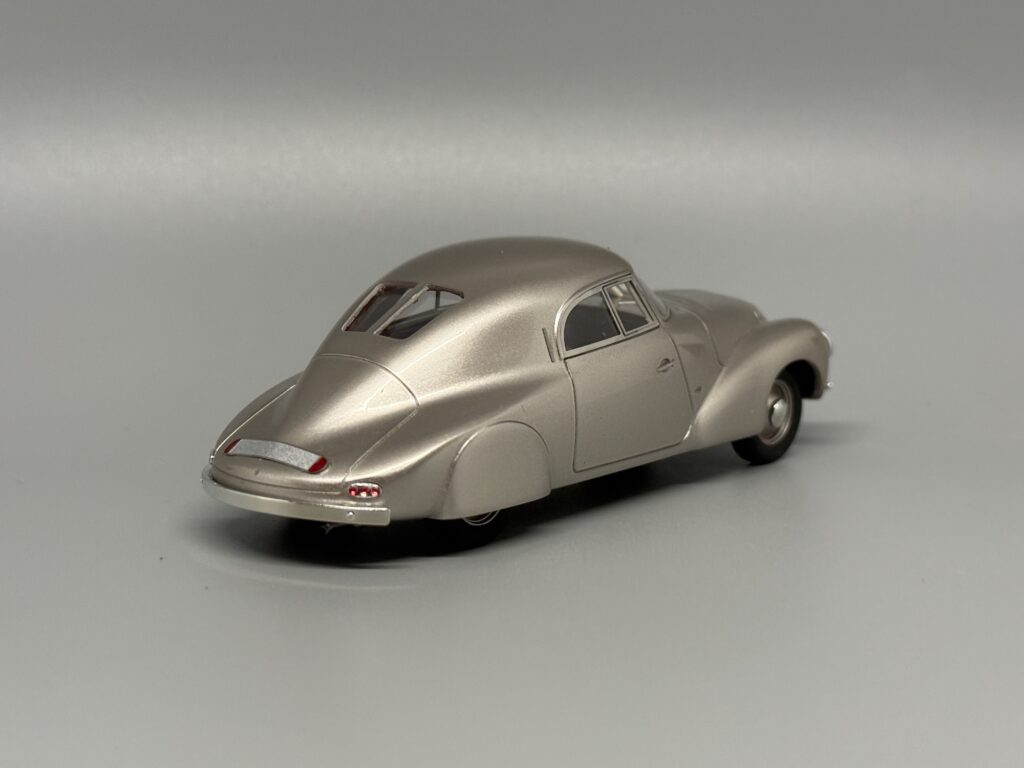
The second part of the car’s name refers to Wendler, a German coachbuilder known for high-quality bespoke bodies. Wendler produced special coachwork on chassis from several manufacturers and often combined traditional craftsmanship with technically ambitious design. In the case of the BMW 326 Stromlinie, the defining feature was its hand-built aluminium body, which transformed the appearance of the standard BMW almost completely. Smooth surfaces, a flowing side profile and an aerodynamic overall shape gave the car a distinctly futuristic character.
Design and concept
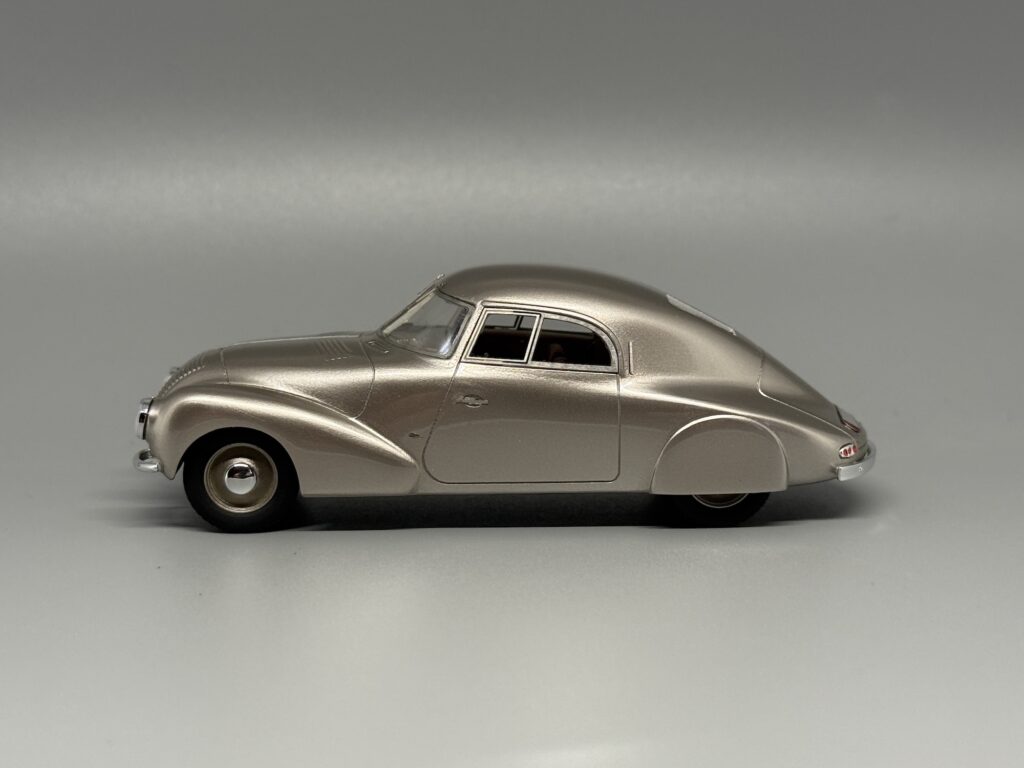
Compared with the standard BMW 326, the Stromlinie by Wendler appeared considerably lower, more elegant and more experimental. While the production 326 was designed primarily as a comfortable and dignified four-door passenger car, the Wendler-bodied version had the character of a streamlined luxury coupé. Its shape suggested movement even when standing still, which was one of the central ideas behind streamlined design in the late 1930s. Cars of this type were therefore not merely means of transport, but also rolling demonstrations of how modern technical aesthetics could transform the appearance and character of an automobile.
Technical basis
Mechanically, the BMW 326 Stromlinie by Wendler was based on the standard BMW 326. It therefore most likely used the same 2.0-litre six-cylinder in-line engine, producing around 50 hp. The strength of the BMW 326 was not outright sporting performance, but its balanced combination of comfort, reliability and modern engineering. The 326 chassis and its technical solutions also formed the basis for several later pre-war BMW models. In the Stromlinie by Wendler, however, the main innovation lay in the body rather than in a fundamental redesign of the mechanical components.
Rarity
The exact production number of the BMW 326 Stromlinie by Wendler is not clearly documented. It was most likely either a one-off or part of an extremely small series. This is precisely what makes the car so interesting. It was not a regular BMW catalogue model, but a special project with very limited production and considerable historical value. Pre-war BMW history includes a number of such special-bodied cars, in which standard mechanical components were combined with completely bespoke coachwork, providing a fascinating insight into the more creative side of automotive design during the period.
Significance in BMW history
The importance of the BMW 326 Stromlinie by Wendler lies not in production volume or commercial success, but in what it reveals about the diversity of BMW’s pre-war development. On one hand, the BMW 326 was an important production model that helped move the company towards larger and more mature passenger cars. On the other, the Wendler streamlined special demonstrated that the same technical foundation could also be used for much more experimental and exclusive projects. The car is a good example of an era in which luxury, craftsmanship, aerodynamics and technical ambition could come together in a very rare automobile.
Model in the collection
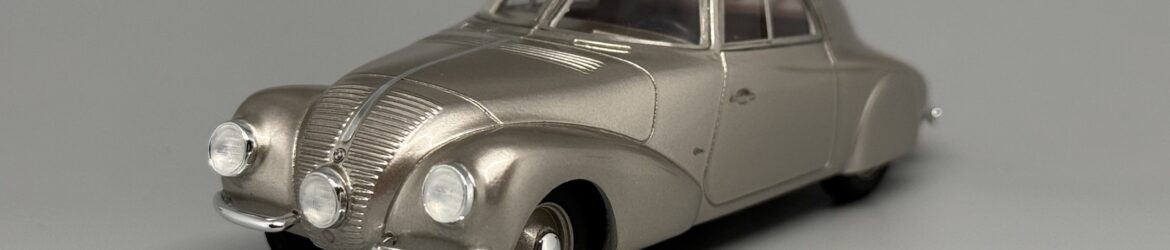
The model in my collection was produced by Autocult. It was issued in a limited edition of 333 examples.
Technical data in brief
Year: 1936
Place of origin: Germany
Basis: BMW 326
Body style: streamlined bespoke coachbuilt body
Coachbuilder: Wendler
Body material: hand-built aluminium body
Engine: 2.0-litre six-cylinder in-line engine
Power: approximately 50 hp
Production: exact number unknown, probably a one-off or very small series
Special feature: streamlined Wendler coachwork on BMW 326 mechanical components
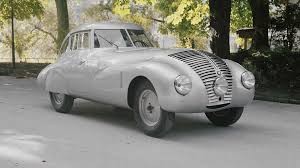
Photo of the real car. Source: blog.deutsches-museum.de