
Background
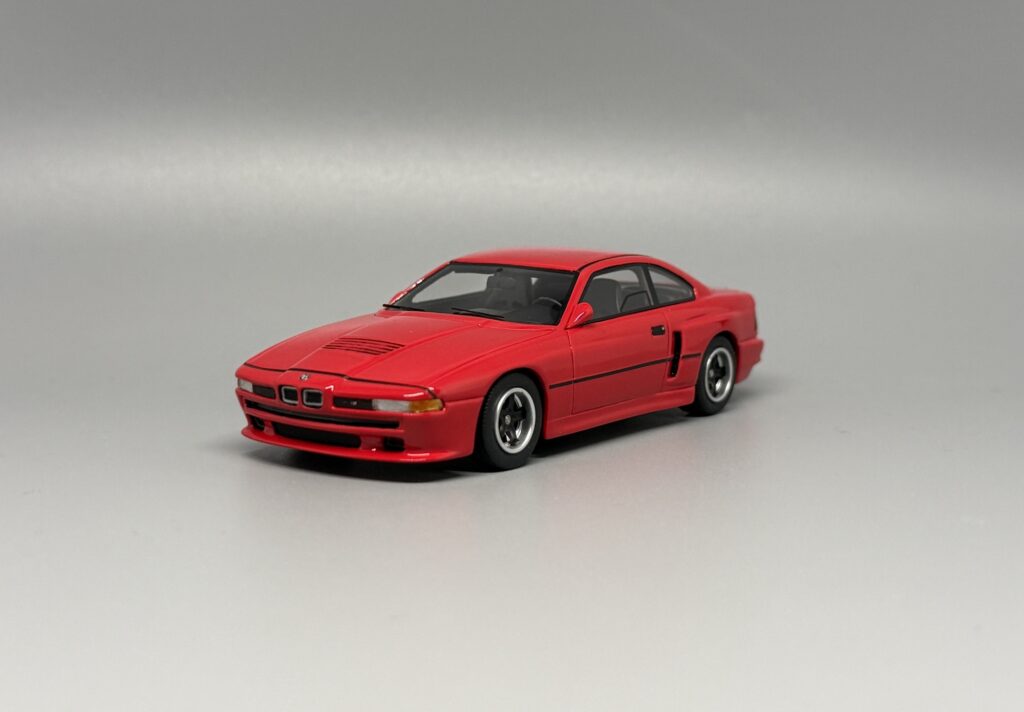
BMW M8 Prototype (E31) is one of the most legendary and mysterious special projects in BMW M history. Developed in the early 1990s on the basis of the E31-generation 8 Series, the car was intended to show how far the performance potential of BMW’s large luxury coupé could be taken. While the BMW 850i was already an exclusive and technologically ambitious V12 grand tourer, the M8 transformed the same basic concept into something far more radical. BMW M developed a car whose power output and projected top speed would have placed it among the fastest production cars of its era. The project never reached series production, and the only prototype remained hidden from the public for almost two decades.
The secret M8 project
The BMW M8 was developed at a time when the E31 represented the technological and design flagship of the BMW range. The prototype was completed in 1992, but BMW did not present it publicly at the time and no M8-badged model entered production. In the same year, the 380 hp BMW 850CSi, also developed with the involvement of BMW M GmbH, entered series production and became the official performance flagship of the E31 range. The M8, however, was significantly more radical. Its existence became widely known only in 2010, when BMW officially presented the prototype to the public.
Design and aerodynamics
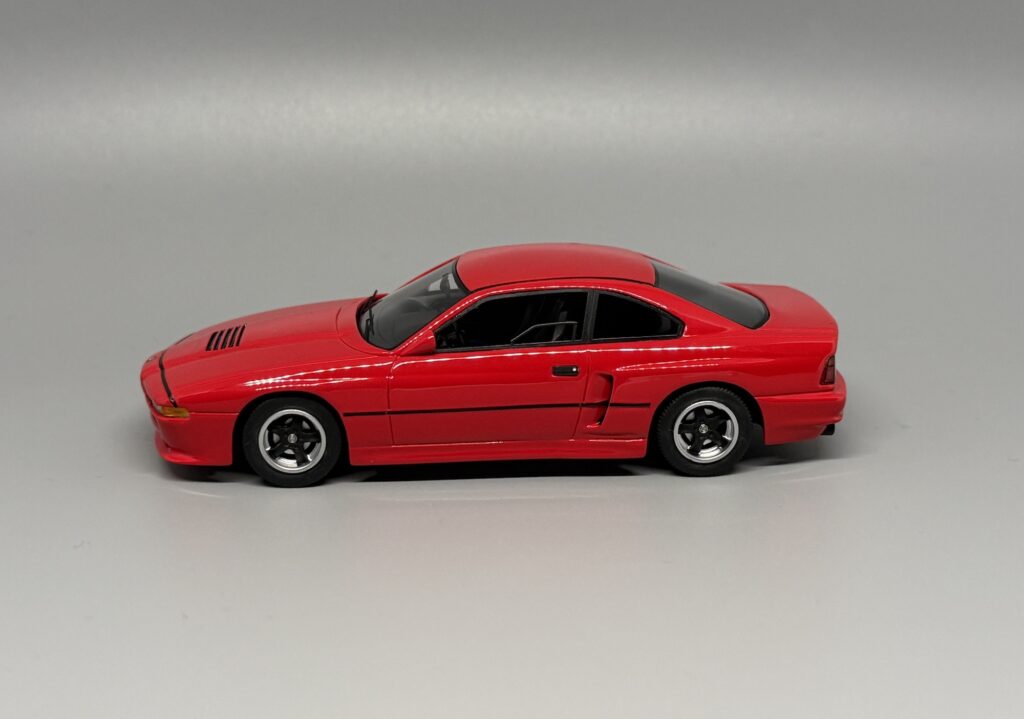
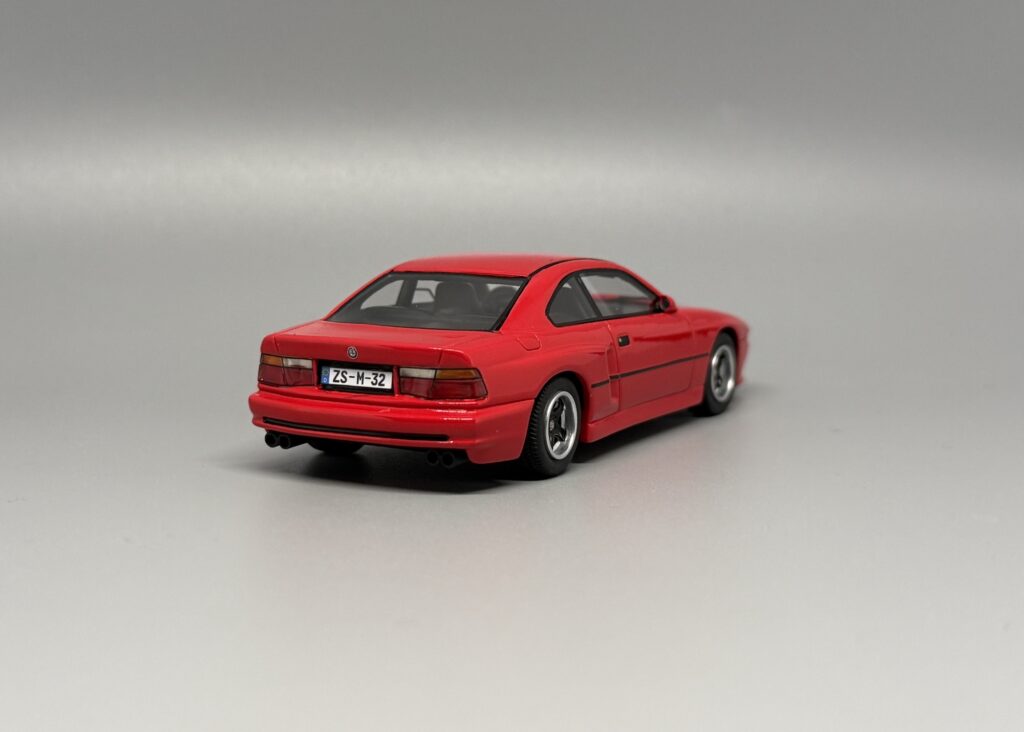
The M8 retained the recognisable low and wide shape of the E31, but several details were modified to suit its high-performance purpose. Widened wheel arches allowed a broader track and considerably wider rear tyres, while large air intakes were positioned ahead of the rear wheels. Aerodynamic M exterior mirrors and more aggressive bodywork emphasised the car’s sporting character. One of the most noticeable differences from the regular E31 was the absence of pop-up headlights. The main lighting units were moved into the front bumper, allowing the use of a smoother one-piece bonnet and reducing aerodynamic interruptions at high speed.
Lightweight construction
Reducing the weight of the large V12-powered coupé was an important part of the M8 development programme. The doors, bonnet and boot lid were made from glass-fibre-reinforced plastic, while lighter solutions were also used elsewhere compared with the production E31. As a result, the prototype had a kerb weight of only 1,443 kg. By comparison, the standard V12-powered 850i weighed around 1.8 tonnes. The lower weight, together with the wider track and M-specific chassis tuning, gave the prototype a much more focused character than the regular 8 Series.
S70/2 V12
The most extraordinary feature of the M8 was its 6,064 cm³ naturally aspirated S70/2 V12 engine. It produced 640 hp, or 471 kW, at 7,500 rpm and a maximum torque of 650 Nm at 5,600 rpm. The engine was developed from the S70 family but incorporated a number of highly specialised solutions. One of the most distinctive was its fully carbon-fibre intake system and the use of roller valves instead of conventional throttle butterflies, designed to allow the air to flow as freely as possible at full load. The same S70/2 engine family later became famous in the McLaren F1 supercar, while the M8 prototype represented BMW M’s own early application of this exceptional V12 concept.
Drivetrain and chassis
Power from the V12 was sent to the rear wheels through a six-speed manual transmission. BMW never published an official 0–100 km/h acceleration figure for the prototype, as corresponding performance measurements were not carried out, but according to BMW its top speed would have exceeded 300 km/h. The chassis used a MacPherson-type front suspension and the E31 multi-link rear axle, together with electronically controlled EDC dampers on both axles. The front brake discs measured 345 mm and the rear discs 328 mm. Tyres were 235/45 ZR17 at the front and particularly wide 285/40 ZR17 at the rear, clearly reflecting the performance objectives of the prototype.
Interior
The interior also differed considerably from the regular luxury-oriented 8 Series. The M8 received heavily bolstered bucket seats with motorsport-derived Sabelt harnesses, a short gear lever and additional instruments in the centre console. The dashboard, centre console and door panels were extensively trimmed in Alcantara. The objective was not to turn the car into a stripped-out racing machine, but to combine the luxury grand tourer character of the E31 with a much more focused, driver-oriented BMW M environment.
M8 and 850CSi
Although the M8 prototype never reached production, the E31 range gained the BMW 850CSi in 1992, a model developed with significant involvement from BMW M GmbH. Its 5.6-litre V12 produced 380 hp, and with 1,510 cars built it became the official performance flagship of the production E31 range. The M8 was far more extreme: more than 250 additional horsepower, considerably lower weight and a projected top speed above 300 km/h demonstrated what a true BMW M flagship based on the E31 could have been.
A unique prototype
Only one BMW M8 prototype was built. BMW never brought the project into series production, and the company’s modern historical account does not attribute the decision to one single specific reason. It is therefore more accurate to regard the M8 as an experimental BMW M high-performance project rather than as a fully developed production model that was simply cancelled at the last moment. Its unique status and the fact that it remained hidden for so many years are also important reasons why the car has achieved an almost mythical reputation among BMW enthusiasts.
Significance in BMW M history
The BMW M8 E31 demonstrated the technical potential of the 8 Series at a level no production E31 ever reached. A 640 hp naturally aspirated V12, a kerb weight of 1,443 kg, a six-speed manual transmission and a top speed of more than 300 km/h were extraordinary figures for the early 1990s. Although the M8 remained a prototype, it clearly demonstrated the ambitions of BMW M engineers when developing a large luxury coupé. Only in 2019, almost three decades later, did the BMW M8 name finally enter series production with the new F92-generation 8 Series.
Model in the collection
The model in my collection was produced by Schuco and represents the BMW M8 E31 prototype. It was produced in a limited edition of 500 examples.
Technical data in brief
Year completed: 1992
Basis: BMW 8 Series Coupé (E31)
Body style: two-door high-performance prototype Coupé
Engine: S70/2 naturally aspirated V12
Displacement: 6,064 cm³
Power: 640 hp / 471 kW @ 7,500 rpm
Torque: 650 Nm @ 5,600 rpm
Transmission: 6-speed manual
Drivetrain: rear-wheel drive
Kerb weight: 1,443 kg
Front tyres: 235/45 ZR17
Rear tyres: 285/40 ZR17
Front brakes: 345 mm ventilated discs
Rear brakes: 328 mm ventilated discs
Top speed: over 300 km/h
Production: 1 prototype
Special feature: a non-production BMW M high-performance prototype powered by a 640 hp naturally aspirated V12
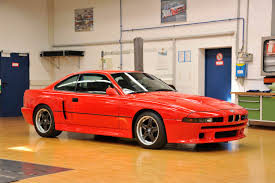
Photo of the real car. Source: secret-classics.com