
Background
BMW X1 (E84) was the first generation of the X1 and the model that brought BMW’s X Series into the premium compact SUV segment for the first time. It made its world premiere at the Frankfurt Motor Show in 2009 and went on sale later that year. The X1 combined an elevated seating position, a practical five-seat body and the sporting driving characteristics traditionally associated with BMW. Compared with the larger X3 and X5, it was more compact and particularly well suited to everyday urban use.
Traditional BMW driving characteristics
The first-generation X1 was based on BMW’s rear-wheel-drive engineering and was offered with either sDrive rear-wheel drive or xDrive all-wheel drive. Its long bonnet, relatively low body and driver-oriented interior distinguished it from many competitors. Rear-wheel-drive models retained the traditional BMW driving character, while xDrive provided additional traction in challenging road conditions.
A wide engine range
The BMW X1 was initially launched with four-cylinder diesel engines and a six-cylinder petrol engine. At the top of the original range was the X1 xDrive28i, powered by a 3.0-litre straight-six producing 258 hp. Turbocharged four-cylinder petrol engines and updated diesels were added later. The European range eventually included a 245 hp turbocharged xDrive28i, while North American customers could also choose the six-cylinder xDrive35i producing 300 hp.
Practical and versatile
Despite its compact dimensions, the X1 offered a spacious five-seat interior and a versatile luggage compartment. Boot capacity ranged from 420 litres to a maximum of 1,350 litres with the rear seats folded. BMW also placed considerable emphasis on efficiency, introducing EfficientDynamics technologies such as Brake Energy Regeneration and, depending on the version, an automatic engine start-stop system.
The 2012 model update
In 2012, the X1 received a model update featuring revised front and rear styling, improved interior materials and an updated equipment range. The xLine and Sport Line design packages were also introduced. The same year saw the X1 enter the United States market, further expanding its international presence.
More than 800,000 cars sold
Production of the BMW X1 began in 2009 at BMW Plant Leipzig in Germany. From 2012, the model was also manufactured in Shenyang for the Chinese market. Leipzig produced a total of 635,194 cars, while BMW reported global sales of more than 800,000 first-generation X1s. Production ended in 2015, when the E84 was succeeded by the second-generation X1 (F48).
Historical significance
The first-generation X1 opened up a new market segment for BMW and significantly broadened the X model range. The E84 combined traditional rear-wheel-drive BMW engineering with the practicality of a compact SUV. Its commercial success established a strong foundation for later X1 generations and the further expansion of BMW’s compact X models.
Model in the collection
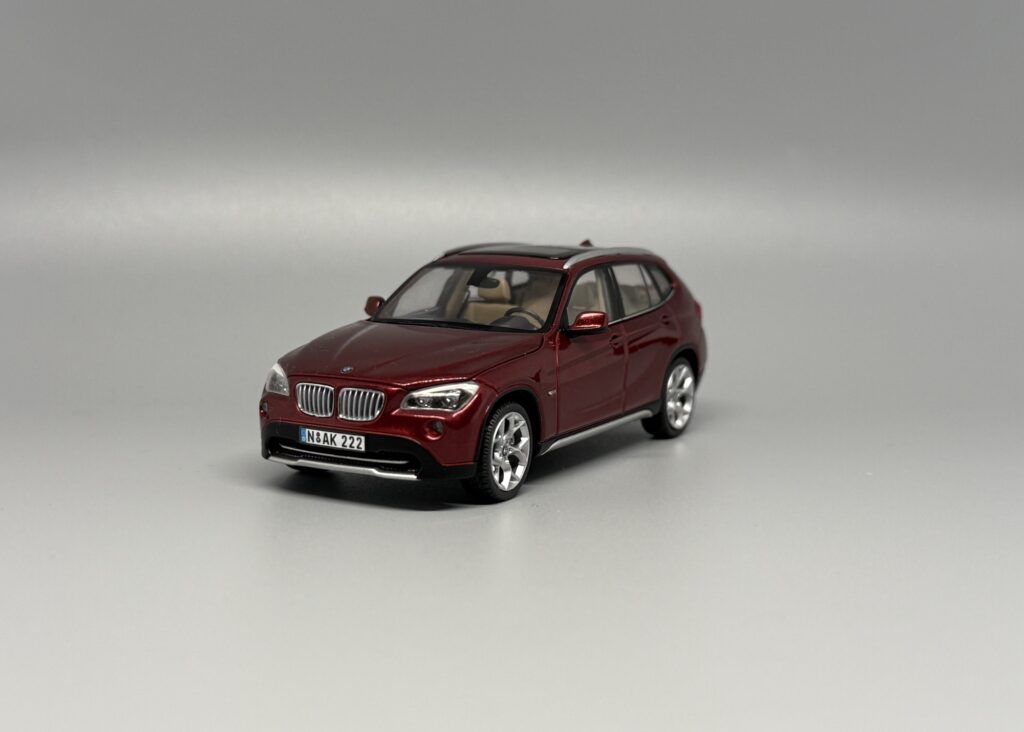
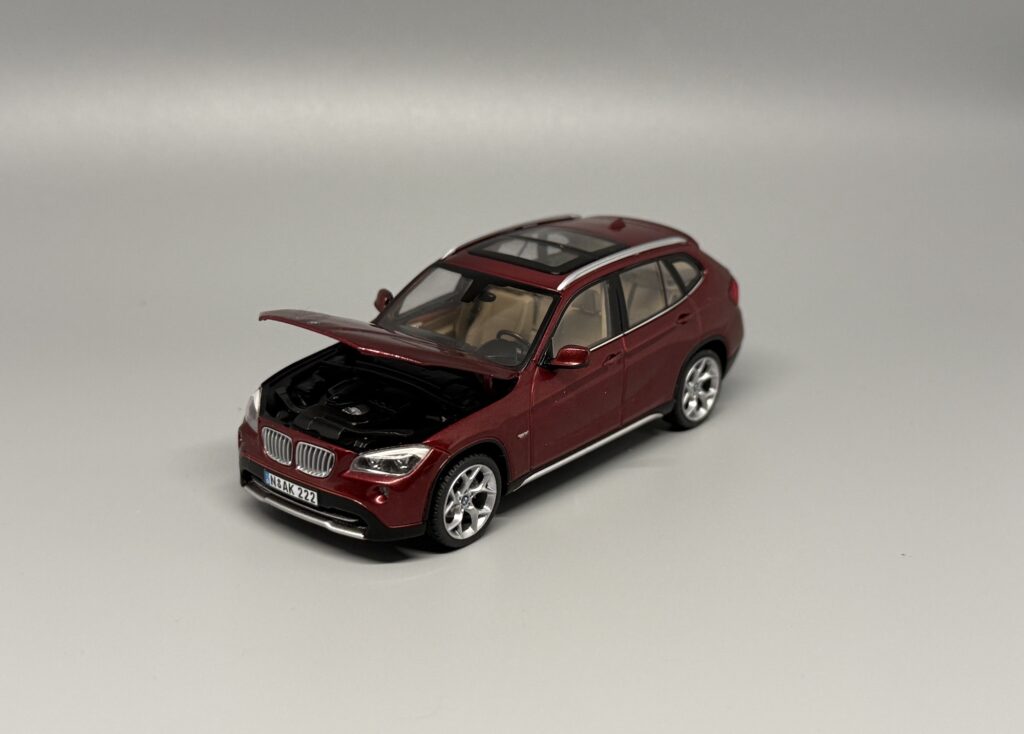
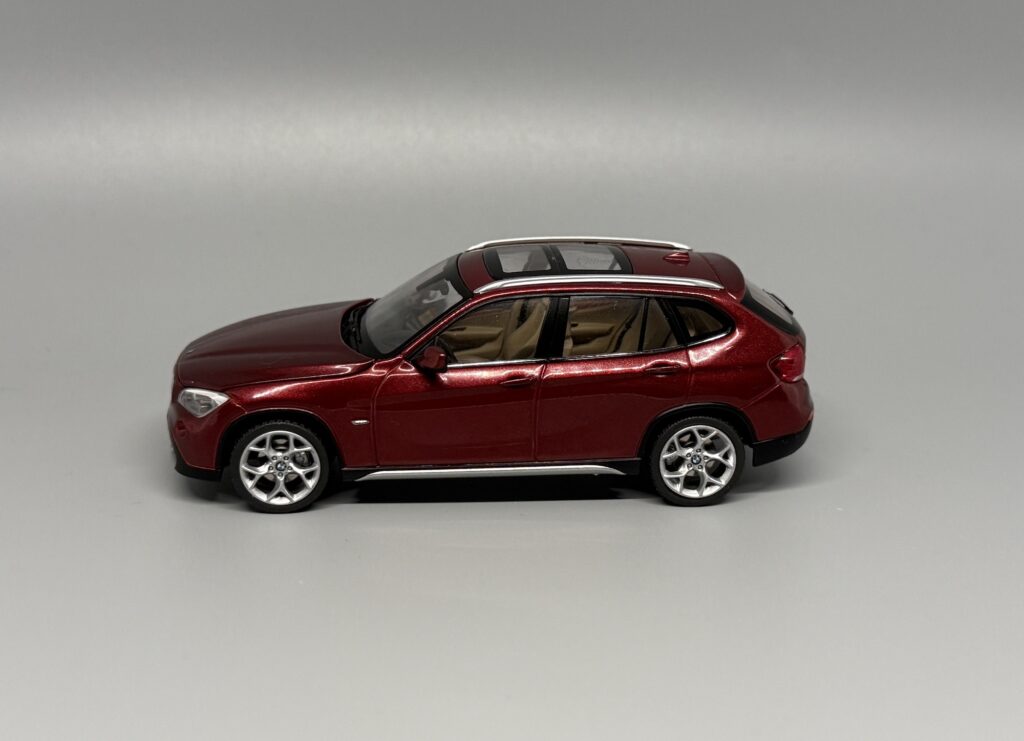
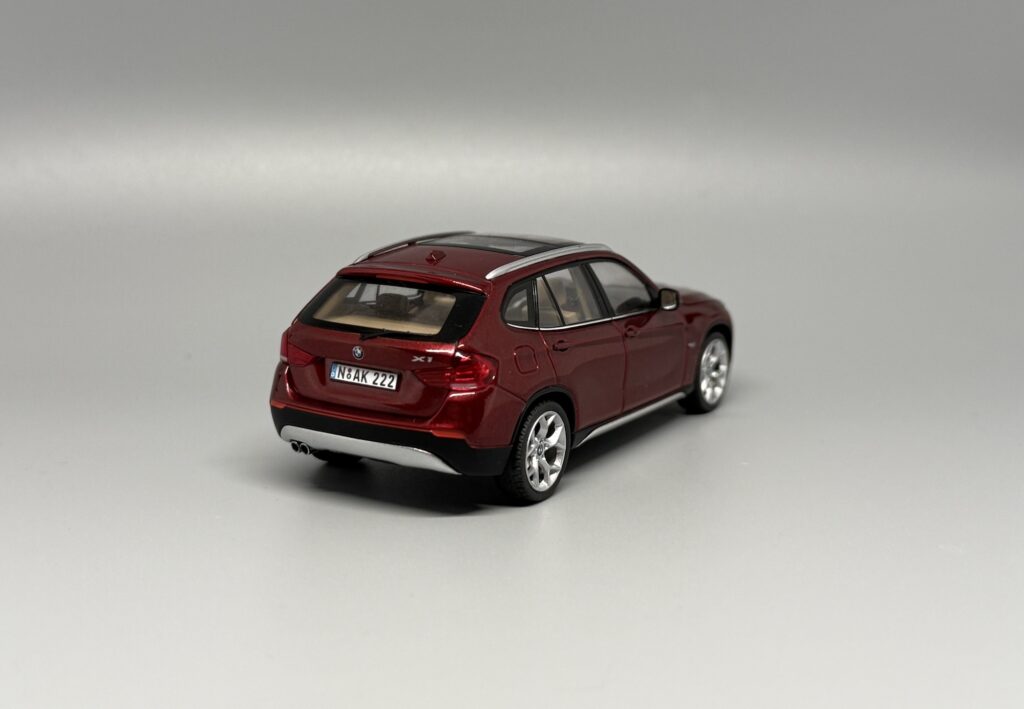
The BMW X1 (E84) in my collection was produced by Schuco. It is a limited-edition model, with a total production run of 1,000 examples.
Technical data in brief
World premiere: 2009
Production period: 2009–2015
Main production locations: Leipzig, Germany; Shenyang, China
Body style: five-door compact Sports Activity Vehicle
Engines: four-cylinder petrol and diesel engines, and six-cylinder petrol engines
Maximum power in European versions: 258 hp
Drivetrain: rear-wheel drive (sDrive) or all-wheel drive (xDrive)
Luggage capacity: 420–1,350 litres
Production at BMW Plant Leipzig: 635,194 cars
Global first-generation sales: more than 800,000 cars
Special feature: the first compact BMW X model, available with both rear-wheel drive and all-wheel drive