
Background
BMW X5 3.0d (E53) was the only diesel version of the first-generation X5 and an important addition to the range of BMW’s first Sports Activity Vehicle. The X5 was introduced in 1999, with the diesel version reaching European customers in 2001. It combined the practicality and luxury of a large SAV with the efficiency of a six-cylinder diesel engine and the driving characteristics traditionally associated with BMW.
BMW’s first all-wheel-drive diesel
The X5 3.0d represented an important technical milestone for BMW, combining a diesel engine with all-wheel drive for the first time in the brand’s history. Unlike many conventional off-road vehicles of its era, the X5 was primarily developed for excellent on-road handling. Its self-supporting body, independent suspension and rear-biased all-wheel-drive system gave it driving characteristics closer to those of a passenger car.
Six-cylinder turbodiesel
The original X5 3.0d was powered by a 2,926 cm³ M57 straight-six turbodiesel, an engine also familiar from BMW’s 3 Series and 5 Series. It produced 184 hp at 4,000 rpm and 410 Nm of torque. Common-rail direct injection and a variable-geometry turbocharger delivered strong pulling power from low engine speeds. The model was available with either a five-speed manual or automatic transmission.
Sporting and practical
The BMW X5 3.0d reached a top speed of approximately 200 km/h and accelerated from 0 to 100 km/h in around ten seconds, depending on the transmission. The diesel engine’s substantial torque suited the character of the heavy all-wheel-drive vehicle and provided comfortable long-distance performance. Permanent all-wheel drive distributed power between the front and rear axles in a 38:62 ratio. The system was complemented by Dynamic Stability Control, Automatic Differential Brake and Hill Descent Control.
The 2003 model update
The X5 received a comprehensive update in 2003. The revised X5 3.0d was equipped with an updated 2,993 cm³ M57 straight-six diesel engine, increasing output to 218 hp and torque to 500 Nm. Six-speed transmissions and the new intelligent xDrive all-wheel-drive system were introduced. The update also brought revised exterior styling, new headlights and numerous technical improvements.
The success of the first generation
The BMW X5 E53 was manufactured at BMW Plant Spartanburg in South Carolina, USA. First-generation production began in 1999 and continued until September 2006. A total of 616,867 first-generation X5s were built. The diesel version became particularly important in European markets, where efficiency and long-distance driving range were major considerations. BMW has not published a separate official production figure for the X5 3.0d.
Model in the collection
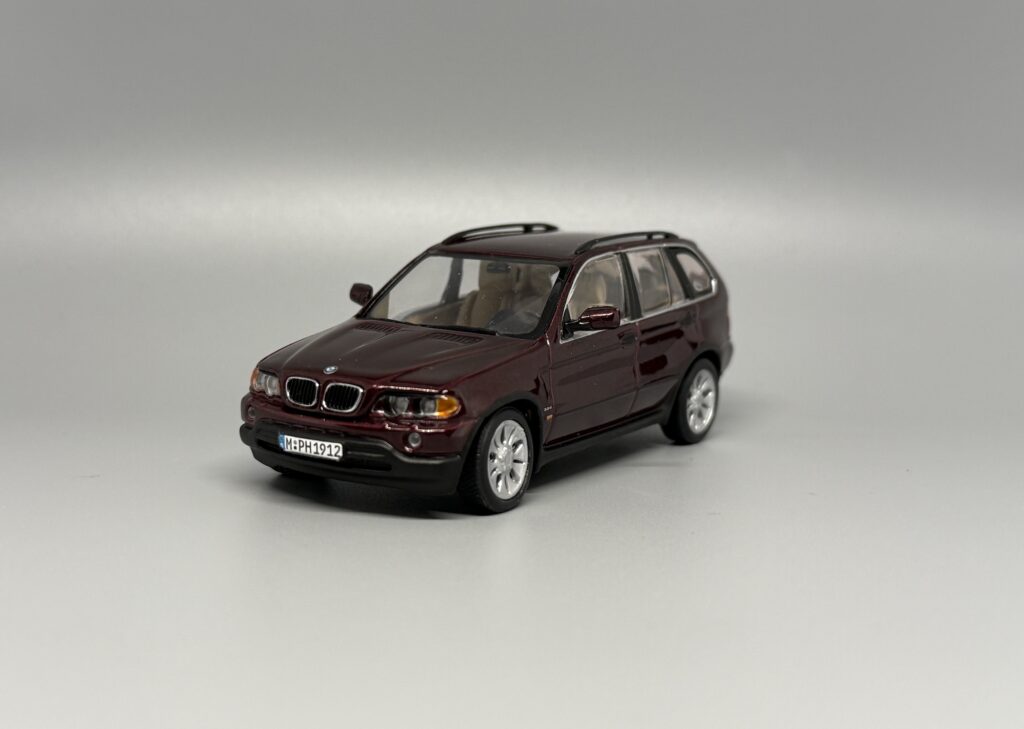
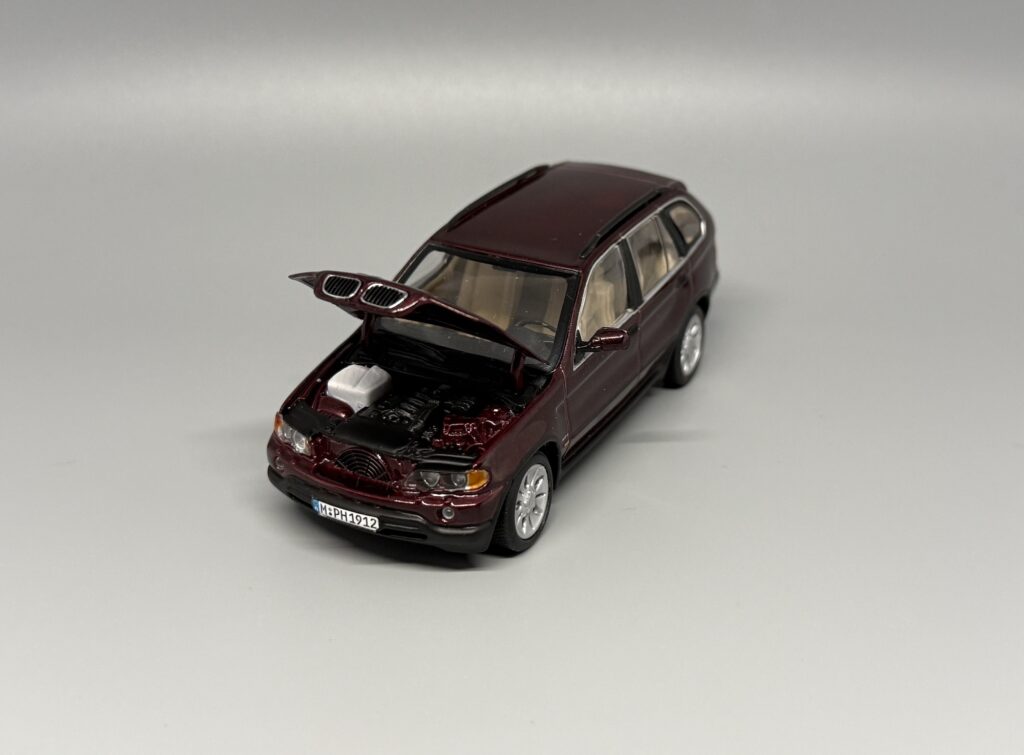
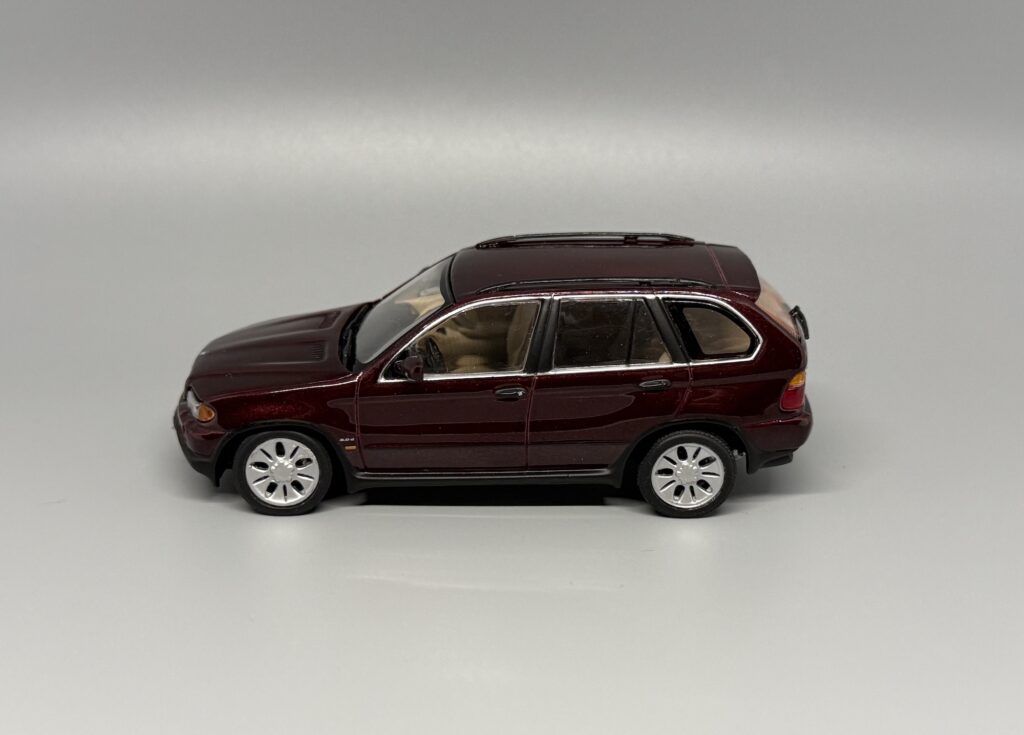
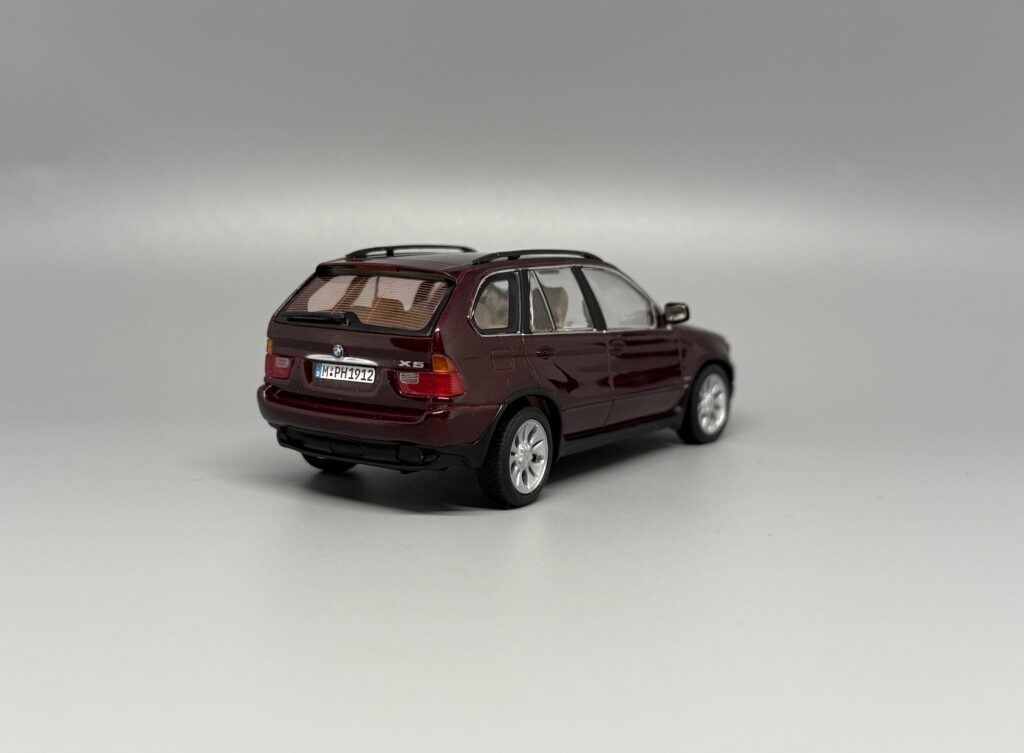
The BMW X5 3.0d (E53) in my collection was produced by Minichamps. It is an official BMW dealer model marked as a 2000 car. The model represents the original 184 hp version of the X5 3.0d.
Technical data in brief
Production period according to BMW Group Classic: April 2001 – September 2006
Original version: 184 hp
Production location: BMW Plant Spartanburg, South Carolina, USA
Body style: five-door Sports Activity Vehicle
Engine: M57 straight-six turbodiesel
Displacement: 2,926 cm³
Power: 184 hp / 135 kW @ 4,000 rpm
Torque: 410 Nm @ 2,000 rpm
Transmission: 5-speed manual or automatic
Drivetrain: permanent all-wheel drive, 38:62 torque distribution
0–100 km/h: approximately 10–10.5 seconds
Top speed: approximately 200 km/h
Weight: approximately 2,095 kg
Total first-generation X5 production: 616,867 cars
Special feature: BMW’s first all-wheel-drive diesel model, combining a six-cylinder turbodiesel with the practicality of a luxury SAV