
Background
BMW 7 Series (E32) was the second generation of BMW’s flagship luxury saloon, introduced in September 1986. Replacing the earlier E23, the new model represented a major step forward in design, comfort and technology. The E32 combined an elegant, aerodynamic body with the sporting handling traditionally associated with BMW, establishing itself as one of the most advanced luxury saloons of its era.
Elegant and timeless design
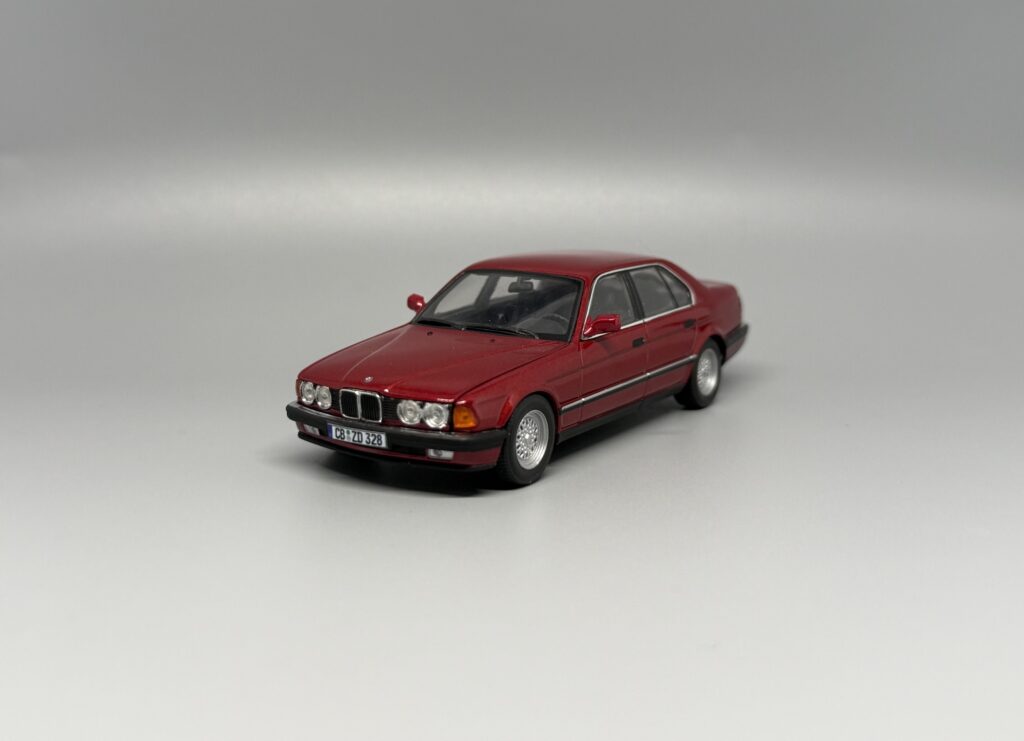
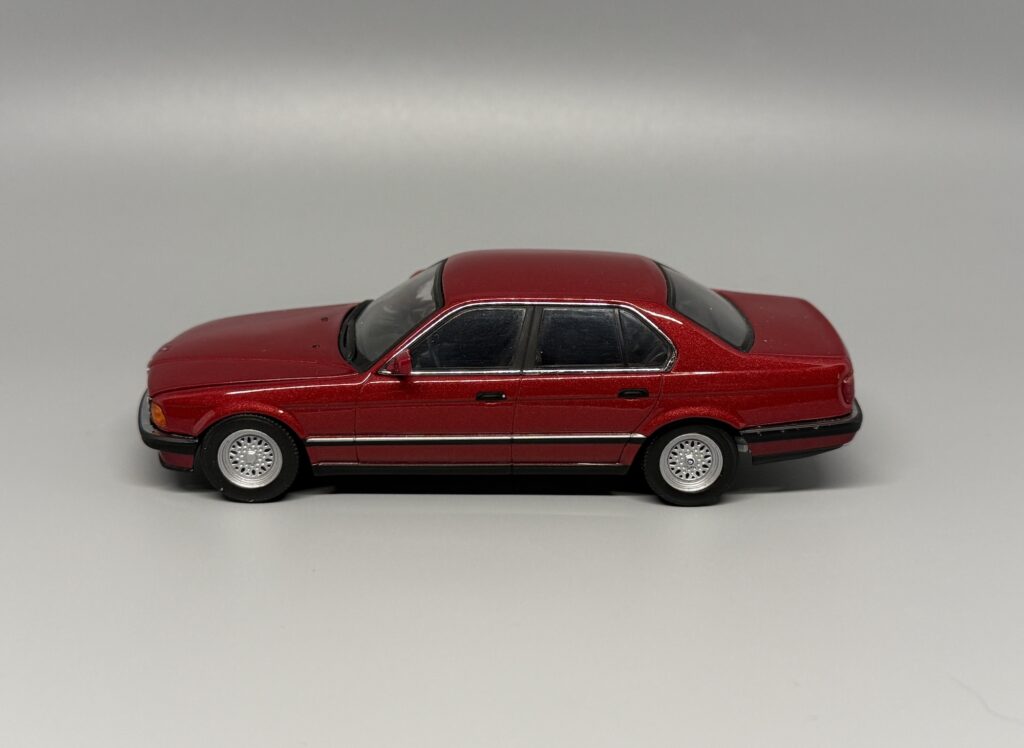
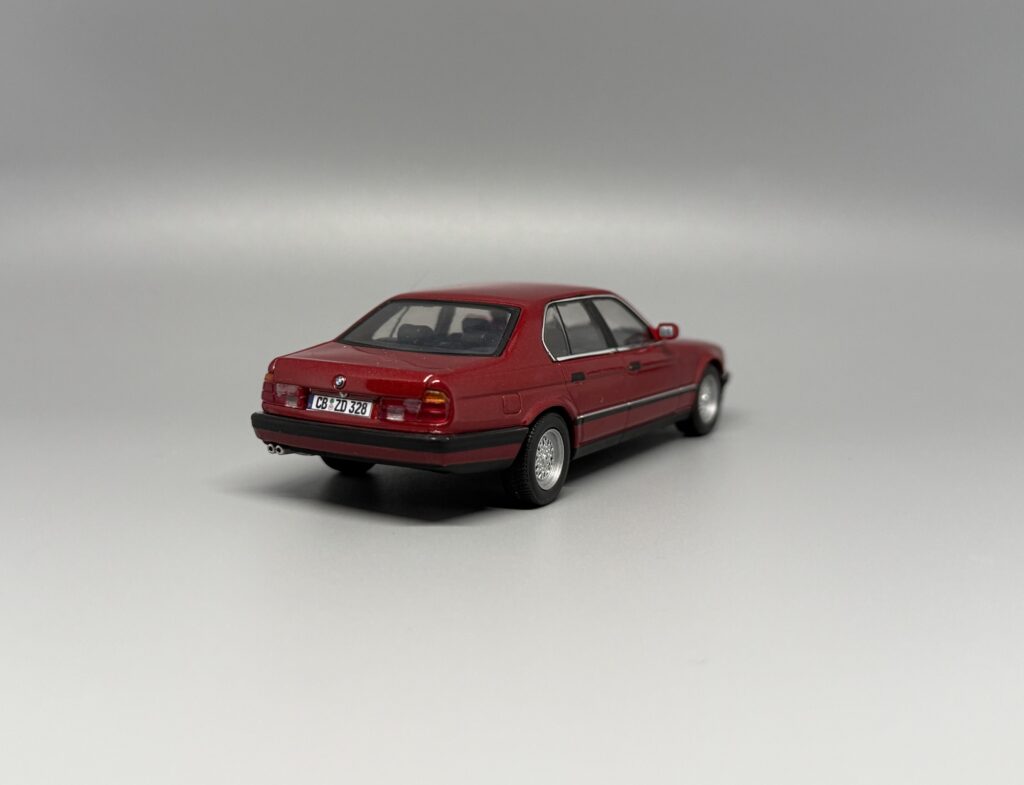
The exterior design of the E32 was developed under BMW’s chief designer Claus Luthe, with Ercole Spada and Hans Kerschbaum responsible for its distinctive appearance. Its low front end, clean body lines and characteristic L-shaped rear lights created a modern yet understated design. Compared with its predecessor, the E32 was more aerodynamic, while its interior offered greater comfort and higher-quality materials.
From straight-six to V12
The second-generation 7 Series was initially offered with two straight-six petrol engines. The BMW 730i featured a 3.0-litre engine producing 188 hp, while the BMW 735i used a 3.4-litre unit developing 211 hp. The most significant technical innovation arrived in 1987 with the introduction of the BMW 750i and long-wheelbase 750iL. Their 5.0-litre V12 produced 300 hp and 450 Nm, becoming the first series-production V12-powered passenger car built by a German manufacturer since the Second World War.
The first long-wheelbase 7 Series
The E32 was the first BMW 7 Series generation to offer an extended-wheelbase iL version. Its wheelbase was increased by 114 millimetres, providing additional space primarily for rear-seat passengers. The particularly luxurious 750iL featured electrically adjustable seats, extensive leather upholstery and a wide range of advanced electronic comfort systems.
Technological innovations
The BMW E32 introduced several important innovations to the luxury-car segment. These included Electronic Damper Control, Automatic Stability Control and electronic throttle management. In 1991, the E32 became the world’s first series-production passenger car to offer xenon dipped-beam headlights. Advanced electronics and driver assistance systems helped combine luxury-car comfort with improved handling and safety.
The 1992 model update
The E32 received a model update in 1992, introducing a new generation of V8 engines. The BMW 730i V8 featured a 3.0-litre engine producing 218 hp, while the BMW 740i used a 4.0-litre V8 developing 286 hp. These engines filled the gap between the existing straight-six models and the V12 flagship. Exterior details and equipment were also revised while retaining the E32’s elegant overall design.
More than 311,000 cars
Production of the BMW E32 began in 1986 at BMW Plant Dingolfing in Germany and continued until 1994. Commonly published production statistics list 311,068 cars, while BMW’s own historical records give a rounded figure of approximately 311,000. More than 6,000 additional assembly kits were supplied to Malaysia and South Africa. The success of the E32 further established the 7 Series as BMW’s flagship luxury model.
Model in the collection
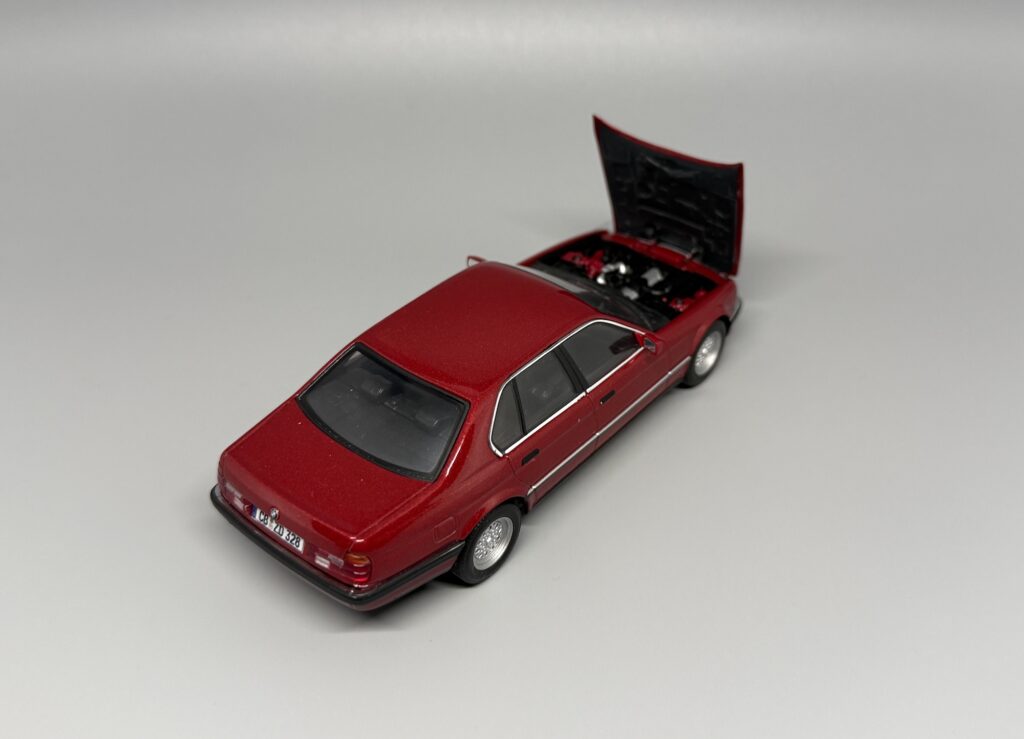
The BMW 7 Series (E32) in my collection was produced by Minichamps and represents a 1986 car. It is a limited-edition model, with a total production run of 3,024 examples.
Technical data in brief
World premiere: September 1986
Production period: June 1986 – July 1994
Main production location: BMW Plant Dingolfing, Germany
Body style: four-door luxury saloon
Body versions: standard and long-wheelbase iL
Engines: straight-six, V8 and V12 petrol engines
Displacement: 3.0–5.0 litres
Power: approximately 184–300 hp depending on version
Most powerful version: BMW 750i / 750iL, 300 hp
Drivetrain: rear-wheel drive
Top speed: up to 250 km/h
Standard wheelbase: 2,833 mm
Long wheelbase: 2,947 mm
Total production: 311,068 cars according to commonly published production statistics
Special feature: the first BMW 7 Series with V12 power and a long-wheelbase version, and the world’s first series-production car to offer xenon dipped-beam headlights