
Background
BMW 750i (E38) was the flagship model of the third-generation BMW 7 Series, introduced in 1994. Replacing the previous E32 generation, the E38 combined more elegant styling with advanced technology and improved ride comfort. Powered by a V12 engine, the 750i represented the pinnacle of BMW luxury saloon engineering while retaining the sporting handling and driver-focused character traditionally associated with the brand.
Elegant and timeless design
The E38 was developed by BMW’s design team under Boyke Boyer. Compared with its predecessor, it featured a lower, more streamlined body while retaining classic BMW proportions. Its long bonnet, low beltline and understated rear-end styling created an elegant appearance. Alongside the standard-wheelbase 750i, BMW also offered the extended 750iL, providing additional space and comfort for rear-seat passengers.
5.4-litre V12
The BMW 750i was powered by the 5,379 cm³ M73 V12 petrol engine, producing 326 hp at 5,000 rpm and 490 Nm of torque. Compared with the previous-generation 750i, displacement had increased and power output had risen by 26 hp. Power was delivered to the rear wheels through a five-speed automatic transmission. Particular attention was paid to smooth operation, low noise levels and strong torque delivery.
6.6 seconds
Despite its luxurious equipment and substantial dimensions, the BMW 750i offered impressive performance. It accelerated from 0 to 100 km/h in 6.6 seconds and reached an electronically limited top speed of 250 km/h. Its advanced chassis and rear-wheel-drive layout combined the comfort of a luxury saloon with the driving characteristics expected from a BMW.
A new era of electronics
The third-generation 7 Series introduced several important technological innovations. The E38 was the first European production car to offer a factory-installed integrated navigation system. Optional equipment also included an onboard telephone, television and electronically controlled suspension. Advanced safety features were introduced during production, including head-protection airbags designed to improve occupant safety in side impacts.
The 1998 model update
The E38 received a model update in 1998, bringing revised headlights, indicators and several exterior styling changes. Electronic systems and safety equipment were also improved. The V12-powered 750i retained its 326 hp output, while further engine-management developments helped improve efficiency and reduce emissions. Production of the E38 continued until 2001.
The third-generation 7 Series
The BMW E38 was manufactured between 1994 and 2001 at BMW Plant Dingolfing in Germany. Total production of the model family reached 327,598 cars. Alongside standard and long-wheelbase saloons, the range included the exclusive L7 and, for the first time in 7 Series history, diesel-powered versions. Throughout its production life, the V12-powered 750i remained the flagship of the range.
Model in the collection
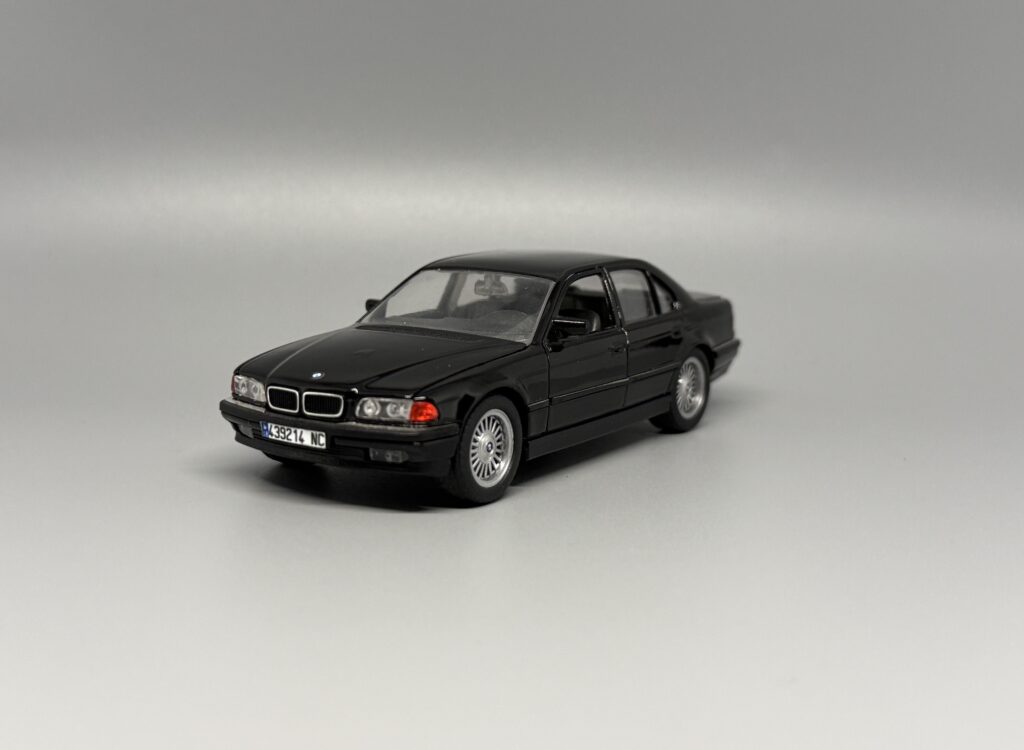
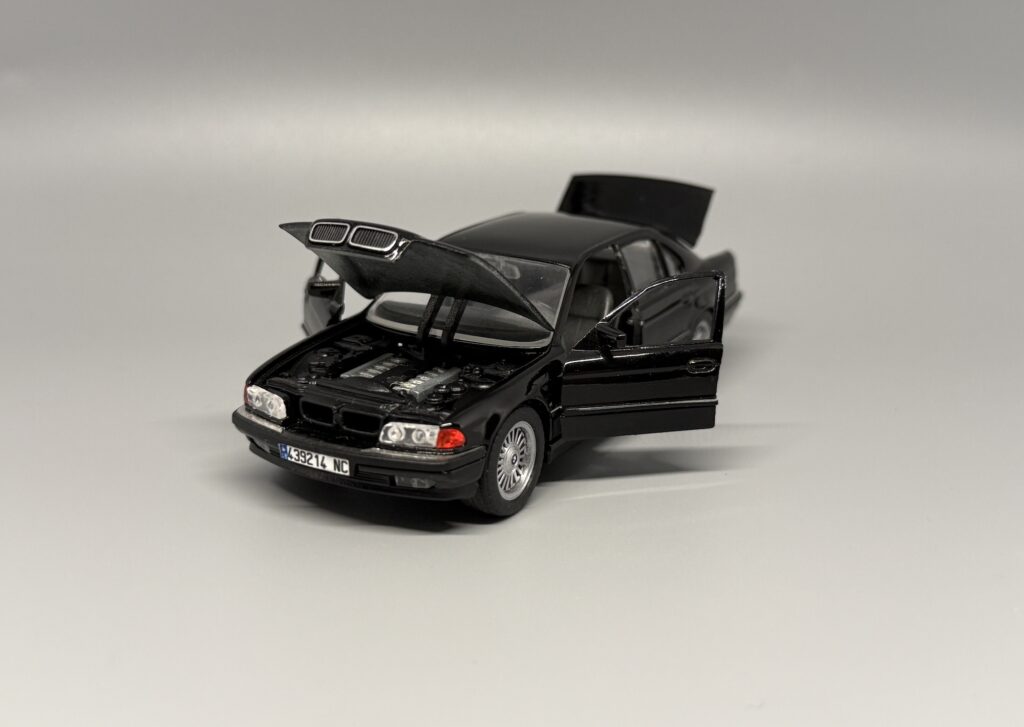
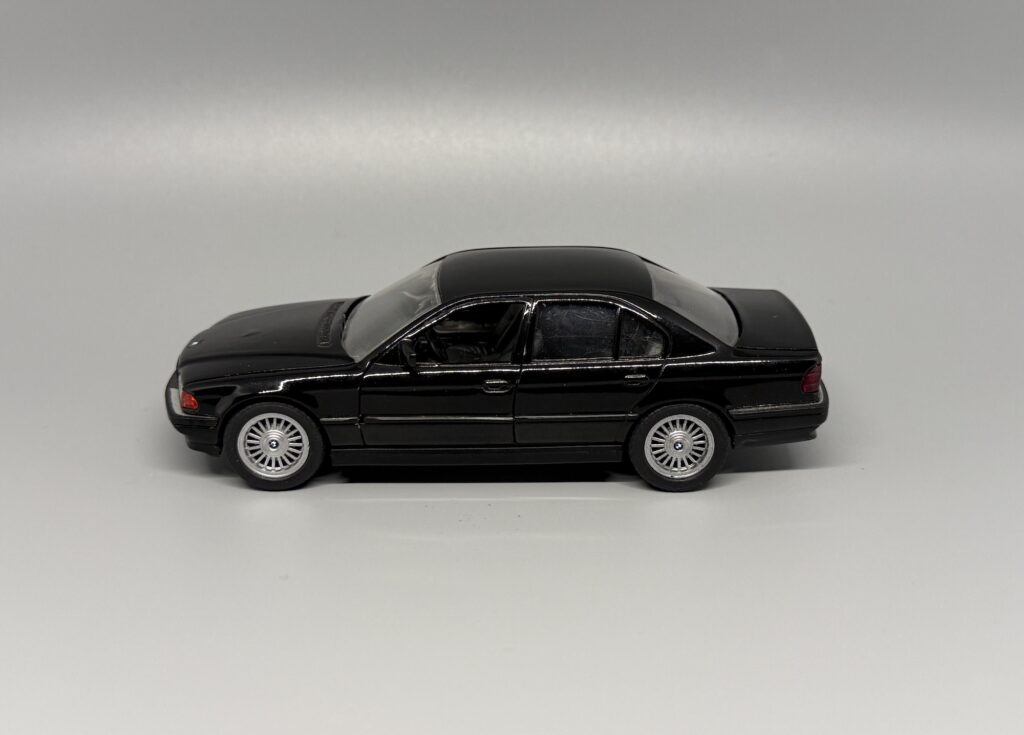
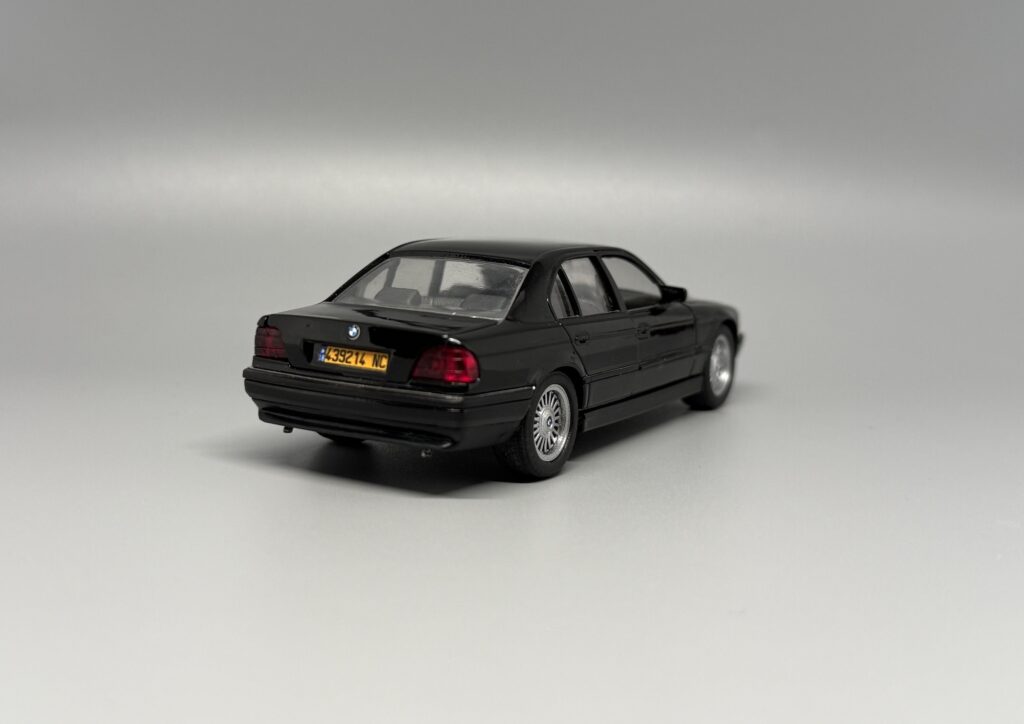
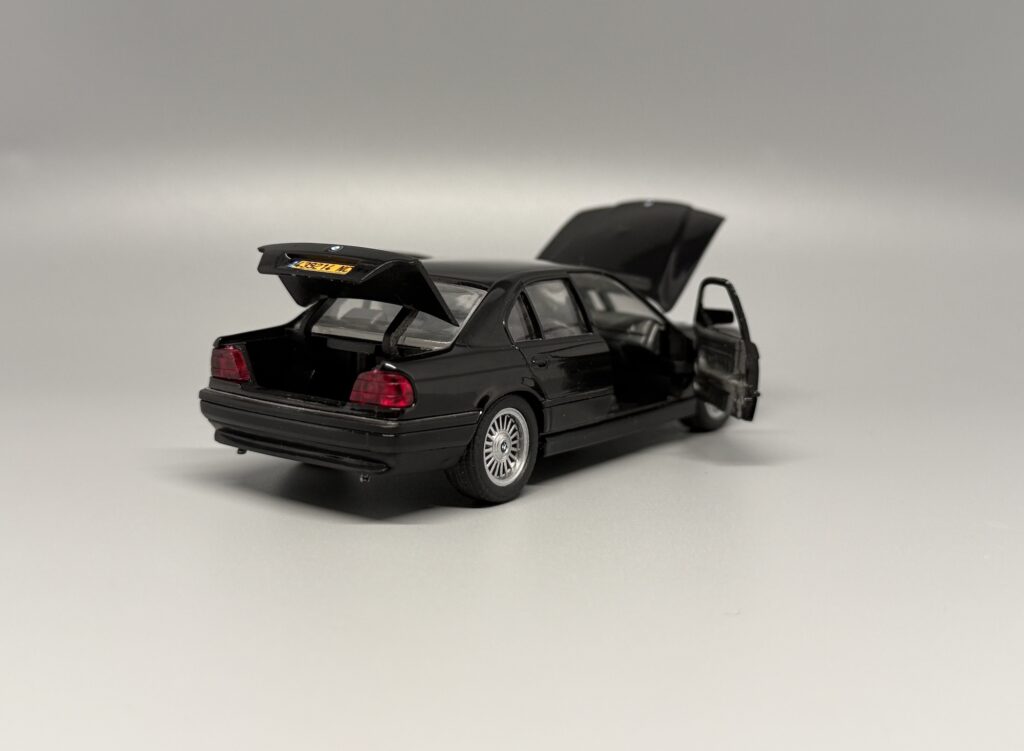
The BMW 750i (E38) in my collection was produced by Schabak and represents a 1994 car. It is an official BMW dealer model.
Technical data in brief
E38 model debut: 1994
BMW 750i production period: September 1994 – July 2001
Production location: BMW Plant Dingolfing, Germany
Body style: four-door luxury saloon
Engine: M73B54, naturally aspirated 5.4-litre V12
Displacement: 5,379 cm³
Power: 326 hp / 240 kW @ 5,000 rpm
Torque: 490 Nm @ 3,900 rpm
Transmission: 5-speed automatic
Drivetrain: rear-wheel drive
0–100 km/h: 6.6 seconds
Top speed: 250 km/h, electronically limited
Weight: approximately 1,960 kg
Wheelbase: 2,930 mm
Original German price: DM 148,000
Total E38-generation production: 327,598 cars
Special feature: V12 flagship of the third-generation 7 Series, combining strong performance with advanced luxury-car technology