
Background
BMW X3 3.0i (E83) was the most powerful petrol version in the original first-generation X3 range. BMW presented the X3 family at the Frankfurt Motor Show in 2003, with sales beginning in early 2004. The new model joined the existing X5 as a smaller and sportier alternative, combining an elevated driving position and practical five-seat body with the driver-focused character traditionally associated with BMW.
3.0-litre straight-six
The BMW X3 3.0i was powered by the 2,979 cm³ M54 straight-six engine, producing 231 hp at 5,900 rpm and 300 Nm of torque. The naturally aspirated petrol engine offered smooth power delivery and responsive performance. It could be combined with either a six-speed manual gearbox or a five-speed Steptronic automatic transmission.
The new intelligent xDrive system
One of the X3’s most important technical innovations was BMW xDrive, a new electronically controlled all-wheel-drive system introduced simultaneously on the X3 and the updated X5 in 2003. The system continuously varied torque distribution between the front and rear axles according to driving conditions and could react proactively to changes in traction. Working together with Dynamic Stability Control, xDrive improved both cornering dynamics and traction on slippery surfaces.
Sporting performance
The 231 hp X3 3.0i accelerated from 0 to 100 km/h in 7.8 seconds with the manual gearbox. Standard top speed was 210 km/h, increasing to 224 km/h with the appropriate Sports Package equipment. BMW placed particular emphasis on achieving precise on-road handling while retaining the versatility expected from an all-wheel-drive Sports Activity Vehicle.
A practical sporting SUV
Despite its sporting character, the X3 was also designed as a practical everyday family car. Its five-seat interior, elevated driving position and large tailgate made it particularly versatile. Luggage capacity was 480 litres, expanding to a maximum of 1,560 litres with the rear seats folded. The all-wheel-drive system was complemented by Hill Descent Control, helping the driver maintain control on steep or slippery descents.
The 2006 model update
The original BMW X3 3.0i remained in production until 2006. Following that year’s model update, it was replaced in the European range by the X3 3.0si, featuring a newer and lighter 3.0-litre straight-six engine producing 272 hp. The update also introduced revised exterior styling, interior improvements and further development of the all-wheel-drive system.
More than 614,000 cars
The first-generation X3 was manufactured primarily at the Magna Steyr plant in Graz, Austria. Production continued until 2010, with a total of 614,824 E83-generation X3s built. Of these, 605,498 were manufactured in Graz, while the remainder were assembled in Russia, Egypt and Thailand. BMW has not published a separate production figure for the X3 3.0i. The success of the first X3 established a strong foundation for the further development of BMW’s compact X models.
Model in the collection
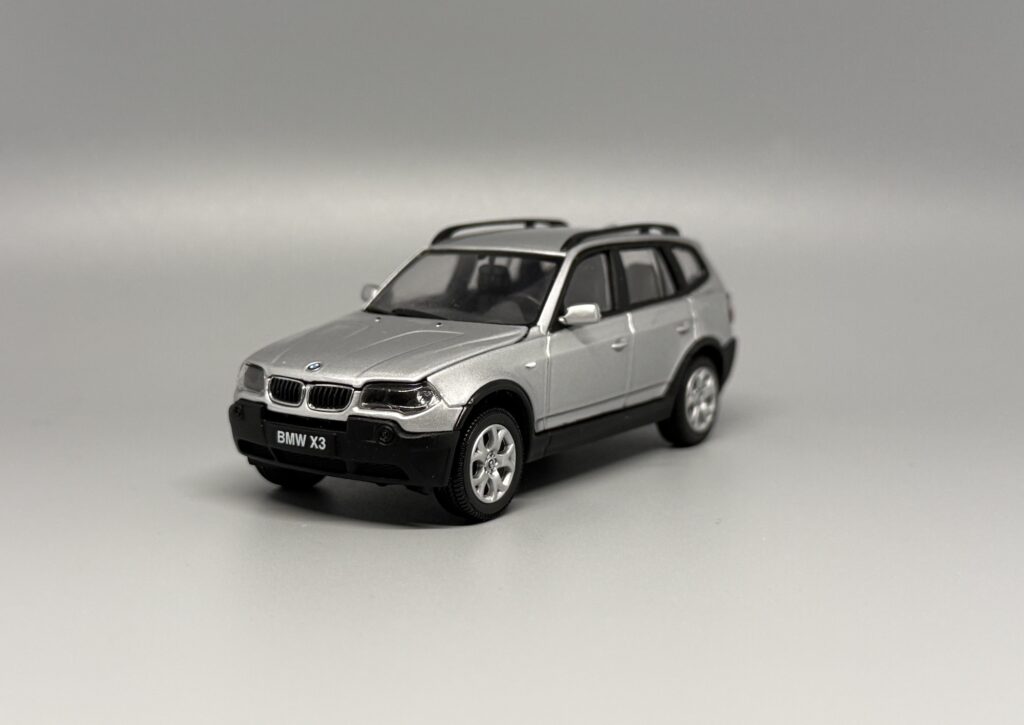
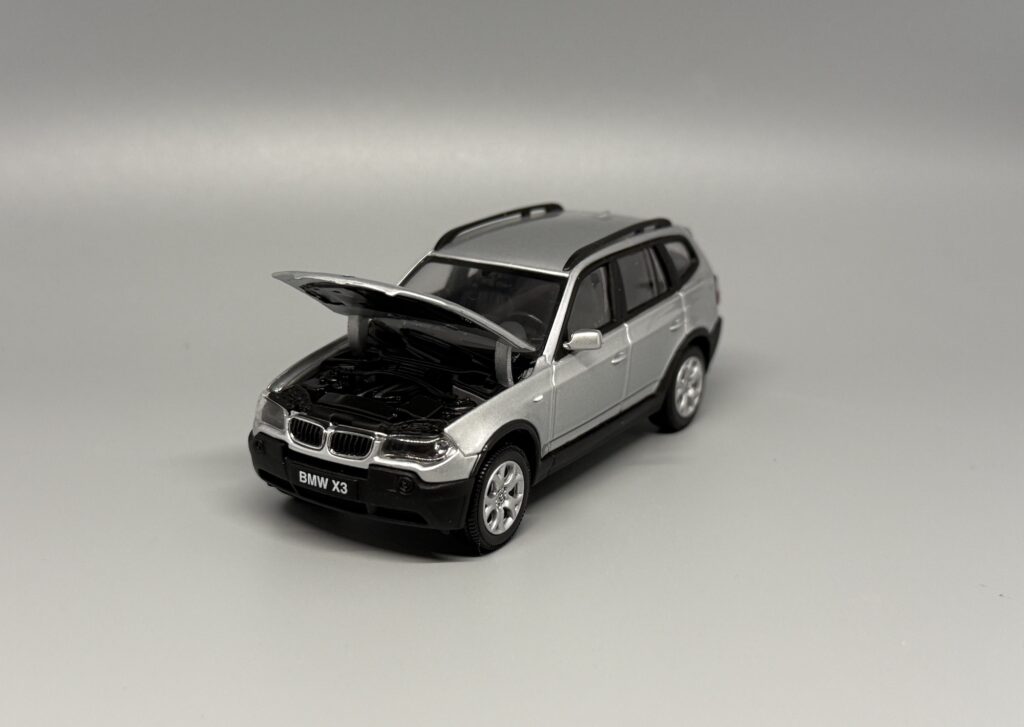
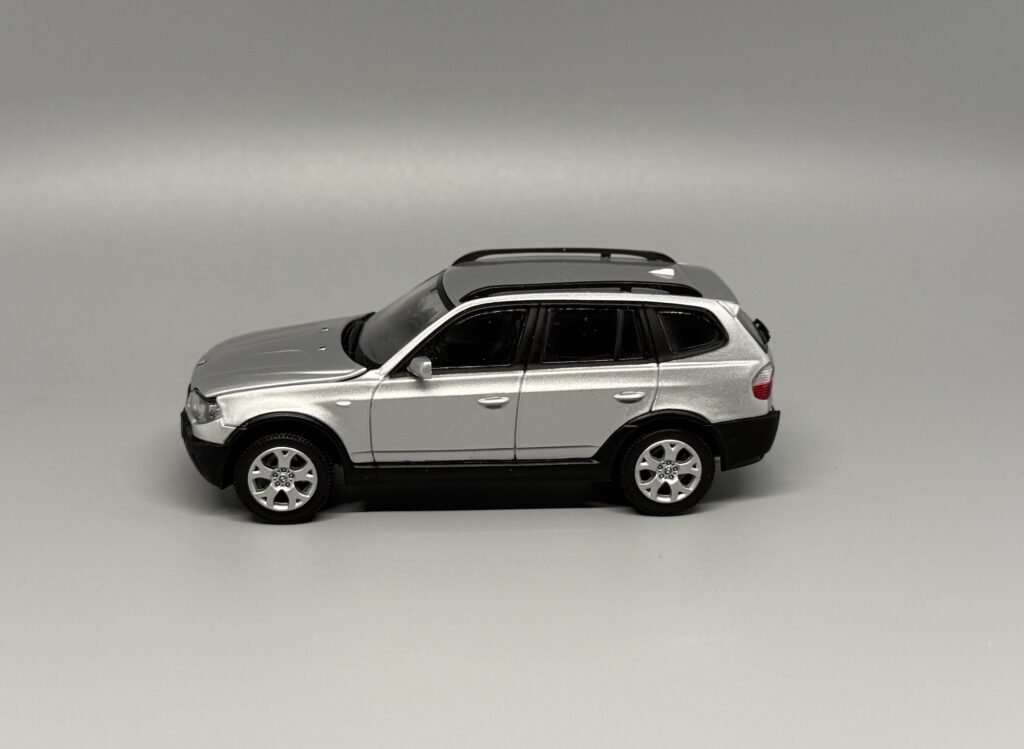
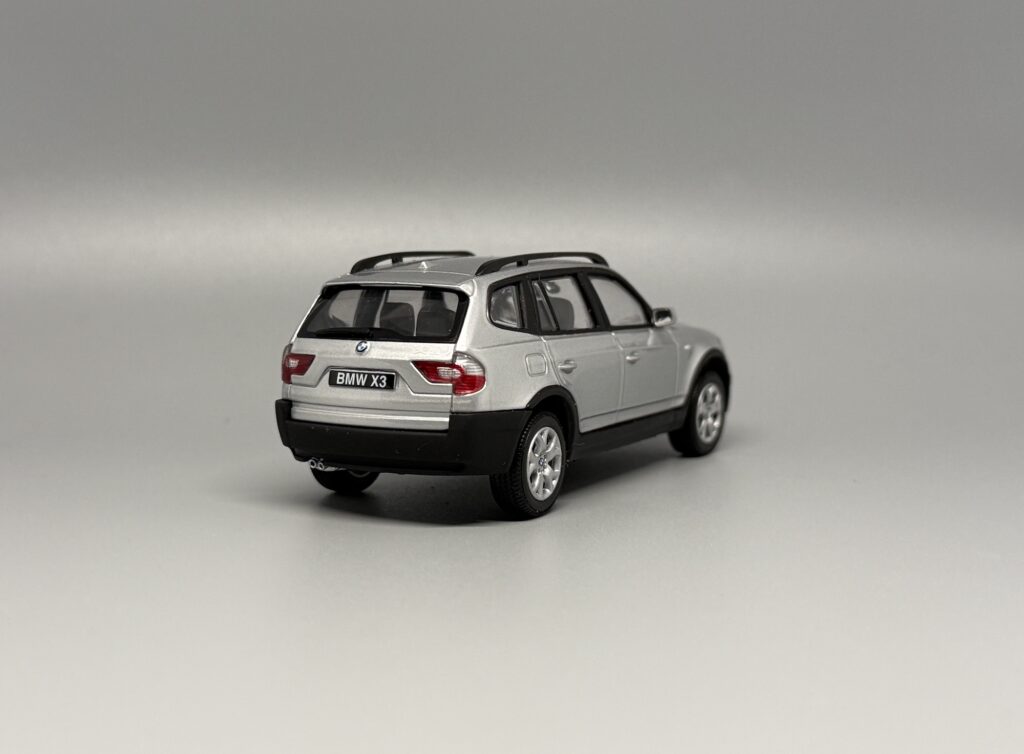
The BMW X3 3.0i (E83) in my collection was produced by Kyosho.
Technical data in brief
Model debut: 2003
BMW X3 3.0i production period: 2003–2006
Market launch: 2004
Main production location: Magna Steyr, Graz, Austria
Body style: five-door Sports Activity Vehicle
Engine: M54B30, 3.0-litre straight-six
Displacement: 2,979 cm³
Power: 231 hp / 170 kW @ 5,900 rpm
Torque: 300 Nm @ 3,500 rpm
Transmission: 6-speed manual or 5-speed automatic
Drivetrain: intelligent xDrive all-wheel drive
0–100 km/h: 7.8 seconds with manual transmission
Top speed: 210 km/h, up to 224 km/h with Sports Package
Weight: approximately 1,760 kg
Luggage capacity: 480–1,560 litres
Total first-generation X3 production: 614,824 cars
Special feature: the most powerful petrol version in the original X3 range, combining a naturally aspirated straight-six with the new intelligent xDrive system