
Background
BMW X3 (F25) was the second generation of the X3 and represented a significant step forward for BMW’s mid-size Sports Activity Vehicle. Unveiled at the Paris Motor Show in 2010, it went on sale later that autumn. Compared with the first-generation E83, the new X3 was larger, more spacious and more comfortable while retaining the sporting handling and driver-focused character traditionally associated with BMW.
Larger and more elegant
The new X3 combined stronger proportions, more defined body lines and a more elegant overall appearance. Its longer wheelbase and wider track improved both driving dynamics and interior space. Higher-quality materials were used throughout the cabin, with greater attention paid to ergonomics and everyday comfort.
A new generation of engines
The BMW X3 was initially offered in two versions. The X3 xDrive20d featured a 2.0-litre four-cylinder turbodiesel producing 184 hp, while the xDrive35i was powered by a 3.0-litre turbocharged straight-six petrol engine developing 306 hp. The engine range expanded considerably during production, eventually including a broad selection of four- and six-cylinder petrol and diesel units. The most powerful regular version was the 313 hp xDrive35d.
Sporting dynamics and comfort
The second-generation X3 received a comprehensively redesigned chassis, combining sporting handling with improved ride comfort. Electric power steering was introduced, while electronically controlled dampers became available as an option. All launch versions featured intelligent xDrive all-wheel drive, with rear-wheel-drive sDrive models joining the range later. The eight-speed automatic transmission further improved both performance and efficiency.
More space and technology
The F25 offered a more spacious interior and a larger luggage compartment than its predecessor, with capacity ranging from 550 to 1,600 litres. The rear seat backrest featured a 40:20:40 split, allowing greater flexibility for passengers and luggage. Optional equipment included advanced driver assistance systems, a Head-Up Display, a reversing camera with Top View and various BMW ConnectedDrive features.
The 2014 model update
The X3 received a comprehensive update in 2014. Its redesigned front end featured headlights extending towards the kidney grille, revised bumpers and improved interior materials. The engine range was updated with new-generation diesel engines, including the 190 hp xDrive20d. The changes gave the X3 a more distinctive appearance while further improving equipment levels and fuel efficiency.
Production in the United States
Unlike its predecessor, the second-generation X3 was manufactured primarily at BMW Plant Spartanburg in South Carolina, USA. Production began in September 2010 and continued until 2017, when the F25 was replaced by the third-generation X3 (G01). Global sales of the second-generation X3 exceeded 900,000 cars, representing a substantial increase over its predecessor.
Model in the collection
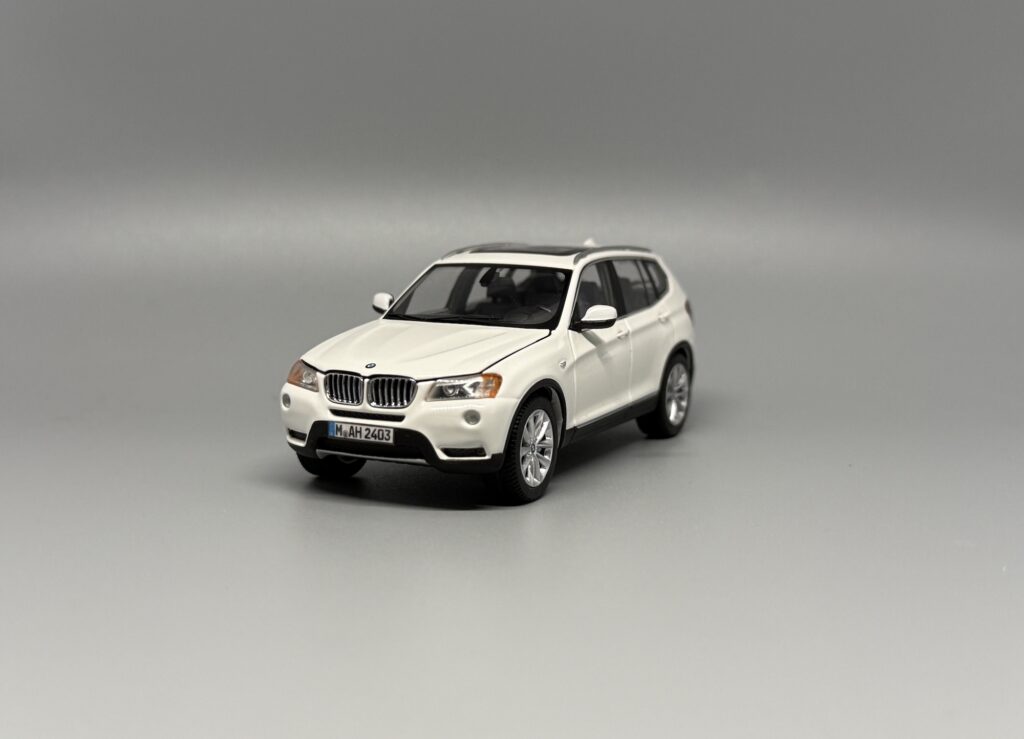
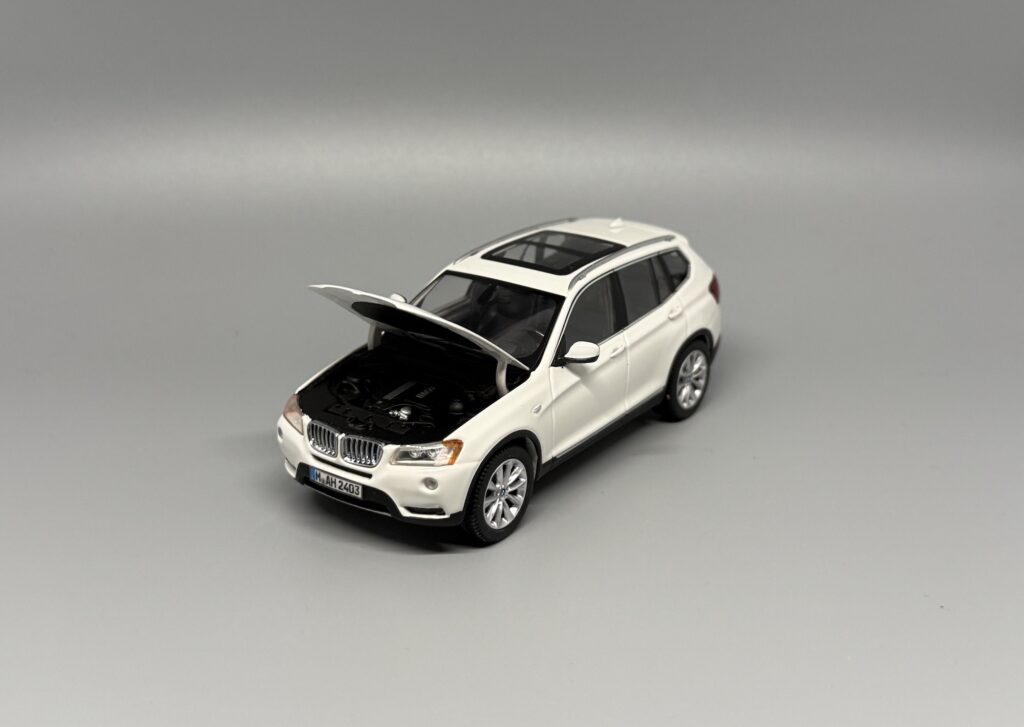
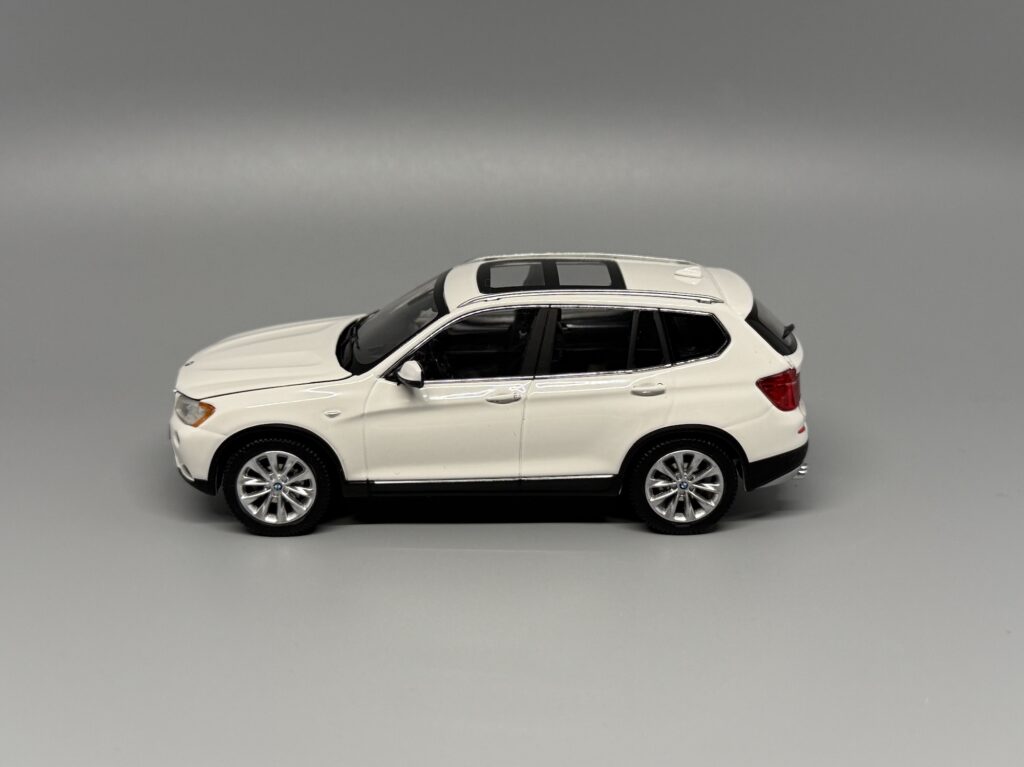
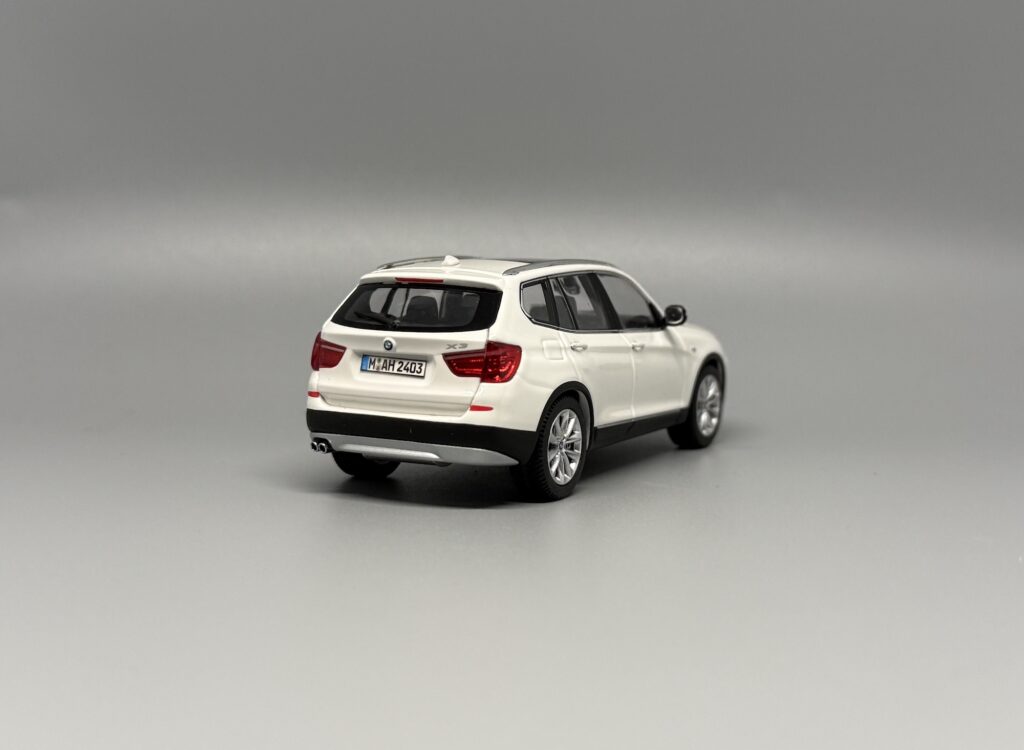
The BMW X3 (F25) in my collection was produced by Schuco. It is an official BMW dealer model.
Technical data in brief
World premiere: 2010
Production period: September 2010 – 2017
Main production location: BMW Plant Spartanburg, South Carolina, USA
Body style: five-door Sports Activity Vehicle
Engines: four- and six-cylinder petrol and diesel engines
Launch versions: xDrive20d with 184 hp and xDrive35i with 306 hp
Maximum power: 313 hp in the xDrive35d
Transmission: 6-speed manual or 8-speed automatic
Drivetrain: rear-wheel drive (sDrive) or all-wheel drive (xDrive)
Wheelbase: 2,810 mm
Luggage capacity: 550–1,600 litres
Global second-generation sales: more than 900,000 cars
Special feature: larger and more refined second-generation X3, with main production moving from Austria to the United States