Background
BMW M5 (E34) was the second generation of the M5 and one of the most important classic high-performance saloons in BMW M history. Introduced in 1988, it developed the concept of the original M5 into a considerably more mature and technically advanced automobile. The E34 continued to combine the understated appearance of an executive saloon with serious performance, while offering greater comfort, safety and everyday usability than its predecessor.
The final M5 with an M1-derived engine
The E34 M5 was the final generation of the M5 whose six-cylinder engine could trace its technical roots back to the BMW M1. The original S38B36 was an extensively developed 24-valve straight-six with individual throttle bodies. This high-revving naturally aspirated engine gave the E34 M5 much of its distinctive character and provided a direct technical link to BMW Motorsport’s earlier high-performance models.
315 hp
The original M5 engine displaced 3,535 cm³ and produced 315 hp or 232 kW at 6,900 rpm, with maximum torque of 360 Nm. Power was sent to the rear wheels through a 5-speed manual transmission. Performance increased substantially over the first M5 despite the E34 being a heavier car with a larger body, improved safety equipment and more extensive sound insulation.
3.8 litres and 340 hp
For the 1992 model update, engine capacity increased to 3,795 cm³, creating the S38B38. Output rose to 340 hp or 250 kW, while maximum torque increased to 400 Nm. It was the largest-capacity production six-cylinder engine BMW had built at the time, and the 340 hp M5 became the most powerful series-production saloon in Germany in 1992. A further update in 1994 introduced a 6-speed manual transmission.
250 km/h
The original 315 hp M5 accelerated from 0 to 100 km/h in 6.3 seconds, while the later 340 hp version achieved the same sprint in approximately 5.9 seconds. Both were electronically limited to a top speed of 250 km/h. The E34 M5 also featured specially tuned suspension, more direct steering and larger brakes. Its characteristic M System wheels used aerodynamic covers designed to direct cooling air towards the braking system.
Understated performance
Like the first M5, the E34 retained deliberately restrained styling. Deeper bumpers, side skirts, distinctive M wheels and subtle badging differentiated it from the regular 5 Series, but the overall appearance remained elegant and discreet. This combination made the E34 M5 a classic example of the BMW M philosophy of combining sports-car performance with an everyday executive saloon.
The first M5 Touring
In 1992 the range was expanded for the first time with the BMW M5 Touring. Powered by the 3.8-litre 340 hp engine, it combined M5 performance with the practicality of an estate car. The M5 Touring was assembled largely by hand at BMW M GmbH in Garching and only 891 examples were produced, making it one of the rarest classic BMW M models.
Almost 12,000 cars
Production of the BMW M5 (E34) ran from September 1988 to July 1995. According to BMW M’s current historical figures, a total of 11,989 cars were produced, including 891 Touring models. Sedan production took place at BMW Plant Dingolfing. The E34 was also the final M5 generation to use a naturally aspirated straight-six engine developed from the BMW M1 power unit.
Model in the collection
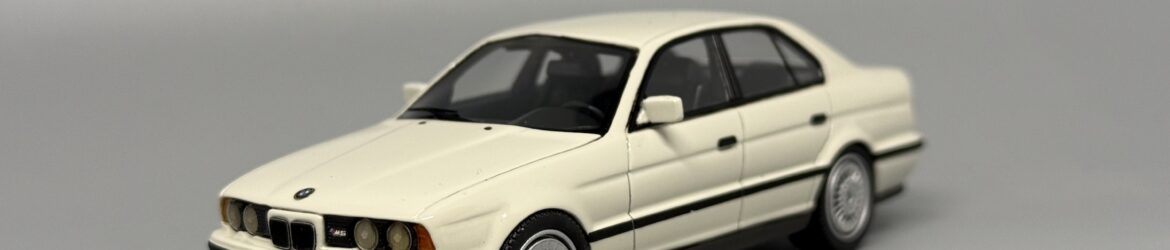
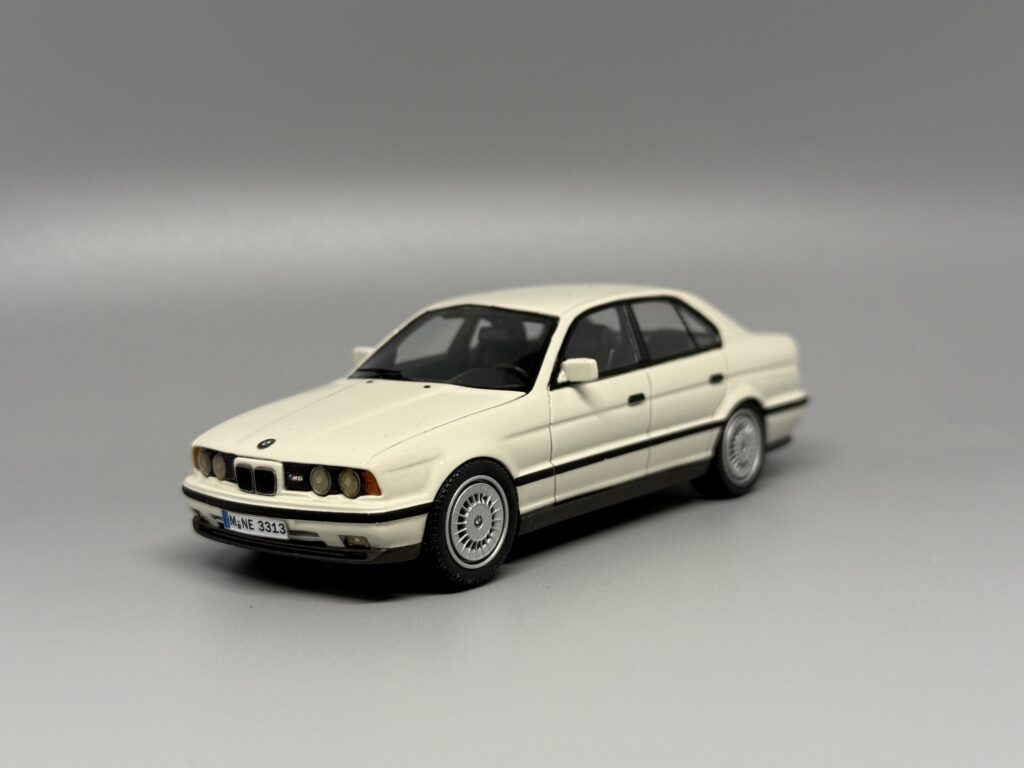
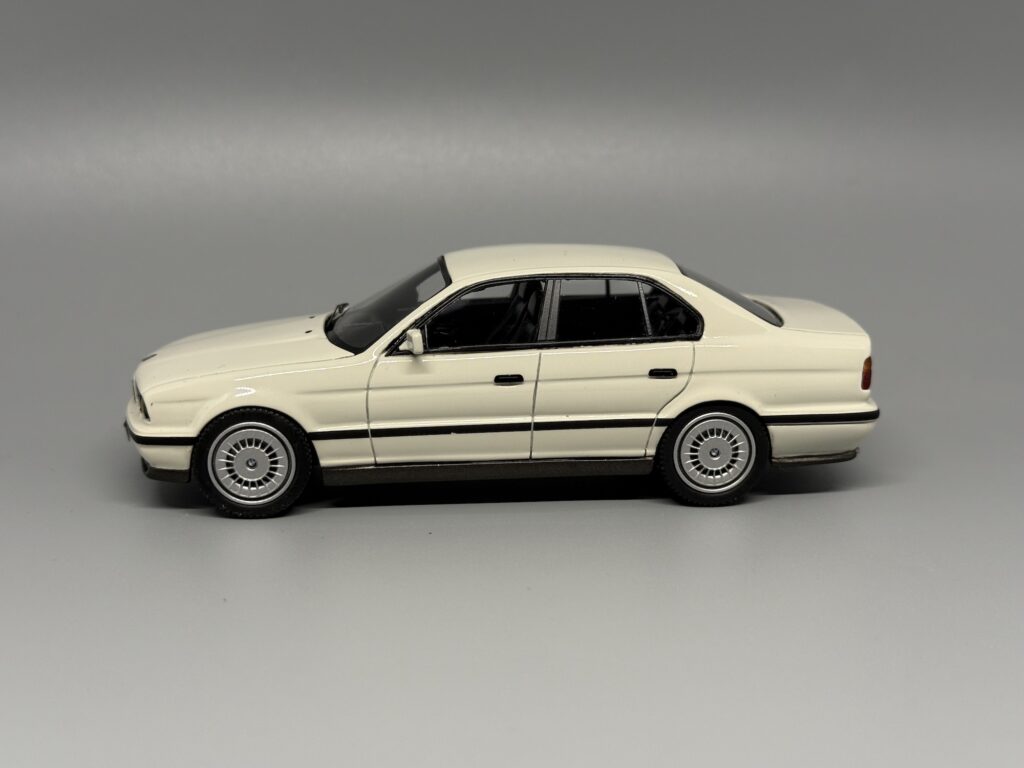
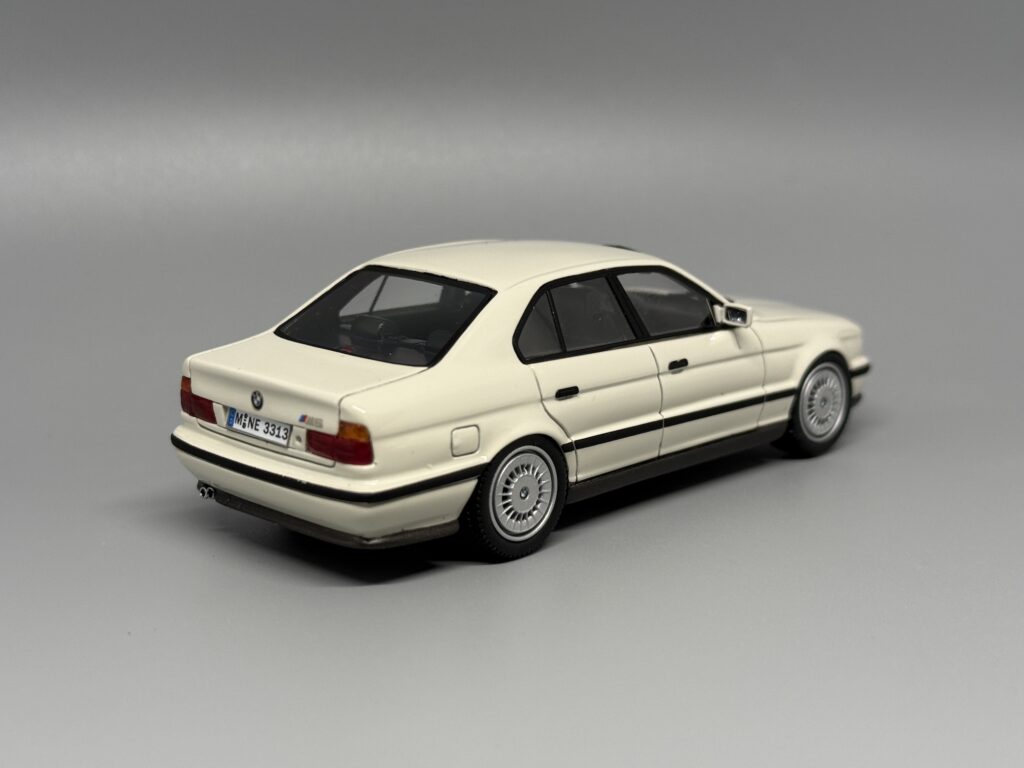
The BMW M5 (E34) in my collection was produced by Neo Scale Models.
Technical data in brief
Production period: September 1988 – July 1995
Production location: BMW Plant Dingolfing, Germany
Body style: four-door high-performance saloon; Touring from 1992
Engine: S38B36 / S38B38 straight-six
Displacement: 3,535 cm³ / 3,795 cm³
Power: 315 hp / 232 kW or 340 hp / 250 kW
Torque: 360 Nm / 400 Nm
Transmission: 5-speed manual; 6-speed manual from 1994
Drivetrain: rear-wheel drive
0–100 km/h: 6.3 seconds / 5.9 seconds
Top speed: 250 km/h, electronically limited
Production: 11,989 cars, including 891 Touring models
Special feature: the final M5 generation powered by a naturally aspirated straight-six developed from the BMW M1 engine