
Background
BMW 520 (E12) was the model that began the history of the BMW 5 Series in 1972. The first-generation 5 Series replaced the Neue Klasse model family and introduced a new mid-size BMW saloon combining sporting handling, comfort and everyday usability. Together with the 520i, the 520 was one of the earliest versions of the E12 range and laid the foundations for a model family that would become one of BMW’s most important product lines.
A new name for a new era
The E12 was the first BMW to use the new series-based three-digit model designation. In the name 520, the first digit identified the new 5 Series while the following two digits referred approximately to engine capacity. This naming logic became the basis of BMW model designations for decades and helped establish the familiar 3, 5 and 7 Series hierarchy.
Bertone, Gandini and Paul Bracq
The design of the first 5 Series combined BMW’s own ideas with influences from the Italian school of automotive design. BMW worked with Bertone during the 1960s, and Marcello Gandini and his team contributed to the early design concept for a new four-door BMW. Gandini’s BMW Garmisch concept also influenced the development of the E12. After Paul Bracq joined BMW as head of design, he refined the exterior concept for series production and also created the driver-focused interior. The result was a cleanly proportioned, elegant yet sporting saloon whose character would influence the 5 Series for decades.
2.0-litre four-cylinder
The original BMW 520 was powered by a 2.0-litre four-cylinder in-line engine derived from the power unit used in the Neue Klasse BMW 2000 but further developed for the E12. Displacement was 1,990 cm³ and output was 115 hp or 85 kW at 5,800 rpm. Power was sent to the rear wheels, giving the 520 a well-balanced combination of performance, comfort and economy for its time.
173 km/h
The BMW 520 had a factory-quoted top speed of 173 km/h. Although it was not intended to be the high-performance model of the 5 Series range, its rear-wheel-drive layout, independent suspension and driver-focused character already displayed qualities that would remain central to later generations of the 5 Series.
From four to six cylinders
The original four-cylinder BMW 520 was produced from 1972 to 1977. In 1977 it was replaced by a new 2.0-litre six-cylinder version which retained the 520 designation but offered a more refined power unit and 122 hp. The 520 therefore also illustrates the development of the E12 generation from a relatively simple four-cylinder saloon towards an increasingly refined six-cylinder 5 Series.
Production from Munich to Dingolfing
The first E12 5 Series cars were built at BMW’s Munich plant. From 1973, the new Dingolfing plant became increasingly important in 5 Series production, marking a major expansion of BMW’s manufacturing capacity. The E12 therefore helped establish not only the 5 Series model family but also Dingolfing as one of BMW’s most important production locations.
Model in the collection
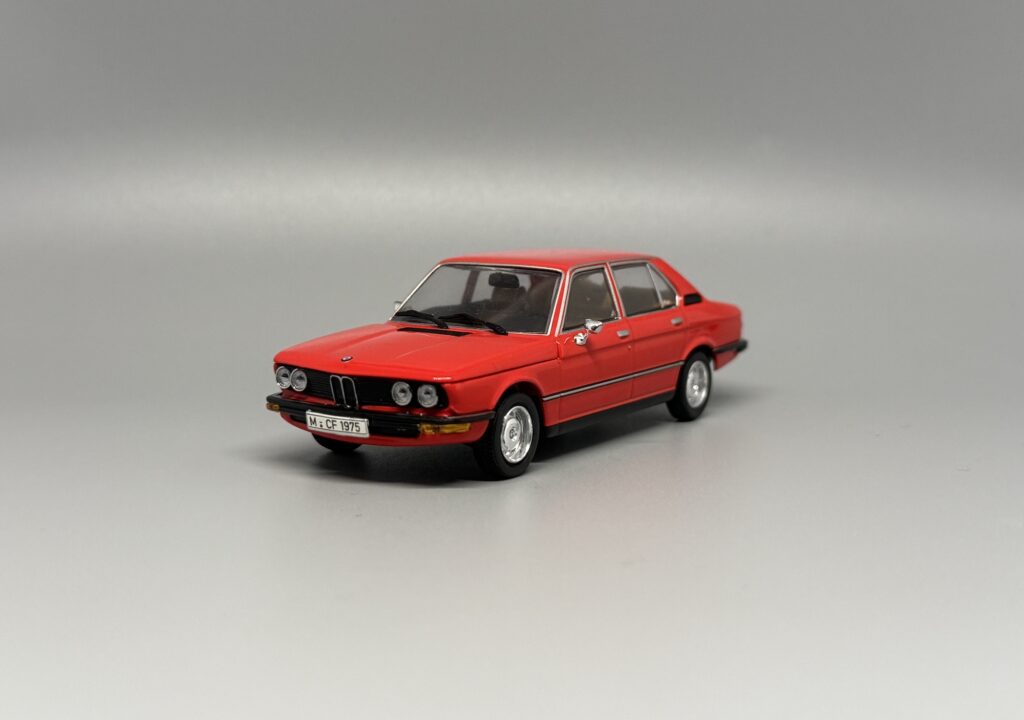
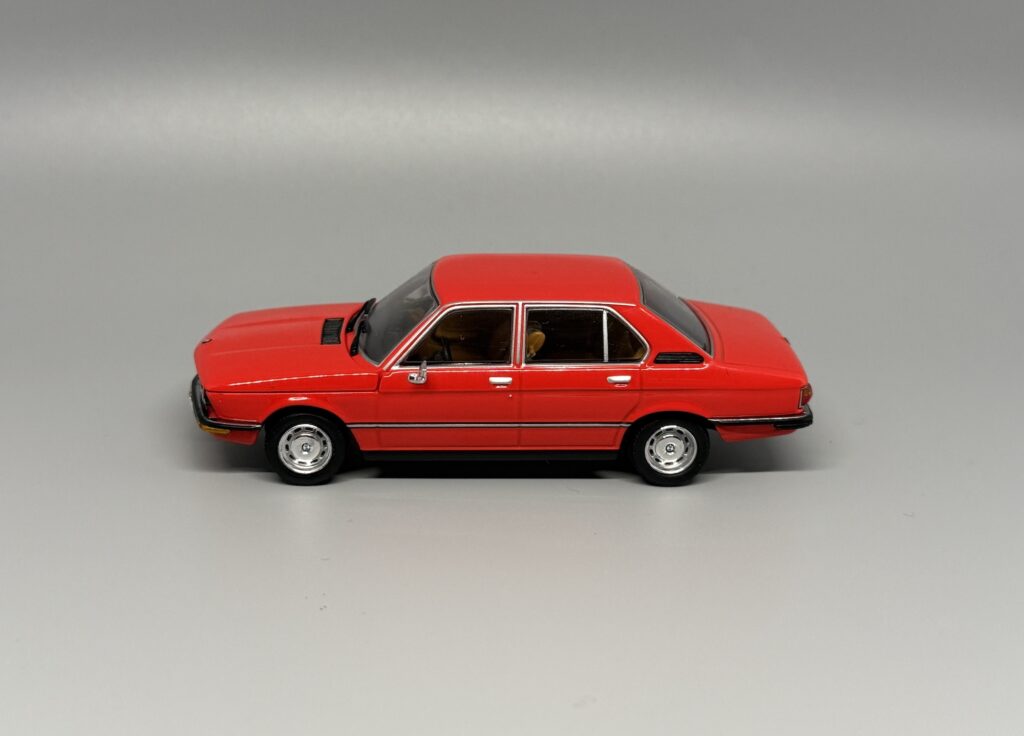
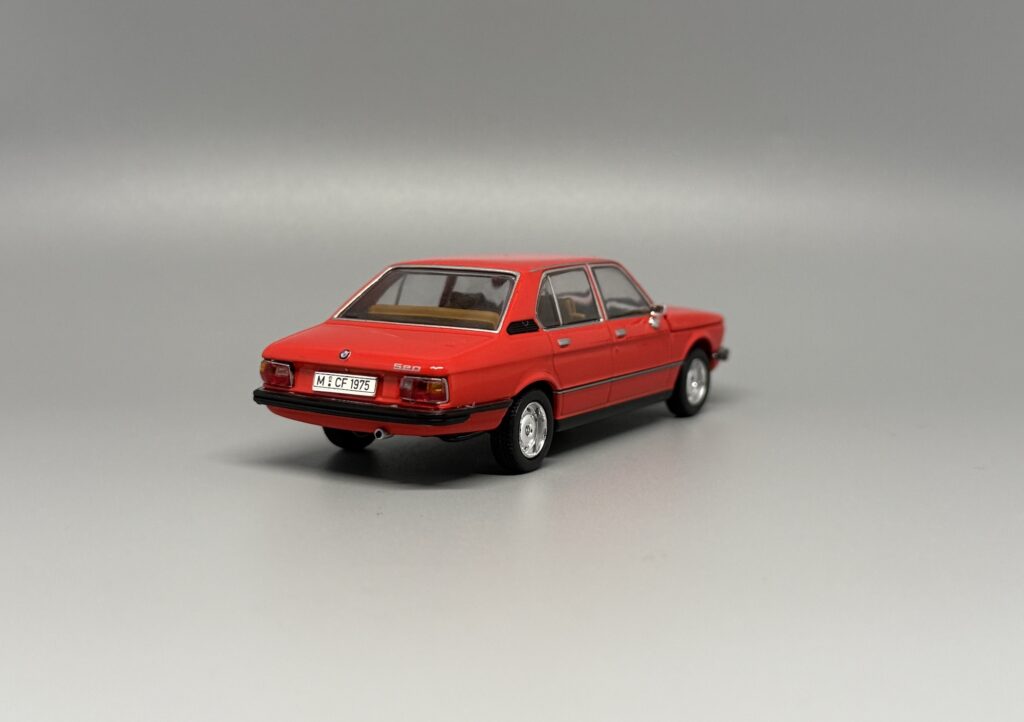
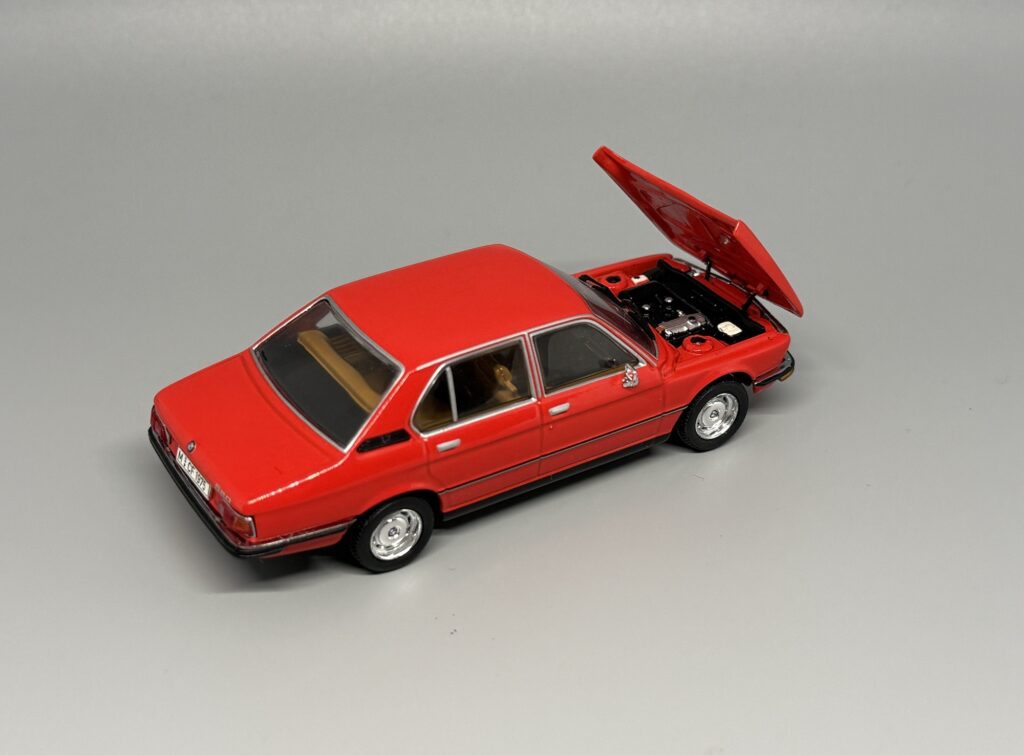
The BMW 520 (E12) in my collection was produced by Minichamps and represents a 1972 car. It is a limited-edition model, with a total production run of 1,536 examples.
Technical data in brief
Model debut: 1972
Production period: 1972–1977
Production location: Germany
Body style: four-door saloon
Engine: 2.0-litre four-cylinder in-line engine
Displacement: 1,990 cm³
Power: 115 hp / 85 kW @ 5,800 rpm
Transmission: manual gearbox
Drivetrain: rear-wheel drive
Top speed: 173 km/h
Special feature: one of the original models of the first BMW 5 Series and an early example of BMW’s new three-digit model designation
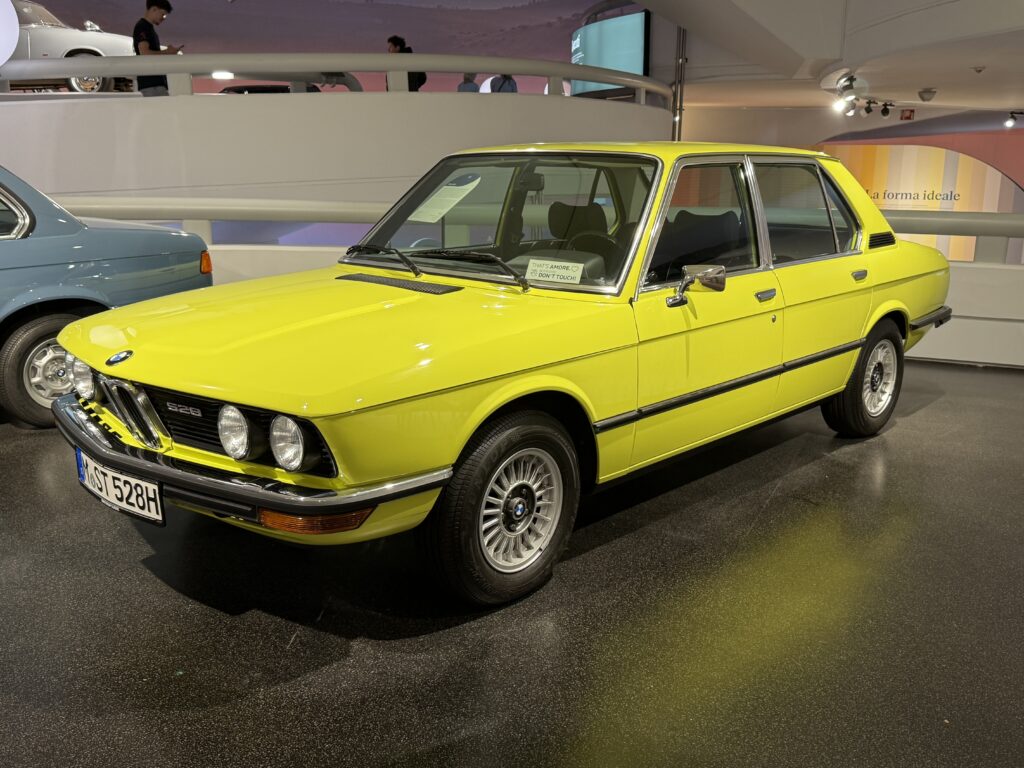
Photo of the real car, BMW Museum. Photo: Sten-Patrick Kreek