Bayer K 67 belongs to the group of experimental cars from the 1960s that were created to explore what the car of the future might look like and which new materials could be used in automotive production. The origins of the project date back to 1963–1964, when BMW board member Paul G. Hahnemann and Bayer AG board member Hermann Holzrichter agreed to develop a concept car whose body and supporting structure would be made as extensively as possible from plastics.
This was not merely a styling exercise or a show car. The aim of the project was to investigate whether plastic construction could offer advantages over a conventional steel body in terms of weight, corrosion resistance and production methods. For this reason, both BMW and Bayer’s plastics research division were involved in the development, and the project was treated from the outset as a serious technical experiment.
The car was publicly presented in October 1967, which was also reflected in its designation, K 67. It represented the optimism of its era towards new synthetic materials and future technologies and demonstrated how actively alternatives to conventional automotive construction were being explored during the 1960s.
Design and concept
The design of the Bayer K 67 differed considerably from that of conventional passenger cars of the period. Its low and streamlined body, large smooth surfaces and minimalist overall appearance gave it a distinctly futuristic character. The intention was not to imitate existing BMW models, but to create a completely new form that emphasised the experimental nature of the project.
The car’s design was associated with German designer Hans Gugelot, whose design office developed the vehicle’s visual concept. Gugelot was known for his functional and modernist design language, and the same approach was evident in the K 67: the form was intended to be clean, technical and clearly future-oriented.
The central issue behind the K 67, however, was its material. Bayer wanted to demonstrate that plastics could be used not only for smaller components, interior parts or trim, but also for the vehicle’s overall structure. This made the K 67 one of the more interesting European experimental cars of an era in which the possible role of plastics in future vehicles attracted considerable attention.
Engineering
BMW was largely responsible for the technical side of the Bayer K 67. The car received a powertrain based on the technology used in the BMW 2000. This meant that proven BMW mechanical components were combined with the experimental plastic construction, allowing the project to focus primarily on testing the new body and structural concept.
Waggon- und Maschinenbau GmbH Donauwörth and Messerschmitt-Bölkow-Blohm were also involved in the development. These companies had experience with lightweight structures as well as materials and production technologies used in aviation. This shows that the Bayer K 67 project was much broader than a simple design collaboration between BMW and Bayer.
One of the expected advantages of plastic construction was lower weight. Improved corrosion resistance was another important objective, while the project also explored whether future production could be made more efficient. In practice, however, it became clear that plastic construction did not provide the level of manufacturing cost advantage that had originally been expected.
Prototypes and possible series production
The Bayer K 67 project progressed considerably further than many other concept cars of the same era. A total of five prototype vehicles were built, allowing engineers to evaluate both the durability of the construction and its possible suitability for small-scale or series production.
Building five cars was significant because the project was not intended solely for exhibition purposes. There was even discussion of producing approximately 5,000 vehicles in the future. This shows that, at least during the earlier stages of the project, practical production of a plastic-bodied car was considered a realistic possibility.
Ultimately, however, the K 67 did not enter series production. The use of the new material did not provide a sufficiently large manufacturing cost advantage over conventional solutions, and the project remained at the prototype stage. Nevertheless, the K 67 provided valuable experience in the use of plastics and composite materials in automotive construction.
Significance in BMW and automotive history
The significance of the Bayer K 67 lies primarily in the fact that it represents an interesting example of BMW’s involvement in experimental future-oriented projects. Although the car was not marketed under the BMW name as a conventional production model, BMW was an important technical partner and contributed both mechanical components and engineering expertise to the project.
The K 67 reflects the strong belief of the 1960s in new materials and technological progress. Plastics were seen at the time as a possible solution for making cars lighter, cheaper and more resistant to corrosion. Although not all of these expectations were realised with the K 67, plastics and composite materials became increasingly important in the automotive industry over the following decades.
Today, the Bayer K 67 is particularly interesting from a technological and historical perspective. Its importance does not lie in production numbers or commercial success, but in the fact that the project demonstrated how seriously alternative materials and completely new vehicle construction methods were already being explored in the 1960s. It also represents a distinctive side branch of BMW history, markedly different from the company’s conventional production cars.
Model in the collection
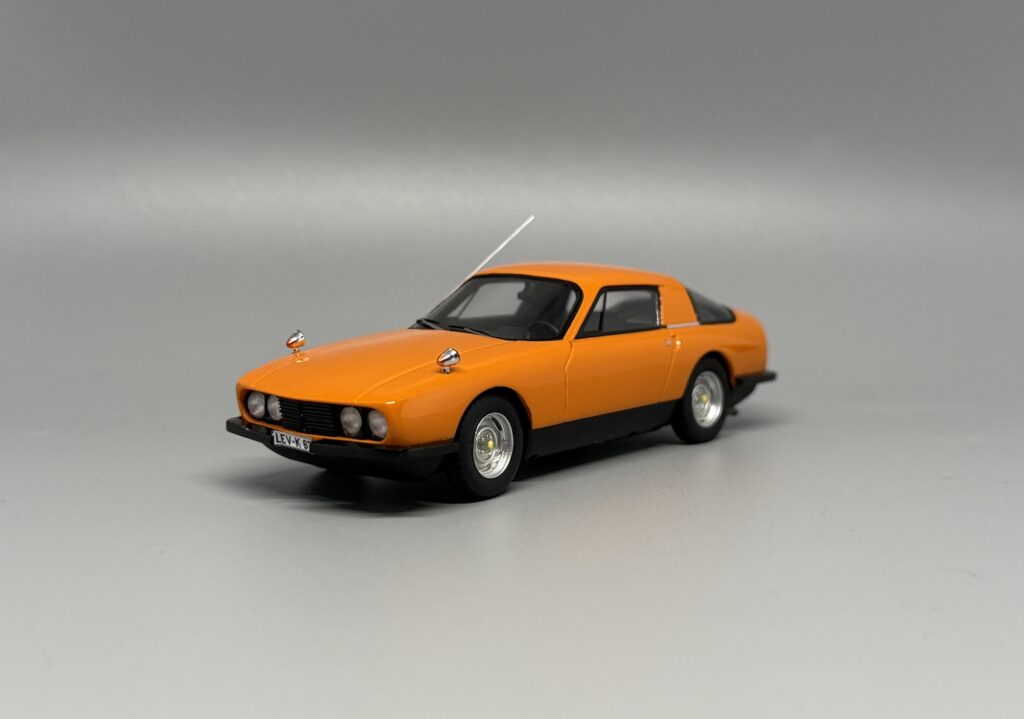
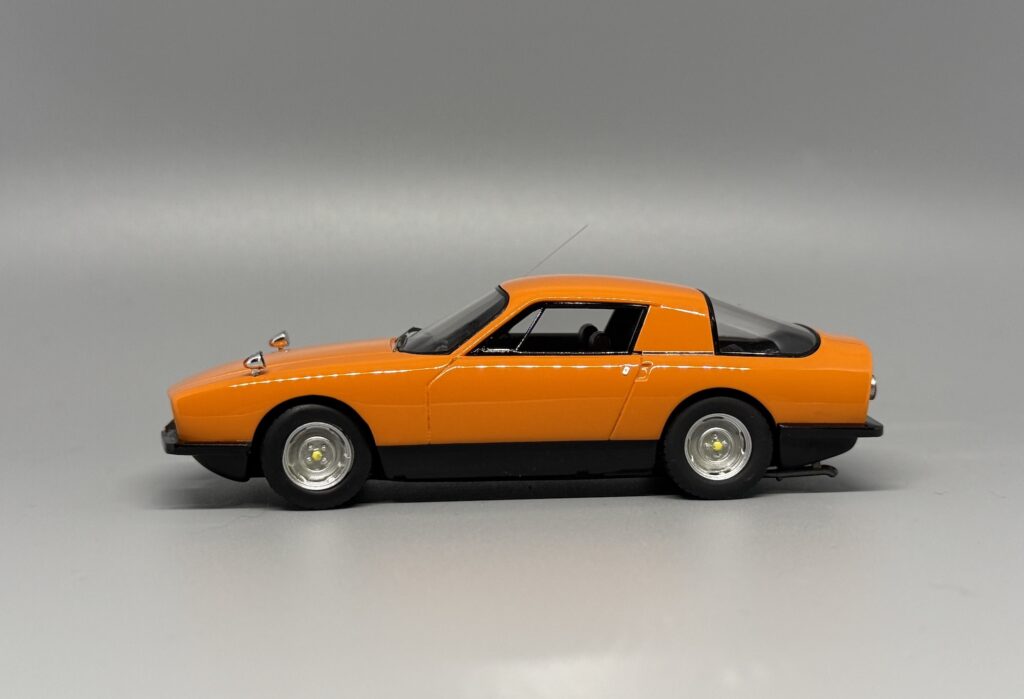
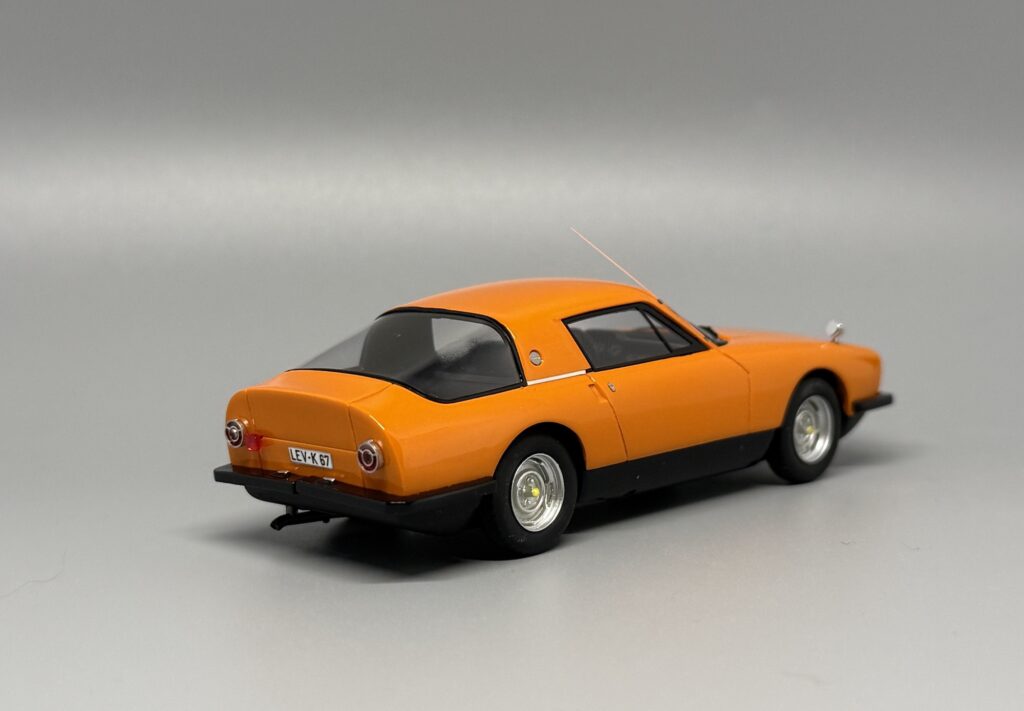
The model in my collection was produced by Autocult and represents the 1967 Bayer K 67 concept car. It is a limited-edition model, with a total production run of 333 examples.
Technical specifications
Public debut: 1967
Place of production: Germany
Body style: experimental concept car
Engine: powertrain related to the BMW 2000
Construction: body and supporting structure made extensively from plastic materials
Number of prototypes: five test vehicles
Planned possible production volume: approximately 5,000 cars
Design: Hans Gugelot’s design office
Project partners: Bayer AG, BMW, Waggon- und Maschinenbau GmbH Donauwörth and Messerschmitt-Bölkow-Blohm
Special feature: a futuristic concept car developed in cooperation between Bayer and BMW to explore the use of plastics in vehicle body and structural construction

Background
Bayer K 67 belongs to the group of experimental cars from the 1960s that were created to explore what the car of the future might look like and which new materials could be used in automotive production. The origins of the project date back to 1963–1964, when BMW board member Paul G. Hahnemann and Bayer AG board member Hermann Holzrichter agreed to develop a concept car whose body and supporting structure would be made as extensively as possible from plastics.
This was not merely a styling exercise or a show car. The aim of the project was to investigate whether plastic construction could offer advantages over a conventional steel body in terms of weight, corrosion resistance and production methods. For this reason, both BMW and Bayer’s plastics research division were involved in the development, and the project was treated from the outset as a serious technical experiment.
The car was publicly presented in October 1967, which was also reflected in its designation, K 67. It represented the optimism of its era towards new synthetic materials and future technologies and demonstrated how actively alternatives to conventional automotive construction were being explored during the 1960s.
Design and concept
The design of the Bayer K 67 differed considerably from that of conventional passenger cars of the period. Its low and streamlined body, large smooth surfaces and minimalist overall appearance gave it a distinctly futuristic character. The intention was not to imitate existing BMW models, but to create a completely new form that emphasised the experimental nature of the project.
The car’s design was associated with German designer Hans Gugelot, whose design office developed the vehicle’s visual concept. Gugelot was known for his functional and modernist design language, and the same approach was evident in the K 67: the form was intended to be clean, technical and clearly future-oriented.
The central issue behind the K 67, however, was its material. Bayer wanted to demonstrate that plastics could be used not only for smaller components, interior parts or trim, but also for the vehicle’s overall structure. This made the K 67 one of the more interesting European experimental cars of an era in which the possible role of plastics in future vehicles attracted considerable attention.
Engineering
BMW was largely responsible for the technical side of the Bayer K 67. The car received a powertrain based on the technology used in the BMW 2000. This meant that proven BMW mechanical components were combined with the experimental plastic construction, allowing the project to focus primarily on testing the new body and structural concept.
Waggon- und Maschinenbau GmbH Donauwörth and Messerschmitt-Bölkow-Blohm were also involved in the development. These companies had experience with lightweight structures as well as materials and production technologies used in aviation. This shows that the Bayer K 67 project was much broader than a simple design collaboration between BMW and Bayer.
One of the expected advantages of plastic construction was lower weight. Improved corrosion resistance was another important objective, while the project also explored whether future production could be made more efficient. In practice, however, it became clear that plastic construction did not provide the level of manufacturing cost advantage that had originally been expected.
Prototypes and possible series production
The Bayer K 67 project progressed considerably further than many other concept cars of the same era. A total of five prototype vehicles were built, allowing engineers to evaluate both the durability of the construction and its possible suitability for small-scale or series production.
Building five cars was significant because the project was not intended solely for exhibition purposes. There was even discussion of producing approximately 5,000 vehicles in the future. This shows that, at least during the earlier stages of the project, practical production of a plastic-bodied car was considered a realistic possibility.
Ultimately, however, the K 67 did not enter series production. The use of the new material did not provide a sufficiently large manufacturing cost advantage over conventional solutions, and the project remained at the prototype stage. Nevertheless, the K 67 provided valuable experience in the use of plastics and composite materials in automotive construction.
Significance in BMW and automotive history
The significance of the Bayer K 67 lies primarily in the fact that it represents an interesting example of BMW’s involvement in experimental future-oriented projects. Although the car was not marketed under the BMW name as a conventional production model, BMW was an important technical partner and contributed both mechanical components and engineering expertise to the project.
The K 67 reflects the strong belief of the 1960s in new materials and technological progress. Plastics were seen at the time as a possible solution for making cars lighter, cheaper and more resistant to corrosion. Although not all of these expectations were realised with the K 67, plastics and composite materials became increasingly important in the automotive industry over the following decades.
Today, the Bayer K 67 is particularly interesting from a technological and historical perspective. Its importance does not lie in production numbers or commercial success, but in the fact that the project demonstrated how seriously alternative materials and completely new vehicle construction methods were already being explored in the 1960s. It also represents a distinctive side branch of BMW history, markedly different from the company’s conventional production cars.
Model in the collection
The model in my collection was produced by Autocult and represents the 1967 Bayer K 67 concept car. It is a limited-edition model, with a total production run of 333 examples.
Technical specifications
Public debut: 1967
Place of production: Germany
Body style: experimental concept car
Engine: powertrain related to the BMW 2000
Construction: body and supporting structure made extensively from plastic materials
Number of prototypes: five test vehicles
Planned possible production volume: approximately 5,000 cars
Design: Hans Gugelot’s design office
Project partners: Bayer AG, BMW, Waggon- und Maschinenbau GmbH Donauwörth and Messerschmitt-Bölkow-Blohm
Special feature: a futuristic concept car developed in cooperation between Bayer and BMW to explore the use of plastics in vehicle body and structural construction
Photo of the real car. Source: autozeitung.de