Background
BMW M5 (E39) was the third generation of the M5 and remains one of the most highly regarded sporting saloons in BMW M history. Introduced in 1998, it took the M5 concept to a new level by combining the understated and elegant body of the E39 5 Series with substantially greater performance. The E39 M5 retained a classic rear-wheel-drive layout and discreet appearance, while its engineering made it one of the most capable four-door cars of its era.
The first V8-powered M5
The E39 was the first BMW M5 to abandon the traditional straight-six in favour of a 4.9-litre S62B50 V8. Although based on BMW’s production V8 architecture, the engine was extensively reworked by BMW M. Changes included a new aluminium block, a dedicated crankshaft, Double VANOS and eight electronically controlled individual throttle bodies – one for each cylinder.
400 hp
With a displacement of 4,941 cm³, the naturally aspirated V8 produced 400 hp or 294 kW at 6,600 rpm and 500 Nm of torque. It was the most powerful engine in the BMW M range at the time, and the same S62 unit was later used in the BMW Z8. In the M5, the drivetrain remained deliberately traditional: power was sent exclusively to the rear wheels through a 6-speed manual transmission.
5.3 seconds and 250 km/h
The BMW M5 accelerated from 0 to 100 km/h in just 5.3 seconds. Top speed was electronically limited to 250 km/h in accordance with the agreement followed by German manufacturers at the time. The large naturally aspirated V8 delivered strong performance throughout the rev range and, combined with rear-wheel drive and a manual gearbox, gave the M5 a direct and classic BMW M driving character.
Sporting yet understated
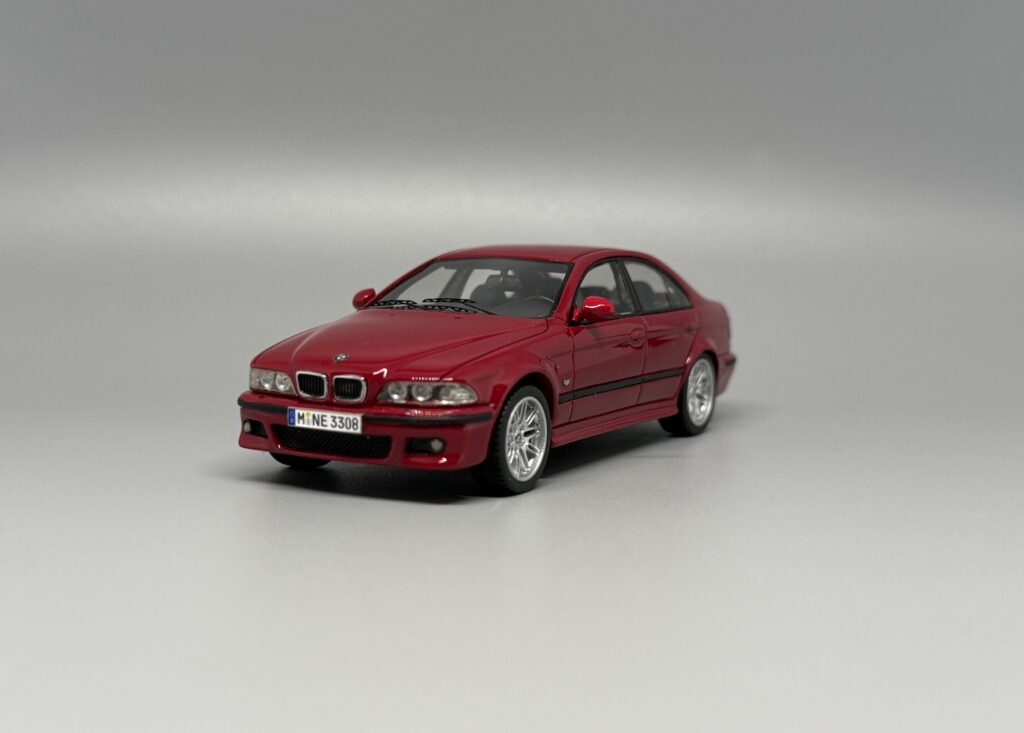
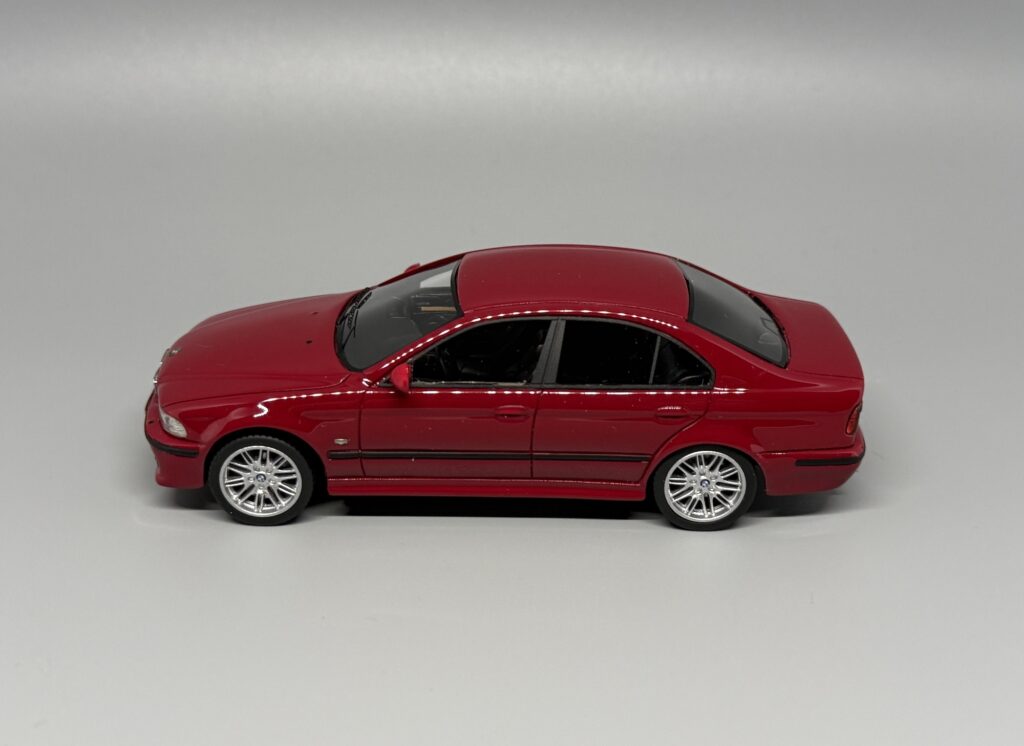
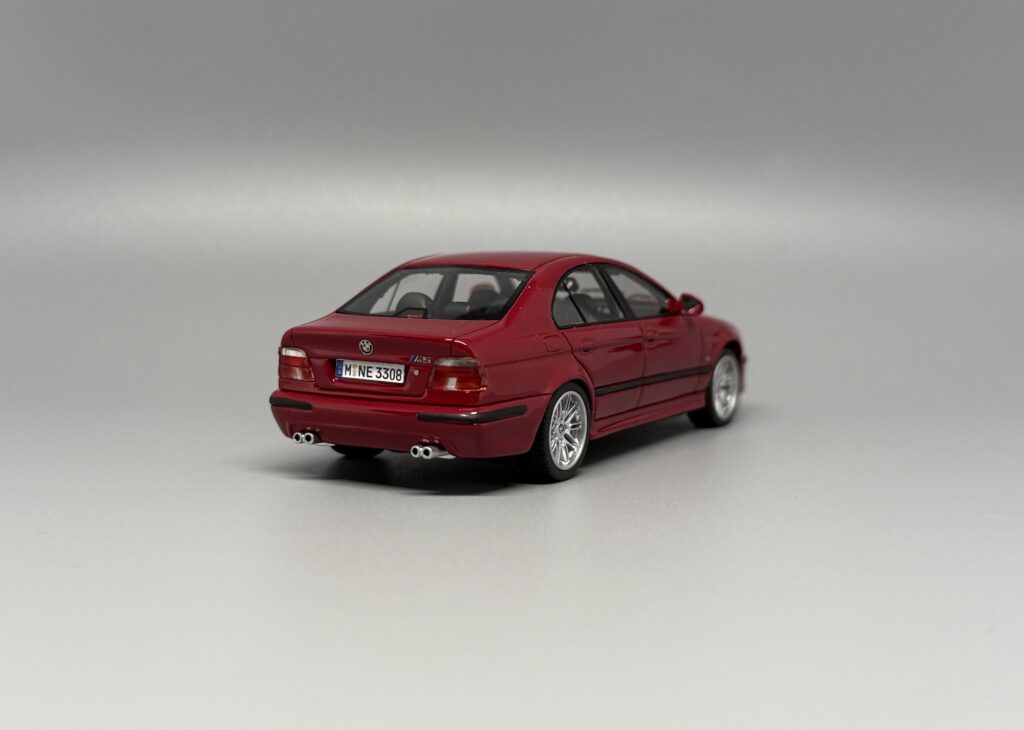
The E39 M5 was deliberately subtle in appearance. M-specific bumpers, 18-inch wheels, distinctive door mirrors and four exhaust outlets hinted at its performance, but the overall design remained elegant. This combination of an understated executive saloon and sports-car performance had always been central to the M5 concept, and the E39 expressed it particularly well.
Light-alloy chassis
The M5 used the advanced light-alloy chassis of the E39 generation, extensively adapted by BMW M for higher performance. Suspension, steering and brakes were tuned to combine precise handling with everyday comfort. BMW Group Classic highlights this balance as one of the defining strengths of the E39 M5, making it suitable both for demanding driving and long-distance travel.
Built in Dingolfing
Series production of the BMW M5 (E39) began in October 1998 at BMW Plant Dingolfing. Unlike its predecessors, the E39 M5 was no longer hand-finished at BMW M’s Garching facility but was built entirely on the same production line as the regular E39 5 Series. This allowed significantly higher production volumes and marked an important change in the development of the M5.
20,482 cars
Production of the BMW M5 (E39) ended in June 2003. A total of 20,482 cars were built, making it considerably more numerous than earlier generations of the M5. The E39 also remains a particularly distinctive chapter in M5 history for combining a naturally aspirated V8, rear-wheel drive and an exclusively manual transmission.
Model in the collection
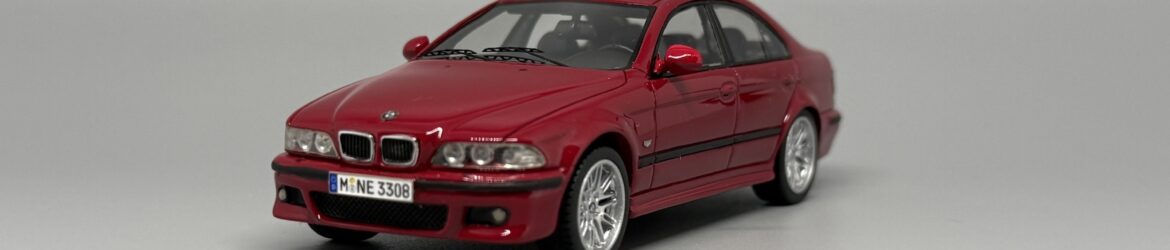
The BMW M5 (E39) in my collection was produced by Neo Scale Models.
Technical data in brief
Model debut: 1998
Production period: October 1998 – June 2003
Production location: BMW Plant Dingolfing, Germany
Body style: four-door high-performance saloon
Engine: S62B50 naturally aspirated V8
Displacement: 4,941 cm³
Power: 400 hp / 294 kW @ 6,600 rpm
Torque: 500 Nm
Transmission: 6-speed manual
Drivetrain: rear-wheel drive
0–100 km/h: 5.3 seconds
Top speed: 250 km/h, electronically limited
Production: 20,482 cars
Special feature: the first V8-powered M5, with an S62 engine featuring Double VANOS and eight individual throttle bodies
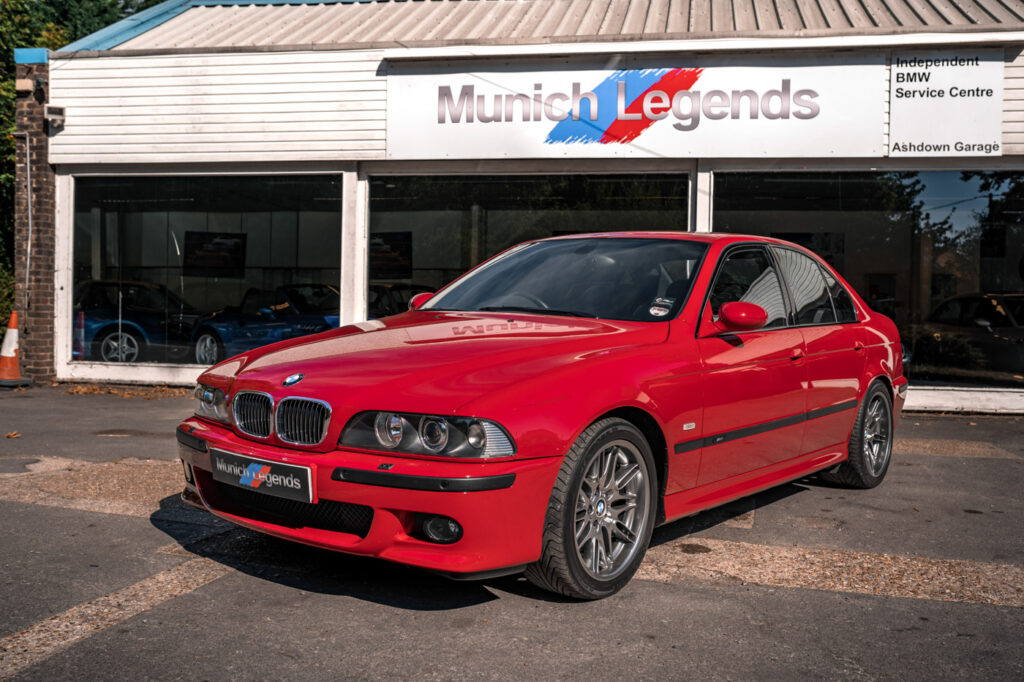
Photo of the real car. Source: munichlegends.co.uk