
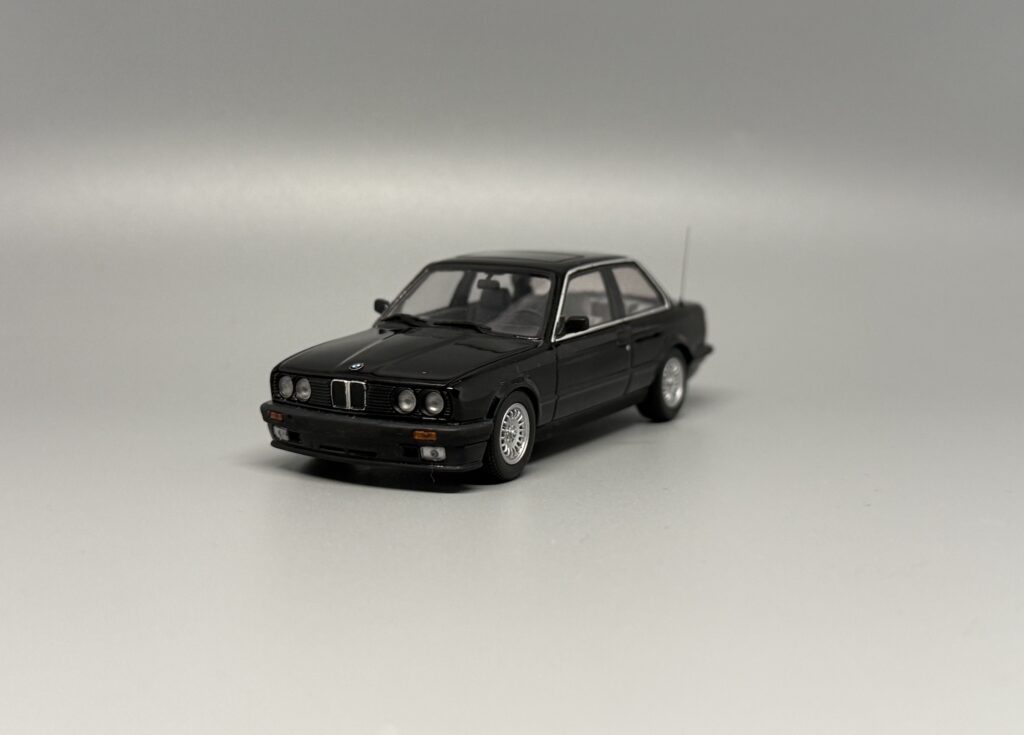
BMW 320i (E30) belonged to the second generation of the 3 Series and was one of the models that helped establish the E30 as one of the best-known and most highly regarded generations in BMW history. Introduced in 1982, the E30 developed the basic concept of the earlier E21 while becoming more spacious, technically mature and considerably more versatile. The 320i sat above the four-cylinder models in the range and brought the smooth character of a BMW straight-six to the compact 3 Series.
The second generation created a complete 3 Series family
The E30 was introduced in 1982 as the successor to the E21. The two-door sedan arrived first, followed in 1983 by the first four-door version in the history of the 3 Series. The range later expanded to include a factory-built Convertible, the Touring, the four-wheel-drive 325iX and, of course, the M3.
This diversity of body styles and versions clearly distinguished the E30 from its predecessor. While the E21 had primarily been a compact sporting two-door sedan, the E30 transformed the 3 Series into a complete model family capable of serving very different purposes without losing its fundamental BMW character.
Classic BMW proportions
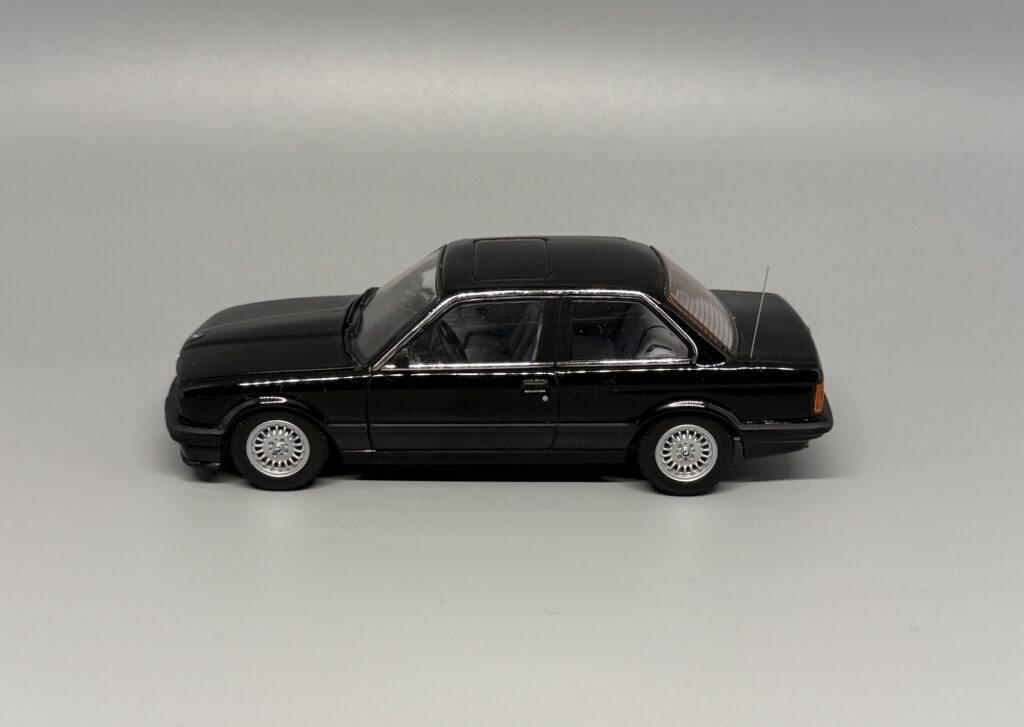
The E30 retained the traditional BMW layout, with a longitudinally mounted front engine driving the rear wheels. Its long bonnet, relatively rearward passenger compartment, short rear section and clearly defined Hofmeister kink created proportions that have since become among the most recognisable features of a classic BMW.
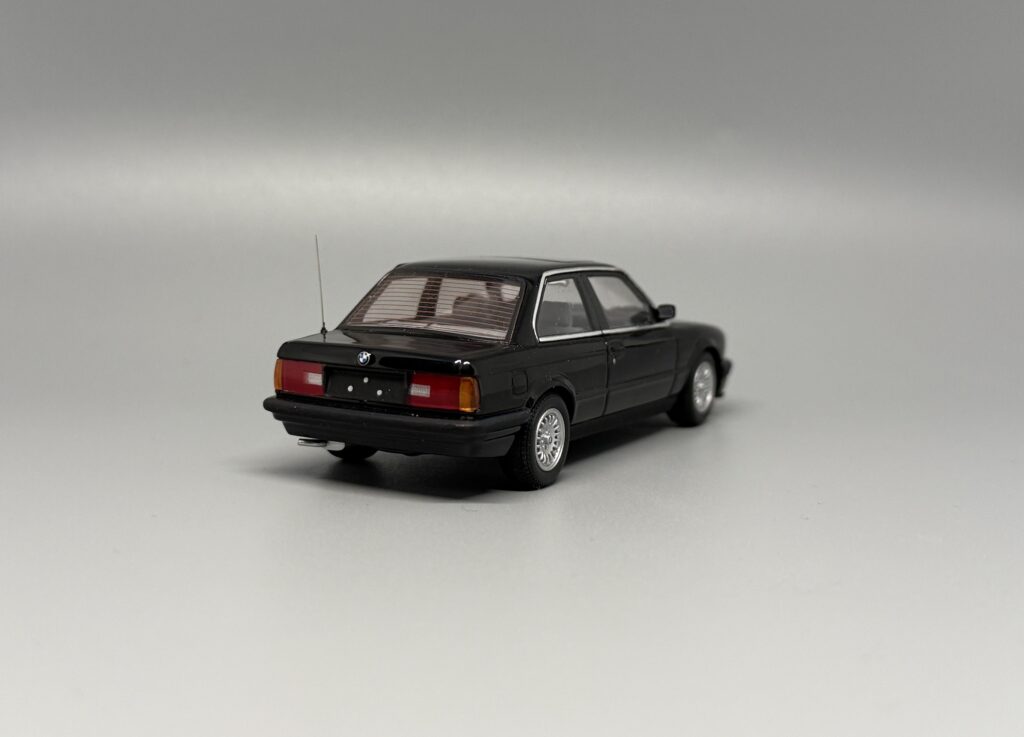
A model update in 1987 subtly modernised the E30. Later cars received revised rear lights, changes to the front and rear styling and increasingly modern bumper designs. The 1989 car represented by the model in the collection belongs to this later stage in the development of the E30.
320i and BMW’s smallest straight-six
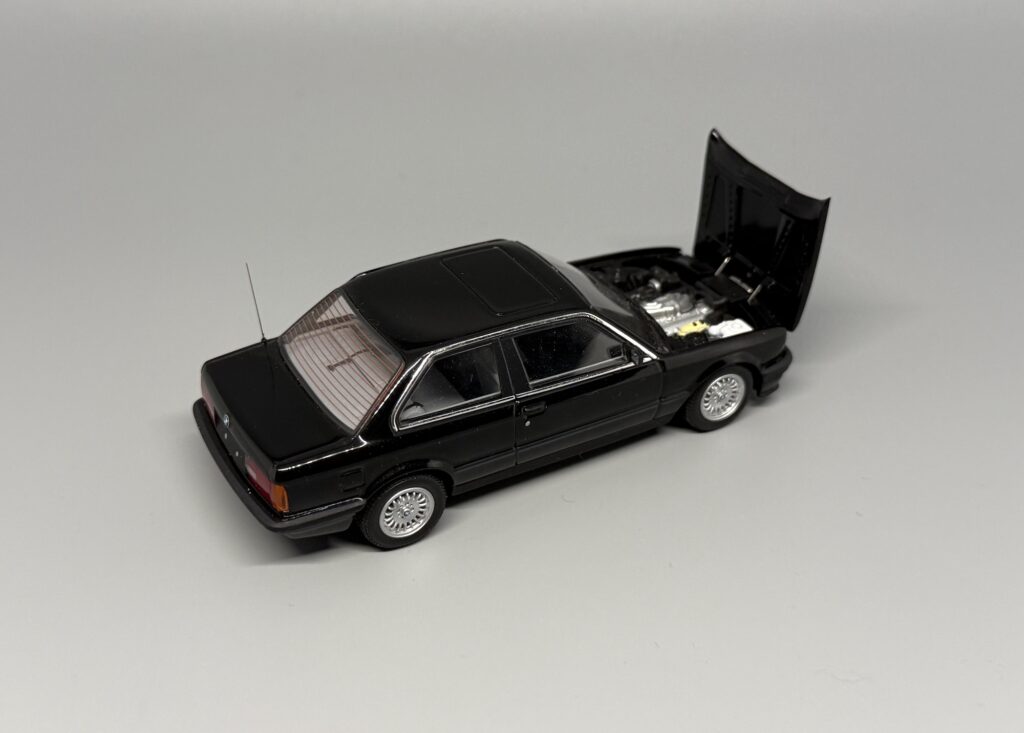
One of the defining characteristics of the 320i was its six-cylinder engine. Under the bonnet was BMW’s M20B20, a compact naturally aspirated 2.0-litre straight-six and the smallest six-cylinder engine offered in the E30 range. Its main appeal was not exceptional power but its smoothness, characteristic sound and willingness to rev.
Earlier E30 320i versions produced 125 hp. During the later production period the engine management was updated, and the 1989 European version developed 95 kW or 129 hp at 6,000 rpm. Maximum torque in the catalytic-converter version was 164 Nm at 4,300 rpm.
A six-cylinder alternative to the more powerful 325i
Within the E30 range, the 320i sat between the four-cylinder 316i and 318i and the more powerful 325i. It could not match the performance of the 325i, but it allowed buyers to enjoy the refinement and sound of a BMW straight-six with a smaller displacement and more modest power output.
This made the 320i a particularly well-balanced version. It retained the light and compact character of the 3 Series, while the six-cylinder engine provided a smoother and more refined driving experience than the smaller four-cylinder models. BMW Group Classic describes the 320i as one of the most successful versions of the E30 and notes that more than 400,000 examples were produced.
Rear-wheel drive and a driver-focused character
Like other classic E30 models, the 320i was rear-wheel drive. MacPherson struts were used at the front, with independent semi-trailing-arm suspension at the rear. Combined with compact dimensions and relatively low weight, this layout helped give the E30 the direct and balanced handling for which the generation remains highly regarded.
A five-speed manual transmission suited the character of the six-cylinder engine particularly well, while a four-speed automatic was also available. A 1989 manual 320i accelerated from 0 to 100 km/h in approximately ten seconds and could reach around 197 km/h. These were not sports-car figures, but the appeal of the model lay in the combination of engine smoothness, chassis balance and everyday usability.
An E30 that became a classic
The importance of the E30 in BMW history extends far beyond individual engine versions. During this generation, the 3 Series became a central part of the BMW range and introduced several themes that would continue for decades, from the Touring and four-wheel drive to the M3.
The 320i represents the classic six-cylinder 3 Series in one of its purest forms. It was neither the fastest nor the rarest E30, but the combination of a compact two-door body, rear-wheel drive and a small straight-six gives it the character now strongly associated with classic BMW models.
Model in the collection
The 1:43-scale BMW 320i (E30) in my collection was produced by Minichamps. The model represents a 1989 two-door car and was released as a limited edition of 3,792 pieces.
The Minichamps model therefore represents the later production period of the E30 and the 129 hp version of the 320i powered by the 2.0-litre M20 straight-six.
Technical data
BMW 320i production: 10/1982–04/1991
Body style: two-door sedan
Engine: M20B20 naturally aspirated straight-six petrol engine
Displacement: 1,990 cc
1989 version power output: 95 kW / 129 hp at 6,000 rpm
Torque: 164 Nm at 4,300 rpm in the catalytic-converter version
Transmission: 5-speed manual or 4-speed automatic
Drive: rear-wheel drive
0–100 km/h: approximately 10.6 seconds for the catalytic-converter manual version
Top speed: approximately 197 km/h
Production total: more than 400,000 BMW 320i models
Special feature: six-cylinder E30 combining a compact body with the smooth character of BMW’s M20 straight-six
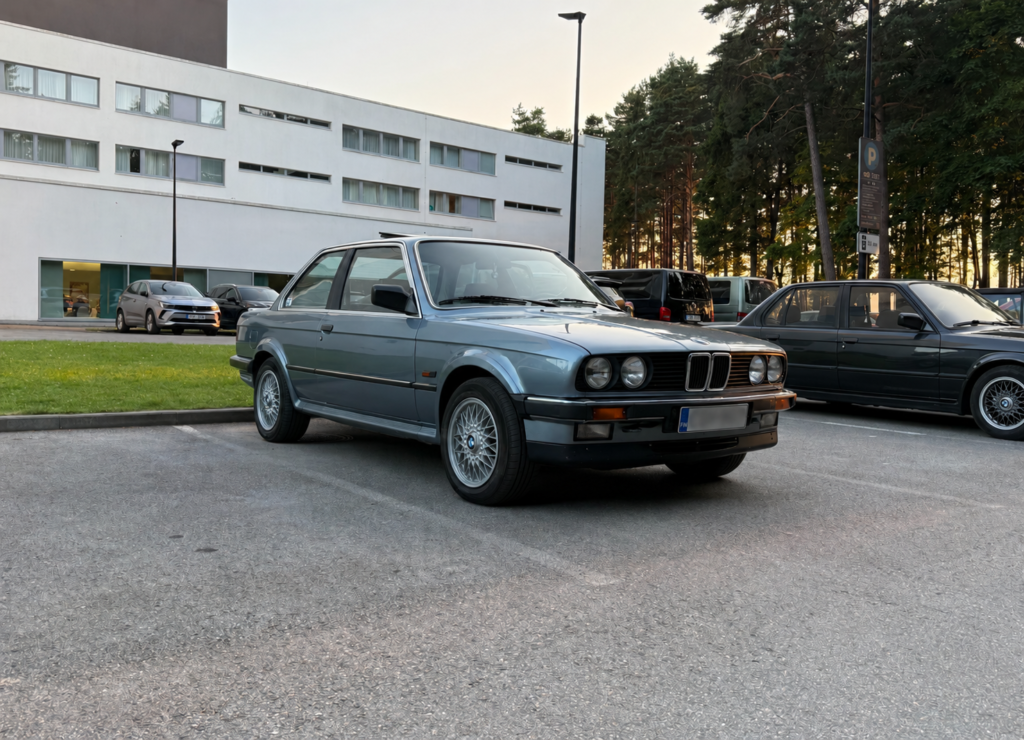
Photo of the real car. Photo: Sten-Patrick Kreek