
BMW M5 (E60) is the fourth generation of the M5 and one of the most technically distinctive high-performance sedans in BMW history. The production model was presented in 2004 and reached the market in 2005. While earlier generations of the M5 were visually rather discreet compared with the regular 5 Series, the E60 M5 was given a much stronger identity of its own. Its defining feature, however, was its naturally aspirated 5.0-litre V10 engine – a power unit never used in any other generation of the M5.
A V10 that transformed the M5
At the heart of the E60 M5 was the S85B50, a naturally aspirated V10 developed specifically by BMW M GmbH. With a displacement of 4,999 cc, it produced 373 kW or 507 hp at 7,750 rpm and 520 Nm of torque at 6,100 rpm. The engine could rev to an exceptional 8,250 rpm, an extraordinary figure for a large four-door sedan.
The S85 was a short-stroke, high-revving engine with a specific output of more than 100 hp per litre. Its compression ratio was 12.0:1 and a sophisticated ionic-current measuring system was used to detect abnormal combustion. The result was an engine with a character very different from the large-capacity engines normally found in executive sedans: its strongest performance came at high engine speeds, with the response and sound more closely resembling a sports car than a conventional luxury sedan.
The influence of the Formula 1 era
The V10 of the E60 M5 is frequently associated with BMW’s Formula 1 activities of the period. The relationship was primarily one of technological philosophy and the concept of a high-revving ten-cylinder engine. BMW M has subsequently emphasised that the S85 was not simply a road-going version of a Formula 1 engine. The engine blocks for BMW’s Formula 1 engines and the M5’s V10 were produced at the same foundry in Landshut, but this was their principal direct connection.
Nevertheless, the S85 was developed during an era in which V10 engines dominated Formula 1, including BMW Motorsport’s own activities. A high-revving ten-cylinder engine therefore fitted perfectly with the E60 M5’s role as a technological showcase. The same S85 was later used in the BMW M6, while its basic architecture also provided the foundation for the S65 V8 used in the E9x-generation BMW M3.
Seven-speed SMG and MDrive
In European specification, power was sent to the rear wheels through a seven-speed SMG III Drivelogic transmission. Gears could be selected using either the centre-console selector or paddles behind the steering wheel, while several shift programmes allowed the driver to adjust the transmission from more relaxed everyday operation to considerably more aggressive performance settings.
The E60 M5 was also the first BMW M model to feature MDrive. Using the M button on the steering wheel, the driver could recall a personalised combination of settings previously configured through iDrive. These included engine response, SMG shift characteristics, EDC damper settings, steering assistance and stability-control behaviour.
Every time the car was started, the engine initially operated in the P400 programme, limiting output to approximately 400 hp. Full 507 hp performance could be selected through the P500 or more responsive P500 Sport programmes. The system highlighted the dual personality of the E60 M5: a comfortable 5 Series sedan in normal use and an exceptionally powerful M car when required.
4.7 seconds and up to 305 km/h
With 507 hp and 520 Nm, the E60 M5 accelerated from 0 to 100 km/h in 4.7 seconds and reached 200 km/h in approximately 13.9 seconds. Standard maximum speed was electronically limited to 250 km/h, while the optional M Driver’s Package raised the limiter to 305 km/h.
The performance was matched by an M-specific chassis, a variable M differential lock and Electronic Damper Control. The driver could choose between different suspension settings, while M Dynamic Mode allowed greater slip before the stability-control system intervened. Large compound brake discs and a high-performance braking system helped ensure that the performance of the more than 500-hp sedan remained controllable even during very fast driving.
An M5 with a much stronger visual identity
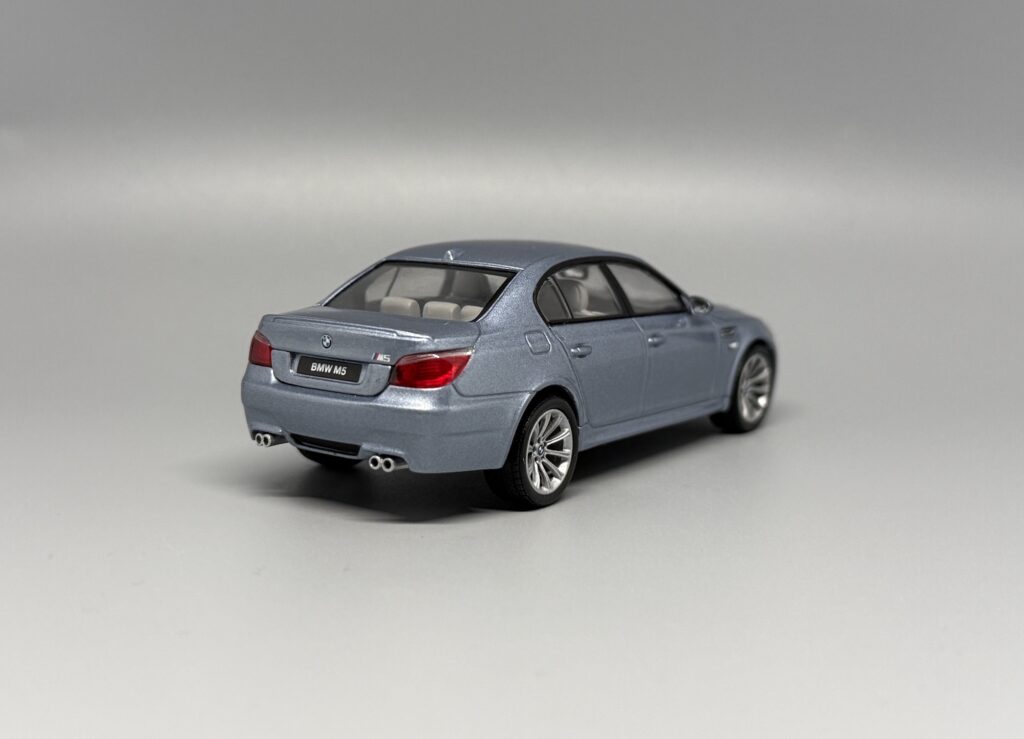
Earlier generations of the M5 had generally been distinguished from regular 5 Series models only by relatively subtle details. The E60 changed that approach. It received unique front and rear aprons, front wings widened by 25 millimetres, characteristic M side gills, model-specific alloy wheels and four 80-millimetre exhaust outlets.
Despite these changes, the fundamental M5 concept remained intact. It was still a practical four-door, five-seat 5 Series sedan suitable for everyday driving and long-distance journeys. The contrast between normal executive-car usability and the extraordinary character of the high-revving V10 is one of the main reasons why the E60 M5 remains such a distinctive model in BMW M history.
The final V10 M5
In 2007, the E61 M5 Touring joined the sedan and used the same 507 hp V10 engine and seven-speed SMG transmission. The sedan remained by far the more common body style. BMW M GmbH produced a total of 20,548 V10-powered M5s of the E60/E61 generation, comprising 19,523 E60 Sedans and only 1,025 E61 Tourings.
Production ended in 2010. The following F10 generation returned to a V8 engine, this time with twin turbochargers, leaving the E60 as both the first and the only V10-powered BMW M5. Its combination of a naturally aspirated high-revving engine, SMG transmission and the technological ambition of BMW M during the 2000s gives the model a unique place in the history of the marque.
Model in the collection
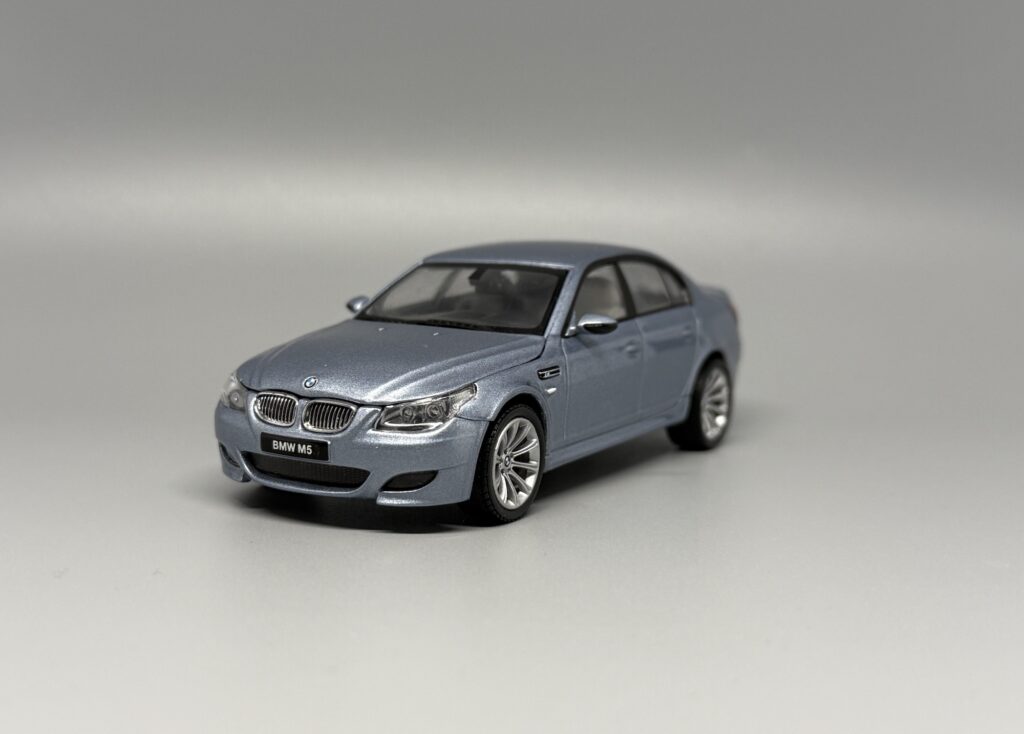
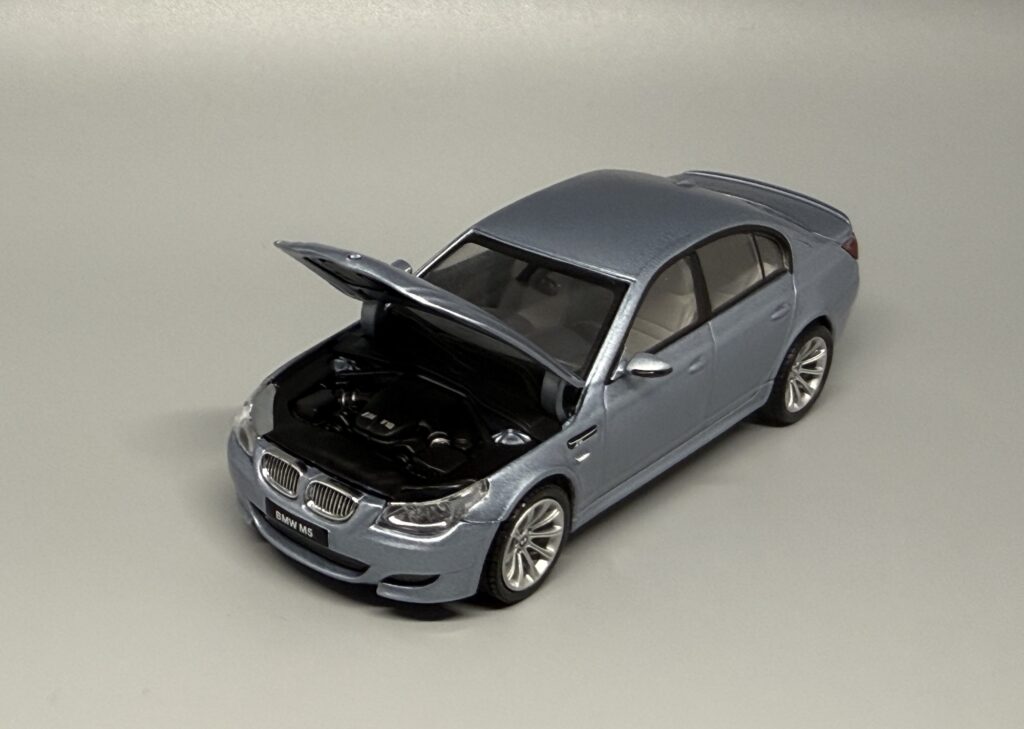
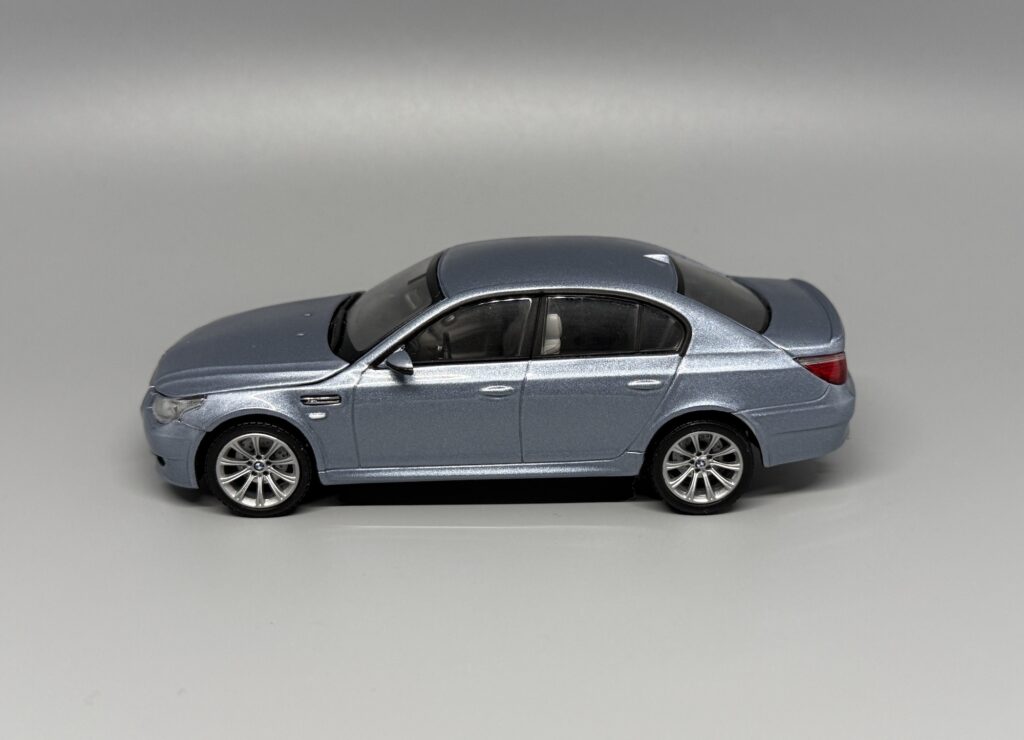
The 1:43-scale BMW M5 (E60) in my collection was produced by Kyosho. The model represents a 2004 car, corresponding to the presentation period of the E60 M5. Its most characteristic details include the M-specific bodywork, distinctive side gills and four-tailpipe rear design.
Technical data
Production: 2005–2010
Production location: Dingolfing, Germany
Body style: four-door sedan
Engine: S85B50 naturally aspirated V10 petrol engine
Displacement: 4,999 cc
Power output: 373 kW / 507 hp at 7,750 rpm
Torque: 520 Nm at 6,100 rpm
Maximum engine speed: 8,250 rpm
Transmission: 7-speed SMG III Drivelogic
Drive: rear-wheel drive
0–100 km/h: 4.7 seconds
0–200 km/h: 13.9 seconds
Top speed: 250 km/h, 305 km/h with M Driver’s Package
Production total: 19,523 sedans
Special feature: the first and only V10-powered BMW M5
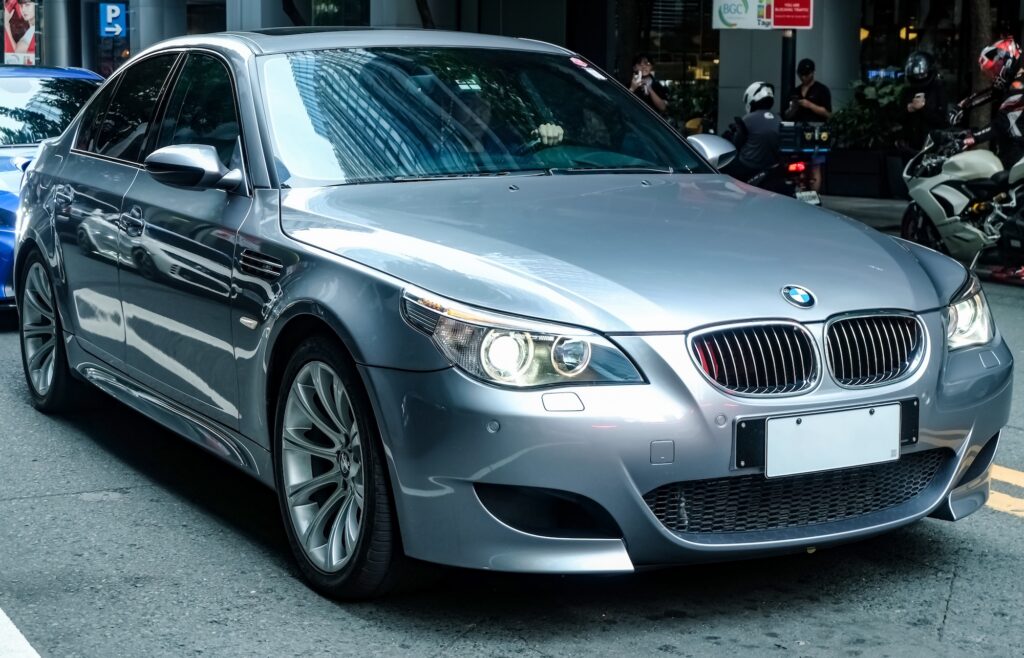
Photo of the real car. Photo: Ethan Llamas / Wikimedia Commons, CC BY-SA 4.0