
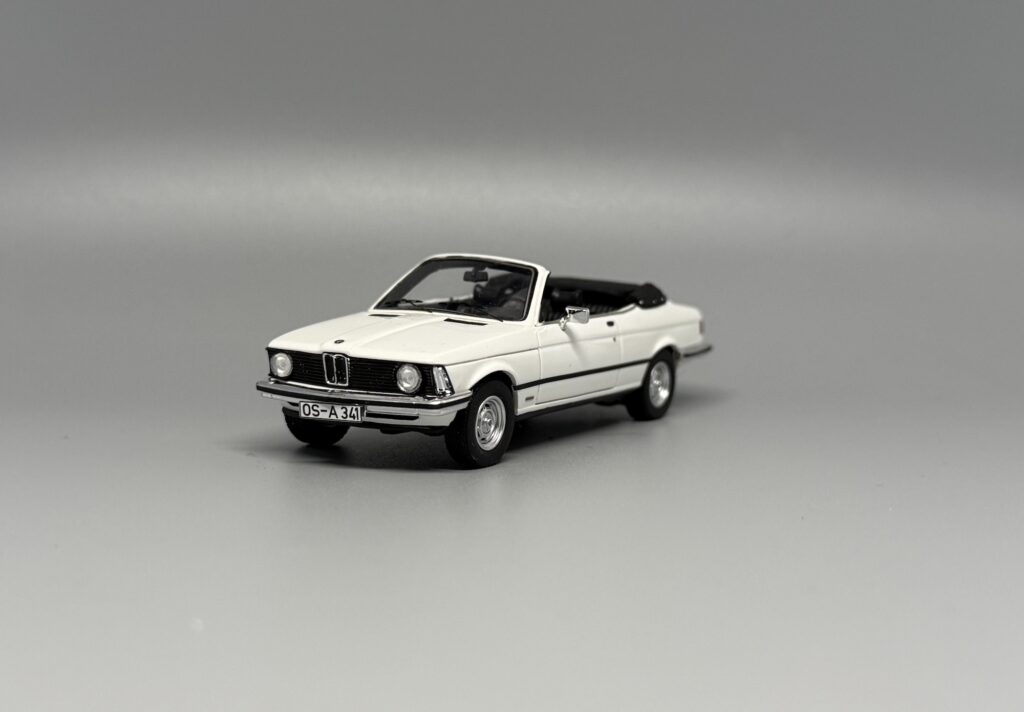
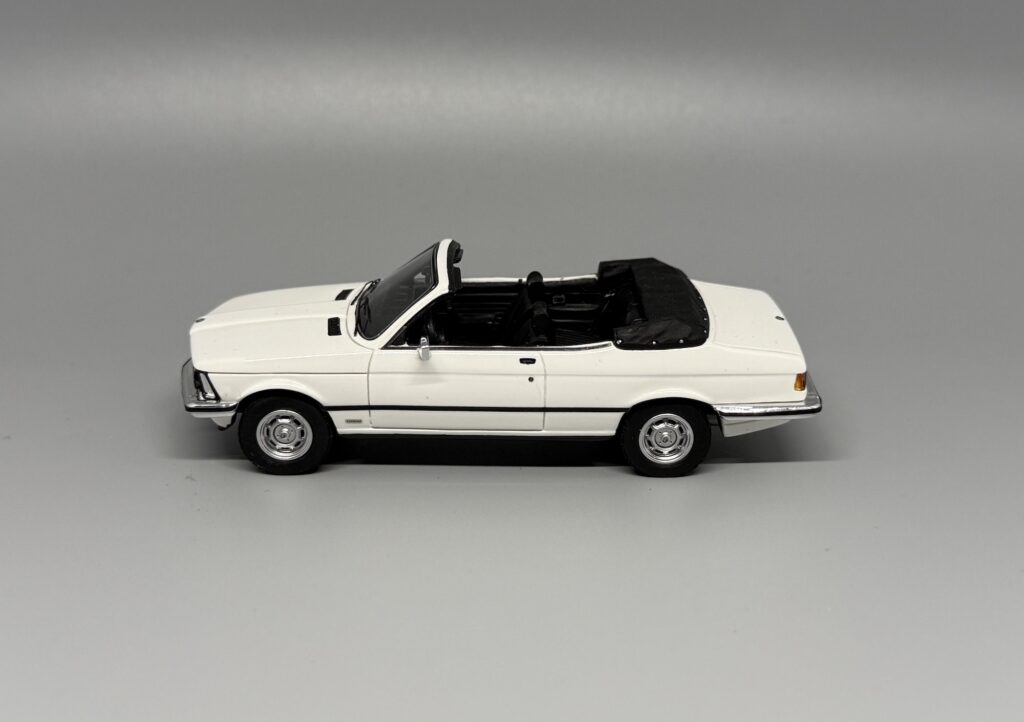
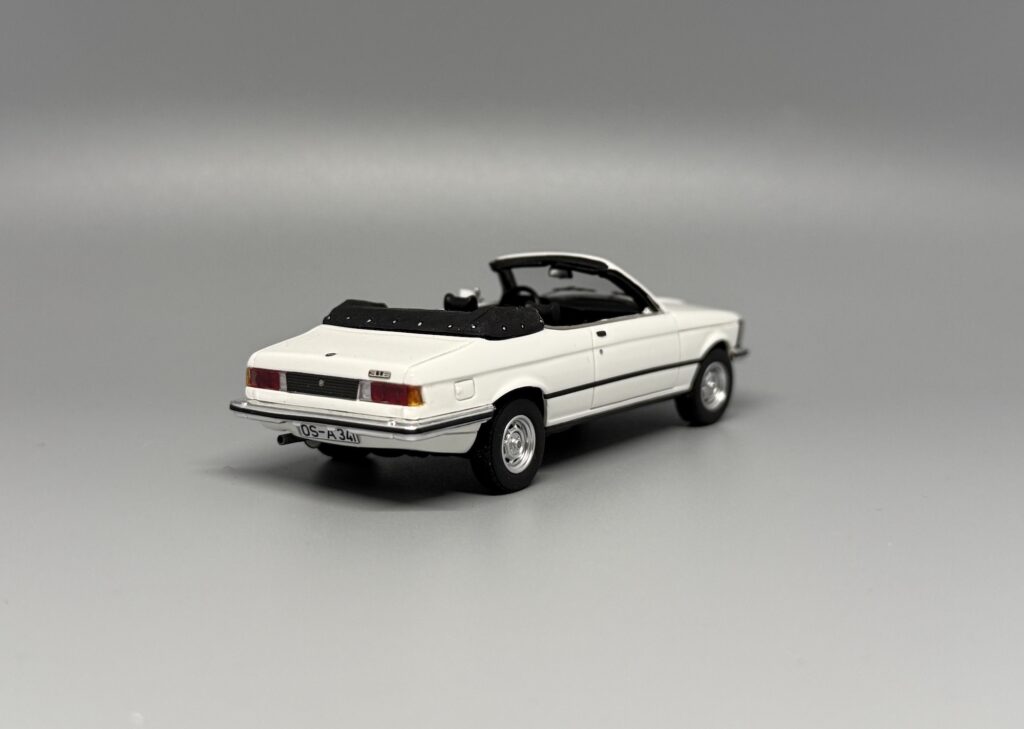
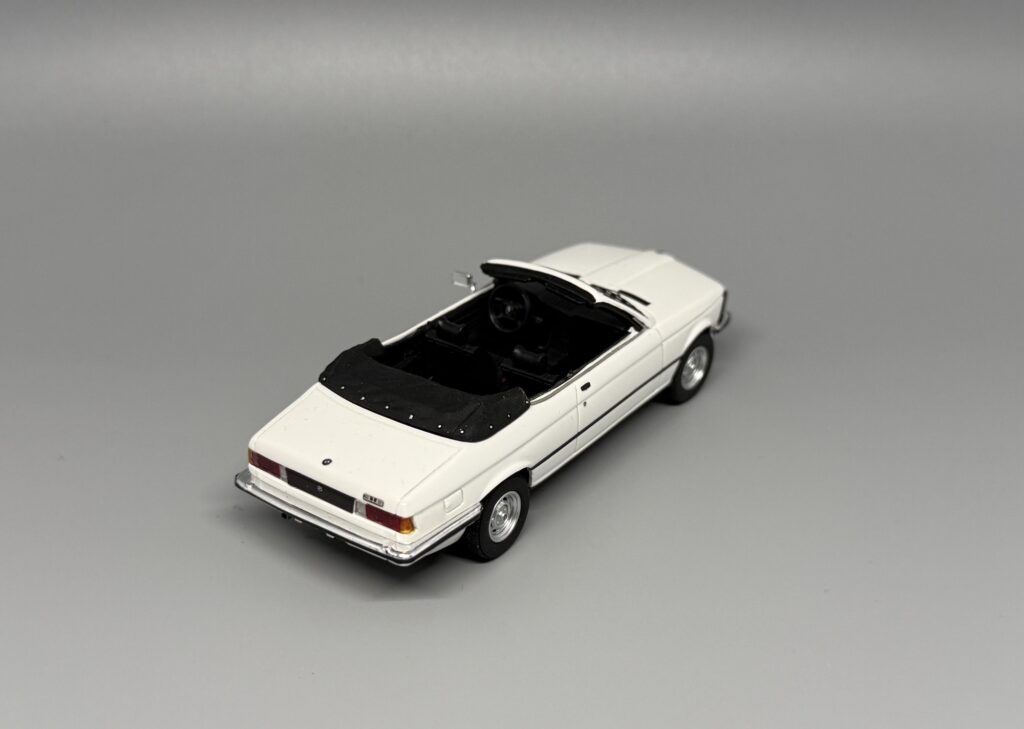
BMW 316 Cabriolet Prototype by Karmann (E21) is one of the rarest side branches in the history of the first-generation BMW 3 Series. Completed in 1975, it was not a BMW production model but a full-convertible prototype created by Karmann in Osnabrück. Its purpose was to demonstrate that the newly introduced E21 could also work successfully as an open-top car. The project ultimately remained a one-off, but it provides a fascinating glimpse of what a factory-style convertible version of the first 3 Series might have looked like.
The E21 that BMW did not offer
BMW introduced the first-generation E21 3 Series in 1975 exclusively as a two-door sedan. The new model replaced the 02 Series and quickly became one of the most important cars in the BMW range, but an open-top version was not initially part of BMW’s production programme.
There was nevertheless a market for open BMW models. Independent coachbuilders had already developed several convertible solutions based on the earlier 02 Series, and the same idea naturally carried over to the new E21. One of the companies that saw potential for a true convertible version of the first 3 Series was Karmann.
Karmann’s independent proposal
Wilhelm Karmann GmbH was already a familiar partner to BMW. The Osnabrück-based company had been involved in the production of several BMW coupés and had extensive experience in designing and manufacturing open-top cars. Karmann had already proposed a full convertible without a permanent rollover bar on the earlier 02 Series, although BMW ultimately chose a different solution.
In 1975 Karmann independently constructed another full-convertible prototype, this time based on the new E21. A BMW 316 was used as the basis, with the metal roof and the B- and C-pillars removed from the standard two-door body. The result was a classic four-seat convertible with a folding soft top that disappeared behind the rear seats when lowered.
A full convertible rather than a TopCabriolet
Karmann’s solution differed fundamentally from the Baur TopCabriolet that would later become available in production form. The Karmann prototype had no permanent side roof rails or central rollover bar, leaving a clean and traditional convertible profile with the roof lowered.
The principal engineering challenge was maintaining sufficient structural rigidity after removing the fixed steel roof. Karmann strengthened the underbody and other structural areas to compensate for the loss of the roof structure. The soft-top mechanism was also designed to occupy relatively little space, allowing the rear seats to remain usable.
Modest BMW 316 mechanicals
The prototype was not based on one of the more powerful E21 versions but on the standard BMW 316. Under the bonnet was a 1,573 cc M10 four-cylinder petrol engine producing 66 kW or 90 hp. Top speed was approximately 160 km/h and acceleration from 0 to 100 km/h took around 13.7 seconds.
The car itself was very modestly equipped. Accounts of the surviving prototype emphasise that it featured virtually no optional equipment and retained the relatively simple specification of the basic 316. This suggests that Karmann’s purpose was not to create a luxurious show car but rather to demonstrate the technical feasibility and visual appeal of the convertible body.
BMW chose Baur
Karmann’s proposal did not reach series production. BMW instead selected Stuttgart-based Baur for the open E21 derivative. Baur’s solution was structurally more conservative, retaining the door frames, side roof rails and a substantial central rollover bar, making it easier to maintain body rigidity and provide additional rollover protection.
The Baur E21 TopCabriolet reached the market towards the end of the 1970s and was sold through the BMW dealer network. Karmann’s more elegant full convertible remained a single prototype. This did not completely end Karmann’s attempts to develop open BMWs: the company later created a convertible prototype based on the BMW 6 Series, although that project also failed to reach production.
A single surviving car
The Karmann E21 Cabriolet is particularly significant because the sole prototype built in 1975 has survived. Decades later, the car has continued to appear at historic vehicle exhibitions as a rare example of the development history shared by Karmann and BMW.
In retrospect, Karmann’s idea was remarkably forward-looking. BMW’s first factory-produced full 3 Series Convertible did not appear until the following E30 generation. The 1975 Karmann prototype had already demonstrated at the very beginning of the 3 Series story that a true open body style could suit BMW’s compact sporting model extremely well.
Model in the collection
The 1:43-scale BMW 316 Cabriolet Prototype by Karmann (E21) in my collection was produced by AutoCult as part of its Avenue 43 range. The model represents the 1975 prototype and is a limited edition of 333 pieces.
It is a particularly interesting part of the collection because it represents not a production car, but a unique development version of the E21 of which only a single full-size prototype was built.
Technical data
Year: 1975
Type: Karmann full-convertible prototype
Base model: BMW 316 (E21)
Body style: two-door four-seat convertible
Engine: M10 four-cylinder petrol engine
Displacement: 1,573 cc
Power output: 66 kW / 90 hp
Drive: rear-wheel drive
0–100 km/h: approximately 13.7 seconds
Top speed: approximately 160 km/h
Coachbuilder: Karmann, Osnabrück
Production total: 1 prototype
Special feature: full-convertible E21 concept built by Karmann as a one-off prototype
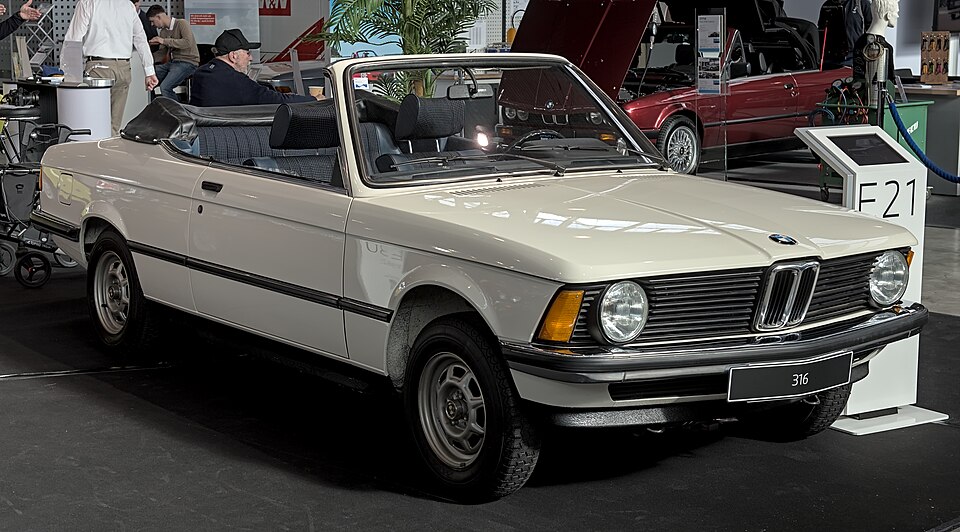
Photo of the real car. Photo: Alexander Migl / Wikimedia Commons, CC BY-SA 4.0