
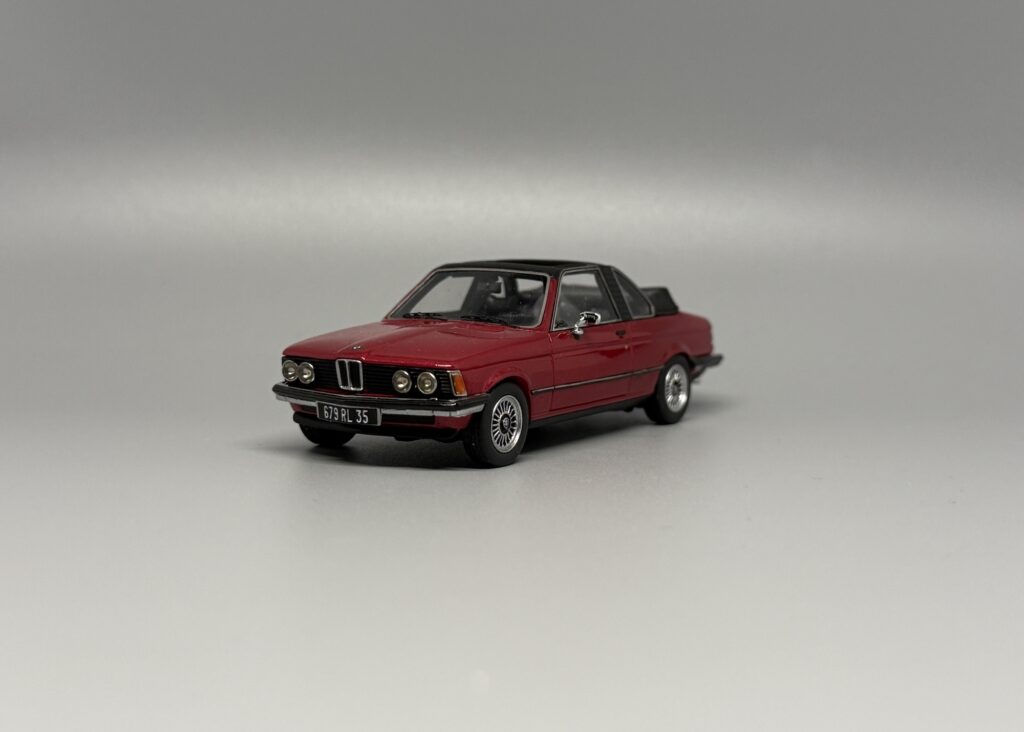
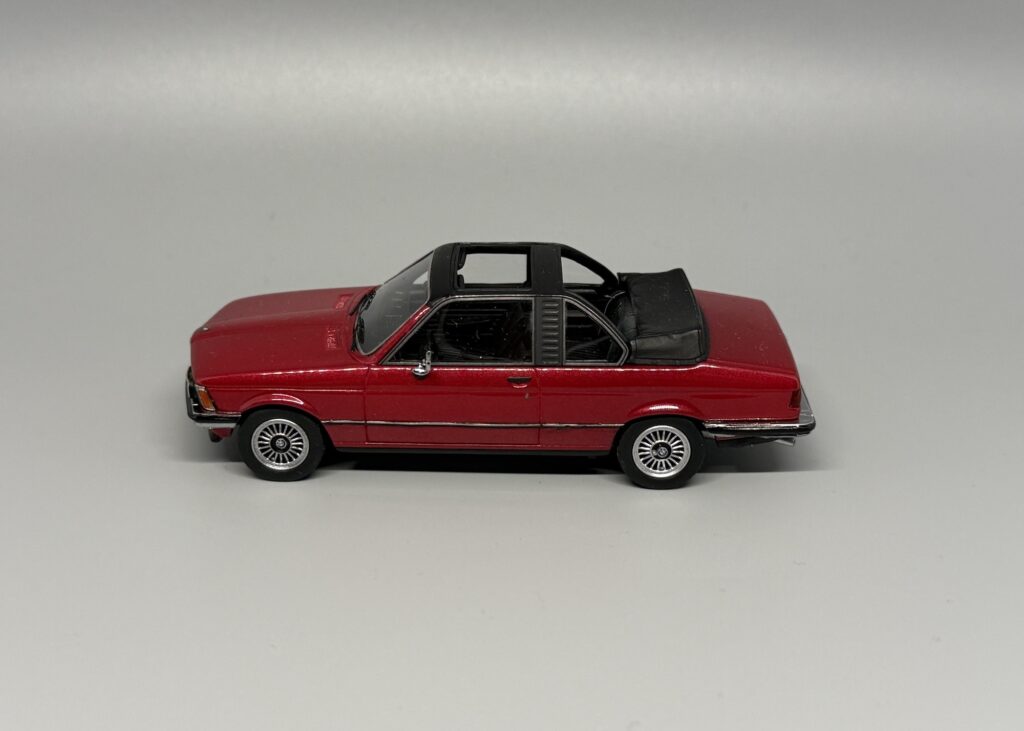
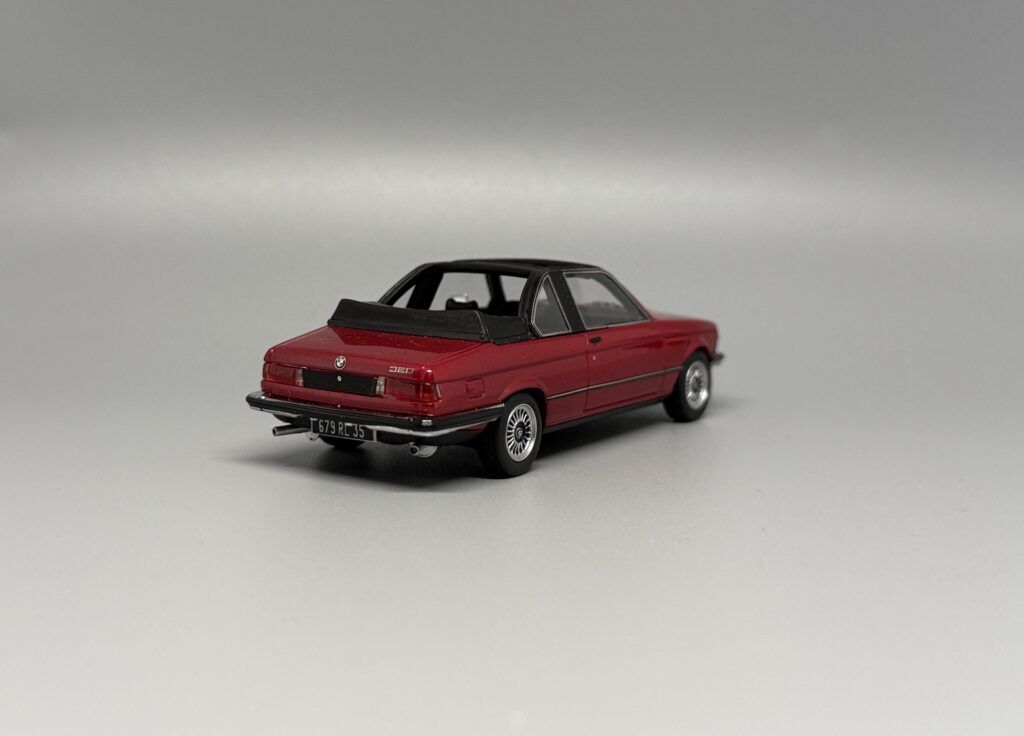
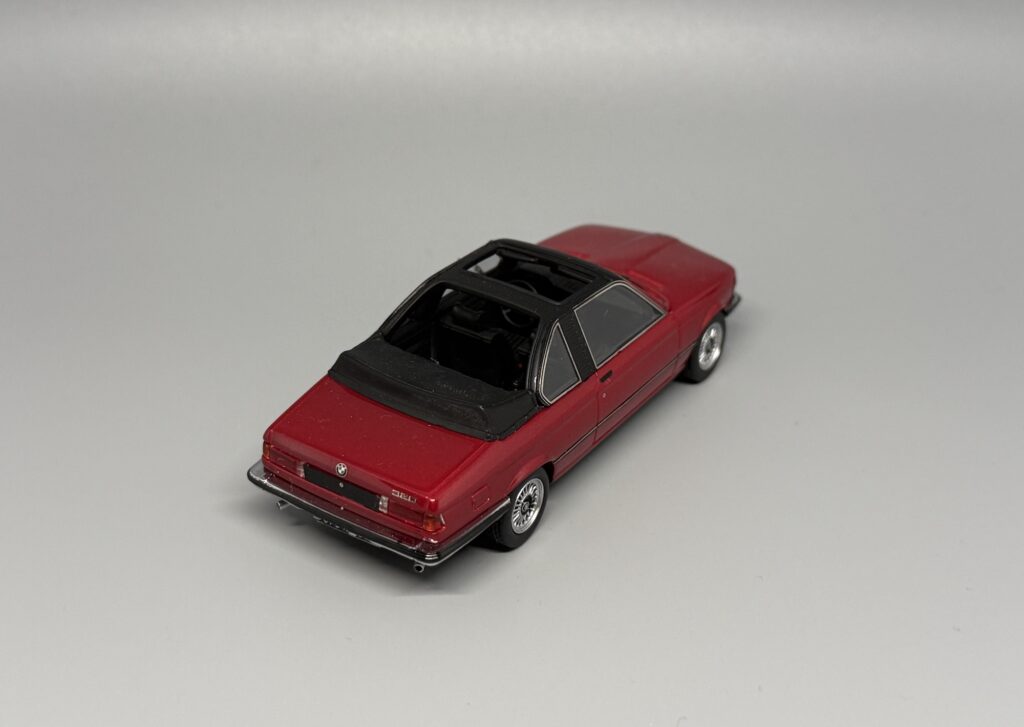
BMW 320 Baur TopCabriolet (E21) represents one of the most interesting side branches in the history of the first-generation 3 Series. BMW itself offered the E21 only as a two-door sedan, but Stuttgart-based coachbuilder Baur developed an open version known as the TopCabriolet. Its combination of a removable front roof panel, folding rear soft top and permanent rollover bar provided open-air motoring without adopting the structure of a conventional full convertible.
Baur’s open version of the 3 Series
Baur already had considerable experience producing open BMWs during the 02 Series era, and the company continued the concept when the E21 arrived. The TopCabriolet, later known as the TC1, entered production in 1978 and was sold through the official BMW dealer network. It was not a separate factory body style produced by BMW, but a new E21 converted by Baur in Stuttgart.
The TopCabriolet differed from a conventional convertible by retaining a substantial central rollover bar together with the side roof rails. The front roof panel could be removed, while the soft rear section above the rear seats folded down. The result combined elements of both a targa and a traditional convertible.
Greater rigidity and rollover protection
The permanent rollover structure was more than a styling feature. Removing a fixed steel roof normally reduces torsional rigidity, and Baur’s construction helped compensate for this loss of structural strength. The substantial rollover bar also provided greater protection in the event of the car overturning than was typical of conventional convertibles of the period.
The roof system was practical as well. The removable front panel could be carried in the car, while the rear soft-top section folded behind the rollover bar. This allowed the TopCabriolet to be driven fully closed, with only the front roof removed, or in its most open configuration.
320 – the six-cylinder TopCabriolet
Baur offered the TC1 conversion with several engines from the E21 range. By the time TopCabriolet production began in 1978, the original four-cylinder BMW 320 had already been replaced by the BMW 320/6. The Baur 320 of this period was therefore based on an E21 powered by BMW’s 2.0-litre M20 straight-six.
The 1,990 cc carburetted engine produced 90 kW or 122 hp and 160 Nm of torque. The six-cylinder engine gave the TopCabriolet a smoother and more refined character than the smaller four-cylinder versions and suited the slightly more exclusive nature of the open car particularly well.
Six-cylinder power in the 3 Series
The 320/6, together with the 323i, was among the first six-cylinder versions of the BMW 3 Series. Both were introduced in 1977 and significantly changed the character of the E21 by combining its compact rear-wheel-drive body with the smoothness traditionally associated with BMW’s larger straight-six models.
The 320 was not as powerful as the 143 hp fuel-injected 323i, but its appeal lay in the balance between smooth performance and everyday usability. Combined with Baur’s open body conversion, it became a particularly distinctive interpretation of the first-generation 3 Series.
4,595 cars over five years
Baur produced a total of 4,595 E21-based TopCabriolets between 1978 and 1982. Production records indicate that the 320 was the most common version, with 1,874 examples built. A further 1,659 were 323 models, 591 were 316s, 410 were 318 or 318i versions and only 61 were 315s.
Compared with the more than one million conventional E21s produced, the TopCabriolet remained extremely rare. It nevertheless played an important role in the history of the first 3 Series by offering an open BMW several years before BMW itself introduced a full factory convertible with the following E30 generation.
The TC1 and later Baur TopCabriolets
The E21 TopCabriolet later became known as the TC1 after Baur continued the same concept with the E30 generation. The E30-based version became the TC2, and the TopCabriolet idea would subsequently continue with other BMW models.
The E21 TC1 remains historically significant because it established the concept. It demonstrated that BMW’s compact sporting 3 Series worked particularly well as an open car and helped pave the way for the factory-built BMW 3 Series Convertibles that followed.
Model in the collection
The 1:43-scale BMW 320 Baur TopCabriolet (E21) in my collection was produced by Neo Scale Models. Neo identifies the miniature as a BMW E21 320 Baur Cabriolet.
As Baur TC1 production began in 1978, by which time the E21 320 already used the M20 straight-six engine of the 320/6, the technical specification of the model corresponds to that version. The page title nevertheless follows the simpler BMW 320 designation used for the miniature itself.
Technical data
Baur TC1 production: 1978–1982
Base model: BMW 320 (E21), technically the 320/6
Coachbuilder: Baur, Stuttgart, Germany
Body style: two-door TopCabriolet
Engine: M20 2.0-litre straight-six petrol engine
Displacement: 1,990 cc
Power output: 90 kW / 122 hp
Torque: 160 Nm
Drive: rear-wheel drive
Total E21 Baur TC1 production: 4,595 cars
320 production: 1,874 cars
Special feature: Baur TopCabriolet with removable front roof panel, folding rear soft top and permanent rollover bar
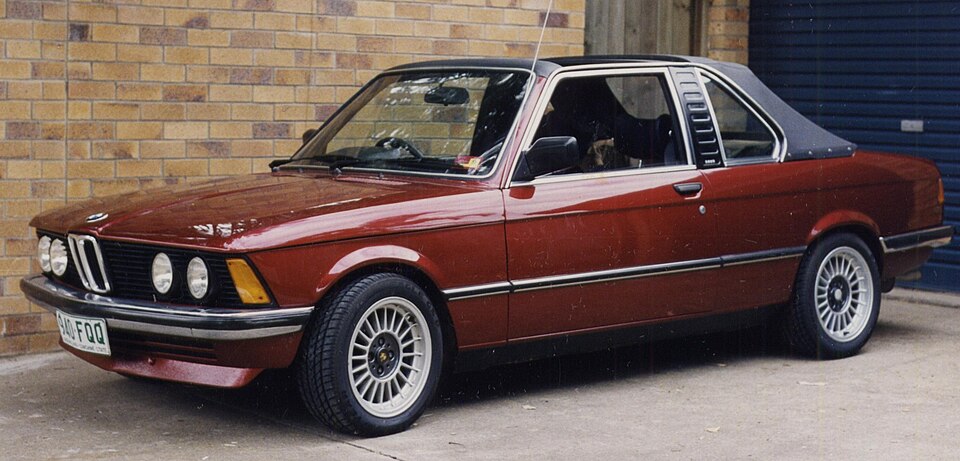
Photo of the real car. Photo: Gotztas / Wikimedia Commons, CC BY-SA 3.0