
BMW 550i (F10) was the most powerful regular version of the sixth-generation 5 Series before the arrival of the M5. Launched in 2010, the F10 marked a return to somewhat more classical and elegant styling after the E60, while remaining a thoroughly modern car underneath. The 550i combined the comfort and refinement of a large executive sedan with a 4.4-litre twin-turbocharged V8, providing a level of performance that only a few years earlier would have been associated mainly with BMW M models.
The sixth-generation 5 Series
The F10-generation 5 Series was unveiled at the end of 2009 and entered the market in 2010. Compared with the E60, its exterior design was more restrained and traditional, with a long bonnet, clearly defined body lines and a broader kidney grille restoring more classical BMW sports-sedan proportions. At the same time, the car grew in size and moved even closer to the 7 Series in terms of comfort, refinement and available equipment.
The F10 adopted a number of technologies already familiar from the larger 7 Series. These included electronically controlled chassis systems, an enhanced iDrive system, Head-Up Display, active steering and an expanding range of driver-assistance functions. The result was a more refined and comfortable 5 Series while retaining the driver-focused character traditionally associated with BMW.
550i – the V8 flagship of the regular range
At the launch of the F10, the 550i sat at the top of the regular model range. Under its bonnet was BMW’s N63 4.4-litre V8, with two turbochargers positioned inside the V between the cylinder banks. Together with the catalytic converters and exhaust manifolds, this so-called hot-V layout shortened the path of the exhaust gases to the turbochargers and helped improve throttle response.
In its original specification, the engine produced 300 kW or 407 hp between 5,500 and 6,400 rpm. Maximum torque of 600 Nm was available from just 1,750 to 4,500 rpm. This broad plateau of torque gave the large sedan exceptionally strong acceleration from low engine speeds and clearly distinguished it from earlier naturally aspirated V8 versions of the 5 Series.
Eight speeds and 5.0 seconds
The 550i was equipped with an eight-speed Steptronic automatic transmission. The large number of ratios allowed rapid acceleration to be combined with lower engine speeds during motorway cruising, improving refinement and efficiency compared with earlier automatic transmissions.
With 407 hp and 600 Nm, the rear-wheel-drive 550i accelerated from 0 to 100 km/h in 5.0 seconds. Top speed was electronically limited to 250 km/h in traditional BMW fashion. An xDrive all-wheel-drive version was added later and, benefiting from improved traction, reduced the 0–100 km/h time to 4.8 seconds.
A V8 with its turbochargers inside the cylinder banks
The N63 represented an important new generation of BMW V8 engines. Its most distinctive engineering feature was the placement of both turbochargers inside the V formed by the two cylinder banks. In a conventional V8 layout, the intake system usually occupies the centre of the engine while the exhaust manifolds are positioned on the outside; in the N63, this arrangement was effectively reversed.
BMW’s aim was to create the shortest possible path between the exhaust valves and the turbochargers. This improved response and allowed the V8 to deliver maximum torque at very low engine speeds. Together with High Precision Injection direct fuel injection, the N63 marked an important stage in BMW’s transition from large naturally aspirated engines to turbocharged power units.
Luxury combined with a sporting chassis
The 550i was not intended to replace the M5. Its purpose was to provide very high performance without sacrificing the comfort and refinement expected from a regular 5 Series. Depending on specification, it could be equipped with Adaptive Drive, electronically controlled dampers and Integral Active Steering, which also turned the rear wheels through a small angle.
These systems made the nearly five-metre executive sedan easier to manoeuvre at low speeds and more stable in fast corners. The defining quality of the 550i was this dual character: during relaxed driving it behaved like a quiet and refined luxury sedan, while a stronger press of the accelerator transformed the car through the power of its twin-turbocharged V8.
More power from 2013
For the 2013 model update, the 550i received a substantially revised version of the V8. Displacement remained at 4.4 litres, but the engine now incorporated additional technologies including VALVETRONIC. Output increased to 330 kW or 450 hp and maximum torque rose to 650 Nm, reducing the 0–100 km/h time to 4.6 seconds.
The update demonstrated how quickly BMW’s turbocharged engine technology evolved during the F10 production period. Although the later 550i was more powerful and efficient, the original 407 hp version represents an important stage in BMW V8 history, marking the point at which the twin-turbocharged V8 became the defining engine of the regular high-performance 5 Series flagship.
Model in the collection
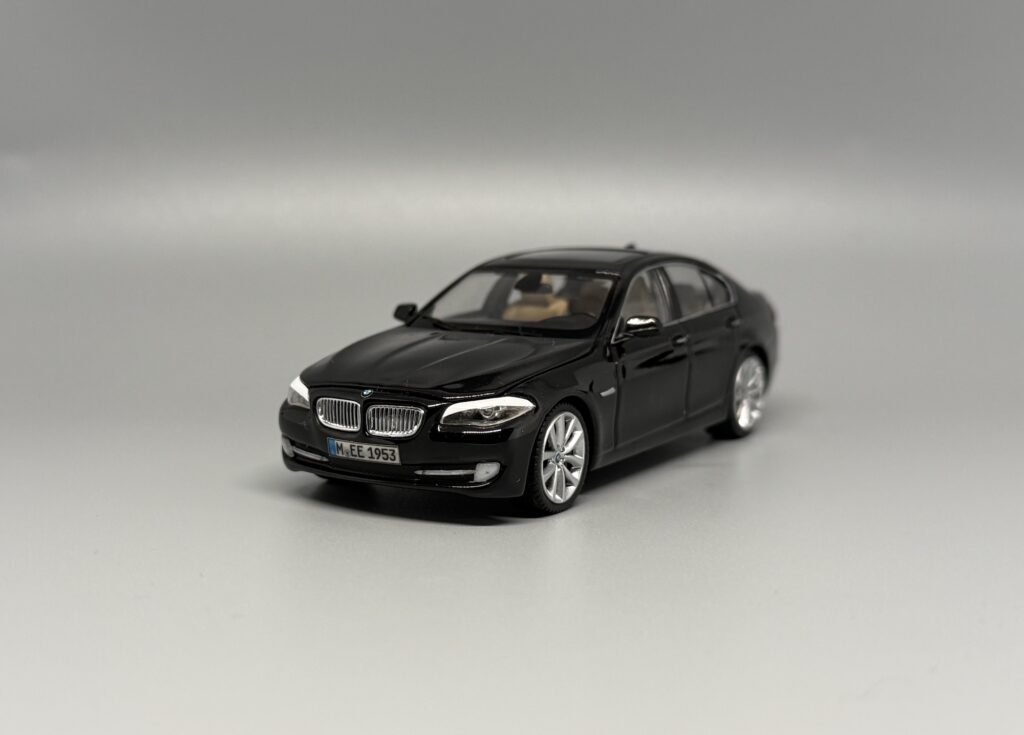
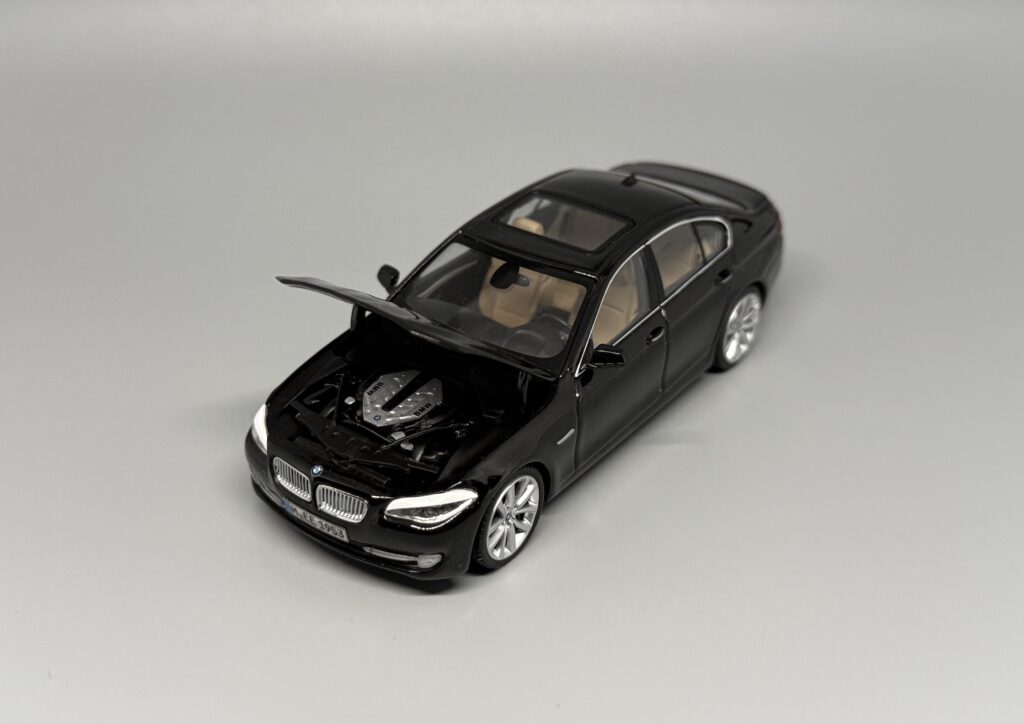
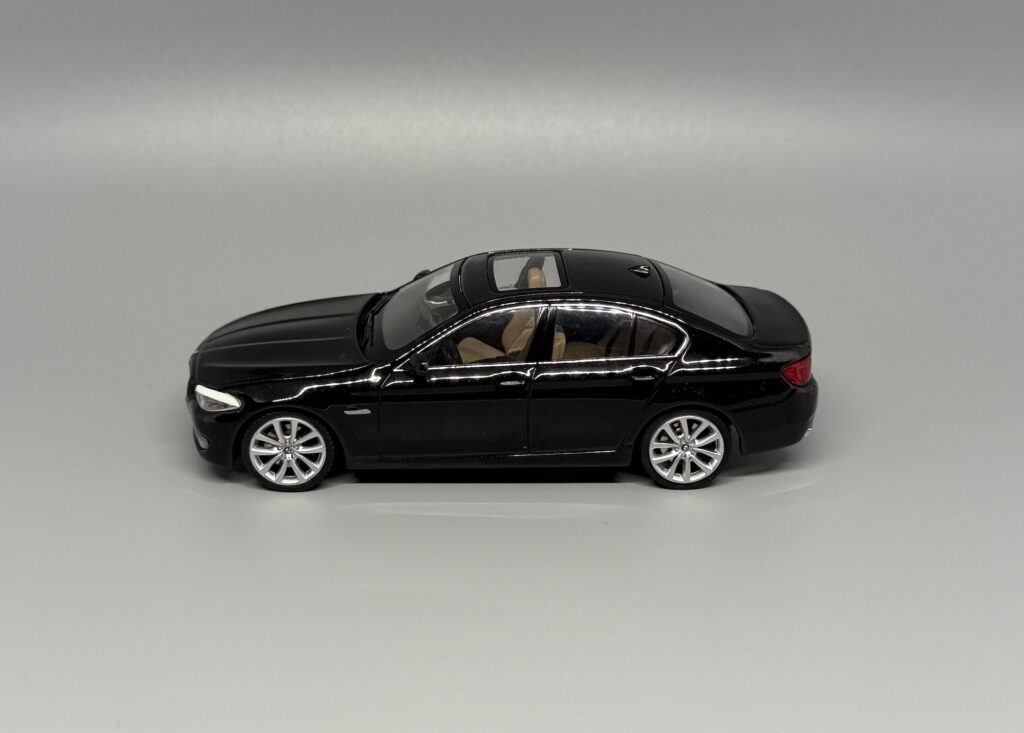
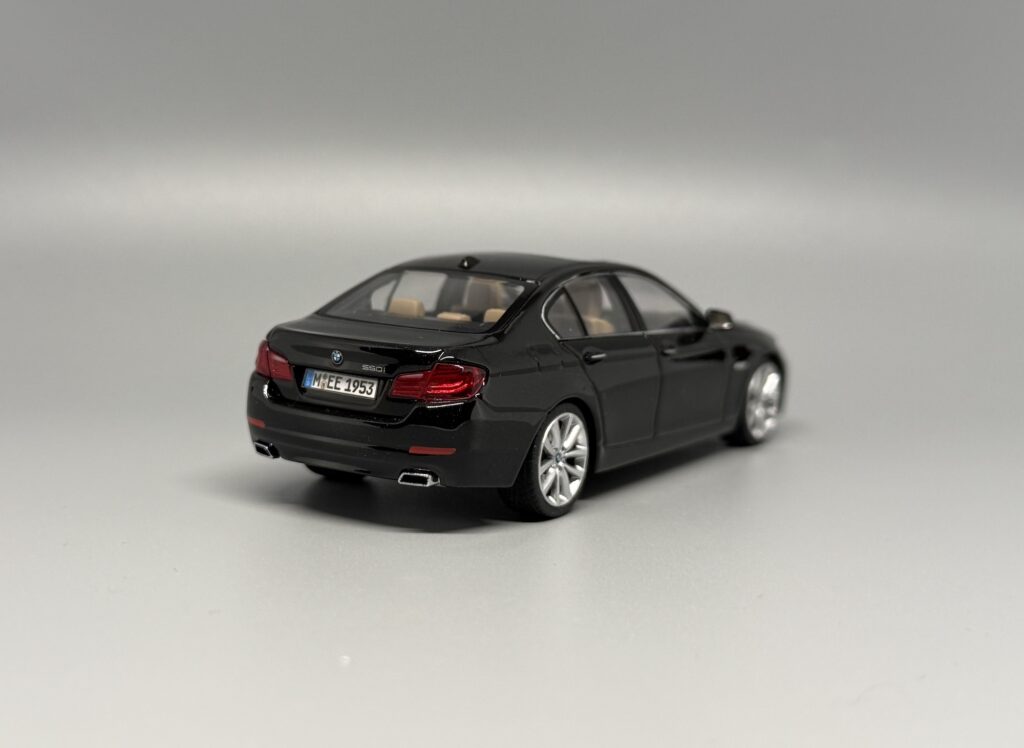
The 1:43-scale BMW 550i (F10) in my collection was produced by Schuco as an official BMW dealer model. It represents a 2010 car and therefore depicts the early version of the F10 550i powered by the 407 hp 4.4-litre twin-turbocharged V8.
The Schuco model therefore represents the original V8 flagship offered at the launch of the F10 generation rather than the more powerful 550i introduced following the 2013 model update.
Technical data
Version represented: 2010
Body style: four-door sedan
Production location: Dingolfing, Germany
Engine: N63 4.4-litre twin-turbocharged V8 petrol engine
Displacement: 4,395 cc
Power output: 300 kW / 407 hp at 5,500–6,400 rpm
Torque: 600 Nm at 1,750–4,500 rpm
Transmission: 8-speed Steptronic automatic
Drive: rear-wheel drive
0–100 km/h: 5.0 seconds
Top speed: 250 km/h
Later update: 330 kW / 450 hp and 650 Nm from 2013
Special feature: V8 flagship of the regular F10 range below the M5
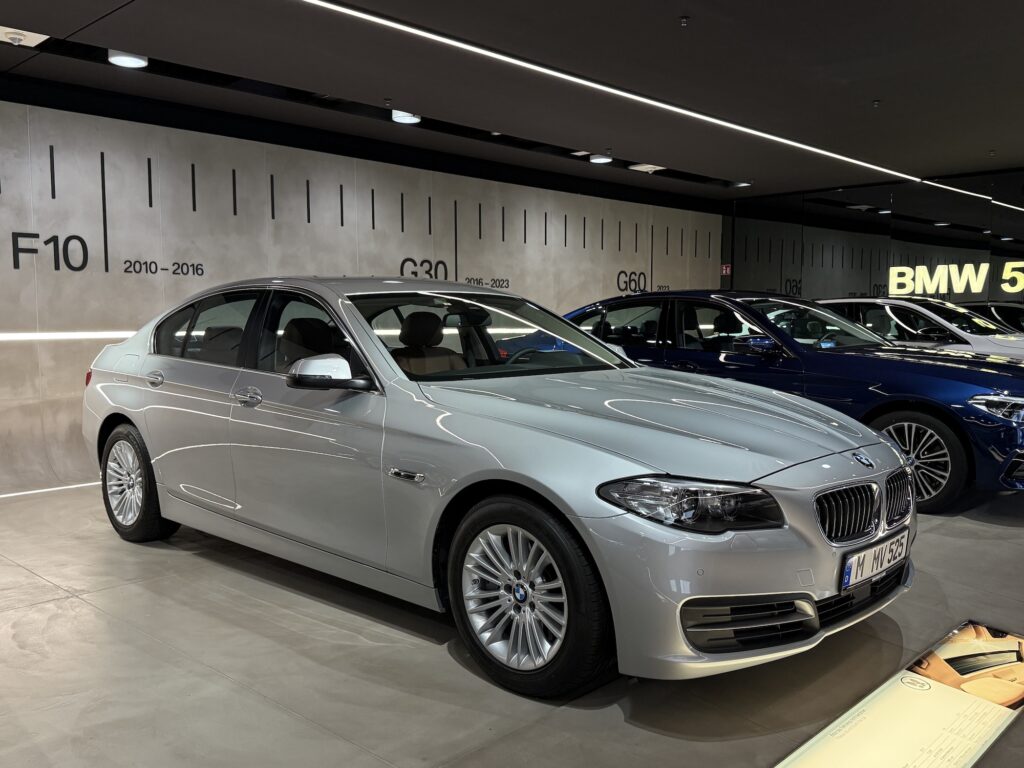
Photo of the real car, BMW Museum. Photo: Sten-Patrick Kreek