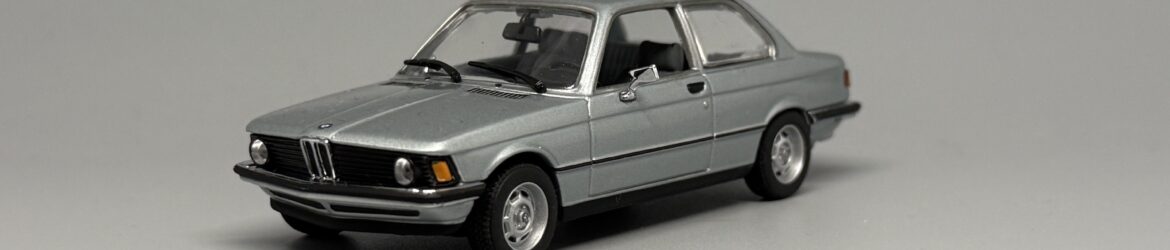
BMW 3 Series Sedan (E21) was the first generation of the 3 Series and the model with which BMW established what would become one of the most important model families in the company’s history. Introduced in 1975 as the successor to the successful 02 Series, the E21 carried the compact and sporting character of its predecessor into a new era. Initially offered in just one body style – a two-door sedan – it combined compact dimensions, rear-wheel drive and a driver-focused character in a formula that would remain central to the 3 Series for decades.
Successor to the 02 Series
BMW presented the first 3 Series to the public in July 1975. The new model was intended to continue the success of the 02 Series while offering more comfort, improved safety and more modern styling. Rather than simply updating the existing car, BMW created an entirely new model family designed to combine sporting ability with everyday usability.
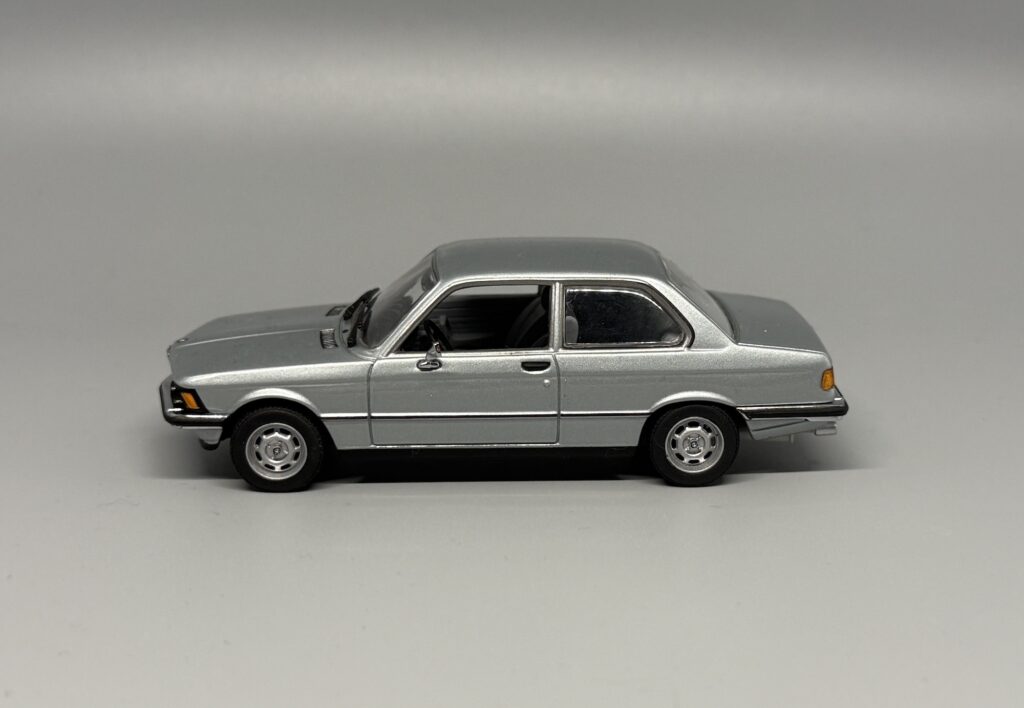
The E21 measured 4,355 millimetres in length, 1,610 millimetres in width and 1,380 millimetres in height. These dimensions made it compact, but its proportions – a long bonnet, relatively rearward passenger compartment and short rear section – gave it a more mature and sporting appearance. The traditional BMW kidney grille, round headlights and Hofmeister kink in the C-pillar clearly linked the E21 with other BMW models of the period.
Paul Bracq’s new design language
The styling of the E21 was developed under BMW chief designer Paul Bracq and followed the design direction already introduced with the first-generation E12 5 Series. Although the family resemblance was obvious, the 3 Series remained a smaller, lighter and more sporting car with a distinct identity of its own.
One of the E21’s most important innovations was found inside the car. With the first 3 Series, BMW introduced a clearly driver-oriented dashboard in which the centre controls were angled towards the person behind the steering wheel. This layout became one of the defining features of BMW interiors for decades and visually reinforced the idea that the driver was at the centre of the car’s design.
Four cylinders at launch
When the E21 entered the market, the range consisted of the four-cylinder 316, 318, 320 and 320i. Their engines came from BMW’s established M10 family and ranged from 1.6 to 2.0 litres. The most powerful of the original versions was the fuel-injected 320i, whose 2.0-litre engine produced 125 hp.
The chassis used MacPherson struts at the front and independent semi-trailing-arm suspension at the rear. Together with rear-wheel drive, compact dimensions and relatively low weight, this gave the E21 the agile handling for which the 3 Series soon became known.
Six cylinders changed the class
In 1977 the 3 Series took an important step forward with the arrival of its first six-cylinder models. The BMW 320/6 used a 2.0-litre M20 straight-six, followed shortly afterwards by the 323i with a 2.3-litre fuel-injected engine producing 143 hp.
The 323i became the flagship of the E21 range. Its performance, smooth six-cylinder engine and compact body demonstrated that a smaller sporting sedan did not have to be basic or modest. By introducing six-cylinder power into this class, BMW created a combination that few direct competitors could offer at the time.
The first million-selling 3 Series
The E21 proved exceptionally successful for BMW. In May 1981 the one-millionth first-generation 3 Series rolled off the production line, setting a new record for the company at the time. By 1983, total sales of the E21 generation had reached 1,364,039 cars, establishing the 3 Series as BMW’s most successful model line.
The reasons for its success would remain familiar throughout later generations: a relatively compact body, rear-wheel drive, precise handling, strong engines and a high-quality interior. The E21 therefore established many of the principles that would later come to define the character of the BMW 3 Series.
The Baur TopCabriolet
BMW itself produced the E21 only as a two-door sedan, but Stuttgart-based coachbuilder Baur developed an open-top version known as the TopCabriolet. The conversion retained the side roof rails and a substantial central rollover bar, while the front roof panel could be removed and the rear section opened using a folding soft top.
Baur conversions were sold through the BMW dealer network and could be ordered with various E21 engine versions. A total of 4,595 E21-based TopCabriolets were produced, making the open version a relatively rare branch of the first 3 Series family.
Model in the collection
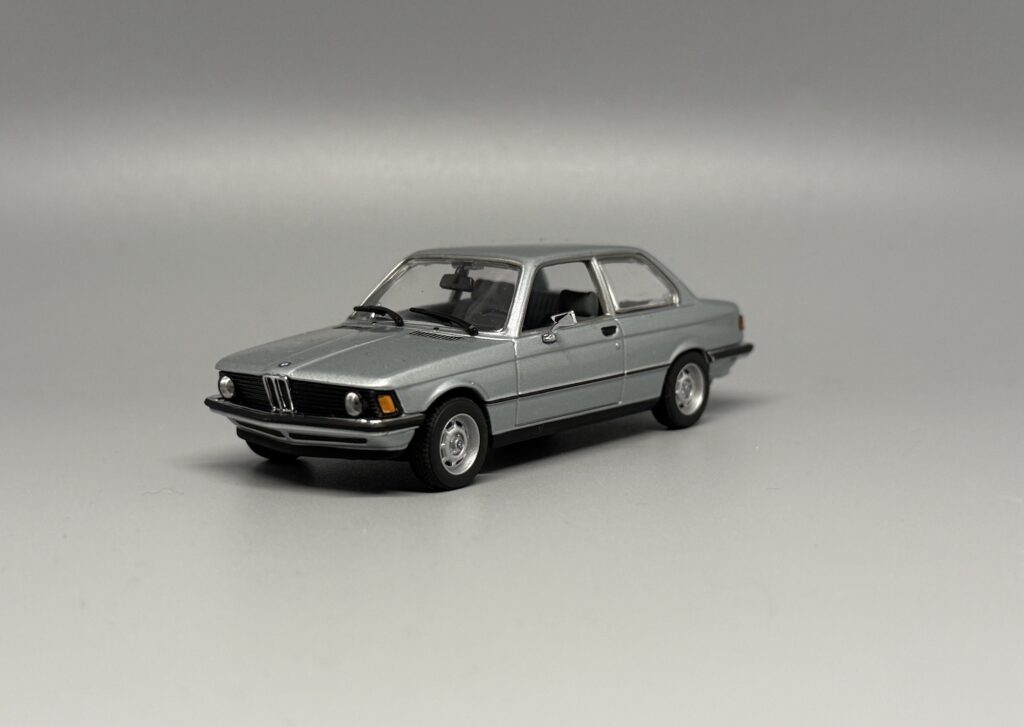
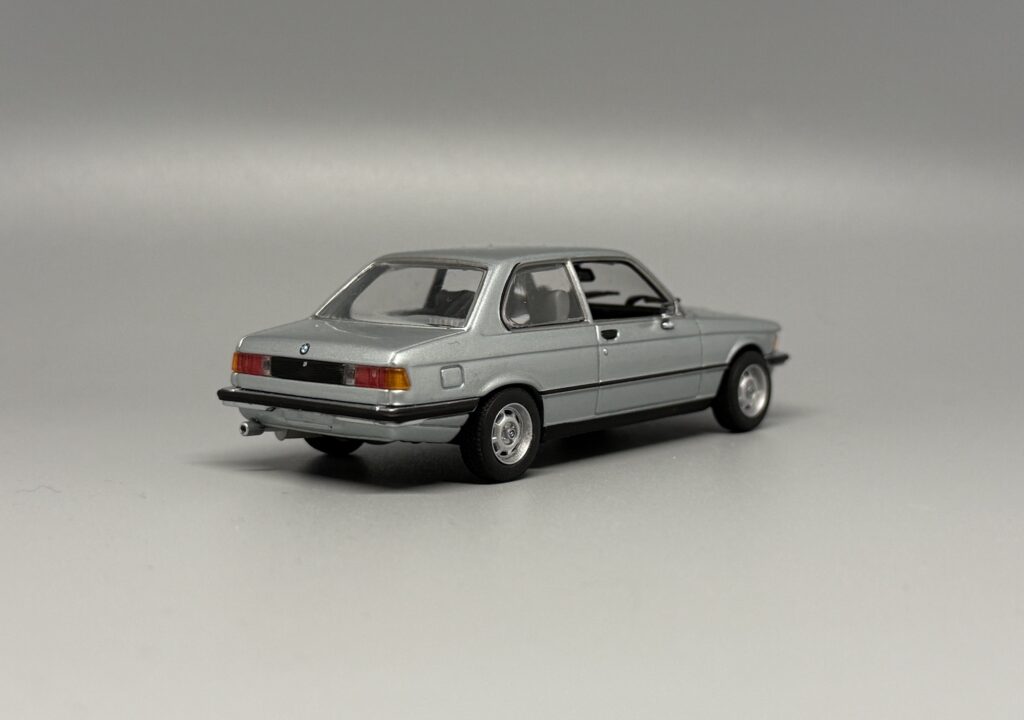
The 1:43-scale BMW 3 Series Sedan (E21) in my collection was produced by Minichamps. The model represents a 1975 car from the earliest production period of the first-generation 3 Series.
It therefore represents the original form of the E21 at the point when BMW’s new 3 Series was taking over the role of the 02 Series and beginning a model lineage that would become one of the central pillars of the BMW range.
Technical data
Production: 06/1975–12/1983
Production location: Munich, Germany
Body style: two-door sedan
Drive: rear-wheel drive
Engines: M10 four-cylinder petrol engines and, from 1977, M20 straight-six petrol engines
Displacement: 1.6–2.3 litres
Power output: 75–143 hp
Flagship version: BMW 323i, 143 hp
Production total: 1,364,039 cars
Baur TopCabriolet: 4,595 cars
Special feature: the first generation of the BMW 3 Series and the origin of BMW’s driver-focused dashboard tradition
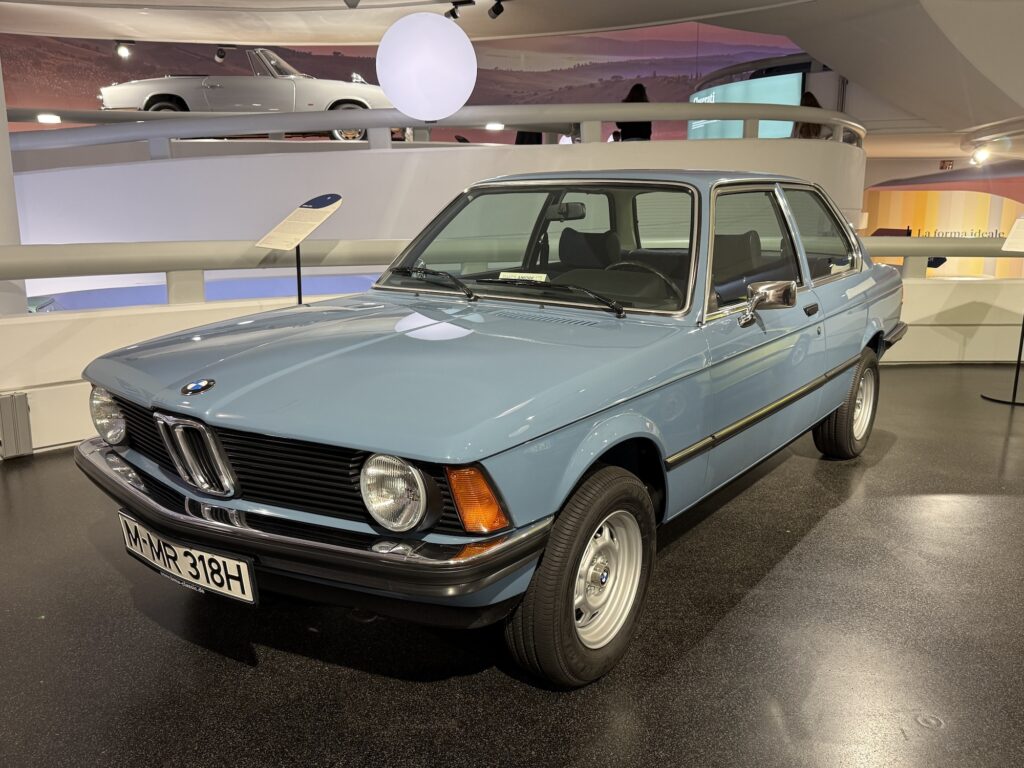
Photo of the real car, BMW Museum. Photo: Sten-Patrick Kreek