BMW i3 (I01) marked the beginning of a completely new era for BMW. It was the first fully electric BMW model produced in larger series and one of the boldest steps BMW took in the early 2010s. The i3 was not an electric version of an existing BMW model, but a completely new concept developed from the ground up as an electric car.
The BMW i3 belonged to the BMW i sub-brand, whose purpose was to explore and implement a new type of mobility. While the BMW i8 showed how electrification could fit into the world of sports cars, the i3 focused primarily on urban mobility, everyday usability and sustainable use of materials. In this way, the i3 differed strongly from BMW’s traditional model range, which had until then been centred mainly on combustion engines, classic rear-wheel drive and more conventional body styles.
The BMW i3 was presented as a production model in 2013. Its significance for BMW went beyond simply launching a new electric car. The i3 showed that BMW did not want to treat an electric car merely as a conventional car with a different powertrain, but as a completely new technical and design concept. This made the i3 one of the most distinctive production models in BMW history.
Design and concept
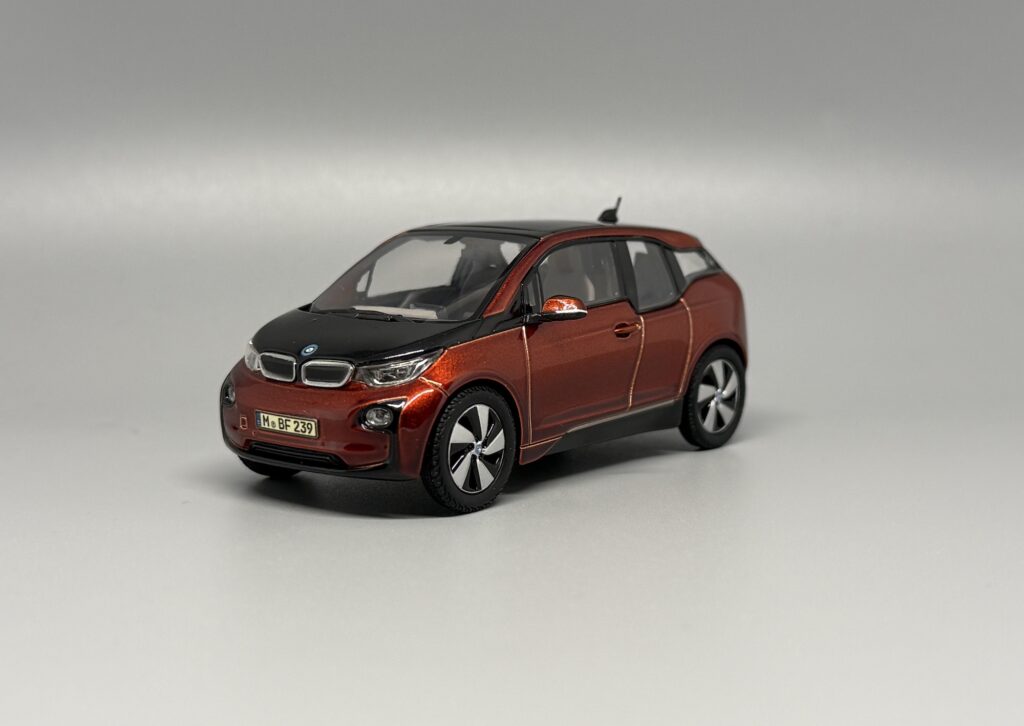
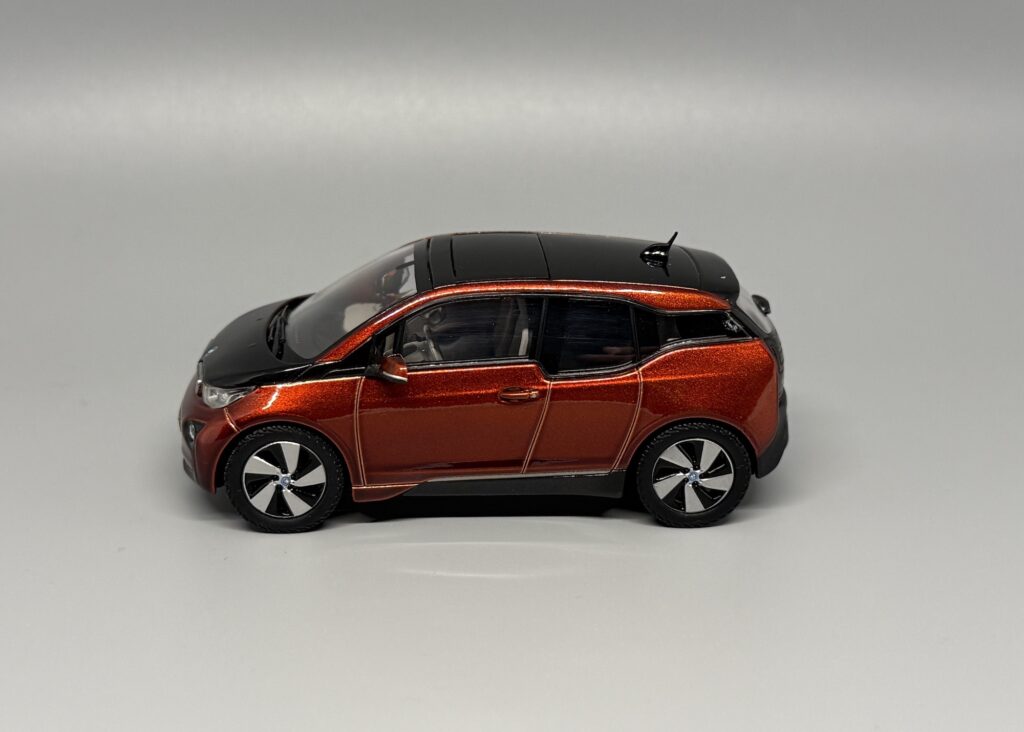
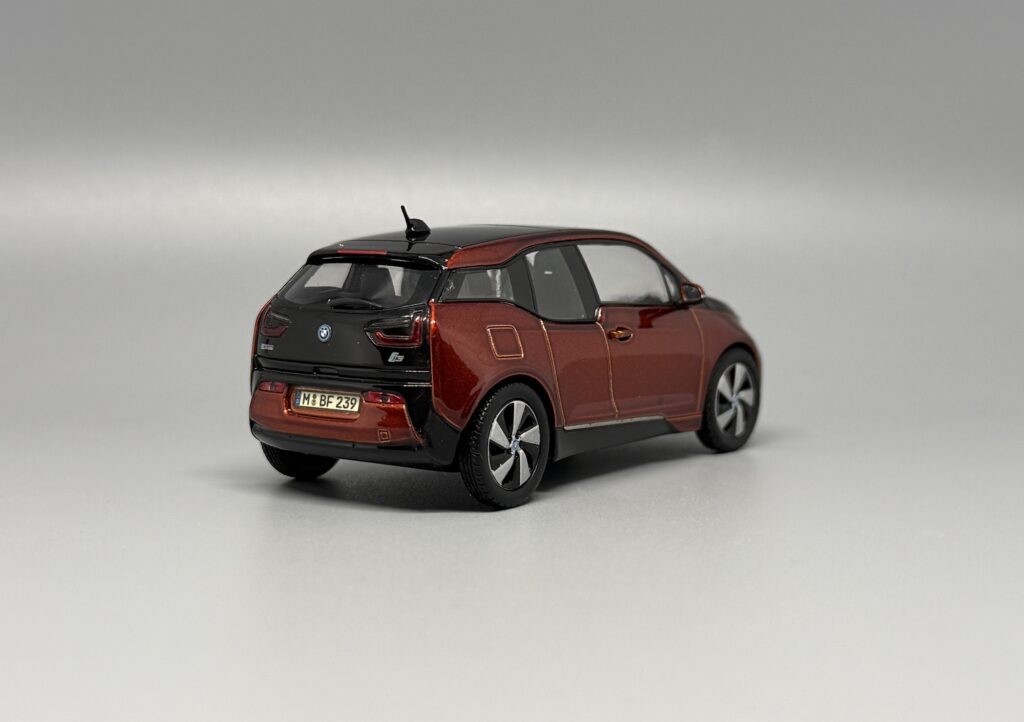
In terms of design, the BMW i3 was highly distinctive. Its tall body, short overhangs, large glass areas, narrow wheels and compact exterior dimensions gave the car a clearly urban and forward-looking appearance. The i3 did not try to look like a regular small BMW, but created a visual identity of its own. It was a car whose appearance immediately showed that it was something different.
One of the most characteristic features of the i3 was its door arrangement. The front doors opened conventionally, while the small rear doors opened in the opposite direction. The absence of a B-pillar made access to the cabin easier and emphasised the conceptual character of the car. This solution suited the idea of the i3 well: a small car intended to offer surprisingly practical interior space in the city.
The same philosophy continued inside the car. BMW used natural and recycled materials in the i3 and aimed to create an interior that felt light, spacious and environmentally conscious. The dashboard was much more minimalist than in a traditional BMW, the seating position was high and the overall cabin atmosphere was modern and airy rather than low and sporty. This clearly separated the i3 from BMW’s classic models.
Technology
The BMW i3 was based on the LifeDrive architecture. Its central idea was to divide the car into two main parts: the Life module and the Drive module. The Life module formed the passenger cell and was made from carbon-fibre reinforced plastic, or CFRP. The Drive module was an aluminium structure containing the battery, electric motor, chassis and other technical components.
This structure was highly innovative for a production car. In the i3, BMW used carbon fibre not as a special solution for a small sports car, but as the load-bearing structure of an everyday electric car. This helped reduce weight and compensate for the mass of the battery pack. At the same time, the strong carbon-fibre passenger cell provided good rigidity and safety.
The original BMW i3 used an electric motor mounted at the rear axle, producing 125 kW, or 170 hp, and 250 Nm of torque. Because the torque of the electric motor was available immediately, the i3 felt very lively and responsive at urban speeds. The car accelerated from 0 to 100 km/h in 7.2 seconds, while top speed was electronically limited to 150 km/h for efficiency reasons.
Over the years, the i3 continued to develop. Battery capacity increased, driving range improved and the sportier BMW i3s was added to the range. This version produced 135 kW, or 184 hp, and received a sportier set-up and a wider stance. In some markets, the i3 was also offered with a Range Extender version, where a small petrol engine worked as a generator to help extend the driving range. This did not turn the car into a conventional hybrid, but was intended to support the usability range of the electric car.
Production
Production of the BMW i3 took place at the Leipzig plant from 2013 to 2022. This plant became very important for BMW’s electrified models, as both the i3 and i8 were produced there. With the i3, BMW introduced a completely new approach to materials, production processes and sustainability.
BMW emphasised an environmentally conscious approach in the production of the i3. The important point was not only that the car itself was electric, but also how it was built and which materials were used. The use of CFRP, the aluminium structure, recycled materials in the interior and energy-efficient production formed a complete concept that distinguished the i3 from many earlier electric car experiments.
By the end of production, the BMW i3 had become one of the symbols of BMW’s electric mobility. In total, 250,271 BMW i3 cars were produced. This made the i3 much more than a small experimental project — it was a genuinely series-produced electric car whose influence on BMW’s later development was very significant.
Significance in BMW history
The significance of the BMW i3 in BMW history is very great. It was the first BMW production model created from the ground up as an electric car and one of the first premium electric city cars in the world. The i3 showed that an electric car did not have to be merely an electric version of a conventional car, but could be a model with a completely new architecture, material concept and design philosophy.
In its own time, the i3 was a bold and even controversial car. Its appearance, narrow wheels, unusual body structure and unconventional interior differed strongly from BMW’s traditional image. At the same time, this is exactly what made the i3 historically important. With this car, BMW experimented with solutions that went far beyond simply using an electric motor.
Today, the BMW i3 can be seen as one of the most important early steps in BMW’s electrification story. It was not a perfect car for every buyer, but it clearly showed that BMW was willing to change the technical structure, production logic and design language of a car in the name of electric mobility. Against the background of later BMW electric models, the i3 therefore has a special pioneer status.
Model in the collection
The model car in my collection is produced by iScale. It is an official BMW dealer model.
Technical data in brief
Production period: 2013–2022
Production location: Leipzig, Germany
Body style: five-door compact electric city car
Architecture: LifeDrive with carbon-fibre passenger cell
Construction: CFRP passenger cell and aluminium Drive module
Motor: electric motor mounted at the rear axle
Power: 170 hp, 184 hp in the i3s version
Torque: 250 Nm, 270 Nm in the i3s version
Transmission: single-speed transmission
Drivetrain: rear-wheel drive
Acceleration 0–100 km/h: 7.2 s in the original i3 version
Top speed: 150 km/h, electronically limited
Range Extender: generator-based range-extending solution offered in some markets
Production number: 250,271 cars
Special feature: first BMW electric production car developed from the ground up, with a carbon-fibre passenger cell and sustainability-oriented use of materials

Background
BMW i3 (I01) marked the beginning of a completely new era for BMW. It was the first fully electric BMW model produced in larger series and one of the boldest steps BMW took in the early 2010s. The i3 was not an electric version of an existing BMW model, but a completely new concept developed from the ground up as an electric car.
The BMW i3 belonged to the BMW i sub-brand, whose purpose was to explore and implement a new type of mobility. While the BMW i8 showed how electrification could fit into the world of sports cars, the i3 focused primarily on urban mobility, everyday usability and sustainable use of materials. In this way, the i3 differed strongly from BMW’s traditional model range, which had until then been centred mainly on combustion engines, classic rear-wheel drive and more conventional body styles.
The BMW i3 was presented as a production model in 2013. Its significance for BMW went beyond simply launching a new electric car. The i3 showed that BMW did not want to treat an electric car merely as a conventional car with a different powertrain, but as a completely new technical and design concept. This made the i3 one of the most distinctive production models in BMW history.
Design and concept
In terms of design, the BMW i3 was highly distinctive. Its tall body, short overhangs, large glass areas, narrow wheels and compact exterior dimensions gave the car a clearly urban and forward-looking appearance. The i3 did not try to look like a regular small BMW, but created a visual identity of its own. It was a car whose appearance immediately showed that it was something different.
One of the most characteristic features of the i3 was its door arrangement. The front doors opened conventionally, while the small rear doors opened in the opposite direction. The absence of a B-pillar made access to the cabin easier and emphasised the conceptual character of the car. This solution suited the idea of the i3 well: a small car intended to offer surprisingly practical interior space in the city.
The same philosophy continued inside the car. BMW used natural and recycled materials in the i3 and aimed to create an interior that felt light, spacious and environmentally conscious. The dashboard was much more minimalist than in a traditional BMW, the seating position was high and the overall cabin atmosphere was modern and airy rather than low and sporty. This clearly separated the i3 from BMW’s classic models.
Technology
The BMW i3 was based on the LifeDrive architecture. Its central idea was to divide the car into two main parts: the Life module and the Drive module. The Life module formed the passenger cell and was made from carbon-fibre reinforced plastic, or CFRP. The Drive module was an aluminium structure containing the battery, electric motor, chassis and other technical components.
This structure was highly innovative for a production car. In the i3, BMW used carbon fibre not as a special solution for a small sports car, but as the load-bearing structure of an everyday electric car. This helped reduce weight and compensate for the mass of the battery pack. At the same time, the strong carbon-fibre passenger cell provided good rigidity and safety.
The original BMW i3 used an electric motor mounted at the rear axle, producing 125 kW, or 170 hp, and 250 Nm of torque. Because the torque of the electric motor was available immediately, the i3 felt very lively and responsive at urban speeds. The car accelerated from 0 to 100 km/h in 7.2 seconds, while top speed was electronically limited to 150 km/h for efficiency reasons.
Over the years, the i3 continued to develop. Battery capacity increased, driving range improved and the sportier BMW i3s was added to the range. This version produced 135 kW, or 184 hp, and received a sportier set-up and a wider stance. In some markets, the i3 was also offered with a Range Extender version, where a small petrol engine worked as a generator to help extend the driving range. This did not turn the car into a conventional hybrid, but was intended to support the usability range of the electric car.
Production
Production of the BMW i3 took place at the Leipzig plant from 2013 to 2022. This plant became very important for BMW’s electrified models, as both the i3 and i8 were produced there. With the i3, BMW introduced a completely new approach to materials, production processes and sustainability.
BMW emphasised an environmentally conscious approach in the production of the i3. The important point was not only that the car itself was electric, but also how it was built and which materials were used. The use of CFRP, the aluminium structure, recycled materials in the interior and energy-efficient production formed a complete concept that distinguished the i3 from many earlier electric car experiments.
By the end of production, the BMW i3 had become one of the symbols of BMW’s electric mobility. In total, 250,271 BMW i3 cars were produced. This made the i3 much more than a small experimental project — it was a genuinely series-produced electric car whose influence on BMW’s later development was very significant.
Significance in BMW history
The significance of the BMW i3 in BMW history is very great. It was the first BMW production model created from the ground up as an electric car and one of the first premium electric city cars in the world. The i3 showed that an electric car did not have to be merely an electric version of a conventional car, but could be a model with a completely new architecture, material concept and design philosophy.
In its own time, the i3 was a bold and even controversial car. Its appearance, narrow wheels, unusual body structure and unconventional interior differed strongly from BMW’s traditional image. At the same time, this is exactly what made the i3 historically important. With this car, BMW experimented with solutions that went far beyond simply using an electric motor.
Today, the BMW i3 can be seen as one of the most important early steps in BMW’s electrification story. It was not a perfect car for every buyer, but it clearly showed that BMW was willing to change the technical structure, production logic and design language of a car in the name of electric mobility. Against the background of later BMW electric models, the i3 therefore has a special pioneer status.
Model in the collection
The model car in my collection is produced by iScale. It is an official BMW dealer model.
Technical data in brief
Production period: 2013–2022
Production location: Leipzig, Germany
Body style: five-door compact electric city car
Architecture: LifeDrive with carbon-fibre passenger cell
Construction: CFRP passenger cell and aluminium Drive module
Motor: electric motor mounted at the rear axle
Power: 170 hp, 184 hp in the i3s version
Torque: 250 Nm, 270 Nm in the i3s version
Transmission: single-speed transmission
Drivetrain: rear-wheel drive
Acceleration 0–100 km/h: 7.2 s in the original i3 version
Top speed: 150 km/h, electronically limited
Range Extender: generator-based range-extending solution offered in some markets
Production number: 250,271 cars
Special feature: first BMW electric production car developed from the ground up, with a carbon-fibre passenger cell and sustainability-oriented use of materials