Background
BMW 2500 (E3) marked the beginning of a new era in BMW history at the end of the 1960s. With the E3 model family, BMW returned to the large luxury saloon segment after an absence of several years, with the 2500 serving as the entry model of the new range. Introduced alongside the more powerful 2800 in 1968, it combined the comfort of an executive saloon with the sporting and driver-focused character associated with BMW.
A new large BMW saloon
Known internally as the E3, the model family was referred to by BMW as its range of large saloons and is also widely known as the New Six. The BMW 2500 was not intended simply as a comfortable prestige car, but as a large saloon that remained enjoyable to drive. This combination of performance, comfort and luxury became one of the defining qualities of the E3 and was later carried forward into the BMW 7 Series.
Design influenced by Michelotti
The design of the E3 was elegant and deliberately understated. BMW Group Classic highlights the influence of Italian designer Giovanni Michelotti on the development of the model family. A long bonnet, large glass areas, clean body lines and the characteristic BMW kidney grille gave the car a distinguished appearance without making it look heavy or overly formal. The interior was luxurious for its time, while the body and cabin were also developed according to contemporary safety standards.
The new M30 straight-six
The BMW 2500 was powered by a 2.5-litre M30 straight-six engine with a displacement of 2,494 cm³. It produced 150 hp or 110 kW at 6,000 rpm. The M30 became one of the most important engine families in BMW history, with various developments remaining in use for decades in BMW saloons, coupés and high-performance models.
190 km/h
The BMW 2500 had a top speed of 190 km/h, an impressive figure for a large saloon at the end of the 1960s. The smooth six-cylinder engine, rear-wheel drive and sporting chassis set-up distinguished the E3 from many more traditional luxury cars. The 2500 already demonstrated the direction BMW would follow in combining the comfort of a large car with rewarding handling.
Before the 5 and 7 Series era
The E3 was created before BMW introduced the modern series-based model naming system and belongs to the period when the company’s model range was developing into the structure familiar today. The E3 formed BMW’s large-saloon range and became the direct predecessor of the first BMW 7 Series introduced in 1977. The 2500 and the other E3 models therefore laid the foundations for BMW’s long-term presence in the luxury saloon segment.
More than 92,000 cars
Production of the BMW 2500 ran from August 1968 to February 1977. The model remained in the range throughout the entire life of the E3 generation, and BMW Group Classic identifies it as the most popular version of the model family. Historical sources place production of the 2500 at more than 92,000 cars. More than 220,000 E3 large six-cylinder saloons in total were produced at BMW Plant Munich between 1968 and 1977.
Model in the collection
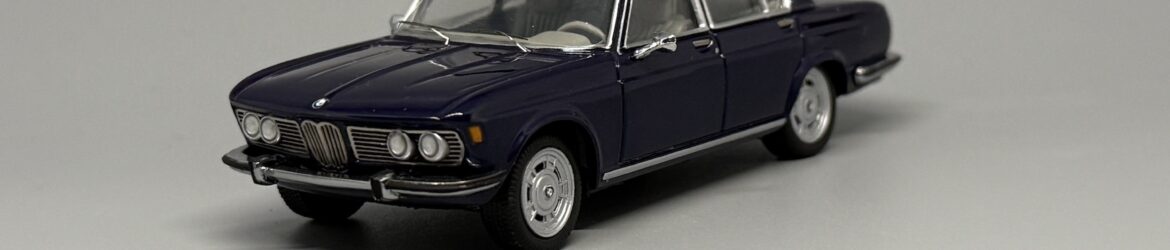
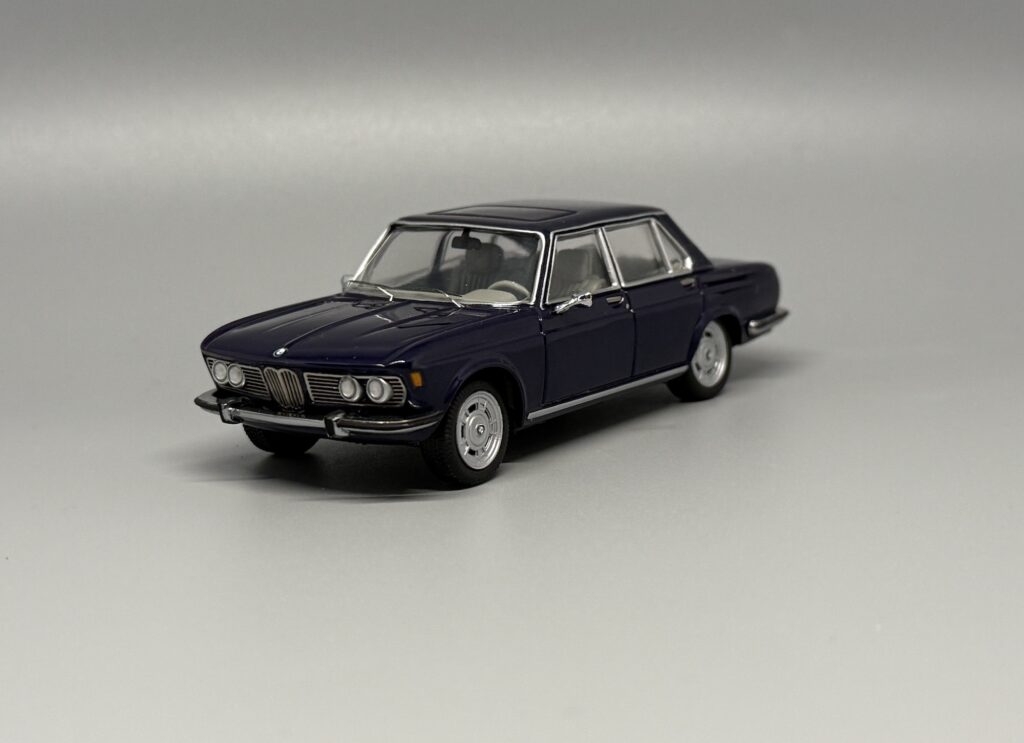
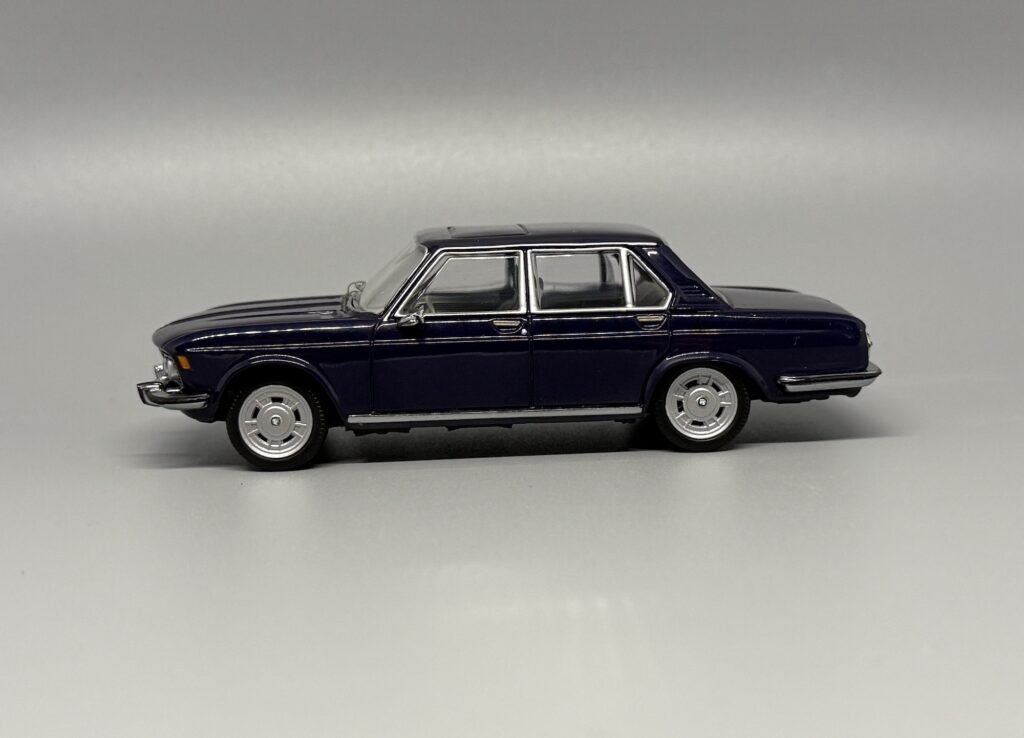
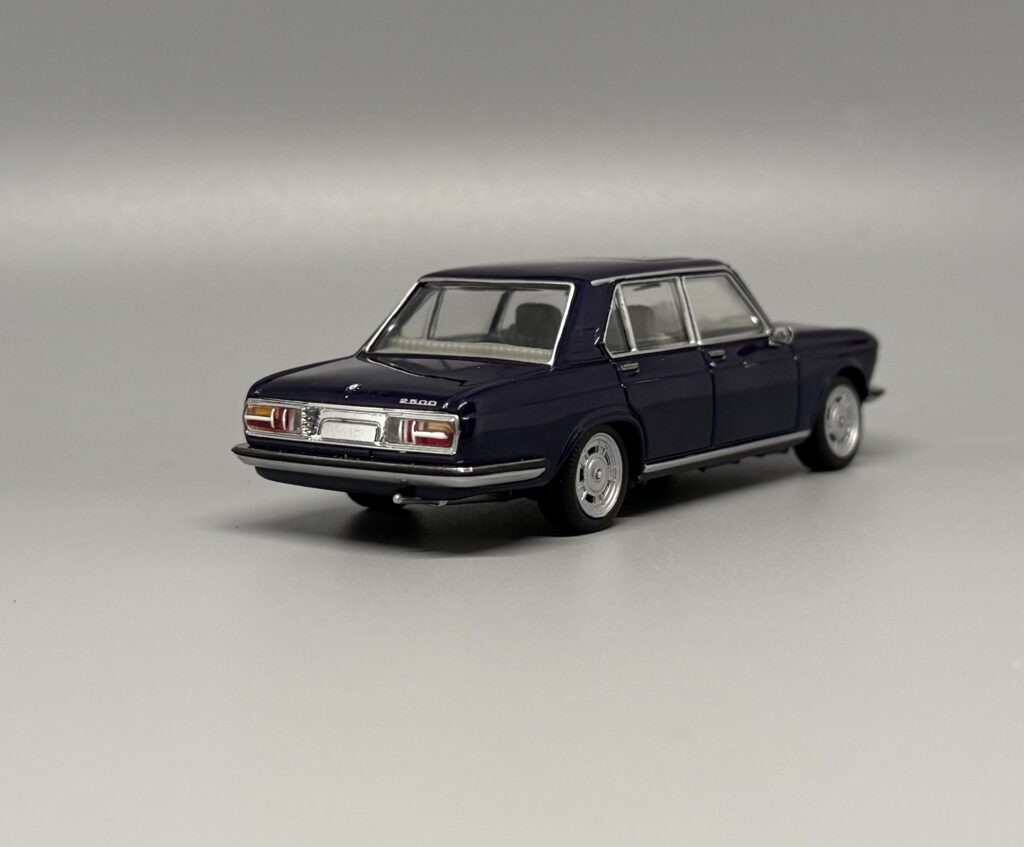
The BMW 2500 (E3) in my collection was produced by Schuco. It is a limited-edition model, with a total production run of 1,000 examples.
Technical data in brief
Production period: August 1968 – February 1977
Production location: BMW Plant Munich, Germany
Model code: E3
Body style: four-door large saloon
Engine: M30, 2.5-litre straight-six
Displacement: 2,494 cm³
Power: 150 hp / 110 kW @ 6,000 rpm
Drivetrain: rear-wheel drive
Top speed: 190 km/h
Production: more than 92,000 cars
Special feature: entry model of the E3 large-saloon family and direct predecessor of the later BMW 7 Series
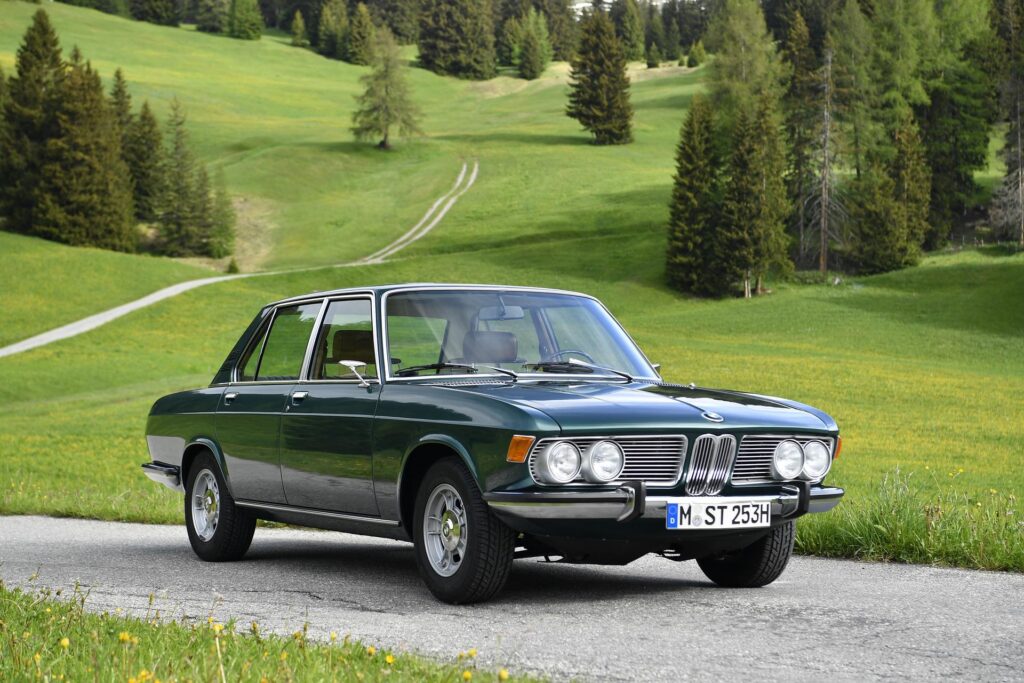
Photo of the real car. Source: bmwblog.com