
Background
BMW Dixi 3/15 PS Cabriolet (DA2) belongs to the model family with which BMW began its history as an automobile manufacturer in 1929. The model’s origins can be traced back to the British Austin Seven, which Fahrzeugfabrik Eisenach initially produced under licence as the Dixi 3/15 PS DA1. When BMW acquired the Eisenach automobile factory in 1928, production of the existing small car initially continued, but the design was quickly developed further. The result was the BMW 3/15 PS DA2, with DA standing for “Deutsche Ausführung”, or German version. It received four-wheel brakes, an improved body and a higher-quality interior. Although the Dixi name is still often associated with these early cars, the DA2 already carried the BMW badge and belonged to BMW’s first series-production passenger cars. The Cabriolet represented the more elegant and luxurious side of this small model family.
Design and concept
The DA2 Cabriolet was based on the same compact technical platform as the other 3/15 models, but its body and equipment were considerably more refined than those of the simpler open versions. BMW used an all-steel body, doors with high window frames and wind-down side windows, providing relatively good protection from wind and weather for an open car. The folding roof was carefully lined, and its construction gave the car a much more prestigious appearance than the simpler Tourenwagen or open two-seater versions. A rear seat provided space for a third passenger, although with the roof closed, sideways visibility from the rear seat was limited. The Cabriolet’s more elegant finish and extensive equipment made it one of the most luxurious variants in the entire DA2 range.
Technology
Technically, the BMW 3/15 PS DA2 Cabriolet shared the simple and economical construction of the other DA2 models. The car used a 748.75 cm³ four-cylinder in-line engine producing 15 hp at 3,000 rpm. Power was transmitted to the rear wheels through a three-speed manual gearbox, and top speed was approximately 75 km/h. One of the DA2’s important improvements over the earlier Dixi DA1 was the introduction of brakes on all four wheels. The small engine and lightweight construction did not make the Cabriolet a sports car, but they provided low running costs and adequate performance for the traffic conditions of the period. Its simple engineering, compact dimensions and wide variety of body styles helped the 3/15 model family establish an important position during BMW’s first years as an automobile manufacturer.
Production
The three-seat BMW 3/15 PS DA2 Cabriolet was produced from May 1929 until December 1930. Approximately 1,374 examples were built. The Cabriolet cost 2,625 Reichsmarks when new and, because of its more extensive equipment, was among the more expensive versions of the DA2 model family. In addition to this Cabriolet, BMW offered the 3/15 in Limousine, Tourenwagen, open two-seater and smaller two-seat Cabriolet forms, as well as in several commercial-vehicle variants. This wide range of body styles demonstrated how flexible the small technical platform that had originated with the Austin Seven became in BMW’s hands.
Significance in BMW history
The BMW 3/15 PS DA2 Cabriolet is important primarily because it was one of the body variants of BMW’s very first automobile model family. It demonstrates that, from the beginning of its car production activities, BMW did not limit itself to offering the cheapest possible small car, but already sought to create vehicles with different characters and price levels using the same technical basis. The Cabriolet added elegance and more luxurious equipment to the 3/15 range and helped make BMW’s early model line-up more diverse. Although later BMW models quickly moved away technically from their Austin Seven origins, the DA2 period was an important stage of learning and development from which BMW’s increasingly independent automobile production emerged.
Model in the collection
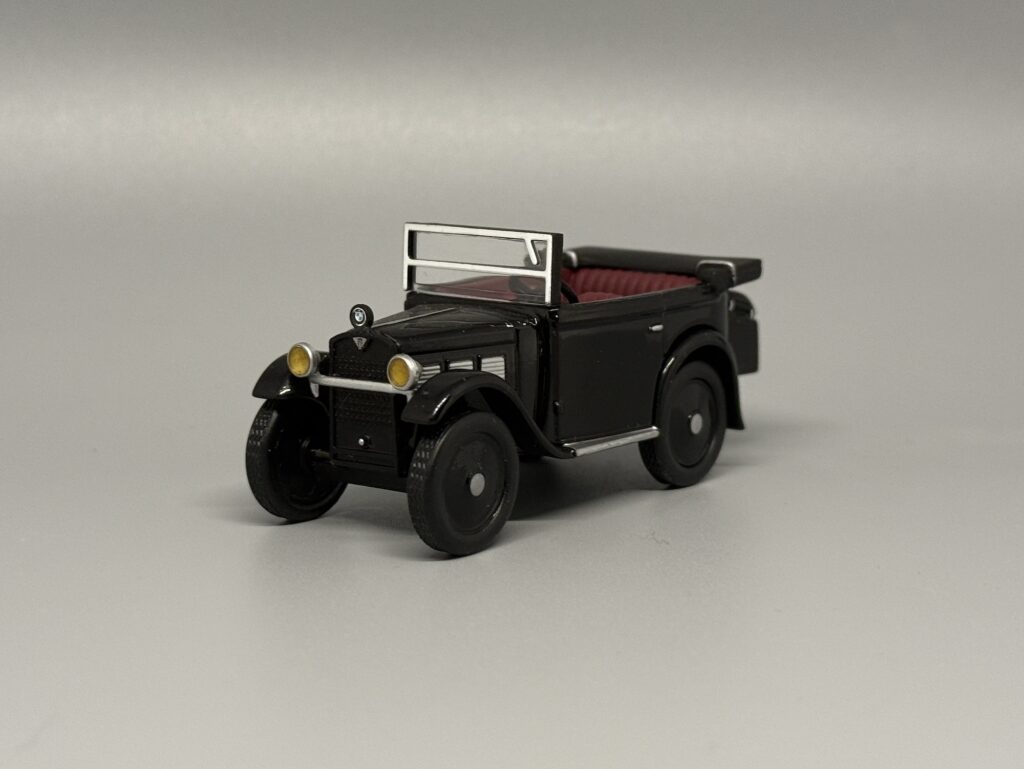
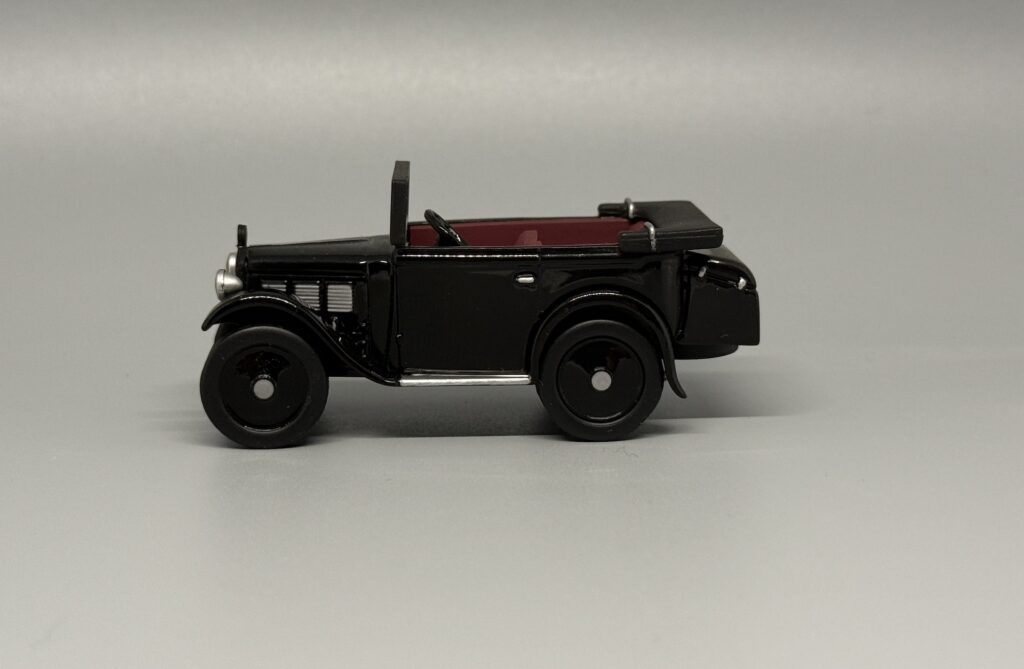
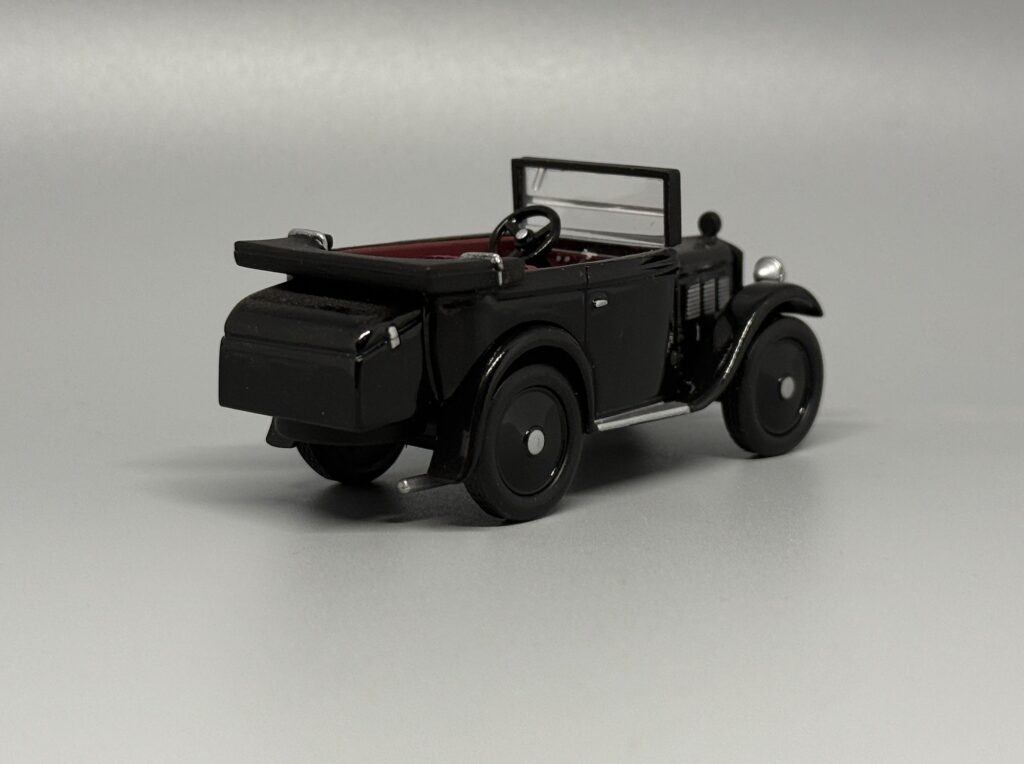
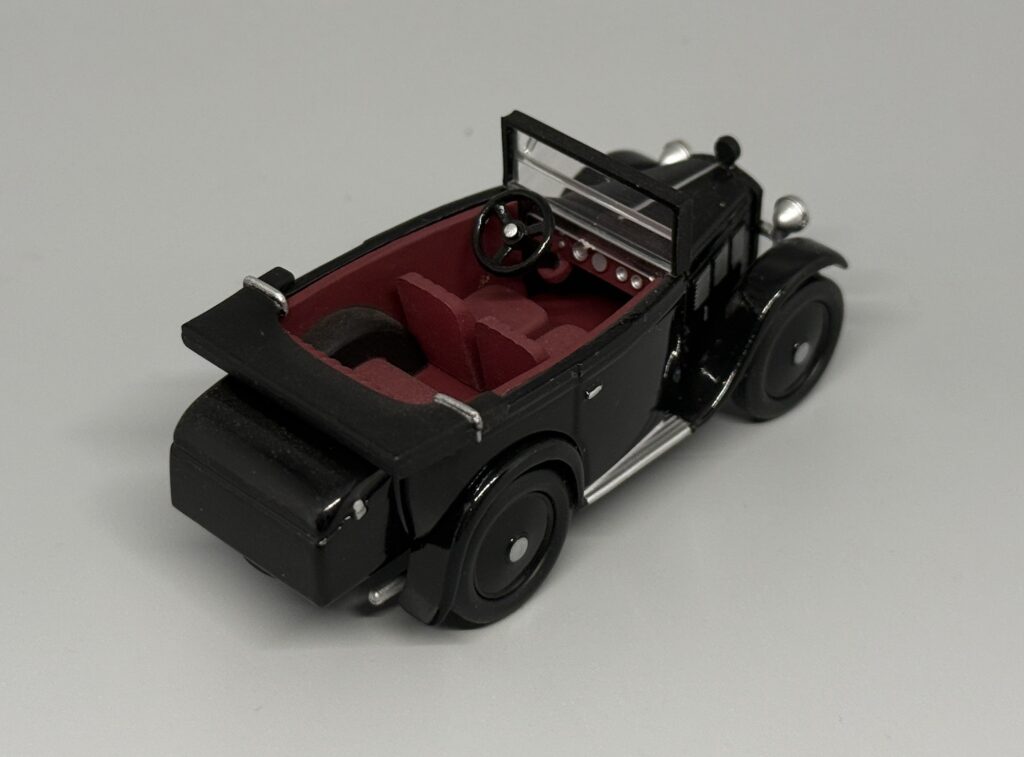
The model in my collection was produced by Schuco and represents the BMW Dixi 3/15 PS Cabriolet (DA2).
Technical data in brief
Production period: 05/1929–12/1930
Place of production: Germany
Body style: three-seat Cabriolet
Body construction: all-steel body
Engine: 748.75 cm³ four-cylinder in-line engine
Power: 15 hp @ 3,000 rpm
Drivetrain: rear-wheel drive
Gearbox: 3-speed manual
Top speed: approximately 75 km/h
Production number: approximately 1,374 cars
Price when new: 2,625 Reichsmarks
Special feature: a luxurious open version of BMW’s first automobile model family, featuring doors with high window frames, wind-down side windows and a carefully finished folding roof