
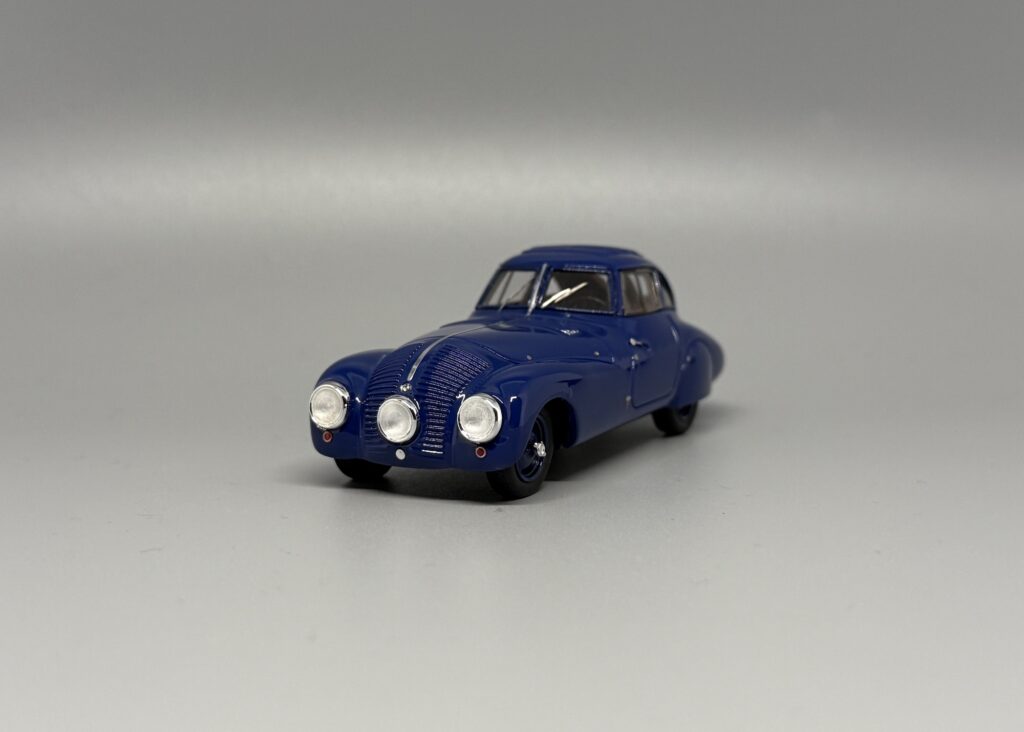
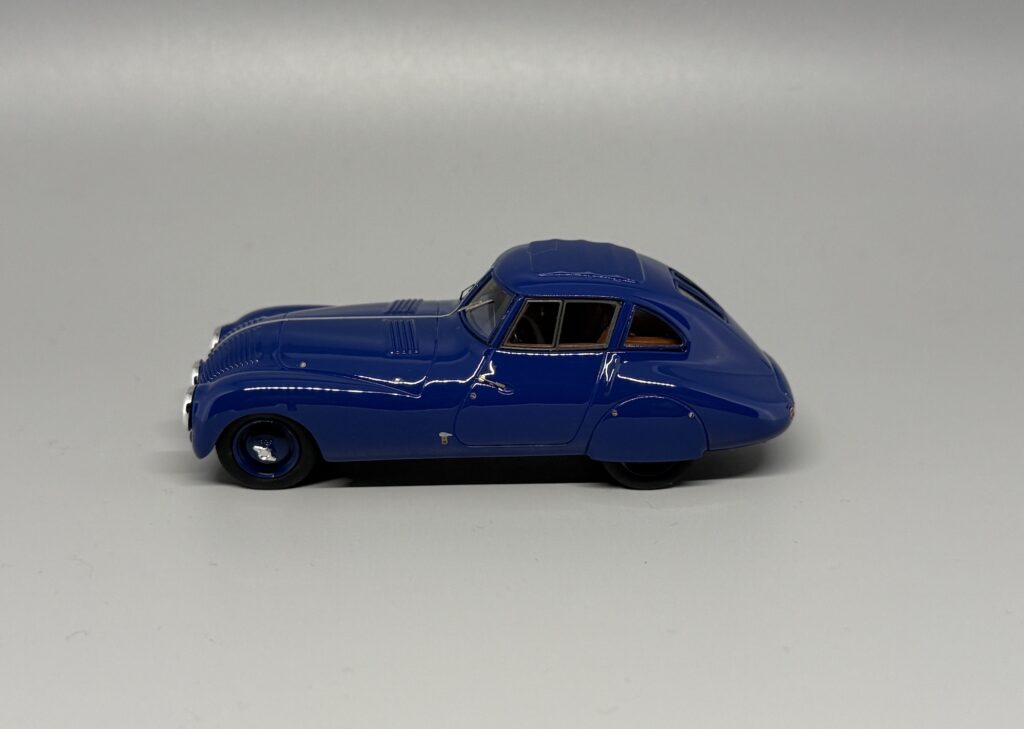
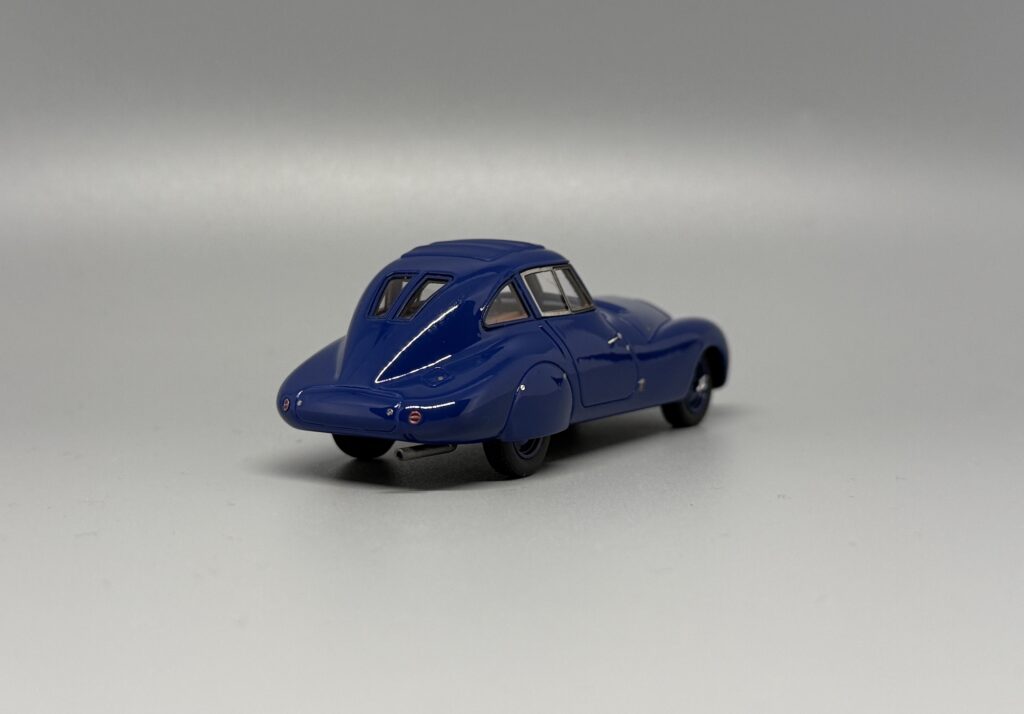
BMW 328 Stromlinien-Versuchswagen was one of the most fascinating special-bodied versions of the BMW 328 and an important example of the growing influence of aerodynamics on automotive design during the 1930s. The mechanical components of the classic BMW 328 sports car were combined with a body created specifically to reduce aerodynamic drag. Its form was developed by pioneering aerodynamicist Reinhard Freiherr von Koenig-Fachsenfeld and built by the specialist coachbuilder Wendler in Reutlingen.
The BMW 328 as a technical foundation
Introduced in 1936, the BMW 328 was already one of the most successful and technically advanced sports cars of its period. Its lightweight construction, excellent handling and 2.0-litre six-cylinder engine made it highly successful both on the road and in competition. These qualities also made the 328 an ideal foundation for experimental aerodynamic bodywork.
The streamlined car retained the basic mechanical components of the BMW 328, but the normal open sports-car body was replaced by an entirely new enclosed body. The objective was not to increase engine output but to use the available power more efficiently by reducing aerodynamic resistance.
Koenig-Fachsenfeld and aerodynamics
The body shape was developed by Reinhard Freiherr von Koenig-Fachsenfeld, one of Germany’s early pioneers of automotive aerodynamics. During the 1930s he was already experimenting in wind tunnels and developing vehicle bodies in which considerably greater attention was paid to the smooth flow of air around the car.
His work also drew on earlier patents by aerodynamic pioneer Paul Jaray. The resulting body was highly unusual for its time, featuring a long, smoothly tapering rear section, enclosed rear wheels, rounded surfaces and details designed to disturb the airflow as little as possible.
Special bodywork by Wendler
The BMW 328 chassis was produced at BMW’s Eisenach plant, while the streamlined body was constructed by the coachbuilding company Erhard Wendler in Reutlingen. Wendler specialised in low-volume custom bodywork and built several designs by Koenig-Fachsenfeld during the 1930s.
The construction combined traditional coachbuilding techniques with remarkably modern aerodynamic thinking. The internal body structure used a timber frame covered with lightweight aluminium panels. This helped to keep weight relatively low despite the larger enclosed body.
Details far ahead of their time
The car was immediately recognisable by its three headlights, numerous cooling openings at the front and the absence of conventional bumpers. Particularly distinctive were the fully enclosed rear wheels, intended to improve airflow along the sides of the vehicle.
The door handles were also integrated into the body surface in an early attempt to minimise aerodynamic disturbance. Such details would not become common on production cars until many decades later, yet Koenig-Fachsenfeld was already using them as part of a complete aerodynamic concept in the 1930s.
Almost 190 km/h from 80 hp
The streamlined BMW used the 1,971 cc straight-six engine of the BMW 328, producing 59 kW or 80 hp. The engine itself was therefore no more powerful than that of the conventional 328; the higher speed was achieved primarily through improved aerodynamics and the relatively light body construction.
According to the museum display, the car was capable of 189 km/h. For an 80 hp car of the late 1930s this was an exceptional figure and clearly demonstrated how significantly performance could be improved simply by reducing aerodynamic drag.
Two streamlined BMW 328s
The museum display lists a production volume of two BMW 328 Fachsenfeld streamlined cars. More recent research by the Deutsches Museum states that seven streamlined BMWs were bodied by Wendler to Koenig-Fachsenfeld designs during 1937 and 1938: five based on the BMW 326 and two on the BMW 328. While the five 326-based cars are considered lost, both BMW 328 examples have survived.
One of the cars was commissioned by Heinz Rosterg. Its BMW 328 chassis left the Eisenach factory in January 1938 and was subsequently taken to Wendler for its special bodywork. After a complicated history that took the car to France, it eventually entered the collection of the Deutsches Museum in Munich in 1978.
An important witness to the development of aerodynamics
The BMW 328 Stromlinien-Versuchswagen is significant today not only because it is an exceptionally rare BMW, but also because it illustrates an important stage in the development of automotive aerodynamics. At a time when most cars still had relatively upright bodies, it demonstrated the considerable effect that body shape could have on speed and efficiency.
At the same time, the car combines two very different eras of automobile construction: a traditional hand-built timber body frame and an aerodynamic shape looking far into the future. This combination makes the streamlined BMW 328 one of the most distinctive special-bodied BMWs created before the Second World War.
Model in the collection
The 1:43-scale BMW 328 Stromlinien-Versuchswagen in my collection was produced by AutoCult. AutoCult identifies the miniature as a 1937 BMW 328 Stromlinien-Versuchswagen, and it was produced as a limited edition of just 333 pieces.
The model forms part of AutoCult’s Streamliner series, which focuses on unusual and pioneering aerodynamic vehicles. It reproduces the distinctive Wendler body, enclosed rear wheels and characteristic three-headlamp front of the original car.
Technical data
Construction period: 1937–1938
Base vehicle: BMW 328
Chassis production: BMW, Eisenach, Germany
Coachbuilder: Wendler, Reutlingen, Germany
Body design: Reinhard Freiherr von Koenig-Fachsenfeld
Body style: streamlined two-door sports coupé
Engine: naturally aspirated straight-six petrol engine
Displacement: 1,971 cc
Power output: 59 kW / 80 hp
Top speed: up to 189 km/h
Number of streamlined Wendler-bodied BMW 328s: 2
Body construction: timber frame with aluminium panelling
Special feature: aerodynamically developed Koenig-Fachsenfeld design with enclosed rear wheels and a streamlined Wendler body
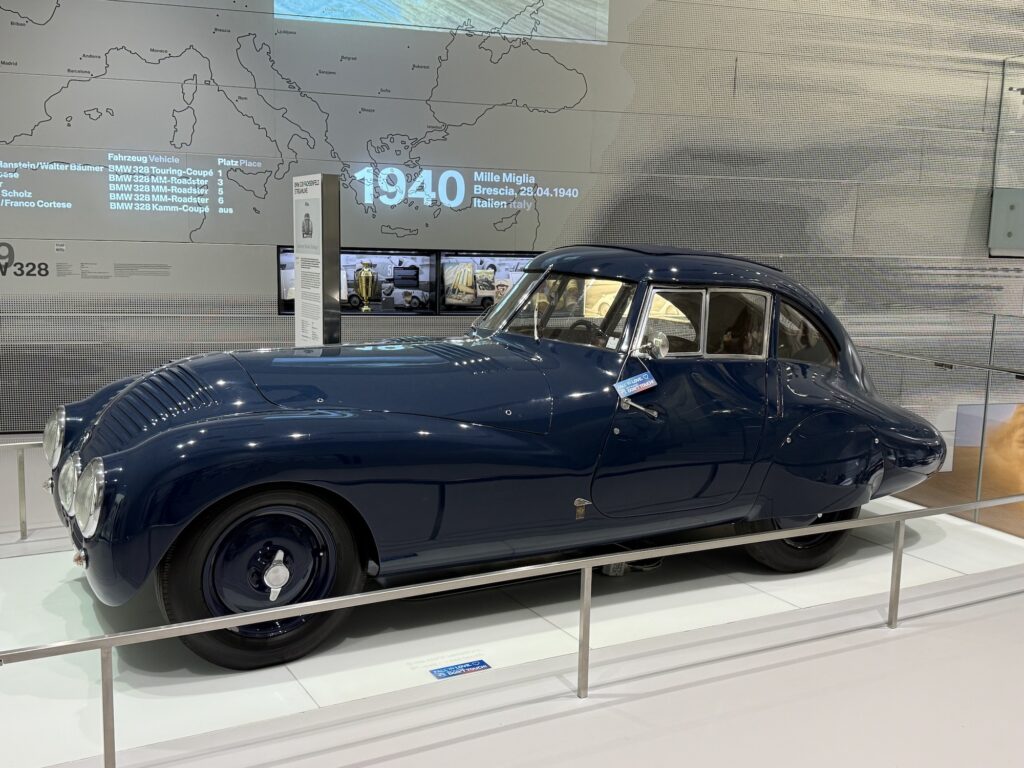
Photo of the real car, BMW Museum. Photo: Sten-Patrick Kreek