Background
BMW 327 Sports Coupé was one of the most elegant and harmoniously designed cars in BMW’s pre-war model range. The model entered the market in September 1938 as a complement to the BMW 327 Sports Convertible introduced the previous year. Both versions ranked among BMW’s most exclusive automobiles of the period, combining a six-cylinder engine, a sporting character and a high level of touring comfort. Technically, the 327 was based on the BMW 326, but its lower and more compact proportions and two-door body gave it a distinctly sportier appearance. The Coupé was aimed primarily at customers who appreciated the elegant lines of the 327 but preferred the greater comfort, refinement and year-round usability of a closed body.
Design and concept
The body of the BMW 327 Sports Coupé was among the most streamlined and elegant BMW designs of its era. The long bonnet, low roofline, smoothly curved wings, integrated headlights and gently sloping rear section created a coherent and remarkably modern silhouette. The rear wheels could be partially covered, further emphasising the flowing shape of the body. Unlike the Sports Convertible, whose bodies were mainly produced by Autenrieth of Darmstadt, the Coupé bodies were built almost exclusively in Eisenach.
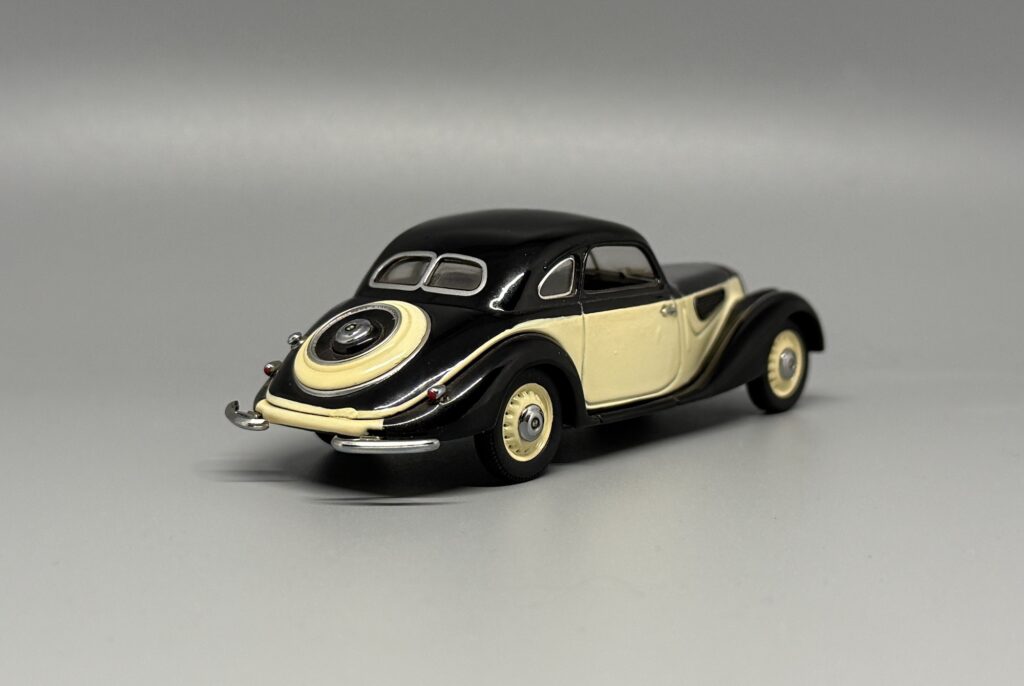
Many BMW 327 Sports Coupés were finished with black bodywork accented by a fine red or green side stripe, accompanied by an interior in a corresponding colour. The closed body also allowed the rear seats to be made slightly more comfortable than those of the Convertible. Access to the luggage compartment was unusual: the external spare wheel first had to be moved aside before the luggage compartment lid behind it could be opened. Such details underline that the 327 Sports Coupé was not merely an attractive car, but a refined grand tourer designed for fast and comfortable long-distance travel.
Technology
The BMW 327 Sports Coupé used a 1,971 cm³ six-cylinder in-line engine based on the BMW 326 power unit. Compared with the 326, the compression ratio was increased from 6.0:1 to 6.3:1, raising output to 55 hp at 4,500 rpm. The car reached a top speed of approximately 125 km/h, an impressive figure for a luxurious coupé of the late 1930s.
Power was transmitted to the rear wheels through a four-speed manual gearbox. Customers could also order a fully synchronised ZF gearbox or a Hurth freewheel transmission. The BMW 327 was not intended to be a pure competition car like the 328, but rather a fast touring car with a sporting character in which performance, handling, comfort and elegant styling were equally important.
BMW 327/28
For customers who wanted the same elegant body with considerably greater performance, BMW offered the more powerful BMW 327/28 Sports Coupé. Visually, it was almost indistinguishable from the standard BMW 327 Sports Coupé, but beneath the bonnet it used the more sporting 2.0-litre six-cylinder engine associated with the BMW 328. Output rose to 80 hp and top speed increased to approximately 145 km/h.
The BMW 327/28 Sports Coupé was even rarer than the 55 hp version. It was produced in Eisenach from October 1938 until October 1939, with only 86 cars built. This version therefore combined the elegant and luxurious body of the BMW 327 with performance derived from BMW’s celebrated 328 sports car, making it one of the most exclusive models in BMW’s pre-war range.
Production
The BMW 327 Sports Coupé was produced from 09/1938 to 04/1941, with only 179 cars built in Eisenach. When new, the Coupé cost 7,450 Reichsmarks, placing it firmly among the more expensive and exclusive cars in the BMW range. Its low production volume reflected both its high price and limited target market, as well as the outbreak of the Second World War, which changed the priorities of the German automobile industry and gradually restricted civilian car production.
Cars built in 1941, including the example represented by the model in my collection, therefore belong to the final stage of pre-war BMW 327 Sports Coupé production. Unlike the Sports Convertible, which was produced again in very small numbers in Eisenach after the war, production of the 55 hp Sports Coupé ended in 1941.
Significance in BMW history
The BMW 327 Sports Coupé demonstrated that by the late 1930s BMW was capable of producing not only successful sports cars and practical saloons, but also sophisticated grand tourers. The car combined streamlined design, a six-cylinder engine, a luxurious interior and sporting driving characteristics in a way that would later become an important theme in BMW’s large coupés.
While the BMW 328 represented the competition-focused and pure sporting side of the same era, the 327 Sports Coupé embodied elegant and rapid long-distance travel. It can be regarded as an early predecessor of BMW’s later tradition of luxurious sporting coupés, continued after the war by cars such as the BMW 503 and later the 3200 CS, E9 Coupé and BMW 6 Series. The BMW 327 Sports Coupé therefore occupies an important position as one of the most elegant and exclusive automobiles of BMW’s pre-war period.
Model in the collection
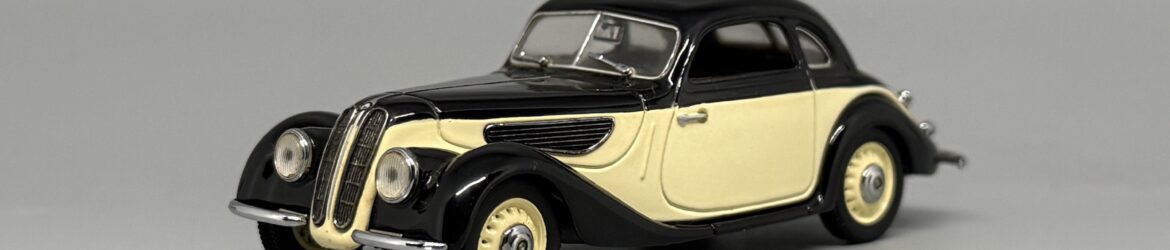
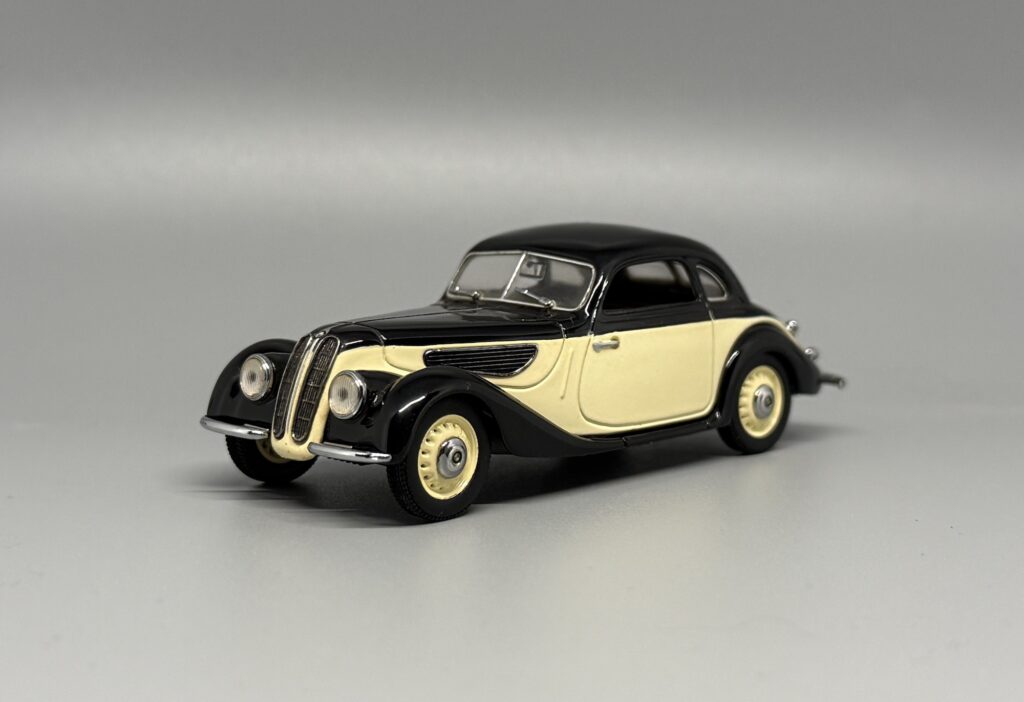
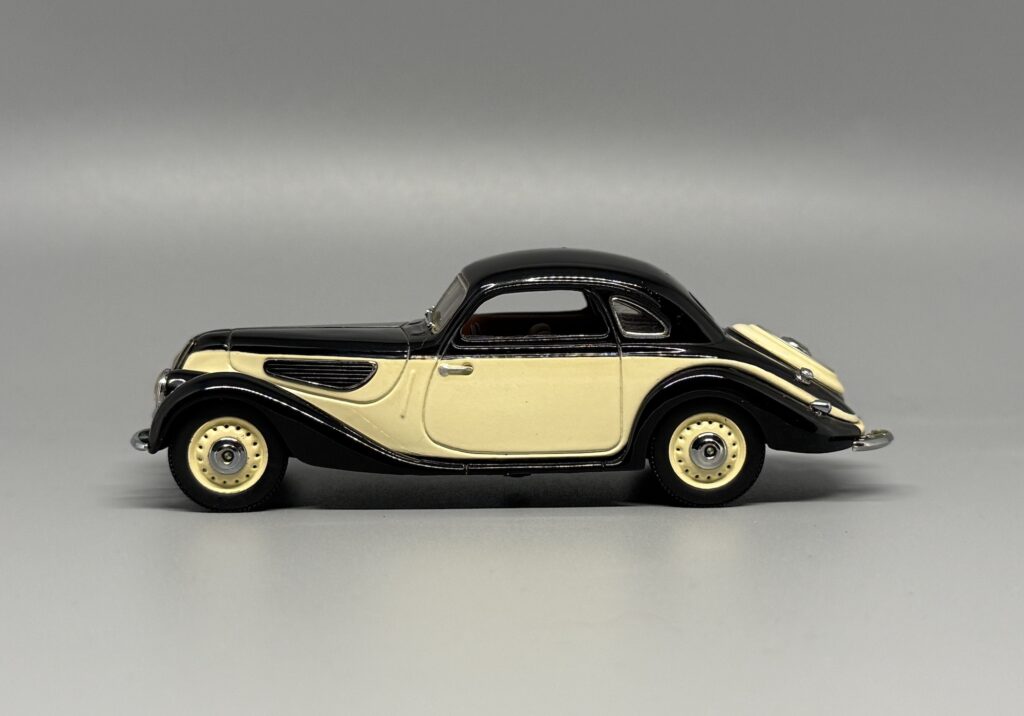
The model in my collection was produced by Detail Cars and represents a 1941 BMW 327 Sports Coupé.
Technical data in brief
Production period: 09/1938–04/1941
Place of production: Eisenach, Germany
Body style: two-door 2+2-seat sports coupé
Engine: 1,971 cm³ six-cylinder in-line engine
Power: 55 hp @ 4,500 rpm
Drivetrain: rear-wheel drive
Gearbox: 4-speed manual
Top speed: approximately 125 km/h
Production number: 179 cars
Price when new: 7,450 Reichsmarks
More powerful version: BMW 327/28 Sports Coupé, 80 hp, 145 km/h, 86 cars
Special feature: one of BMW’s most elegant and rare pre-war sporting luxury coupés and an early representative of the marque’s later grand touring and luxury coupé tradition
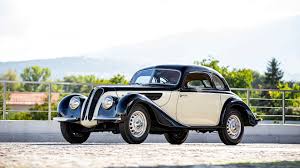
Photo of the real car. Source: rmsothebys.com