
Background
BMW 635 CSi (E24) was one of the best-known and most successful versions of the first-generation BMW 6 Series. Introduced in 1978, two years after the debut of the E24 6 Series, it remained the flagship of the model range until the arrival of the BMW M635CSi. The 635 CSi combined the comfort and refinement of a large four-seat coupé with a considerably sportier technical character than the smaller-engined E24 versions. Its powerful fuel-injected six-cylinder engine, rear-wheel drive, sportier chassis setup and high level of equipment made it one of BMW’s most characteristic grand tourers of the late 1970s and 1980s.
BMW 6 Series E24
The first BMW 6 Series was introduced in 1976 and continued the tradition of BMW’s large E9 coupés. The E24 was designed to combine elegance, sporting character and long-distance comfort, and it became an exceptionally long-lived BMW model family. Production continued until April 1989, spanning more than 13 years. According to BMW Group Classic, the E24 was one of the longest-running model series in BMW history, with the final car leaving the Dingolfing plant on 18 April 1989. The 6 Series did not receive an immediate direct successor, and BMW revived the 6 Series name only in 2003 with the E63 generation.
Design
The E24 was designed under BMW’s then chief designer Paul Bracq. Its long bonnet, low beltline, generous glass area and gently sloping roof created an elegant yet powerful silhouette. Particularly distinctive was the forward-slanting nose with BMW kidney grilles and four round headlights, which later gave the E24 its widely used “sharknose” nickname. Inside, the car continued BMW’s increasingly characteristic driver-oriented approach, with the dashboard and centre-console controls angled towards the driver. The E24 was a four-seat coupé intended to combine the atmosphere of a sports car with the comfort of a large grand tourer.
BMW 635 CSi
Introduced in 1978, the BMW 635 CSi gave the E24 a considerably more sporting character. Its 3.5-litre six-cylinder in-line engine produced 218 hp, while the car also received stronger anti-roll bars, firmer dampers and a limited-slip differential. According to BMW M’s historical overview, the differential could provide a locking effect of up to 40 per cent. The 635 CSi could also be distinguished from the smaller-engined E24 versions by its sportier front and rear spoilers and cross-spoke BBS wheels. At the same time, it retained all the qualities that made the 6 Series a luxury grand tourer, including a comfortable four-seat interior, generous equipment and strong long-distance capability.
1982 technical update
The 6 Series received an important technical update in 1982, and it is this period that is represented by the model in my collection. From May 1982, the 635 CSi received a 3,430 cm³ six-cylinder engine in place of the earlier 3,453 cm³ unit. Power remained at 218 hp, while the underlying engineering was brought closer to that of the contemporary BMW 5 Series E28. The suspension and several chassis components were revised, making the car both more modern and more refined to drive. BMW Group Archive gives a top speed of 229 km/h for the 1982–1987 635 CSi, making it a very fast four-seat luxury coupé by the standards of its time.
Engine and transmission
The 635 CSi used a six-cylinder in-line engine from BMW’s legendary M30 engine family. Its strengths were not limited to maximum power: the engine was also known for its smooth power delivery and the characteristic refinement of a large BMW straight-six. The 218 hp output was transmitted to the rear wheels, and the model was available with a five-speed manual gearbox, including a sportier close-ratio version, as well as an automatic transmission. The 3,430 cm³ version introduced in 1982 combined strong performance with a mature and refined driving character, making the 635 CSi equally suitable for fast motorway travel and everyday use.
Development during production
The technical specification of the 635 CSi evolved several times during its long production life. From the 1984 model year, a catalytic-converter version became available with an output of 185 hp. In 1987 the model was updated again, and the output of the catalytic-converter engine increased to 211 hp. At the same time, the appearance, interior and equipment of the E24 were modernised. Despite these changes, the basic concept of the 635 CSi remained unchanged throughout production: a large front-mounted six-cylinder engine, rear-wheel drive, four-seat coupé bodywork and a balance between sporting ability and luxury.
Motorsport
The BMW 635 CSi name also became highly successful in motorsport, although the competition cars were extensively modified compared with the standard road-going model. Group A versions of the 635 CSi achieved major success in touring-car racing during the 1980s. The model won the Spa 24 Hours in 1983, 1985 and 1986, while racing versions also secured several European Touring Car Championship titles. E24 competition cars also won the Nürburgring 24 Hours in 1984 and 1985. These achievements strengthened the sporting reputation of the 635 CSi, even though the road car’s primary role remained that of a fast and luxurious grand tourer.
Relationship with the BMW M635CSi
Until 1984, the 635 CSi was the sporting flagship of the E24 model family. It was then joined by the BMW M635CSi, developed by BMW Motorsport GmbH and powered by a 286 hp M88 engine related to that of the BMW M1, together with much more extensively performance-oriented engineering. The M635CSi did not replace the regular 635 CSi, however, and the two models remained in production alongside one another. The 635 CSi retained the role of a classic high-performance grand tourer, while the M635CSi took the performance potential of the E24 into the territory of BMW M cars.
Significance in BMW history
The BMW 635 CSi was the most successful and one of the most characteristic versions of the E24 6 Series. It helped define BMW’s image as a manufacturer of large sporting coupés and demonstrated that a luxurious long-distance car could also offer excellent handling and strong performance. The long production life of the 635 CSi, its distinctive Paul Bracq design and its six-cylinder engine made it one of BMW’s defining models of the 1970s and 1980s. Today, the E24 – and the 635 CSi in particular – remains one of the clearest examples of the classic BMW grand tourer.
Model in the collection
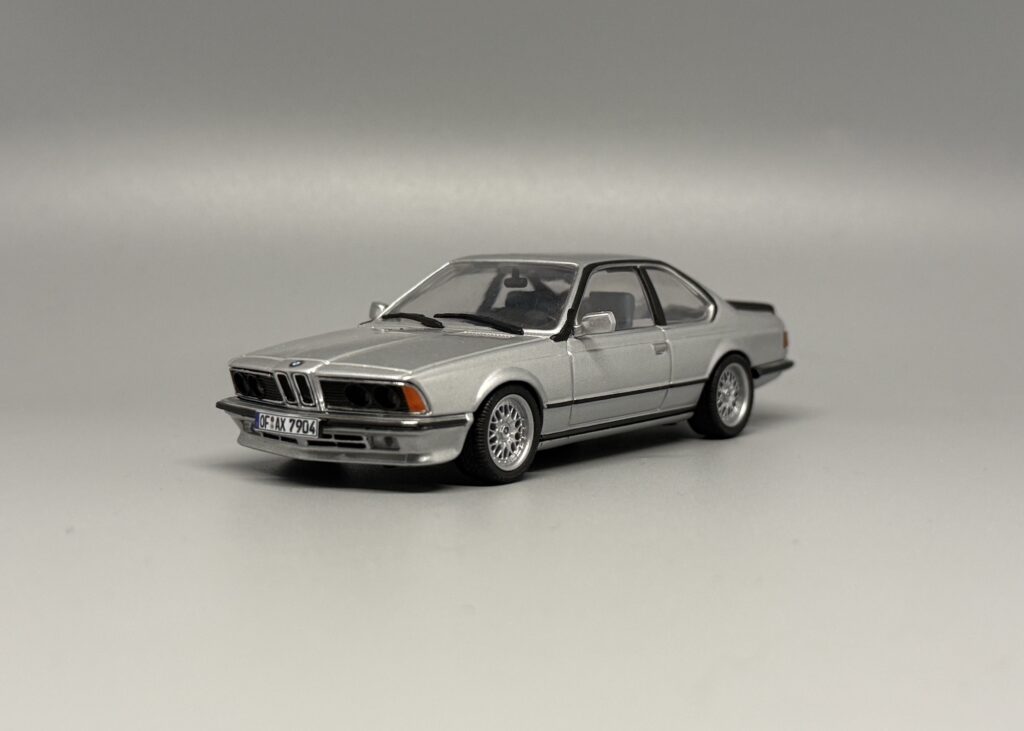
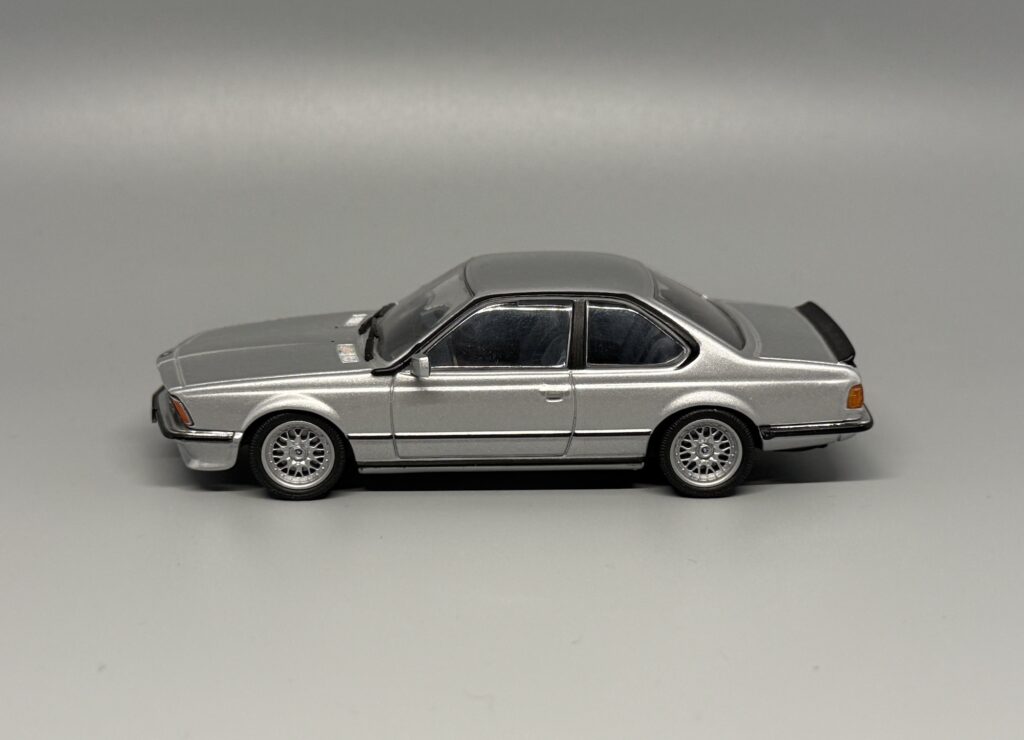
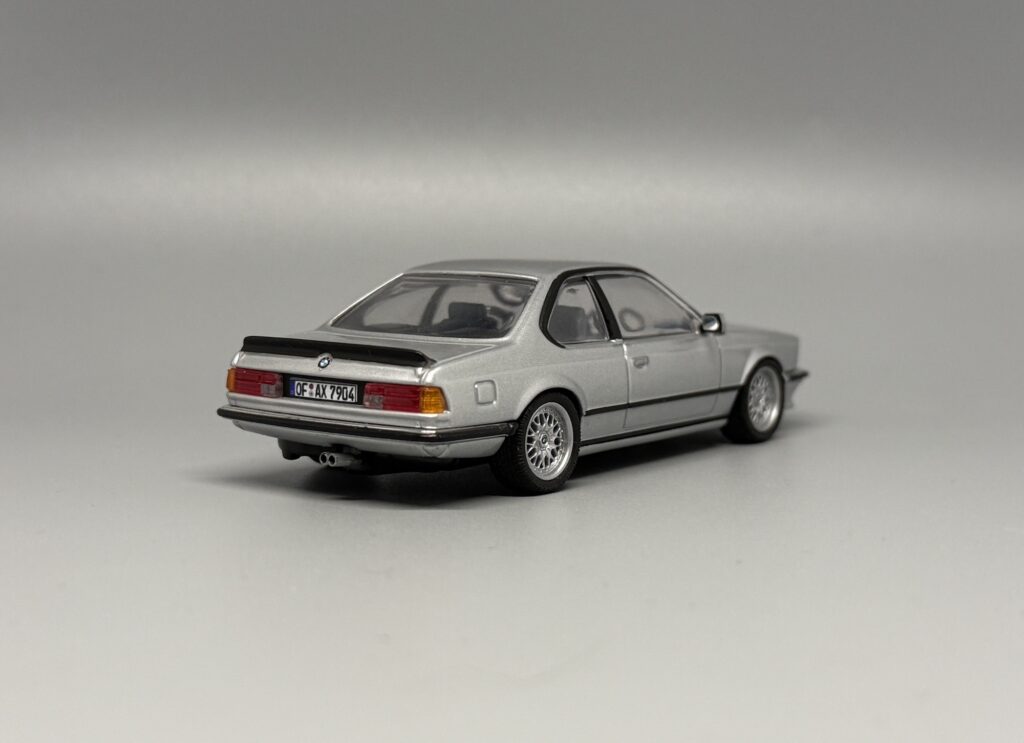
The model in my collection was produced by Minichamps and represents a 1982 BMW 635 CSi (E24). It depicts the version produced after the 1982 model update, whose real-life counterpart used a 3,430 cm³ six-cylinder engine producing 218 hp.
Technical data in brief
Production period: 06/1978–04/1989
Place of production: Dingolfing, Germany
Body style: two-door four-seat Coupé / grand tourer
Engine: M30 six-cylinder in-line engine
Displacement 1978–05/1982: 3,453 cm³
Displacement from 05/1982: 3,430 cm³
Power: 218 hp / 160 kW
Top speed 1982–1987: 229 km/h
Drivetrain: rear-wheel drive
Transmission: 5-speed manual or automatic
Catalytic-converter version from model year 1984: 185 hp
Catalytic-converter version from 1987: 211 hp
Production number: approximately 45,218 cars
Special feature: the most successful version of the E24 6 Series and the flagship of the range until the arrival of the BMW M635CSi
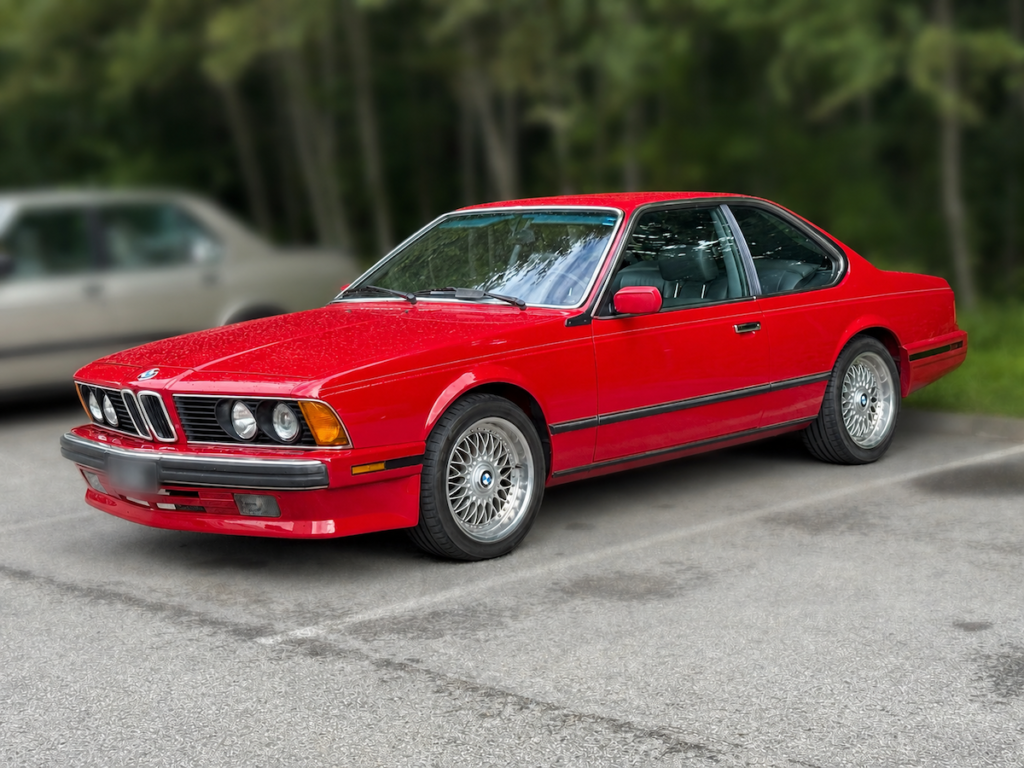
Photo of the real car. Photo: Sten-Patrick Kreek